 Seattle
 Bellevue sits across Lake Washington from Seattle, and while it shares the same marine climate as the rest of King County, the mix of mature tree canopy, lakefront and hillside lots, and a long, wet fall-through-spring stretch creates its own set of maintenance headaches for the exterior of a home. Whether you're in an older neighborhood with towering evergreens overhead or a newer build on a more exposed lot, the same basic forces are at work: moisture that lingers, moss and mildew that get a long growing season, and UV exposure that shows up more in summer than most people expect from the Pacific Northwest.
We work on siding, roofing, windows, and decks across the Eastside, and this guide walks through what we actually see on Bellevue homes and how we approach each part of the exterior.
What the Bellevue Climate Does to a House
King County's marine climate means long stretches of low-intensity rain rather than short violent storms, but the cumulative effect on a building envelope is significant. Homes here deal with a combination of driving rain during wind events, near-constant humidity for much of the year, and a moss season that can run from early fall through late spring wherever there's shade from trees or north-facing exposure.
Moisture Is the Long-Term Enemy
It's rarely one storm that damages a house in this region — it's months of moisture sitting against siding, collecting in roof valleys, or wicking into window frames that weren't properly flashed. Wood-based products are especially vulnerable because they absorb water, swell, and eventually rot from the inside before a homeowner notices anything from the curb.
Moss and Organic Growth
Shaded lots, common throughout Bellevue's older, tree-lined neighborhoods, give moss and algae a long runway to establish on roofs and siding. Moss holds moisture against the surface it's growing on, which accelerates whatever deterioration is already happening underneath.
Salt Air and Wind Exposure
Properties nearer Lake Washington or with more open exposure catch more wind-driven rain and airborne moisture, which pushes water into seams, joints, and fastener penetrations faster than on a sheltered inland lot. It's a smaller factor here than on the immediate coast, but it's real, and it matters for material choice and installation detail.
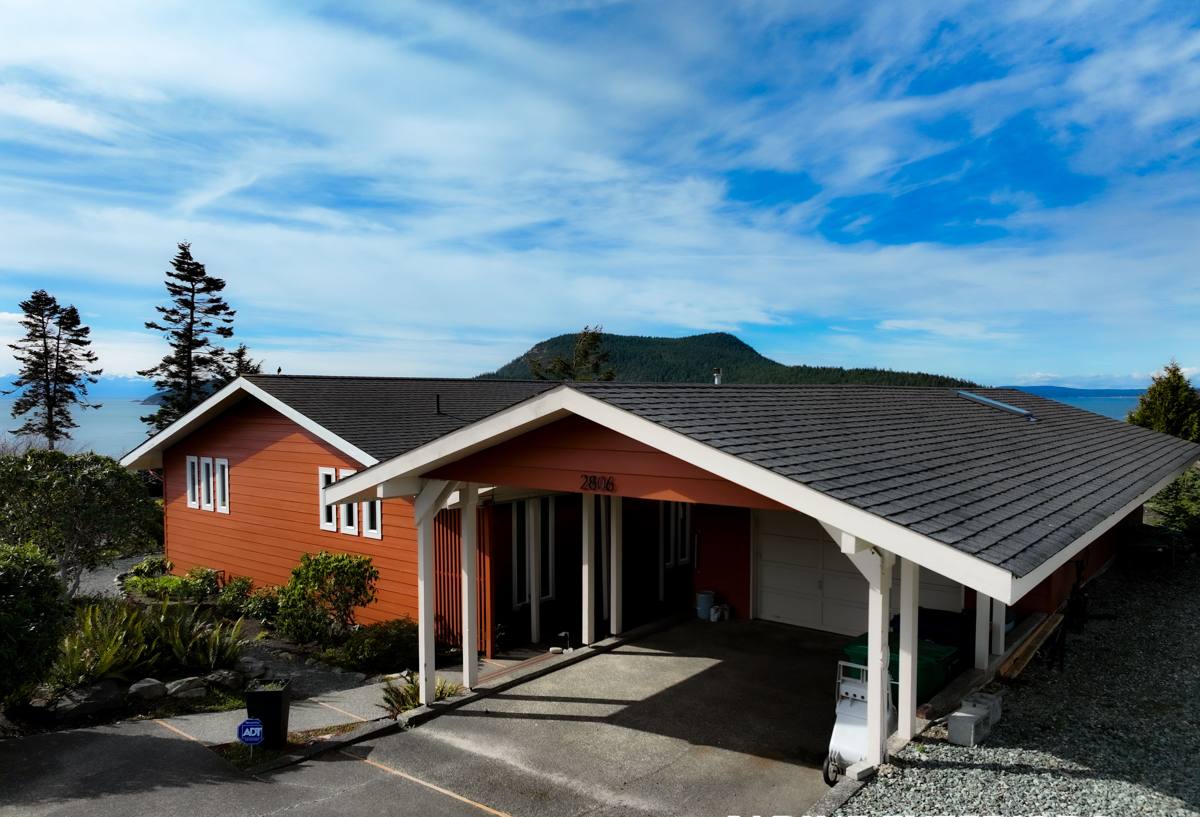
Siding: Why We Only Install James Hardie
We install James Hardie fiber cement siding exclusively. We don't install vinyl, LP SmartSide, Cemplank, Allura, primed spruce, or cedar, and that's a deliberate standard, not a sales pitch. Each of those alternatives has real strengths, but each also carries a trade-off that shows up on homes in this climate specifically.
Vinyl
Vinyl is affordable and low-maintenance in dry climates, but it expands and contracts significantly with temperature swings, and in a region with constant humidity and driving rain, water finds its way behind panels through gaps that widen over time. It also isn't structurally rigid, so it telegraphs an unevenly prepped wall rather than hiding it.
Wood-Based and Engineered Wood Products
Cedar and primed spruce look great fresh off the truck, but wood is exactly the material that struggles most against sustained Pacific Northwest moisture — it needs consistent refinishing, and any lapse in maintenance opens the door to rot. LP SmartSide is an engineered wood product with a resin-treated strand core, which helps, but it's still wood-based at heart, meaning cut edges and any breach in the factory coating need diligent sealing to avoid moisture intrusion over the long run.
Other Fiber Cement Brands
Cemplank and Allura are legitimate fiber cement competitors to Hardie, and the base material science is similar. Where we see the difference is in factory finish consistency, the depth of climate-specific engineering in Hardie's product lines, and the strength and clarity of the transferable warranty — details that matter over a 30-plus year ownership horizon, not just at installation.
Why Hardie
James Hardie fiber cement is non-combustible, doesn't rot, and holds its factory-applied ColorPlus finish far longer than field-applied paint on wood or vinyl's baked-in color. Hardie also engineers regional HZ5 product formulations specifically for climates like ours, where moisture cycling is the dominant stress rather than extreme heat or cold. Installed to spec — correct clearances, proper flashing, factory-caulked joints — it's the product we're comfortable standing behind with a real warranty.
Roofing in a Long Moss Season
Roofs in Bellevue take a beating from the combination of moisture and shade. Moss growth on roofing is more than a cosmetic issue — moss holds water against shingles and can lift edges over time, shortening the life of the roof underneath it.
- Proper attic ventilation to reduce condensation buildup under the roof deck
- Ice-and-water shield at eaves and valleys, the areas most prone to backup and pooling
- Zinc or copper strips and periodic moss treatment for homes under heavy tree cover
- Flashing details at chimneys, skylights, and roof-to-wall transitions checked and resealed as needed
Windows: Sealing Out a Wet Climate
Old or poorly flashed windows are one of the most common sources of hidden water intrusion we find on Eastside homes. Flashing tape, proper head flashing, and correctly sealed sill pans matter more here than in drier climates because there's simply more water looking for a way in over the course of a year.
What Matters Beyond Glass
Homeowners often focus on glass performance (low-E coatings, gas fills) when the bigger issue in this region is the quality of the install — how the window integrates with the surrounding wall and siding. A great window installed with poor flashing will leak; a modest window installed correctly usually won't.
Decks: Built for Wet Ground and Shade
Decks in Bellevue's shadier, tree-covered lots deal with slower drying times, more moss and algae on walking surfaces, and ledger board connections that need careful flashing to keep water from tracking back into the house structure.
- Proper ledger board flashing where the deck attaches to the house
- Joist tape or flashing on framing members to slow moisture absorption
- Decking material chosen with drying time and slip resistance in shaded conditions in mind
- Adequate spacing and airflow underneath to reduce trapped moisture
Comparing Siding Options for This Climate
| Material | Moisture Resistance | Maintenance | Longevity in PNW Conditions |
|---|---|---|---|
| Vinyl | Moderate — water can track behind panels | Low, but panels can warp or fade | Variable; joints loosen over time |
| Cedar / Primed Wood | Low without diligent upkeep | High — regular refinishing required | Shorter if maintenance lapses |
| LP SmartSide | Improved over raw wood, but edge-sensitive | Moderate — coating breaches need prompt sealing | Good with strict maintenance |
| Other Fiber Cement (Cemplank, Allura) | High | Low | Strong, comparable base material |
| James Hardie | High, non-combustible | Low — factory finish holds up | Long-term, backed by transferable warranty |
Why a Local Crew Matters
A crew that works throughout King County and the Eastside regularly sees how Bellevue's specific mix of tree cover, lake proximity, and hillside drainage plays out on real houses. That local pattern recognition — where moss tends to build up first, which wall exposures take the worst driving rain, how a given roof pitch sheds water in this specific climate — is the difference between a generic install and one that's actually built for the conditions the house will face for the next several decades.
Planning an Exterior Project
Most homeowners come to us because of one visible problem — a moss-covered roof, a leaking window, siding that's finally showing rot — but a full exterior holds together as one system. Roofing, siding, window flashing, and deck framing all interact at the seams and transitions where water actually gets in. When we look at a project, we look at how those pieces meet, not just the piece that's failing.
A Few Questions Worth Asking Before You Hire
- Does the crew regularly work in this specific climate, or mostly in drier regions?
- What's the plan for flashing and sealing at every seam, not just the main surface?
- What warranty backs the materials, and is it transferable if you sell the home?
- Will they walk you through why they recommend one material over another for your specific lot?
If your Bellevue home is due for new siding, a roof that's finally lost the battle with moss, windows that let in more draft and moisture than they should, or a deck that needs rebuilding the right way, we're happy to take a look. Reach out for a free, no-pressure estimate — we'll walk the property, explain what we see, and give you a straightforward assessment of what it would take to fix it right.