 Seattle
 Exterior Work Built for West Seattle's Peninsula Climate
West Seattle sits out on its own peninsula, wrapped by Puget Sound on three sides, which means homes here take on a different kind of weather stress than houses just a few miles inland. Salt-laden air off the Sound, driving rain that comes in sideways during winter storms, and a moss season that seems to stretch longer every year all work on a home's exterior at the same time. We've built our approach around that combination, and it's a big part of why we standardized on one siding system rather than juggling several.
West Seattle's housing stock spans a wide range — older craftsman and bungalow-style homes near the ridge, mid-century houses on the slopes down toward the water, and newer construction filling in view lots. Each of those brings its own exterior considerations, but the climate exposure is shared across nearly all of them: wind off the water, persistent moisture, and the kind of temperature swings that stress siding joints and roof flashing year after year.
What Salt Air and Driving Rain Actually Do to a House
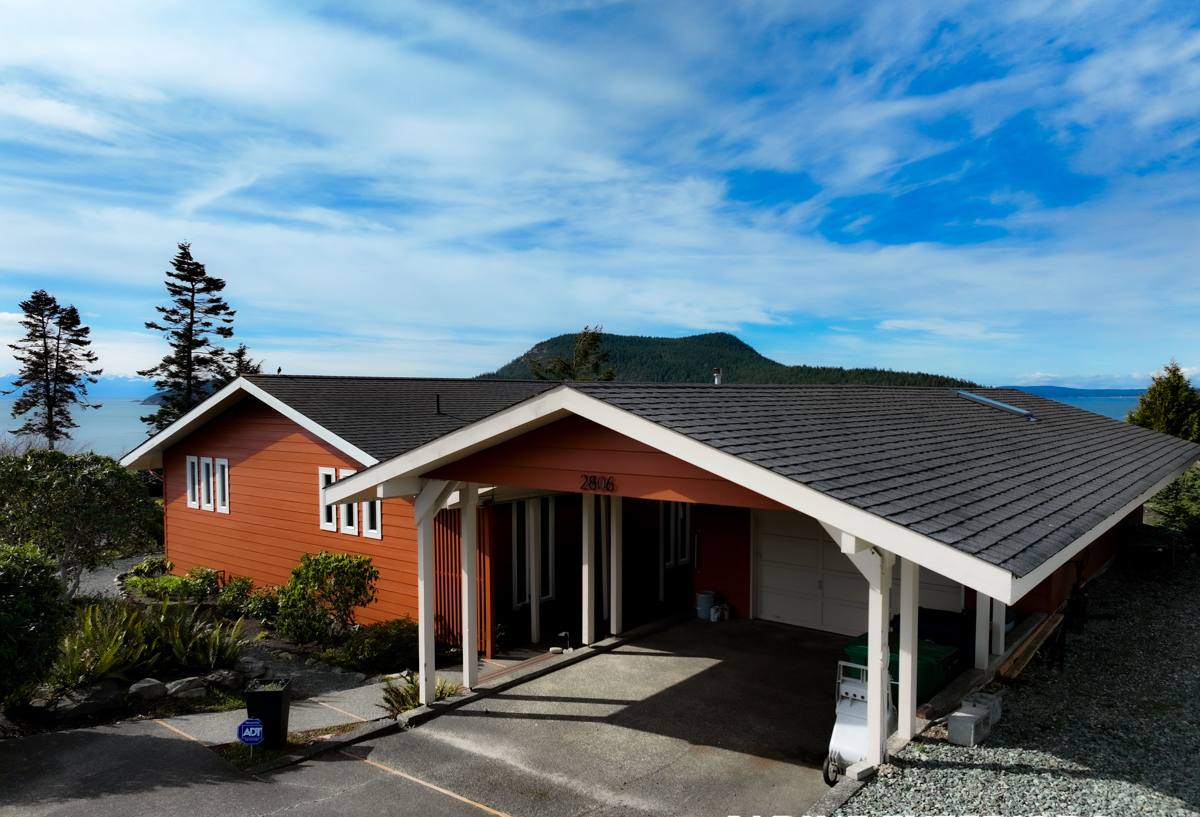
Salt air doesn't just smell like the beach — it's corrosive. Metal fasteners, flashing, and hardware exposed to salt-carrying wind break down faster than they would a few miles inland, and that corrosion can travel into the wall assembly if the exterior isn't detailed correctly. Driving rain compounds the problem. When wind pushes rain sideways instead of letting it fall straight down, water finds its way into every horizontal seam, every trim gap, and every spot where a previous installer cut a corner.
Over a few seasons, homes that aren't sided and roofed with this exposure in mind start showing it: streaking, soft spots around window and door trim, paint that won't hold, and moisture finding its way behind siding that looked fine from the curb. None of that shows up overnight — it's cumulative, which is exactly why the quality of the original installation matters so much more here than in a drier, calmer climate.
Moss Season Is Longer Here Than People Realize
King County's wet stretch runs long, and West Seattle's exposure to marine moisture extends it further. Moss and algae don't just grow on roofs — they take hold on north-facing siding, in trim details that don't get sun or airflow, and anywhere debris collects and holds moisture against a surface. Left alone, that growth holds water against the substrate underneath, which is a slow but steady path to rot on wood-based products and a real problem for asphalt shingle roofs that aren't maintained.
Siding: Why We Only Install James Hardie
We install James Hardie fiber cement siding exclusively. We don't offer LP SmartSide, vinyl, Cemplank, Allura, primed spruce, or cedar, and that's a deliberate professional standard, not an oversight. Each of those alternatives has real strengths — cedar looks great fresh off the wall, vinyl is inexpensive, engineered wood products install quickly — but in a climate defined by sustained moisture and salt exposure, the trade-offs matter more than the upfront savings.
Wood-based siding, including cedar and engineered wood products like LP SmartSide, depends on an intact factory coating and diligent long-term maintenance to keep moisture out. Once that barrier is compromised — a scratch, a poorly sealed cut end, a nail that wasn't set right — wood fiber and moisture don't mix well, especially with West Seattle's rain volume and moss pressure. Vinyl siding is low-maintenance but it's a thin plastic product that can warp in temperature swings, fade over time, and simply isn't as impact- or fire-resistant as fiber cement. Cemplank and Allura are also fiber cement products, and reasonable ones, but we've standardized on Hardie specifically for its ColorPlus factory finish, its HZ5 formulation engineered for this Pacific Northwest climate zone, and the strength of its transferable warranty when installation is done to spec.
Fiber cement doesn't rot, it's non-combustible, and it holds paint and color far longer than wood because the ColorPlus finish is baked on at the factory rather than applied on site. That matters in a marine climate where UV exposure and salt air both work against a painted surface. It's also why correct installation — proper flashing, correct fastener spacing, sealed joints, and rain-screen detailing where called for — is non-negotiable. A great product installed carelessly will still let water in.
Comparing Common Siding Options in a Marine Climate
| Material | Moisture Resistance | Maintenance | Fire Resistance | Typical Lifespan |
|---|---|---|---|---|
| James Hardie Fiber Cement | Excellent — does not rot or absorb moisture like wood | Low — factory finish holds color for years | Non-combustible | 30+ years with proper install |
| Cedar | Fair — needs consistent sealing and upkeep | High — regular staining/sealing required | Combustible | 15-25 years with diligent care |
| Vinyl | Good but can warp/gap over time | Low, but fading and brittleness are common | Combustible, can melt/deform | 20-30 years, variable |
| LP SmartSide (Engineered Wood) | Fair — relies on intact coating | Moderate — cut edges and damage need prompt sealing | Combustible | 20-25 years with good upkeep |
Roofing for a Wet, Windy Peninsula
Roofing in West Seattle has to account for the same driving rain and moss pressure that affects siding, plus wind exposure that's more pronounced on higher ground and near the water. We look closely at flashing details around chimneys, vents, and valleys, since that's where the vast majority of roof leaks actually start — not in the open field of shingles. Ventilation matters too: a roof deck that can't breathe traps moisture underneath the shingles, which accelerates deterioration from the inside out and feeds moss growth from below.
Routine moss removal and gutter maintenance go a long way toward extending a roof's life here, but they're not a substitute for a roofing system installed correctly in the first place, with the right underlayment and flashing for a coastal Pacific Northwest exposure.
Windows: Managing Condensation, Drafts, and Wind-Driven Rain
Older windows in West Seattle homes often show their age through condensation between panes, drafts around the frame, and — in the worst cases — water intrusion at the sill during heavy wind-driven rain. Replacing windows isn't just about comfort and energy bills, though both improve; it's also about closing off one more entry point for moisture in a climate that gives water plenty of chances to find its way in. Proper flashing and integration with the surrounding siding is as important as the window unit itself, especially where new windows meet Hardie siding on a retrofit.
Decks: Built to Handle Standing Water and Sun-Shade Cycles
West Seattle's tree cover and hillside lots mean a lot of decks sit in partial shade for much of the day, which slows drying time after rain and creates ideal conditions for moss, algae, and eventual rot if the structure and decking material aren't suited to it. We build decks with drainage and airflow in mind from the framing up, not just the visible decking boards, since a deck that looks fine on top can still be failing underneath if water isn't shedding properly.
Why a Local Crew Matters More Than It Sounds Like It Should
A crew that works across King County regularly, including West Seattle specifically, knows the difference between a roof detail that works in a drier inland neighborhood and one that's built for direct exposure to Sound weather. That's not marketing — it's the practical result of seeing the same failure points repeat on homes with the same exposure, year after year. It also means we're not guessing at permitting norms, typical lot conditions, or the kind of access challenges that come with West Seattle's hills and narrow streets.
What to Expect When You Work With Us
- An honest, no-pressure assessment of your current siding, roofing, windows, or deck condition
- A clear explanation of why we recommend James Hardie fiber cement, and what that means for your specific home
- A written estimate with no vague allowances or hidden scope
- Attention to the flashing, fastening, and moisture-management details that matter most in a marine climate
- A crew that shows up, communicates, and cleans up after itself
Signs It's Time to Have Your Exterior Looked At
Homeowners often wait too long simply because exterior deterioration is gradual. A few signs worth acting on sooner rather than later:
- Persistent moss or dark streaking on siding, especially north-facing walls
- Paint that's peeling, bubbling, or won't hold on siding or trim
- Soft or spongy spots around window and door trim
- Granule buildup in gutters or bald patches on an asphalt roof
- Visible daylight or drafts around older window frames
- Deck boards that stay wet long after rain has stopped, or visible sagging
Let's Take a Look at Your Home
If you're weighing a siding replacement, a roof that's showing its age, aging windows, or a deck that needs more than a coat of stain, we're happy to take a look and give you a straight assessment — no pressure, no upsell. Reach out for a free estimate and we'll walk your property with West Seattle's specific climate conditions in mind.