 Seattle
 Why This Decision Is Different in Seattle
Every roof eventually forces a decision: patch it again, or replace it. In most of the country that decision comes down to age and a leak or two. In Seattle and around King County, the climate adds a few extra variables that homeowners in drier regions never have to think about. Salt-laden air moving in off Puget Sound, long stretches of driving rain from fall through spring, and a moss season that can run nine months out of the year all put steady, cumulative stress on a roof system. A roof that would coast along fine in Spokane or Boise can show real wear here a decade sooner, simply because it never gets a long dry season to fully shed moisture and reset.
That doesn't mean every roof problem in Seattle means replacement. It means the evaluation has to account for how moisture, moss, and salt air behave over time, not just what a roof looks like from the driveway. This guide walks through how to tell the difference, what typically drives the cost either way, and where the line usually falls.
Signs You're Looking at a Repair, Not a Full Replacement
Roofs rarely fail all at once. Most problems start local and stay local for a while, which is good news if you catch them early.
Localized damage
- A handful of cracked, curled, or missing shingles after a windstorm
- A single flashing failure around a chimney, skylight, or vent pipe
- A leak traced to one clear entry point rather than water showing up in multiple rooms
- Moss buildup that's been caught early, before it's lifted shingle edges or held water against the deck
- Isolated granule loss on a roof that's otherwise well within its expected service life
If your roof is under 15 years old, the rest of the field looks sound, and the damage is confined to one area, repair is almost always the right call. A good contractor will tell you that even if a full replacement would be the bigger job to sell.
When repair starts making less sense
The math changes once a roof needs the same kind of repair in multiple places, or once you're calling someone back for the second or third time in a few years for "just one more leak." At that point you're not really extending the roof's life, you're deferring the same decision at a higher cumulative cost.
Signs You're Looking at Replacement
| Indicator | What it usually means |
|---|---|
| Roof is 20+ years old (asphalt) or past its rated life | Underlying materials are brittle regardless of surface appearance |
| Moss has been established for multiple seasons | Moisture has likely been held against the deck long enough to cause rot, not just cosmetic damage |
| Leaks in more than one location | Widespread underlayment or flashing failure, not a single fixable point |
| Visible sagging in the roofline | Structural deck or rafter damage, a repair-only approach won't address it |
| Granules collecting heavily in gutters | Shingles are at or near the end of their protective life across the whole roof |
| Daylight visible through the deck from the attic | Deck failure, this is a replacement, not a patch |
Age alone isn't disqualifying, but age combined with any one of the other signs above usually tips the decision toward replacement. Patching a roof that's already failing in more than one place tends to buy a year or two at most, and you end up paying for both the patch and the eventual full job.
What Seattle's Climate Actually Does to a Roof
Moss and organic growth
Western Washington's mild, wet winters and shaded, tree-heavy lots are close to ideal conditions for moss. Moss itself isn't just cosmetic. As it spreads, it lifts shingle edges, holds moisture against the roofing material far longer than open air would, and creates a foothold for the moisture to work its way toward the deck. A roof that's been shedding water cleanly for a decade can start deteriorating quickly once moss gets established and goes untreated for a few seasons.
Driving rain and wind-driven moisture
Seattle doesn't get the heaviest rainfall totals in the country, but it gets a lot of sustained, wind-driven rain, which behaves differently than a straight-down downpour. It pushes water sideways under flashing, around vent boots, and into laps that were only ever designed to shed water moving straight down. Flashing details that would hold up fine in a calmer climate are exactly where Seattle roofs tend to develop slow, hard-to-spot leaks.
Salt air near the Sound
Homes closer to Puget Sound deal with salt-laden air that accelerates corrosion on metal flashing, fasteners, and vents. It's a slower process than moss or rain damage, but it shortens the effective life of metal roofing components, which is worth factoring in if your roof is closer to the water.
How Roofing Materials Hold Up Locally
Not every roofing material handles King County's climate the same way, and it's worth understanding the trade-offs before you commit to either a repair strategy or a full material choice at replacement time.
Asphalt shingles
Still the most common roofing material in the area, and reasonably priced, but they're also the material most susceptible to moss colonization and granule loss under sustained wet conditions. Algae-resistant shingle lines help, but they don't eliminate the moss issue entirely, especially on shaded, north-facing slopes.
Metal roofing
Sheds moss and moisture well and holds up to wind-driven rain better than most materials, but needs corrosion-resistant fasteners and coatings closer to the Sound, and it's a bigger upfront investment.
Composite and synthetic roofing
Generally resists moss better than untreated asphalt and holds up well to moisture, at a higher material cost than standard asphalt.
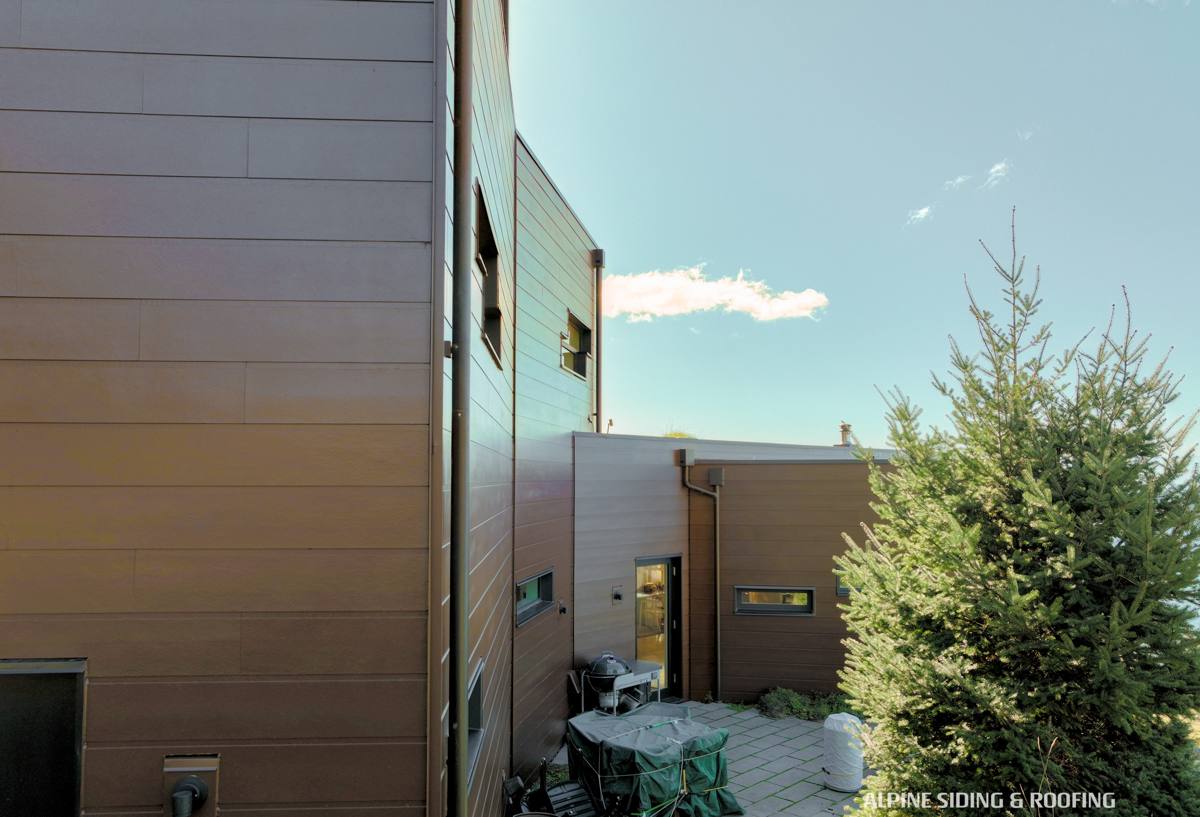
Whatever roofing material sits on top, it only performs as well as the rest of the building envelope underneath it. A new roof paired with siding or trim that's letting moisture into the wall assembly is still going to have ongoing moisture problems, just somewhere else in the house. This is the same reason we standardized on James Hardie fiber cement siding rather than materials like vinyl, LP SmartSide, or untreated wood: a home's exterior needs every component, from the roofline down to the foundation, holding up to the same wet, moss-prone conditions consistently. Hardie's fiber cement doesn't feed moss growth the way wood-based siding can, and it's engineered for exactly this kind of climate.
Cost Factors: What Actually Drives the Number
Roofing costs vary widely based on size, pitch, material, and access, so we won't quote fake figures here. What we can tell you is what tends to move the price up or down on both repair and replacement jobs.
| Factor | Effect on cost |
|---|---|
| Roof pitch and complexity | Steep or multi-plane roofs take longer and require more safety setup |
| Deck condition underneath | Rotted decking found during tear-off adds material and labor beyond the original quote |
| Number of penetrations (vents, skylights, chimneys) | Each one needs its own flashing detail, more penetrations means more labor |
| Material choice | Asphalt is the most budget-friendly; metal and composite cost more upfront but can last longer |
| Moss remediation needed | Heavy, long-established moss may require deck inspection and treatment before new roofing goes on |
| Access and staging | Steep lots, tight setbacks, or tree cover common in older Seattle neighborhoods can add setup time |
A repair is almost always cheaper in the short term. The question worth asking isn't just "what does the repair cost today" but "how many more repairs is this roof likely to need before it needs full replacement anyway." That's a conversation a good contractor should be willing to have honestly, including telling you when a repair is the right call even if it's the smaller job.
Questions to Ask Before You Commit Either Way
- Is the damage isolated, or is it showing up in more than one area of the roof?
- What's the actual condition of the decking, not just the surface material?
- How old is the roof relative to its expected service life for the material installed?
- Has moss been present for one season or several?
- Are there signs of moisture in the attic, insulation, or ceiling that suggest the problem has already moved past the roof surface?
- Does the estimate distinguish between what's confirmed and what might be found once tear-off starts?
A Straightforward Way to Decide
If you want one rule of thumb: repair makes sense when the roof is younger than its expected lifespan, the damage is contained, and there's no sign of moisture reaching the deck or attic. Replacement makes sense once the roof is near or past its expected life, damage is showing up in more than one spot, or moss and moisture have had multiple seasons to work on the material. Everything in between is a judgment call that depends on the specific roof, and that's where an honest, in-person inspection matters more than any general guideline.
If you're trying to figure out where your roof falls on that spectrum, we're glad to take a look and give you a straight answer, whether that means a repair, a full replacement, or simply telling you the roof has a few good years left. Reach out for a free, no-pressure estimate and we'll walk the roof with you and lay out exactly what we see.