 Seattle
 Capitol Hill's Exterior Challenges: A Different Kind of Wear
Capitol Hill is one of Seattle's oldest and most densely built neighborhoods, and that combination shapes what happens to a house's exterior over time. Mature street trees and tight lot lines mean a lot of homes sit in partial shade for much of the day, which slows drying after every rain event. Add in Puget Sound's marine air, King County's long wet season, and the driving rain that comes off winter storms, and you get an exterior environment that's constantly testing paint, wood, and roofing rather than giving them a chance to fully dry out between soakings.
None of this is dramatic on its own. It's cumulative. A house that never quite dries out between October and June will show it first in soft trim, streaked siding, moss creeping across the roof, and window frames that stay tacky to the touch long after the rain has stopped. We see this pattern block after block on Capitol Hill, and it's the starting point for how we think about every exterior project here.
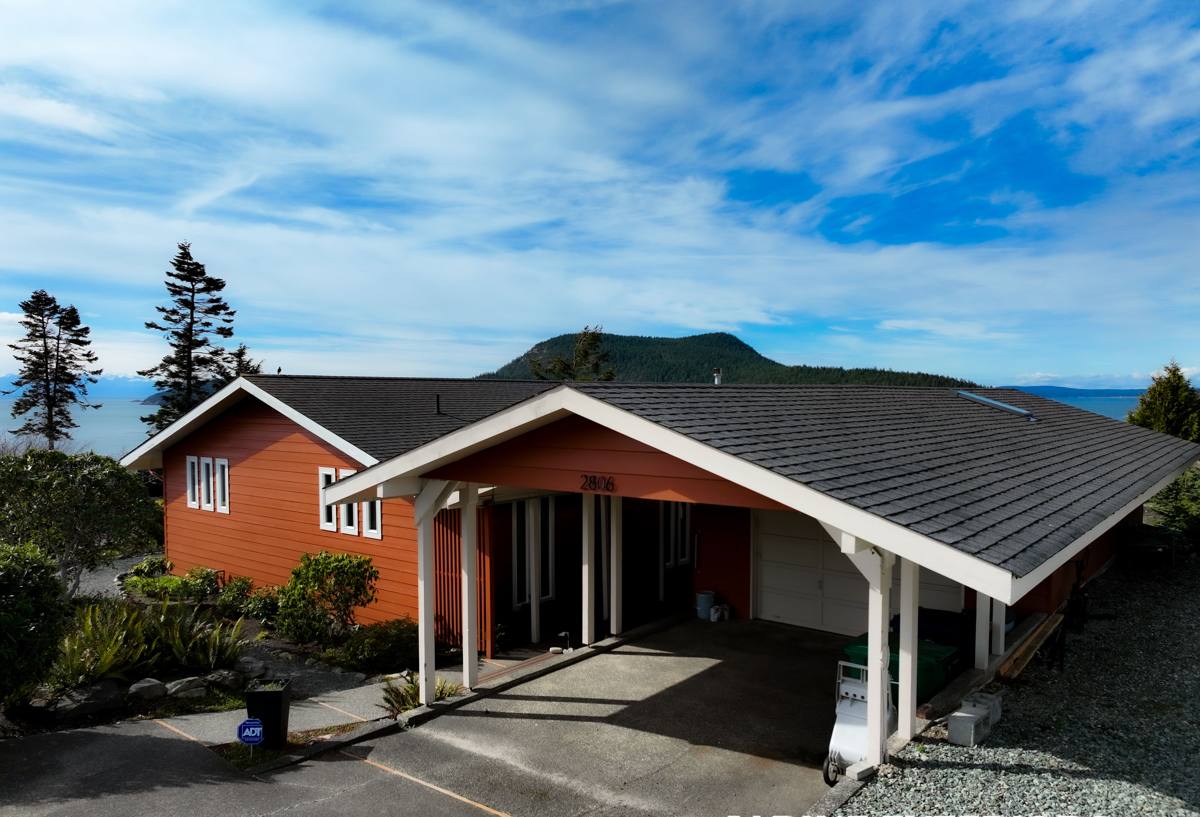
Why Older Homes Here Take the Hit Hardest
A large share of Capitol Hill's housing stock predates modern building materials — Craftsman bungalows, older Victorians, and early-20th-century multifamily buildings with wood lap siding, built-up roofing, and single-pane windows that were never designed for today's expectations around efficiency or low maintenance. That's part of the neighborhood's character, and we're not suggesting anyone strip it away. But the original materials on these homes are decades past the point where they can be maintained economically.
Wood Siding and Moss
Wood siding under a tree canopy is a maintenance treadmill: scrape, prime, paint, repeat, usually every 3 to 5 years if you want to stay ahead of rot. Shaded north- and west-facing walls — common on narrow Capitol Hill lots where the neighboring house blocks afternoon sun — develop moss and mildew faster than walls with more light and airflow. Once moss takes hold at a lap joint or a nail head, moisture gets trapped against the wood and rot follows even if the surface still looks presentable from the sidewalk.
Respecting Historic Character
When we work on an older Capitol Hill home, matching the proportions, trim details, and reveal lines of the original siding matters. Homeowners here are usually not looking to make their house look "new" — they want it to look like itself, just without the rot and repainting cycle. That's achievable with the right material and the right installer.
Siding: Why We Install Only James Hardie Fiber Cement
Seattle Exterior installs one siding system: James Hardie fiber cement. We made that decision because it's the product that actually holds up to the conditions this neighborhood produces, and because we'd rather stand behind one system we know well than offer a menu of options with different long-term outcomes.
Fiber cement doesn't feed mold or moss the way wood does, and it won't delaminate or go soft with prolonged moisture exposure the way some engineered wood products can if a seal is compromised. Hardie's ColorPlus finish is baked on at the factory rather than field-applied, which matters enormously in a climate where wet weather can arrive before a jobsite paint job has fully cured. It also means the color holds up under UV and salt-tinged marine air without the fading and chalking you see on older repainted wood siding around the neighborhood.
HZ5 Engineering for This Climate
Hardie's HZ5 product line is engineered specifically for climates like ours — freeze-thaw cycles, sustained moisture, and wind-driven rain. It's not a generic siding dropped into every region; the formulation and installation specs account for exactly the weather pattern Capitol Hill sees from fall through spring.
What We Won't Install, and Why
We don't install vinyl, LP SmartSide, Cemplank, Allura, or unprimed cedar or spruce siding. Vinyl can warp and its seams give moisture a path inward over time. Engineered wood products carry warranty terms that hinge on moisture exposure limits that are genuinely hard to guarantee under a tree canopy in a wet climate. Cedar and spruce look great on day one but commit the owner to the same repainting and rot-watch cycle that's already worn out most of the original wood siding on this hill. None of these are "bad" products in every setting — they're just not what we believe holds up best here, so we don't put our name on them.
Roofing in a Moss-Heavy, Rain-Heavy Neighborhood
Roofs on Capitol Hill fight two things simultaneously: volume of rainfall and shade-driven moss growth. A roof under a mature maple or cedar canopy can develop moss within a couple of years even on a well-installed system, and moss holds moisture against shingles, lifts tabs, and shortens the roof's effective life if it's left unmanaged.
We look at ventilation, flashing detail around chimneys and dormers (common on the older roof profiles here), and gutter capacity as part of any roofing conversation — not just the shingle choice. A roof that can't shed water fast enough during a heavy King County downpour will back up at valleys and eaves regardless of how new the shingles are. For steep or complex historic rooflines, proper underlayment and flashing work is what actually determines whether the roof performs for its full rated life.
Windows: Comfort, Noise, and Efficiency in a Dense Urban Setting
Capitol Hill is loud and close-packed by Seattle standards — traffic, transit, and neighboring buildings a few feet away in some spots. Older single-pane wood windows, common in the neighborhood's pre-war housing stock, do very little to buffer that noise or hold in heat during our damp, chilly winters. Replacing them with properly sealed, insulated units addresses both comfort problems at once: less street noise inside, and less cold air pooling near exterior walls.
Window replacement is also a moisture-management project, whether homeowners think of it that way or not. Old window openings are a common entry point for water intrusion once caulking and flashing degrade, and that's frequently where we find hidden rot when we open up a wall during a siding project.
Decks That Hold Up to Shade and Moisture
A shaded Capitol Hill backyard deck deals with the same slow-drying problem as siding: moss on the boards, algae film that makes stairs slippery, and fasteners or ledger connections that corrode faster when they're wet more often than they're dry. Deck ledger attachment to the house is also one of the most important — and most overlooked — structural details in our region, since a poorly flashed ledger board is a common source of hidden rot at the point where the deck meets the house.
Whether a deck gets rebuilt in wood or a low-maintenance composite, the flashing, spacing, and drainage details underneath matter more than the surface material for how long it actually lasts here.
What Access and Density Mean for Your Project
Capitol Hill's narrow lots, alley access, and street parking realities genuinely affect how an exterior project gets scheduled and staged. A crew that regularly works this neighborhood plans for it; a crew that doesn't ends up losing days to logistics that a local team would have anticipated.
| Factor | Typical Capitol Hill Condition | Effect on the Project |
|---|---|---|
| Lot width / setbacks | Narrow lots, close neighboring structures | Limits staging area for materials and scaffolding |
| Access | Alley access or street parking only | Affects dumpster placement and delivery scheduling |
| Tree canopy | Mature trees, partial shade most of the day | Slower cure/dry times; moss and moisture considerations |
| Home age | Many pre-war and early-20th-century structures | Possible hidden rot behind old siding or trim; more careful tear-off |
| Historic character | Craftsman and Victorian detailing common | Trim and reveal matching to preserve original look |
Choosing a Local Crew for Capitol Hill Work
Exterior work on a dense, older neighborhood like this rewards experience with the specific conditions, not just general contracting skill. Here's what we'd tell a neighbor to check before hiring anyone for siding, roofing, window, or deck work on Capitol Hill:
- Ask whether they've worked on homes of similar age and construction in the neighborhood, not just "in Seattle" broadly
- Confirm they carry proper licensing and insurance, and are willing to put it in writing
- Ask how they plan to handle staging, parking, and access given your specific lot and street
- Ask what they do differently for shaded, tree-covered exteriors versus sun-exposed ones
- Get specifics on the siding material being proposed and why — not just a price
- Ask what's included in the warranty, and whether it's backed by the manufacturer or just the installer
Getting Started
Every Capitol Hill property is a little different — lot shape, tree cover, home age, and how the existing exterior has held up all factor into what makes sense for a given house. If you're seeing moss buildup, soft trim, drafty windows, or a deck that never quite dries out, it's worth having a local crew take a look before small problems become expensive ones. Seattle Exterior offers free, no-pressure estimates for siding, roofing, window, and deck projects across Capitol Hill and the rest of King County — fill out the form below and we'll take it from there.