 Seattle
 Exterior Work in Fremont: What the Neighborhood Is Up Against
Fremont sits close to the water, tucked between Lake Union and the Ship Canal, with a mature tree canopy that shades a lot of its older housing stock. That combination is good for character and bad for exteriors. Homes here deal with a longer damp season than inland King County neighborhoods, plus the low-grade salt exposure that comes with proximity to the canal and the Sound. None of that is dramatic on its own, but stacked together year after year, it wears down siding, roofing, windows, and decks faster than homeowners expect.
We work on homes across Seattle, and Fremont has its own personality: a mix of early-1900s bungalows and Craftsman-style houses, mid-century infill, and newer construction squeezed onto steep or narrow lots. Older homes often still have original wood siding or trim that's been patched over decades. Newer builds may already have fiber cement or engineered wood products installed to varying standards. Either way, the fixes that work are specific to what's actually on the house, not a generic playbook.
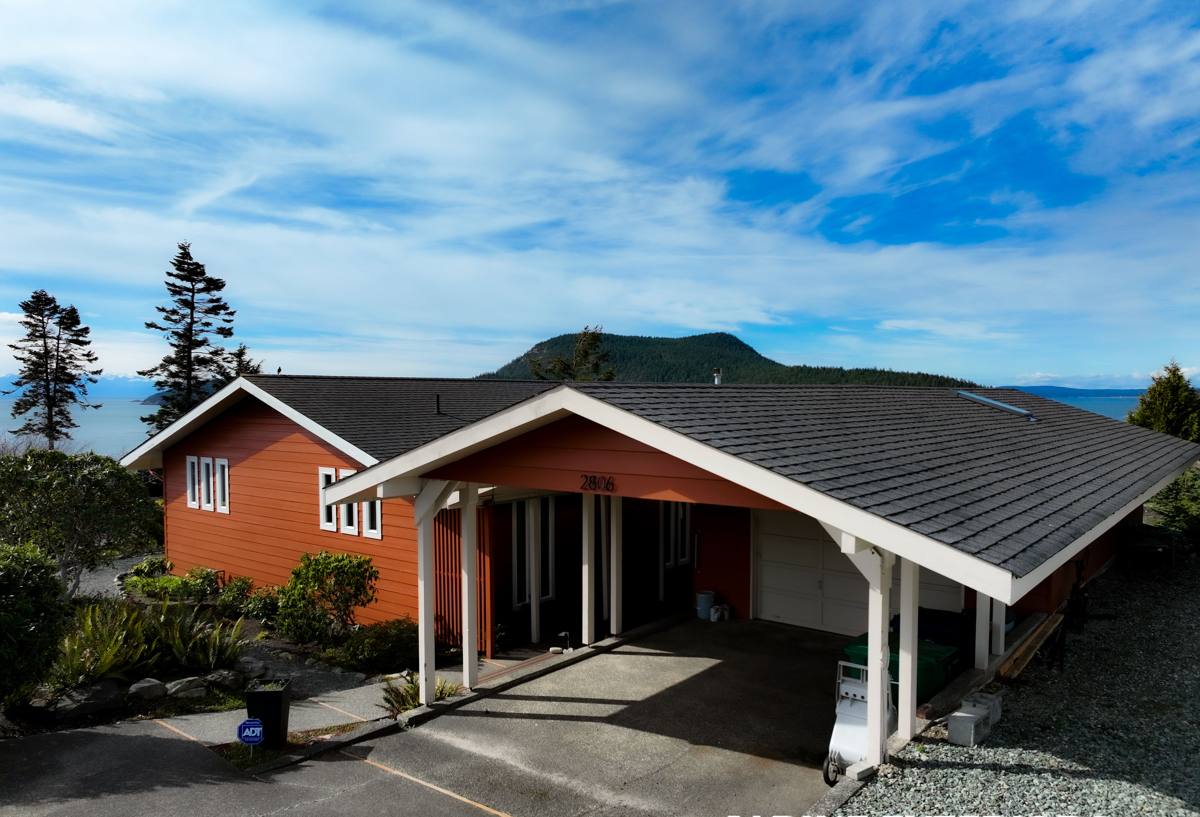
Moss, Shade, and Moisture: The Real Enemy of Fremont Exteriors
Moss gets blamed for a lot in the Pacific Northwest, and in shaded pockets of Fremont it's a legitimate, ongoing problem. Moss itself doesn't eat through siding or shingles, but it holds moisture against the surface for long stretches, which is exactly the condition that causes wood to rot, paint to fail, and fasteners to corrode. On roofs, moss growth under shingle tabs can lift them slightly and create pathways for water. On siding, moss and algae staining in shaded, north-facing walls are usually the first visible sign that a section is staying wet longer than it should.
Why Driving Rain Matters More Than Total Rainfall
Seattle's rain isn't usually heavy, but it's frequent, and wind off the water can drive it sideways into wall assemblies, window flanges, and deck ledger connections. Driving rain finds the weak points in an exterior — a gap in caulking, an under-flashed window, a siding joint that wasn't back-primed — and pushes water into places gravity alone wouldn't reach. Over years, that's what causes hidden rot behind siding that still looks fine from the street.
Salt Air's Slower, Quieter Damage
Fremont isn't oceanfront, but its position near tidal and brackish water means metal components — fasteners, flashing, gutter hardware, deck hardware — see more corrosion pressure than homes further inland. It's rarely the reason a homeowner calls us, but it's often part of why a 20-year-old repair is failing sooner than it should have.
Siding: Why We Only Install James Hardie Fiber Cement
We install James Hardie fiber cement siding exclusively. We don't install vinyl, LP SmartSide, Cemplank, Allura, or bare cedar and primed spruce, and we're upfront about why. It's not that these products have no place in the market — it's that after years of doing exterior work in exactly this climate, we settled on one system we trust to perform and stand behind.
- Non-combustible core: fiber cement doesn't feed a fire the way wood-based siding can, which matters in a densifying neighborhood with houses built close together.
- Engineered for wet climates: Hardie's HZ5 product line is specifically formulated for regions like ours, with moisture and freeze-thaw performance that generic fiber cement or wood composites aren't built around.
- Factory-applied ColorPlus finish: baked-on color resists the fading and peeling that repainting cycles on wood siding can't fully solve, especially on shaded, moisture-prone walls.
- Transferable warranty: a real, honored warranty structure matters more once you've seen how many older warranties on other products go unhonored due to installation exclusions.
Wood siding and primed spruce need repainting and recaulking on a cycle that's hard to keep up with in a climate that stays damp most of the year — skip a cycle and moisture gets a foothold. Vinyl is low-maintenance but can warp, fade unevenly, and doesn't hold up well against blunt impact or long-term UV exposure. LP SmartSide, Cemplank, and Allura are all wood-based or fiber cement competitors with their own trade-offs in moisture tolerance, finish durability, or installation forgiveness. We'd rather install one product system extremely well than juggle several we can't fully stand behind.
Roofing: Built for Moss Season, Not Just Rain
Roofing in Fremont has to account for the shade-and-moisture combination more than raw storm intensity. A roof that's technically sound but sits under overhanging trees will still develop moss, debris buildup in valleys, and slower drying after every rain. That accelerates granule loss on asphalt shingles and shortens the practical lifespan of an otherwise good roof.
Good roofing work here means more than just laying shingles: proper ventilation to let the attic and roof deck dry out between storms, correct flashing at every penetration and valley, and ice-and-water shield in the areas most exposed to wind-driven rain. We also look at gutter and downspout capacity during a roof inspection — undersized or clogged gutters push water back up under the roof edge, which is a very common, very preventable cause of edge rot in older Fremont homes.
Windows: Where Driving Rain Finds the Gaps
Older Fremont homes frequently still have original or early-replacement windows with aging seals, single-pane glazing, or wood frames that have taken decades of moisture cycling. Windows are one of the most common points of water intrusion in wall assemblies, because they combine a lot of joints, flashing details, and moving parts in one small area.
When we replace windows, proper flashing integration with the surrounding wall — siding, house wrap, and sill pan — matters as much as the window unit itself. A high-quality window installed with poor flashing will leak eventually; a modest window installed correctly usually won't. That's especially true on walls that take direct driving rain, which in Fremont often means the west- and south-facing elevations most exposed to weather coming off the water.
Decks: Built to Handle Standing Moisture
Decks in shaded, tree-heavy yards face the same moss-and-moisture pressure as roofs, but with more structural consequence, since ledger boards, joists, and post bases are load-bearing. A deck that stays damp for long stretches without airflow is at higher risk for rot at connection points, even if the surface boards look fine.
We pay particular attention to ledger flashing where the deck meets the house — one of the most common failure points on older decks — along with proper joist spacing, post-base drainage, and material choices that hold up to repeated wet-dry cycling rather than just looking good on install day.
Comparing Exterior Materials for a Fremont Home
| Material | Moisture Performance in Our Climate | Maintenance Burden | Longevity Concern |
|---|---|---|---|
| James Hardie fiber cement | Engineered for wet regions (HZ5) | Low — factory finish, no repainting cycle needed for years | Strong when installed to spec, backed by transferable warranty |
| Vinyl siding | Sheds water but can trap moisture behind seams | Low, but limited repair options if damaged | Can warp or fade unevenly over time |
| Cedar / primed spruce | Absorbs moisture without diligent upkeep | High — regular painting and caulking required | Rot risk rises quickly if maintenance lapses |
| LP SmartSide / other engineered wood | Moisture-resistant but installation-sensitive | Moderate | Performance varies significantly with install quality |
What a Fremont Homeowner Should Check Every Year
A short annual walk-around catches most problems while they're still cheap to fix. We recommend Fremont homeowners keep an eye on:
- Moss or dark streaking on shaded siding or roof sections, especially north-facing walls
- Gutters and downspouts for buildup, sagging, or water overflow during rain
- Caulking and trim around windows for cracking, gaps, or soft spots
- Deck ledger boards and post bases for discoloration or soft wood
- Paint or finish failure on any wood trim, fascia, or siding still in place
- Standing water or slow drainage anywhere near the foundation or deck footings
Catching any of these early usually means a targeted repair. Ignoring them for a few more wet seasons usually means a bigger job.
Why a Local Crew Matters for This Kind of Work
Exterior problems in a neighborhood like Fremont are rarely generic. A crew that works across King County regularly knows which walls take the worst of the driving rain, which lot conditions tend to hold moisture longest, and how older Seattle-area framing typically responds to decades of moisture exposure. That local pattern recognition is what separates a repair that actually solves the problem from one that just covers it up for a season.
If you're noticing moss buildup, water stains, drafty windows, or a deck that feels softer than it used to, we're happy to take a look. We offer a free, no-pressure estimate — walk us through what you're seeing, and we'll tell you honestly what needs attention now versus what can wait.