 Seattle
 Exterior Work Built for Wallingford's Older Housing Stock
Wallingford is one of Seattle's classic close-in neighborhoods — a mix of early-1900s craftsman bungalows, a good number of 1920s-40s cottages, and infill construction from more recent decades. That range matters when it comes to exterior work. A home built before mid-century may still have its original siding profile buried under later layers, aging window openings that were never flashed to modern standards, and a roof deck that's been re-covered more than once without anyone checking what's underneath. Newer builds in the neighborhood have their own issues, mostly around how well the original construction handled moisture management from day one. Either way, exterior work here isn't a one-size-fits-all job — it starts with actually looking at what's on the house now.
We're a Seattle-based exterior contractor working across King County, and Wallingford is squarely in our regular service area. That means our crews aren't guessing at what this neighborhood's homes go through every winter — they're the same crews working streets over, week after week.
What the Climate Does to Homes in This Part of Seattle
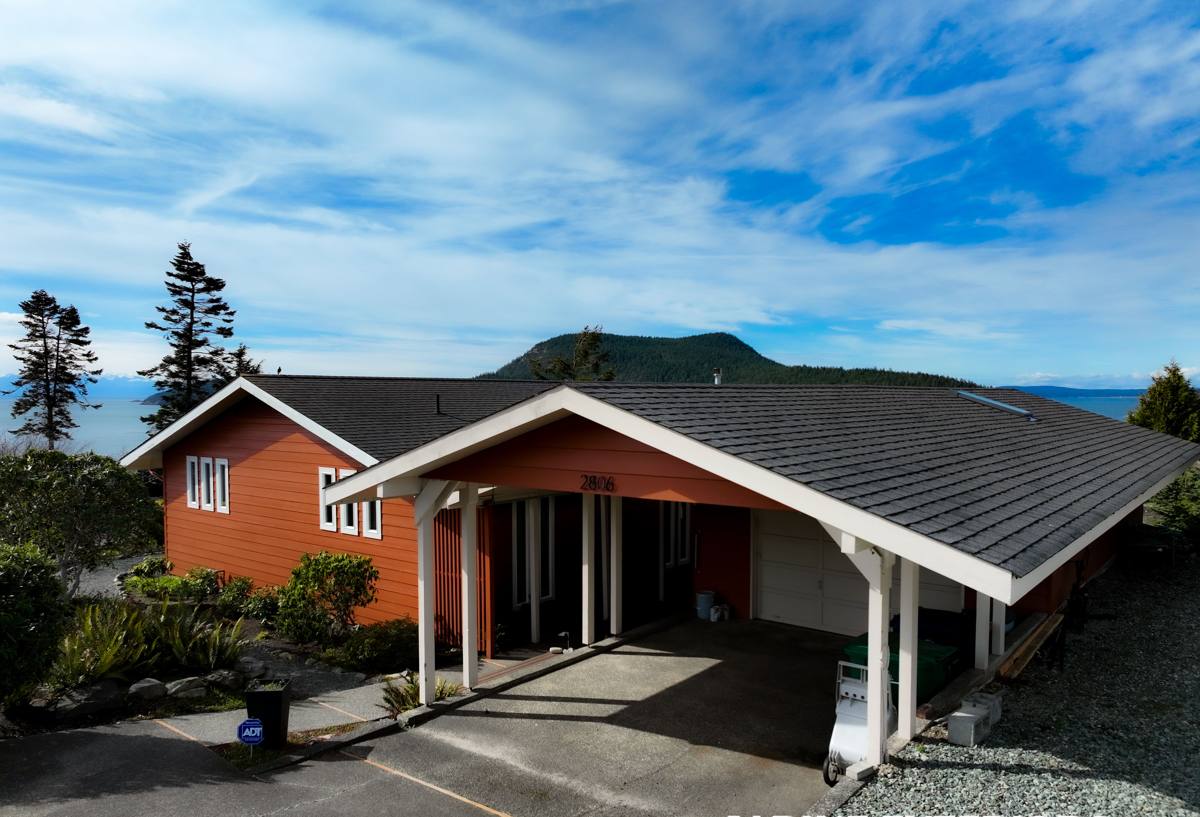
Seattle's marine climate is mild compared to most of the country, but "mild" doesn't mean easy on a house. Wallingford sits close enough to the water that homes deal with a real dose of salt-laden air moving in off Puget Sound, on top of Seattle's long, wet fall-through-spring stretch. Add in the tree canopy that gives the neighborhood its character — mature trees mean shade, and shade means damp surfaces that don't dry out quickly.
The Three Big Stressors
- Driving rain: Wind-driven rain off the Sound doesn't just hit siding straight-on — it gets pushed sideways and up under laps, trim, and window flanges that weren't detailed to handle it.
- Moss and algae: Seattle's moss season runs long. On shaded rooflines, north-facing siding, and anywhere airflow is limited, moss and algae take hold and hold moisture against the surface far longer than an unaffected wall or roof plane.
- Salt air: It's a slower, quieter stressor than rain or moss, but persistent salt exposure accelerates corrosion on fasteners, flashing, and any exposed metal — which is part of why the materials and hardware we spec matter as much as the visible finish.
None of this is unique to Wallingford, but it's a real, ongoing condition for every home in the neighborhood — not a one-time weather event to plan around.
Siding: Why We Only Install James Hardie
We get asked fairly often about vinyl, LP SmartSide, cedar, and other fiber cement brands like Cemplank or Allura. We don't install any of them, and we think homeowners deserve the honest reasoning rather than a sales pitch.
Where the alternatives fall short in this climate
Vinyl siding is inexpensive and low-maintenance in dry climates, but it expands and contracts more than fiber cement, and its seams and J-channels give wind-driven rain more opportunities to work behind the panel over time. Cedar siding looks great when new and is genuinely a quality wood product, but it requires ongoing refinishing, and in a long-moss, high-moisture climate like ours, that maintenance burden is real and recurring — skip a cycle or two and you're often looking at rot repair, not just a repaint. LP SmartSide is an engineered wood product with a factory finish, which is a step up from raw cedar, but it's still wood-based at its core, meaning moisture intrusion at a cut edge or fastener point behaves differently — and generally worse over the long run — than it does with fiber cement. Other fiber cement brands like Cemplank and Allura are legitimate products in the same category as James Hardie, but we standardized on one manufacturer so our crews, our warranty conversations, and our installation details stay consistent across every job — and Hardie's regional-specific HZ10 product line, factory-applied ColorPlus finish, and transferable warranty structure gave us the best combination of the two.
Why James Hardie fits this specific climate
Fiber cement is non-combustible, doesn't expand and contract with moisture the way wood-based products do, and Hardie's ColorPlus finish is baked on at the factory rather than field-applied, which means better color consistency and a longer stretch before repainting is even a conversation. The HZ10 product line is engineered specifically for climates like ours — humid, wet, moderate — rather than a generic all-climate spec. That matters in a neighborhood dealing with salt air and a long wet season every year.
| Factor | Vinyl | Cedar | LP SmartSide | James Hardie Fiber Cement |
|---|---|---|---|---|
| Moisture behavior | Seams vulnerable to driving rain | Absorbs moisture, needs refinishing | Wood-based core, edge sensitivity | Dimensionally stable, engineered for wet climates |
| Fire rating | Combustible | Combustible | Combustible | Non-combustible |
| Finish | Color molded in, fades over time | Field-applied, needs recoating | Factory primed/finished | Factory-baked ColorPlus finish |
| Typical maintenance cycle | Low, but seams/panels degrade | Refinish every few years | Moderate, monitor edges/seams | Long stretch between repaints |
Roofing: Handling a Long Moss Season
Moss is the single most common roofing complaint we hear from homeowners in this part of Seattle, and it's a legitimate structural concern, not just a cosmetic one. Moss holds moisture against roofing material for months at a time, which accelerates granule loss on asphalt shingles and can work its way under laps and around penetrations if it's left unaddressed. Shaded roof planes — common under Wallingford's tree canopy — are almost always the first place it shows up.
Our roofing work covers full replacements as well as targeted repairs: flashing around chimneys and skylights, valley work, and ventilation checks. Proper attic and roof ventilation is one of the most overlooked factors in moss and moisture control — a roof that can't breathe stays damp longer, full stop.
Windows: Where Driving Rain Actually Gets In
Window failures in this climate are rarely about the glass itself — they're almost always about flashing and installation detail. Wind-driven rain off the Sound puts real pressure on window openings, and if the flashing isn't lapped correctly with the surrounding siding or the sill isn't sloped and sealed properly, water finds its way in behind the frame rather than running off the face of the house. We pay close attention to how a new window integrates with the wall assembly around it, not just the unit itself, because that's where most real-world leaks actually originate.
Decks: Built for Wet Ground and Shade
Wallingford's mature tree cover is a neighborhood asset, but it also means a lot of decks sit in partial shade for much of the day, which slows drying time after every rain event. That combination — long wet season, less direct sun, salt air — puts real demands on fasteners, ledger flashing, and framing connections. We build and repair decks with attention to proper ledger flashing against the house (a common point of hidden rot), adequate drainage below the deck surface, and hardware rated to hold up under sustained moisture and coastal air exposure.
Why a Local Crew Matters More Than It Sounds Like It Should
Anyone can show up with a truck and a crew after a storm. What's harder to fake is a working knowledge of how a specific neighborhood's housing stock, tree cover, and microclimate interact — which roof pitches hold moss longest, which older siding assemblies tend to hide moisture problems, which window details fail first under wind-driven rain. That's the kind of knowledge you build by working the same streets repeatedly, not by reading a regional weather report once.
Being based here also means straightforward things: we're not driving in from out of county for a warranty callback, and we're not unfamiliar with Seattle's permitting expectations for exterior work.
A Practical Checklist Before You Hire for Exterior Work in Wallingford
- Ask what siding material they install and why — and whether they install more than one brand in the same category (a sign of a distributor relationship rather than a chosen standard)
- Confirm they inspect for moss and moisture damage on the roof, not just visible shingle wear
- Ask how they detail window flashing, not just what window brand they use
- Check that deck estimates include ledger flashing and drainage, not just decking material
- Get a written scope that separates material cost from labor, so you can see what you're actually paying for
- Confirm licensing and insurance before any work begins
What to Expect From an Estimate
A useful estimate starts with an actual walk-around of the exterior — siding condition, roof plane exposure and moss buildup, window flashing where accessible, and deck framing if applicable — not a drive-by quote. From there, we'll talk through what's actually needed versus what can wait, and give you a clear, itemized picture of the work.
If you're weighing a siding replacement, a roof that's showing moss or wear, windows that seem to be letting in more than they should during storms, or a deck that needs attention, we're happy to take a look and put together a free, no-pressure estimate — no obligation, just a straight assessment of where your home actually stands.