 Seattle
 Green Lake's Exterior Challenge: Shade, Moisture, and Moss
Green Lake is one of Seattle's greener, more tree-shaded neighborhoods, and that's exactly what makes exteriors here work harder than they do in more exposed parts of the city. Mature trees and the lake itself keep a lot of moisture hanging around properties long after a storm has passed. Add King County's long, wet stretch from October through April, and you get siding, roofs, and trim that rarely get a full day to dry out during winter. That's the setup that lets moss, algae, and mildew take hold on north-facing walls, shaded rooflines, and anything tucked under a big cedar or maple canopy.
Salt-tinged air moving in off Puget Sound adds a second layer of stress on top of the rain — it accelerates corrosion on fasteners, flashing, and any exterior material that isn't built to shrug it off. None of this is dramatic on its own. It's cumulative. A house in Green Lake that isn't sided, roofed, and detailed for this specific combination of shade, moisture, and salt air will show it years before a comparable house in a drier, sunnier part of the region would.
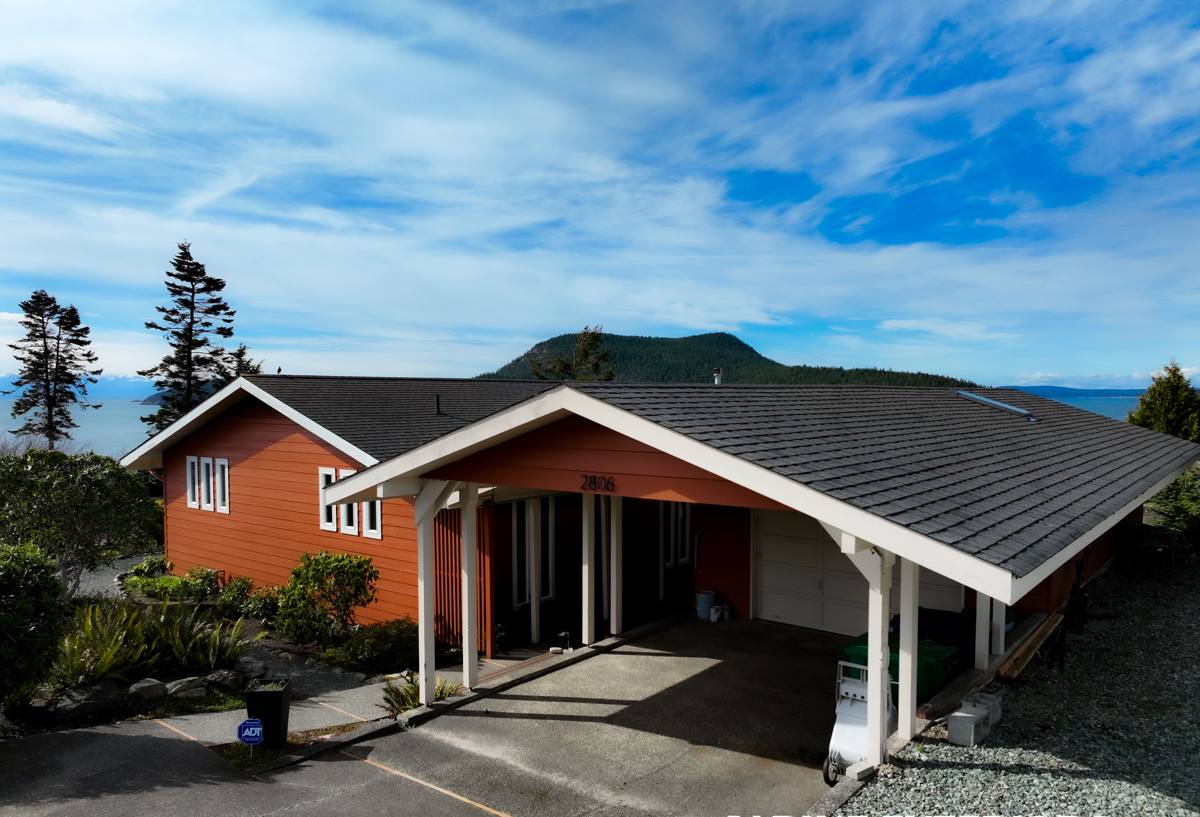
Siding in Green Lake: Why We Only Install James Hardie
We install James Hardie fiber cement siding exclusively. We don't do vinyl, LP SmartSide, Cemplank, Allura, or primed wood species like cedar and spruce. That's not a marketing line — it's a standard we hold because of what we've seen these products do (and not do) in exactly the kind of shaded, wet, moss-heavy environment Green Lake sits in.
What shade and moisture do to the alternatives
Wood siding — cedar, primed spruce, whatever the species — is organic material, and organic material in a shaded, damp environment is food for moss, mold, and rot fungi. Even well-maintained wood siding in a low-sun pocket near the lake needs more frequent painting, caulking, and spot repair than most homeowners expect going in. Engineered wood products like LP SmartSide use resin-treated strand board, which holds up better than raw wood but is still a wood-based substrate — edge swelling and moisture intrusion at cut ends and fastener penetrations remain the failure points to watch, especially where siding stays wet for days at a stretch. Vinyl doesn't rot, but it doesn't manage moisture behind the panel the way a rigid, code-approved rainscreen assembly can, and it can warp or fade over the decades a house is expected to stand.
Why fiber cement, specifically Hardie
Fiber cement is cellulose fiber reinforced cement — it's non-combustible and dimensionally stable, meaning it doesn't expand and contract with humidity swings the way wood-based products do. James Hardie's HZ5 product line is engineered for exactly the wet/humid climate zone Seattle sits in, and their ColorPlus factory-applied finish is baked on under controlled conditions rather than field-painted, which matters a lot in a neighborhood where a field-applied finish would need to cure between rain showers half the year. It won't feed moss the way bare wood can, and correctly installed with proper flashing and a drainage plane behind it, it's built to handle sustained damp exposure without the maintenance treadmill.
We're not saying every other product is unusable everywhere — we're saying that after installing and repairing exteriors across Seattle's wetter, shadier neighborhoods, Hardie is what we're willing to warranty and put our name on.
Hardie siding profiles that suit Green Lake's housing stock
- HardiePlank lap siding — the standard choice for the craftsman bungalows and traditional single-family homes common in the neighborhood
- HardieShingle — a good match for homes with a Craftsman or cottage character where shingle accents are already part of the design
- HardiePanel — vertical panel siding for modern builds or accent walls, often paired with board-and-batten detailing
- HardieTrim — non-combustible trim boards that pair with any of the above and resist the same moisture pressure as the field siding
Roofing for Green Lake's Shaded, Wet Conditions
Roofs near Green Lake face the same moss-and-moisture pressure as siding, often worse, because roof surfaces are more exposed to standing moisture and tree debris. Overhanging branches drop needles and leaves into valleys and behind chimneys, creating dams that hold water against roofing material long after the rain stops. A few things matter more here than in drier parts of King County:
- Proper ventilation to keep moisture from condensing in the attic during long damp stretches
- Ice-and-water shield or equivalent underlayment at valleys, eaves, and penetrations, since moss buildup can force water back under shingles
- Metal flashing details around chimneys and skylights that account for both rain volume and the corrosive edge that lake and Sound air can add over time
- Gutter systems sized and pitched to handle sustained fall and winter rain rather than short, intense bursts
We look at tree cover on a specific lot before recommending a roofing plan — a heavily shaded roof under mature trees needs a different moss-prevention approach than a more open one a few blocks away.
Windows: Comfort in a Marine Climate
Older homes around Green Lake often still have original single-pane or early dual-pane windows, which struggle with both energy loss and condensation once the wet season sets in. Condensation between panes or fogging on interior glass is usually a sign the seal has failed — at that point, the insulating value is largely gone regardless of how the window looks. Replacement windows suited to this climate need:
- Proper flashing integration with the surrounding siding so water is directed out, not behind the wall assembly
- Weatherstripping and glazing rated for sustained damp, cool conditions rather than dry-climate specs
- Frame materials that won't wick moisture at the sill over years of standing water during heavy rain events
Window replacement is also the right moment to check that flashing and siding around the opening are doing their job — a lot of hidden water damage we find starts at a poorly flashed window, not the siding field itself.
Decks: Built to Handle Shade and Standing Water
Decks near Green Lake often sit under partial tree cover, which keeps decking boards damp for extended periods and accelerates rot at ledger boards, joists, and any spot where water can pool instead of shed. The most common problems we see are ledger board attachment failures (where the deck meets the house) and under-deck framing that was never properly flashed against long-term moisture exposure. A deck built or rebuilt for this specific environment should include:
- Proper ledger flashing where the deck attaches to the house, matched to the siding system behind it
- Joist tape or equivalent protection on framing lumber to slow rot at fastener points
- Decking material and spacing chosen to shed water rather than trap it under shade
- Railing and post hardware rated for sustained damp exposure, not just structural load
Why a Local Crew Matters Here
A crew that works across Seattle and King County day in and day out knows which pockets of a neighborhood hold moisture longer, which lots get heavier moss pressure from tree cover, and which older homes are more likely to have hidden water damage behind the siding before a single panel comes off. That local knowledge changes how we bid a job, what we flag during inspection, and how we sequence work around the wet season so materials aren't going up in conditions that compromise the install. It also means someone is nearby if a warranty question or follow-up comes up years down the road — not a regional call center with no context on the property.
What Drives Cost on an Exterior Project Near Green Lake
| Factor | Why It Matters Here |
|---|---|
| Existing moisture/rot damage | Shaded, wet lots often hide damage behind old siding that isn't visible until removal |
| Tree cover and access | Overhanging branches can require trimming or careful staging before roofing or siding work begins |
| House age and original materials | Older homes may need additional flashing, sheathing repair, or code-driven upgrades during a re-side |
| Product line chosen | HardiePlank, HardieShingle, and HardiePanel carry different material and labor costs |
| Roof complexity | Valleys, dormers, and chimneys near tree canopy need extra flashing and moss-prevention detailing |
| Seasonal timing | Scheduling around the wettest months can affect both price and installation quality |
A Homeowner's Maintenance Checklist for This Climate
- Clear gutters and downspouts before the fall rains start, and again mid-winter if trees are nearby
- Check roof valleys and behind chimneys for moss or debris buildup at least once a year
- Look for dark streaking or green growth on north-facing siding as an early moisture signal
- Inspect window seals for fogging or condensation between panes
- Check deck ledger boards and under-deck framing for softness or discoloration
- Trim back branches that keep any part of the roof or siding in constant shade
If you're weighing a siding, roofing, window, or deck project for a home near Green Lake, we're happy to take a look and talk through what your specific lot and house are dealing with. Reach out for a free, no-pressure estimate using the form below.