 Seattle
 Magnolia sits on a peninsula wrapped by Puget Sound and the Ship Canal, which means most homes here are never far from open water. That's part of what makes the neighborhood desirable, and it's also exactly why exteriors in Magnolia take a beating that homes ten miles inland don't. Salt-laden air off the Sound, wind-driven rain that hits siding at an angle instead of falling straight down, and a moss season that can run eight or nine months out of the year all work on a house continuously. None of it is dramatic on any given day. It's the accumulation that gets people.
We work throughout Seattle and King County, and Magnolia is one of the areas where we see the clearest gap between homes that were built or renovated with the local climate in mind and homes that were finished with materials or details better suited to a drier region. This page covers what we look for on Magnolia homes specifically, and how our siding, roofing, window, and deck work is built around what this exposure actually does to a house over time.
What Magnolia's Exposure Does to a House
A few things are worth understanding before any exterior work starts:
- Salt air corrodes and stresses finishes. Homes on the Sound-facing bluffs and closer to the water take more of this than homes further into the interior of the peninsula, but airborne salt travels further than most people expect, especially with the wind patterns common here.
- Driving rain finds gaps that vertical rain never would. Magnolia catches wind off the water, and wind-driven rain pushes moisture sideways into laps, seams, and trim joints that a standard installation might not fully seal against.
- Moss and shade go together. Magnolia has a lot of mature tree cover — Discovery Park and the surrounding residential streets both contribute to it — and shaded, north-facing roof slopes and siding sections stay damp longer, which is exactly what moss and algae need to take hold.
- Older housing stock means older exterior systems. A good share of Magnolia's homes predate current building science around drainage planes, flashing, and vapor management. An exterior that looks fine from the street can be hiding a wall assembly that was never built to shed water the way modern codes require.
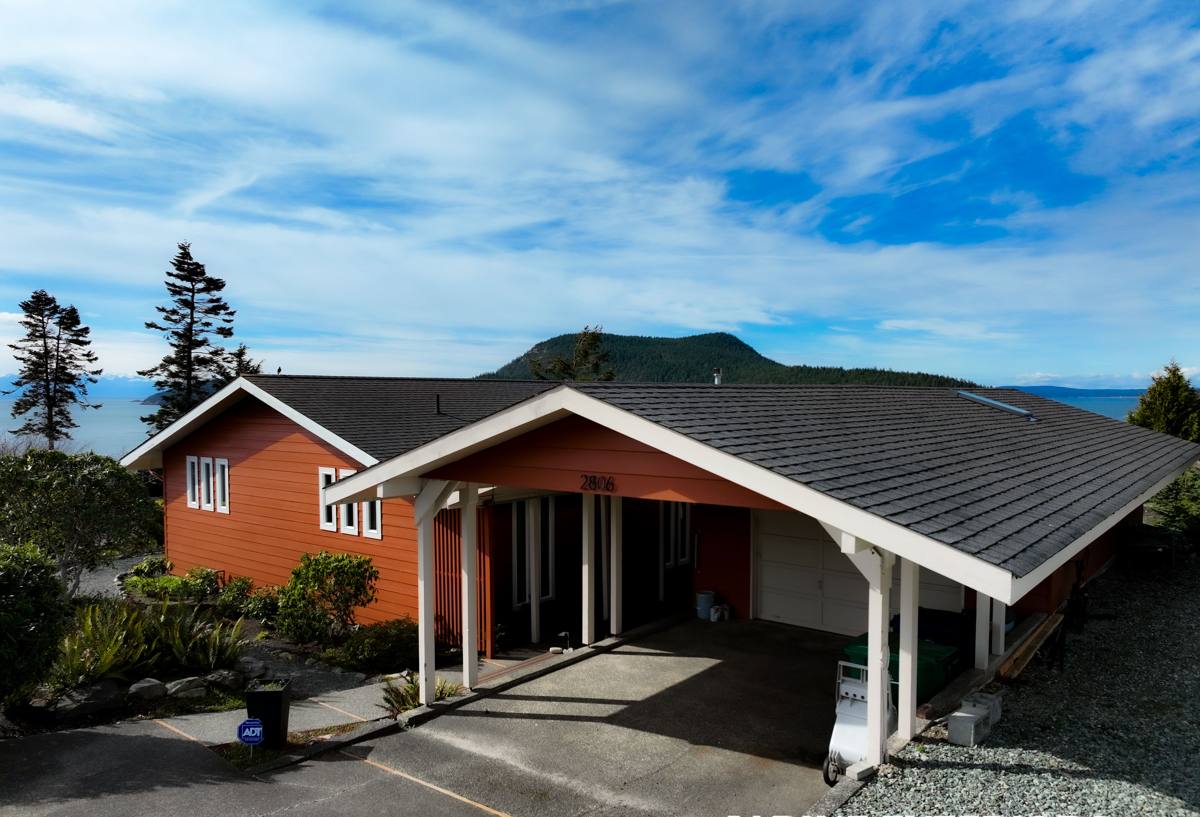
Siding: Why We Only Install James Hardie
We install James Hardie fiber cement siding exclusively. We don't install vinyl, LP SmartSide, Cemplank, Allura, or cedar or primed wood siding, and on a peninsula like Magnolia, the reasons matter more than they would somewhere drier and more sheltered.
Vinyl siding can warp and become brittle with repeated temperature swings and UV exposure, and its seams and J-channels give wind-driven rain more opportunities to get behind the cladding. Wood and primed spruce siding need consistent repainting and caulking to keep moisture out, and in a moss-prone, salt-air environment, that maintenance schedule gets demanding fast. Engineered wood products like LP SmartSide perform reasonably in drier climates but rely on edge sealing and field-applied treatments staying intact over the long term — a tall order in a place where wood siding rarely gets a real chance to dry out between rain events.
James Hardie fiber cement is non-combustible, doesn't rot, and holds its shape and finish under the kind of moisture cycling Magnolia sees every winter. The ColorPlus factory finish is baked on rather than field-applied, which matters directly for salt-air resistance — a factory-cured finish holds up to airborne salt and UV far better than a coat of paint applied on-site. Hardie's HZ5 product line is engineered for Pacific Northwest-style climates, and the transferable warranty backs up work that's actually built to last, not just to look good at installation.
What Correct Installation Looks Like Here
Fiber cement siding is only as good as the installation behind it. On Magnolia homes we pay particular attention to:
- Proper rainscreen or drainage gap behind the siding so any moisture that does get past the cladding has somewhere to go
- Correct flashing at windows, doors, and horizontal trim — the places wind-driven rain targets first
- Factory-cut and factory-primed edges wherever possible, since field cuts need to be sealed properly to keep the cut edge from wicking moisture
- Fastener patterns and clearances that match Hardie's specifications for the exposure category the home falls into
Roofing: Built for Moss and Driving Rain
Magnolia's tree cover is a mixed blessing for roofs. It's part of the neighborhood's character, but shaded roof planes stay wet longer, and moss doesn't just sit there — it lifts shingles at the edges and holds moisture against the roofing material underneath. Over a few seasons, that's how you get granule loss, soft spots, and eventually leaks that show up as ceiling stains inside the house.
We look at moss growth, valley and flashing condition, and how well a roof's ventilation is working before recommending anything. A lot of roofing problems in Magnolia aren't about the shingles themselves failing early — they're about moisture getting trapped by moss or poor ventilation and doing damage that a well-maintained, well-ventilated roof wouldn't see for years longer. Where a roof does need replacement, we make sure flashing details at chimneys, skylights, and valleys are done to handle wind-driven rain, not just straight-down rainfall.
Windows: Comfort, Condensation, and the View
A lot of Magnolia homes are there for the views — of the Sound, the Olympics, or Elliott Bay — which means a lot of glass. Older single-pane or early dual-pane windows in these homes tend to show their age two ways: condensation between the panes (a sign the seal has failed) and noticeable drafts or cold spots near the frame.
Replacing failing windows does more than fix the fogging. Modern dual-pane units with proper flashing integration reduce heat loss, cut down on street and water-traffic noise, and — importantly for a marine-exposed neighborhood like this — hold up better against the combination of salt air and constant humidity that accelerates frame and seal degradation. Window replacement is also a natural time to correct flashing details that may have been done poorly decades ago, since that flashing integration is what keeps water out of the wall assembly around each opening.
Decks: Standing Up to Moisture Year-Round
Decks in Magnolia deal with the same driving rain and moss pressure as roofs and siding, plus standing water if drainage wasn't built in correctly at the start. Ledger board connections, joist hardware, and any structural wood that isn't properly flashed or coated are the first places we check on an older deck — that's where rot typically starts, often invisibly, from underneath.
For decking material, durability against constant moisture cycling and low maintenance are the priorities we steer homeowners toward, especially on decks that get shade for part of the day and don't dry out quickly. Whatever material a homeowner chooses, the structural work underneath — proper flashing, ledger attachment, and drainage — is what actually determines whether a deck lasts.
Cost Factors to Expect
Every home is different, but these are the main variables that move price on exterior projects in a neighborhood like Magnolia:
| Factor | Why It Matters Here |
|---|---|
| Home exposure to wind/water | Bluff-facing and water-facing homes often need more attention to flashing and drainage detailing |
| Existing moss/moisture damage | Hidden rot or trapped moisture found during tear-off can add repair scope before new material goes on |
| Access and site conditions | Sloped lots, mature landscaping, and narrow street access common in Magnolia can affect staging and labor time |
| Age of existing exterior systems | Older homes may need updated flashing, sheathing repair, or code-required upgrades during replacement |
| Scope (single trade vs. combined project) | Combining siding, roofing, window, or deck work in one project can reduce redundant setup and staging costs |
Why a Local Crew Matters
Exterior work in Magnolia isn't the same job as exterior work in a dry inland suburb, and it isn't quite the same as work in other parts of Seattle that get less direct wind and salt exposure. A crew that works throughout King County regularly sees how Puget Sound proximity, tree cover, and the age of the local housing stock interact — and builds installations around that, rather than applying a generic approach and hoping it holds up.
That local knowledge shows up in small decisions: where to add extra flashing attention, which roof slopes need a closer look for moss, how much drainage gap a rainscreen needs given a home's specific wind exposure. None of it is complicated, but it only gets done right when the crew has actually seen what happens to exteriors in this specific environment over time.
A Simple Pre-Estimate Checklist
Before we come out, it helps to walk your own exterior and note what you see. Look for:
- Moss buildup on roof slopes, especially shaded or north-facing sections
- Peeling paint, soft spots, or visible gaps in siding, particularly around windows and trim
- Fogging or moisture between window panes
- Soft or spongy decking, especially near ledger boards or support posts
- Water stains on interior ceilings or walls near exterior corners
- Gutters that overflow or pull away from the fascia during heavy rain
Any of these are worth a professional look, even if the damage seems minor. Caught early, most of these issues are straightforward repairs. Left alone through another wet season, they tend to get more expensive.
If you're in Magnolia and want an honest read on your siding, roof, windows, or deck, we're happy to come take a look. The estimate is free, there's no pressure, and you'll get a straightforward assessment of what actually needs attention and what can wait.