 Seattle
 Why Ballard Decks Face Different Conditions Than Other Seattle Neighborhoods
Ballard sits close to Salmon Bay, Shilshole Bay, and the Puget Sound shoreline, and that proximity to salt water changes how a deck ages. Salt-laden air carries moisture and mineral content that speeds up corrosion on fasteners, hardware, and any metal connector that wasn't specified for a marine-adjacent environment. Add in Seattle's long wet season, driving rain that comes in sideways off the water during winter storms, and the heavy tree canopy found in many Ballard yards, and you get a near-perfect setup for moss, algae, and slow wood decay if a deck isn't built with those specifics in mind.
A deck built the same way you'd build one in a dry inland climate will show problems in Ballard faster than most homeowners expect — soft spots at the ledger board, rusted-out fastener heads, green film on the walking surface by late fall, and railings that loosen because the posts were never properly flashed. None of that is inevitable. It's a matter of choosing the right materials and details for this specific location, not just following a generic deck-building checklist.
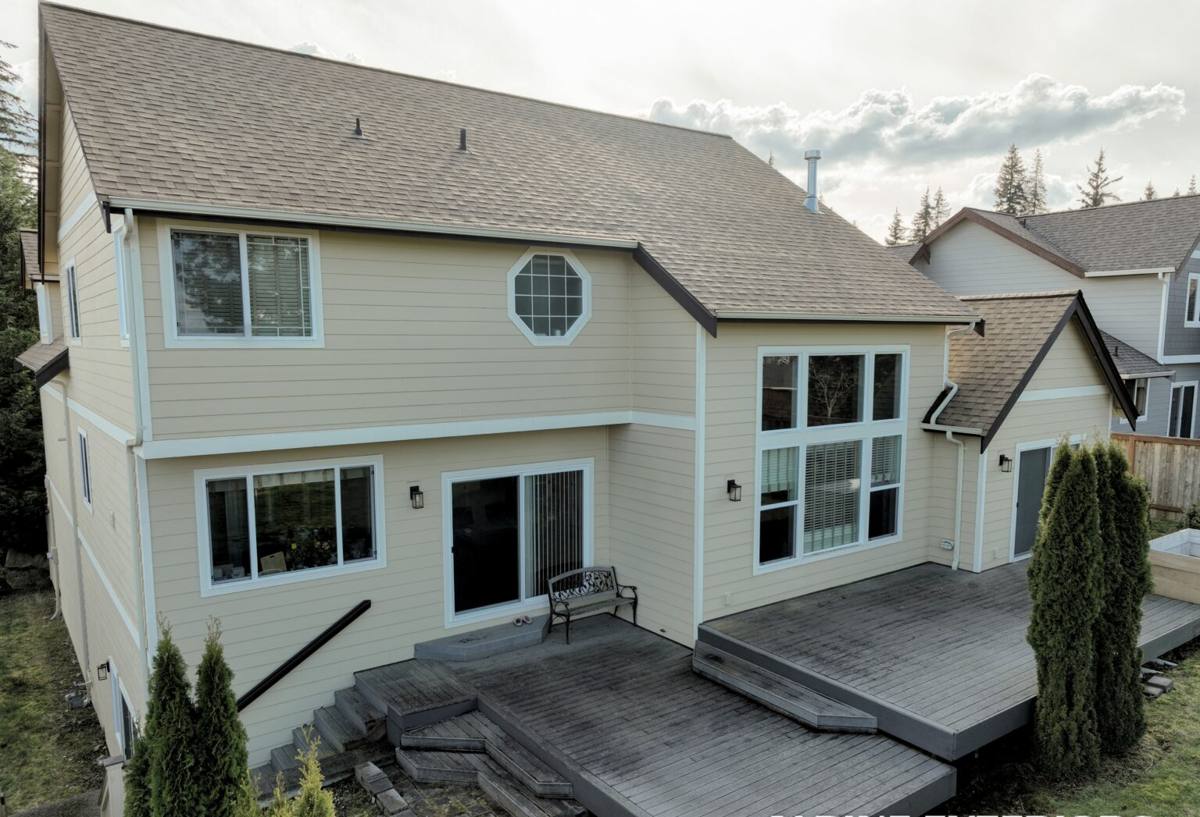
What a Correctly Built Deck Needs in This Climate
Drainage Comes First
Water that sits on or under a deck is the root cause of almost every callback we see on older decks around Ballard. Correct decking gaps, a slight slope away from the house, and a clear path for water to move off the structure and away from the foundation matter more than almost any other single decision. Decks built tight against the house without a drainage plan trap moisture underneath, which is exactly where moss and rot get started and stay hidden until the damage is significant.
Fasteners and Hardware
Given the salt air exposure this close to the water, we don't cut corners on fasteners. Stainless steel or high-grade coated fasteners rated for corrosive environments cost more up front than standard galvanized screws, but standard hardware visibly rusts and stains decking within a few seasons in this environment. The same goes for joist hangers, post bases, and any structural connector — all of it needs a coating rated for the exposure it's actually going to see, not just what's cheapest at the yard.
Ledger Board Flashing
The ledger board — where the deck attaches to the house — is the single most common failure point on decks in wet Pacific Northwest climates. If it isn't flashed correctly with proper step flashing and a water-resistant barrier behind it, rainwater works its way behind the siding and into the rim joist over time. This kind of damage is slow, expensive, and often invisible until the deck itself starts to feel spongy near the house.
Footings and Frost Depth
King County's frost line requires footings to be set to a minimum depth so the structure doesn't shift with seasonal freeze-thaw cycles. Seattle soil in established neighborhoods like Ballard often includes glacial till, which can be dense and rocky in some yards and softer fill in others depending on how the lot was originally developed. Footings sized and placed correctly for the actual soil on your lot — not just a generic minimum — are what keep a deck from developing a lean or uneven bounce a few years in.
Choosing the Right Decking Material for Salt Air and Moss
There's no single "best" decking material — there's a best material for your budget, your maintenance appetite, and how much sun versus shade your deck actually gets. Shaded decks under mature trees, common on many Ballard lots, hold moisture longer and grow moss faster regardless of material, which shifts the calculation toward surfaces that resist that buildup or clean up easily.
| Material | Moisture & Moss Behavior | Maintenance | Typical Lifespan |
|---|---|---|---|
| Pressure-Treated Lumber | Absorbs moisture; moss and algae need regular cleaning/treatment to keep in check | Annual cleaning, periodic sealing or staining | 15-20 years with upkeep |
| Cedar | Naturally rot- and insect-resistant, but softens and grays without upkeep; can still host moss in deep shade | Sealing every 1-2 years, regular cleaning | 15-25 years with upkeep |
| Composite Decking | Doesn't absorb water the way wood does; some early-generation composite boards were prone to surface mold in constant shade — modern capped composites resist this much better | Occasional washing; no staining or sealing | 25-30+ years |
| PVC Decking | Essentially non-absorbent; best resistance to moss and algae staining of the common options | Occasional washing | 25-30+ years |
We install all of the above depending on what fits the project — the point isn't to push one product, it's to be honest about the trade-offs. Wood costs less initially and has a warmer look many homeowners want, but it demands consistent maintenance to hold up against Ballard's moss season. Composite and PVC cost more upfront and install with more sensitivity to spacing and fastening details (get those wrong and boards can buckle or gap incorrectly over time), but they take shade and moisture out of the maintenance equation almost entirely.
Permits, Codes, and Ballard-Specific Site Conditions
Most new decks and significant deck rebuilds in Seattle require a permit through the city's Department of Construction and Inspections, with inspections at the footing stage and again at final. Skipping this step is a real risk — unpermitted decks can complicate a home sale, trigger a stop-work order mid-project, and in the worst cases mean tearing out and redoing work that wasn't inspected along the way.
Ballard also presents some practical site challenges that differ from other parts of the city: narrow side yards and alley access on many lots, mature trees whose root zones need to be considered before digging footings, and older homes where the existing ledger attachment or foundation wasn't built to current code. A crew that pulls permits and works through Seattle's inspection process regularly knows what inspectors are going to flag before it becomes a delay, and knows how to work around tight lot access without damaging landscaping or fences in the process.
Our Deck Building Process
- Site assessment and design — we look at sun/shade exposure, drainage patterns, existing structure (if replacing a deck), and how the space will actually be used before recommending materials or layout.
- Permit and plan submission — we handle the permit application and design documentation required by the city so the project is legal and inspectable from day one.
- Demolition (if applicable) — old decking, framing, and any compromised ledger material is removed and hauled off; we flag any hidden rot or damage to the house structure before covering it back up.
- Footings and framing — footings are set to the depth King County requires for the soil conditions on your lot, framing goes up with corrosion-rated hardware, and the ledger board is flashed properly before anything else is attached.
- Decking installation — boards are spaced and fastened to the manufacturer's specification (composite and PVC products have specific gapping and fastening tolerances that affect long-term performance) and sloped for drainage.
- Railings and stairs — built to current guard and baluster spacing code, with attention to any spots where standing water or shade will accelerate wear.
- Inspection and final walkthrough — we schedule the required city inspection and walk the finished deck with you before calling the job done.
Guardrails, Stairs, and Code-Required Safety Details
Guardrails on decks more than 30 inches above grade are required to meet a minimum height, currently 42 inches for most residential applications, with baluster spacing that prevents a 4-inch sphere from passing through — a detail specifically meant to keep young children from slipping through the rail. Stair stringers need to be sized for the actual rise and run of the site, not assumed off a standard chart, especially on Ballard lots where the yard slopes noticeably from the house down toward the street or alley. Getting these details right isn't optional trim work — it's the difference between a deck that passes inspection and one that gets flagged and sent back.
Maintenance Checklist for Ballard Homeowners
Whatever material your deck is built from, a few habits go a long way toward keeping moss and moisture damage from taking hold given the local climate:
- Sweep leaves and debris off the deck surface regularly in fall — trapped wet leaves are one of the fastest ways moss gets started
- Clean the deck surface (and the gaps between boards) at least once a year, more often in heavily shaded yards
- Check the ledger board area and any spot where the deck meets the house for soft wood, staining, or gaps in flashing
- Reseal or restain wood decking on the schedule appropriate to the product — don't wait until it's visibly gray and dry
- Keep gutters and downspouts near the deck clear so runoff isn't dumping extra water onto or under the structure
- Trim back overhanging branches where practical to reduce shade and speed up drying time after rain
- Check railing posts and stair connections annually for looseness, which can signal a fastener or framing issue underneath
Why Hire a Crew That Already Works in Ballard
A deck contractor who works across Seattle and King County day to day has already seen how decks fail in this specific climate and has adjusted their approach accordingly — not just in theory, but in the fastener grade they default to, the flashing detail they won't skip, and the material recommendations they give based on how much shade your particular yard gets. That local pattern recognition is hard to substitute with a generic build. It also means familiarity with the city's permitting process, realistic timelines around inspection scheduling, and practical know-how for working on Ballard's often tight and sloped lots without the project turning into a bigger disruption than it needs to be.
If you're weighing a new deck, a rebuild of an aging one, or you're just not sure whether what you have is holding up the way it should, we're happy to take a look and walk you through what we'd recommend for your yard, your budget, and your maintenance preferences — no pressure, no obligation. Reach out using the form below for a free estimate.