 Seattle
 Exterior Work in Redmond, Washington
Redmond sits on the Eastside of King County, in the shadow of the Cascade foothills and wedged between Lake Washington and Lake Sammamish. It's a city that grew up fast around tech employers, but the housing stock underneath that growth is a real mix: modest ranch and split-level homes from the 1960s and 70s, a wave of 1990s and 2000s construction, and newer infill built to current energy codes. Whatever the vintage, every one of those houses sits under the same Pacific Northwest sky, and that sky is not gentle on exteriors.
Redmond's tree canopy is heavy — big-leaf maples, Douglas firs, and cedars shade huge stretches of the city, which is part of what makes it a pleasant place to live and part of why exteriors here take a beating. Shade plus moisture plus mild temperatures is exactly the recipe that grows moss, algae, and mildew on siding, trim, and roofing. Add the region's long, driving rain seasons and the humid marine air that moves inland off Puget Sound through the lowlands east of Lake Washington, and you've got a climate that is patient but relentless about finding weak points in a building envelope.
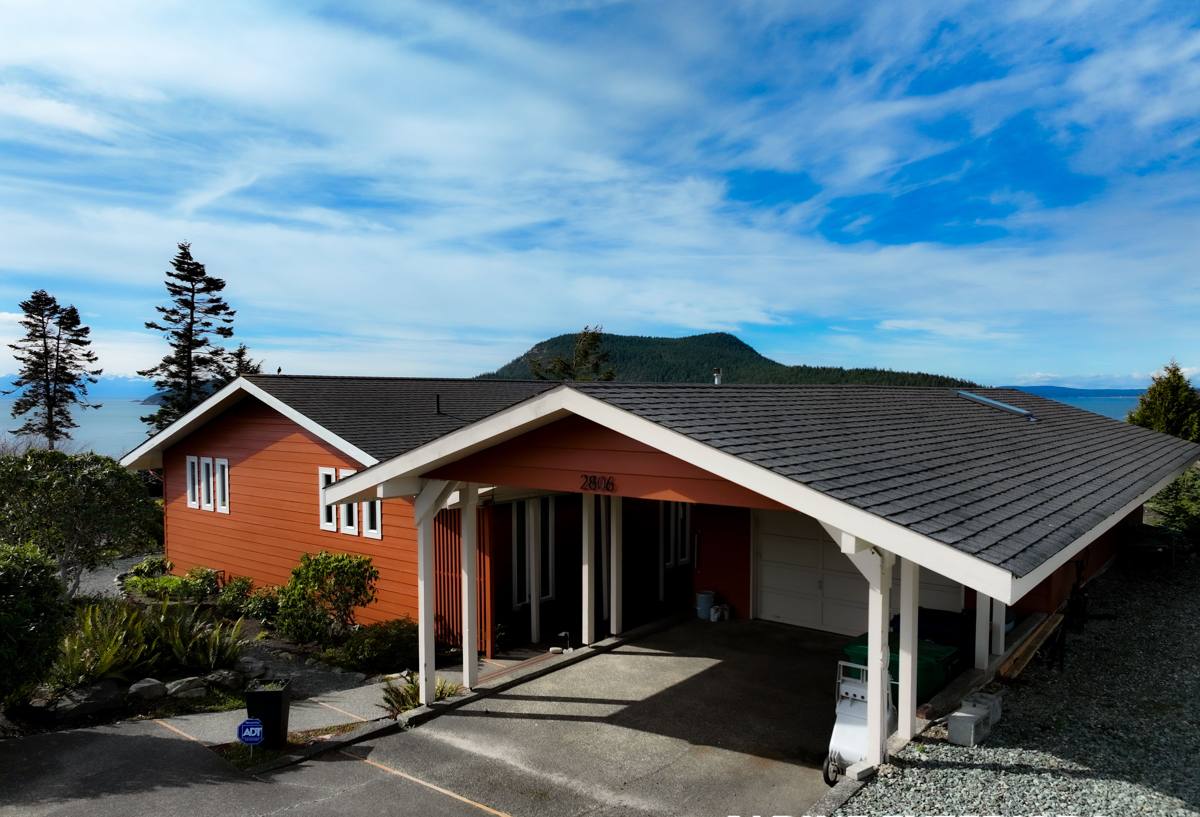
What Redmond's Climate Actually Does to a House
Moss and algae season is most of the year
In a lot of the country, moss is a summer-shade problem. In Redmond, with our wet fall-through-spring stretch and mild temperatures that rarely kill off organic growth, moss and algae can establish on north-facing walls, roof valleys, and anywhere siding stays damp longer than it should. On wood-based products, that's not just cosmetic — moss and algae hold moisture against the surface, which accelerates rot underneath.
Driving rain finds every gap
Wind-driven rain off the lowlands doesn't just fall straight down — it gets pushed sideways into laps, seams, and trim joints. Siding systems that rely on tight caulk lines and perfect field cuts to stay watertight are exactly the ones that struggle here, because caulk is the first thing to fail as a house settles and moves through wet-dry cycles year after year.
Freeze-thaw is mild but not absent
Redmond doesn't get brutal winters, but it does get enough freeze-thaw cycling — cold snaps followed by rain and thaw — to stress any siding or trim that's already absorbed moisture. Materials that swell when wet and then freeze are the ones that crack, split, or delaminate over a decade or two.
Why We Install Only James Hardie Fiber Cement Siding
We get asked why we don't offer vinyl, LP SmartSide, cedar, primed spruce, or other fiber cement brands like Allura or Cemplank. The honest answer is that we made a standardization decision based on what holds up in this specific climate, and we'd rather explain that clearly than pretend every siding product performs the same way here.
- Vinyl is affordable and low-maintenance, but it expands and contracts significantly with temperature swings, can warp or crack in the cold, and gives homeowners no real path to a higher-end look — it's a plastic product masquerading as siding, not a long-term exterior material for a wet climate.
- LP SmartSide and other engineered wood products use treated wood strand technology and have improved over the years, but they're still wood at the core. In a region where a house can go weeks without fully drying out, any breach in the factory coating or a poorly sealed cut edge is an invitation for moisture intrusion and swelling.
- Cedar and primed spruce look beautiful when new, but real wood siding in the Pacific Northwest requires a maintenance commitment — recoating, caulking, and vigilant moss control — that most homeowners underestimate until they're repainting every few years.
- Other fiber cement brands (Allura, Cemplank) are legitimate competitors to James Hardie on paper, but we standardized on one manufacturer so our crews install one system to the letter of its own specifications, every time, rather than juggling install details across multiple product lines.
James Hardie fiber cement is non-combustible, doesn't feed moss and mildew the way wood fiber does, and comes with a factory-applied ColorPlus finish that's baked on under controlled conditions rather than field-painted on a rainy jobsite. For a climate that gives you maybe a handful of dry, workable weeks between rain systems, factory finishing is a real advantage — it removes the weather-dependent painting step from the equation entirely.
The HZ5 Climate Engineering
James Hardie engineers its siding in different formulations for different climate zones, and the HZ5 line is built for the wetter, milder regions like ours — it's engineered to resist moisture-related damage in areas with significant rainfall rather than being a one-size-fits-all product. That climate-specific engineering, paired with a fiber cement core that doesn't absorb and hold water the way wood does, is a meaningfully better match for King County than a generic siding spec.
Roofing for Redmond Homes
Roofs here take on the same moss and moisture pressures as siding, just with more direct rain exposure and less airflow in shaded valleys and north-facing slopes. We look at ventilation, underlayment condition, flashing at penetrations and valleys, and moss buildup on every roofing job — a roof that sheds water but traps moist air underneath the deck will still develop rot and mold problems over time. Good roofing work in this climate is as much about the details you can't see — proper flashing, ice-and-water barrier at vulnerable transitions, balanced intake and exhaust ventilation — as it is about the shingle or panel on top.
Windows: Sealing Out a Wet Climate
Old windows in Eastside homes are a common source of hidden water intrusion, especially where original flashing has failed or where trim has been repainted over rot for years without anyone addressing the underlying leak. When we replace windows, we treat the flashing and integration with the surrounding siding as the real work — a good window installed with sloppy flashing will leak just as badly as a bad window. In a climate that gets sustained rain events rather than isolated storms, that flashing detail is what determines whether a window replacement actually solves a moisture problem or just delays it behind new trim.
Decks in a Shaded, Wet Climate
Redmond's tree cover is beautiful and also brutal on decks — shade keeps deck boards damp longer after every rain, which speeds up rot in untreated or poorly maintained wood and creates ideal conditions for slippery moss and algae growth on walking surfaces. Composite decking has become a popular answer because it doesn't absorb moisture the way wood does and doesn't need the same ongoing sealing and staining schedule, but proper ledger flashing, joist protection, and drainage underneath the deck matter just as much as the decking material itself. A deck built without attention to water management under a shaded canopy will show problems within a few seasons, regardless of what's on top.
Why a Local Crew Matters Here
Exterior work in Redmond isn't generic construction — it's construction that has to account for specific microclimates within the same city. A house tucked under mature trees on a north slope faces a very different moss and moisture load than an open, sun-exposed lot a few blocks away. A crew that works across King County and the Eastside regularly learns to read those differences: where to add extra moss-resistant detailing, where drainage planes need extra attention, and which trim details tend to fail first in this specific rain pattern. That kind of judgment doesn't come from a spec sheet — it comes from having done the work here, repeatedly, and seen what actually happens to houses over the following decade.
What Drives Cost on an Exterior Project
| Factor | Why It Matters in Redmond |
|---|---|
| Home size and wall complexity | More corners, gables, and trim details mean more cutting, flashing, and labor time |
| Existing moisture damage | Rot found under old siding or around windows adds repair scope before new material goes on |
| Siding profile and accessories | Lap width, trim style, and factory-finish color selections affect material cost |
| Roof complexity and access | Steep pitches, multiple valleys, and tree-shaded areas affect both labor and moss-prevention detailing |
| Tree cover and site access | Heavily shaded, tight lots common in established Redmond neighborhoods can add setup and protection time |
| Window count and condition | Full flashing replacement takes more time than a simple insert swap |
We give straightforward, honest estimates rather than lowball numbers that grow once work starts — in a climate where hidden moisture damage is common, we'd rather find and price it upfront than surprise a homeowner mid-project.
A Homeowner's Exterior Health Checklist
- Check north-facing and shaded siding for moss or dark streaking at least once a year
- Look at caulk lines around windows and trim for cracking or gaps after several wet seasons
- Watch roof valleys and behind chimneys for moss buildup, which holds moisture against shingles
- Inspect deck ledger boards and under-deck framing for soft spots or discoloration
- Note any soft or bubbling siding, especially near ground level or under gutters with poor drainage
- Keep gutters clear so overflow doesn't run directly down siding or foundation walls
How We Approach a Redmond Project
We start with an honest look at the exterior as a whole system — siding, trim, flashing, roof, and drainage — rather than quoting one component in isolation, because in this climate a problem in one area (say, a clogged gutter) often shows up as damage somewhere else (siding rot below it). From there we walk through material and color options, explain what correct installation involves for whichever scope applies, and give a clear, itemized estimate. There's no pressure and no inflated urgency — just a straight assessment of what your home actually needs given its age, exposure, and condition.
If you're weighing a siding replacement, a roof that's showing its age, window leaks you've been patching around, or a deck that's past its prime, we're happy to come take a look and talk through what makes sense for your specific house. Reach out for a free, no-pressure estimate — the form below gets you started.
Frequently asked questions
How long does a typical siding replacement take on a house in Redmond?
Most single-family homes take one to two weeks depending on size, trim complexity, and how much moisture damage is found once old siding comes off. Weather windows in the wetter months can extend that timeline, since fiber cement installation needs reasonably dry conditions for proper sealing.
What should I ask a contractor before hiring them for exterior work in King County?
Ask about their licensing and bonding status in Washington, whether they carry manufacturer certifications for the specific siding they install, and whether they'll show you a written scope that separates material, labor, and any repair work found underneath old siding. A contractor who's vague about moisture damage until after the contract is signed is a red flag.
Why do you only install James Hardie and not other fiber cement brands?
We standardized on one manufacturer so our crews install to one set of specifications every time, rather than switching install details between competing product lines. James Hardie's HZ5 formulation is also specifically engineered for wetter climates like ours, which factored into the decision.
What's the difference between James Hardie's ColorPlus finish and a standard field-painted siding job?
ColorPlus is baked onto the siding at the factory under controlled conditions, which gives more consistent, durable color than paint applied on a jobsite that depends on the weather that day. It also comes with its own warranty coverage separate from the substrate warranty.
Does Redmond's tree cover really make that much difference for siding and roofing?
Yes — shaded, tree-covered lots stay damp longer after rain, which accelerates moss and algae growth on both siding and roofing compared to more sun-exposed properties nearby. It's one of the reasons we look at a home's specific microclimate, not just its general neighborhood, when assessing exterior condition.
Get expert help in Seattle.
Have questions about your exteriors project? Our local crew serves Seattle and all of King County — call or request a free on-site estimate.