 Seattle
 Exterior Work Built for Columbia City's Housing Stock and Climate
Columbia City sits in southeast Seattle, part of the Rainier Valley, with one of the city's most recognizable historic cores and a mature tree canopy that gives the neighborhood its character — and gives homeowners a specific set of exterior maintenance headaches. Between the Craftsman bungalows and early-1900s homes that define the district and the newer infill going up around them, the exteriors here take on a wide range of problems: shaded, damp siding under old-growth trees, roofs that never fully dry out between fall and spring, and window and trim assemblies that were never built for a century of Pacific Northwest weather cycling.
We work throughout King County and treat every neighborhood a little differently, because the housing stock, tree cover, and sun exposure aren't the same block to block. Columbia City's older homes and heavy shade patterns push us toward specific material and detailing choices — which is a big part of why we standardized on one siding system instead of offering a menu of products with different moisture behavior and maintenance needs.
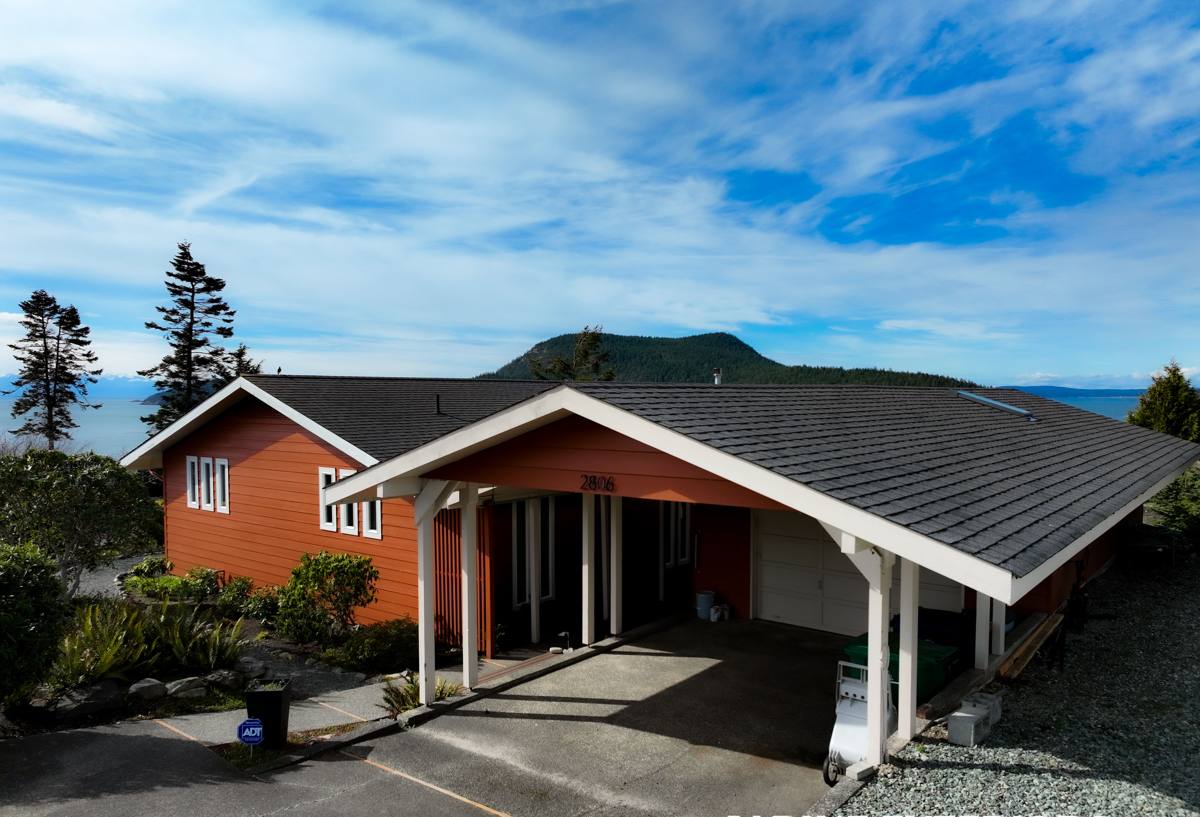
What Seattle's Climate Does to Columbia City Exteriors
The regional marine climate — long wet winters, mild but damp summers, and driving rain that comes in sideways during storm systems off the Sound — is hard enough on a house. Add in Columbia City's dense, mature tree canopy and you get extended shade on north- and east-facing walls that can stay damp for days after a storm passes. That combination is what drives most of the exterior problems we see here.
Moss and Organic Growth
Long moss season is the right way to describe it. Shaded roof slopes and siding that doesn't get afternoon sun can hold moisture long enough for moss, algae, and lichen to take hold. On roofing, that growth lifts shingle edges and traps water against the deck. On siding, it holds moisture against the surface and, on materials that aren't dimensionally stable, contributes to swelling, cupping, and paint failure over time.
Driving Rain and Wind-Driven Moisture
Seattle storms don't just fall straight down — wind pushes rain sideways into wall assemblies, especially on exposed corners and upper stories. Flashing details, water-resistive barriers, and siding laps all matter more here than they would in a drier climate, because the assembly has to shed water that's actively being pushed into it, not just falling on it.
Freeze-Thaw and Temperature Swings
King County doesn't get brutal winters, but it does get repeated cycles of cold snaps and thaw, wet and dry. Materials that absorb moisture and then freeze — or that expand and contract with humidity — take cumulative damage from this cycling even if no single event looks dramatic.
| Climate Factor | Effect on Exteriors | Where It Shows Up |
|---|---|---|
| Heavy shade / tree canopy | Slow drying, moss and algae growth | North/east walls, low roof slopes |
| Driving rain | Water intrusion at laps, corners, penetrations | Siding seams, window flashing, roof valleys |
| Long wet season | Sustained moisture exposure | Untreated trim, deck ledgers, roof edges |
| Freeze-thaw cycling | Cumulative material fatigue | Caulked joints, painted wood, fasteners |
Siding: Why We Only Install James Hardie
On a lot of Columbia City properties we're not just replacing siding, we're replacing it a second or third time, because the previous material didn't hold up under shade, moisture, and decades of wet-dry cycling. That history is exactly why we made a decision most contractors won't: we install only James Hardie fiber cement siding, and we don't offer vinyl, LP SmartSide, primed wood, cedar, or other fiber cement brands as alternatives.
That's not a marketing position — it's a maintenance and moisture-behavior call. Fiber cement doesn't absorb water the way wood-based products can, it won't warp or rot, and it's non-combustible. James Hardie backs its siding with a strong transferable warranty and offers HZ5 products engineered for the kind of wet, temperate climate zone Seattle sits in. On a shaded, damp lot like a lot of what we see in Columbia City, that moisture resistance is the whole ballgame.
Why We Don't Install the Alternatives
- Vinyl siding can work fine in dry climates but doesn't manage moisture the way fiber cement does, can warp under heat and UV exposure, and isn't repairable in sections the way fiber cement is — it's a full-panel replacement product.
- LP SmartSide is an engineered wood product. It performs well when installation and maintenance stay perfect, but wood-based substrates are more sensitive to the sustained moisture exposure common in shaded Northwest lots, and any lapse in caulking or paint maintenance opens the door to swelling at cut edges.
- Cedar and primed spruce look great new but require an ongoing paint and sealing schedule that most homeowners underestimate — and in a climate with this much wet-season exposure, gaps in that maintenance show up as rot faster than in drier regions.
- Other fiber cement brands (Cemplank, Allura) are technically similar to Hardie in composition, but we standardized on one manufacturer so we can guarantee installation consistency, warranty support, and color-match availability for repairs down the road.
We'd rather install one product exceptionally well, to spec, every time, than offer five products and let a homeowner guess which one is right for their lot.
Roofing in a Shaded, Wet Neighborhood
Roofing in Columbia City has to account for the tree canopy as much as the weather. Shaded roof planes stay damp longer, which accelerates moss growth and shortens the effective life of asphalt shingles if moss isn't controlled. We look at slope, shade exposure, and existing moss or algae staining as part of any roofing estimate, and we pay particular attention to valleys, flashing around penetrations, and ventilation — a roof deck that can't breathe traps moisture from underneath, which is just as damaging as water getting in from above.
For older homes in the neighborhood's historic core, we also check attic ventilation and existing flashing details before quoting a re-roof, since a lot of homes from that era were built or later patched without the venting and flashing standards used today.
Windows: Comfort and Moisture Control
Older Columbia City homes often still have original or early-replacement windows that are single-pane or poorly sealed. Beyond the energy loss, poorly flashed window openings are one of the most common points of water intrusion we find behind failing siding. When we replace windows, we treat the flashing and integration with the surrounding wall assembly as seriously as the window unit itself — a good window installed with bad flashing details will leak into the wall regardless of the glass quality.
Decks: Built for a Wet Yard
Decks in this part of Seattle deal with the same shade and moisture issues as siding and roofing, plus direct ground contact and standing water risk if drainage isn't right. Ledger board flashing, joist protection, and proper spacing for drainage and airflow matter more here than in a drier climate — a deck built without those details will show rot at the ledger and framing well before the surface boards show visible wear.
Why a Local Crew Matters Here
Columbia City's mix of century-old bungalows, mid-century infill, and newer construction means no two exterior jobs look the same. A crew that works across King County regularly — not just occasionally passing through — knows how to read a shaded, moss-prone lot, knows what a historic-era wall assembly is likely hiding, and knows how local wind and rain patterns actually behave against a wall, not just what a spec sheet says on paper.
Working locally also means we can be back quickly if something needs a look after a big storm, and we're familiar with the permitting expectations in Seattle and King County for siding, roofing, and window projects.
What to Check Before You Hire
- Do they carry current Washington State contractor licensing and insurance, and will they show you proof without being asked twice?
- Do they install one siding system to spec, or are they offering whatever's cheapest for the bid?
- Will they walk your specific lot's shade and moisture exposure before quoting, not just measure square footage?
- Do they address flashing and water management at windows, roof penetrations, and deck ledgers — not just the visible surface material?
- Can they explain the manufacturer's warranty in plain terms, including what voids it?
Getting Started
If you're dealing with moss-covered siding, a roof that never seems to dry out, drafty original windows, or a deck showing rot at the framing, we're happy to take a look and talk through what's actually going on before recommending anything. Reach out for a free, no-pressure estimate — we'll assess your home's specific exposure and walk you through what we'd do and why.