 Seattle
 What LP SmartSide Actually Is
LP SmartSide is an engineered wood siding product made from wood strands bonded with resin, then treated with LP's proprietary SmartGuard process to resist fungal decay and moisture absorption at the manufacturing stage. It's built on a similar concept to OSB (oriented strand board), pressed and coated rather than milled from a single piece of wood like traditional cedar. It comes in lap boards, panels, and trim, and it's been on the market long enough that most siding contractors in the Puget Sound region have installed it at some point.
We want to be upfront about something before we get into why we don't use it: LP SmartSide is not a scam product or a "bad" brand. It has real engineering behind it and a real place in the market. Our decision to standardize on James Hardie fiber cement instead comes down to how these two material categories — wood-based versus cement-based — perform over 20-30 years in a specific climate: ours.
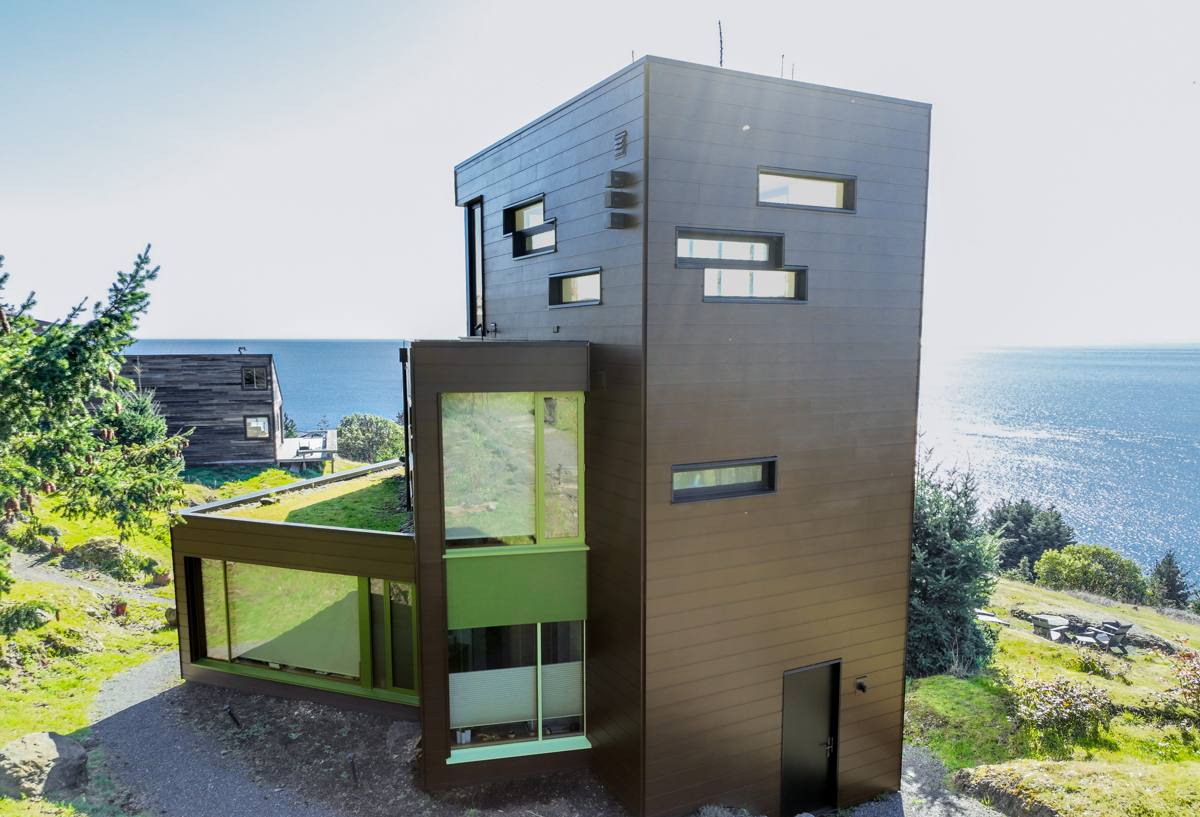
What LP SmartSide Gets Right
Giving credit where it's due matters, because an honest comparison is more useful to a homeowner than a one-sided pitch.
- Lower material cost than fiber cement in most markets, which matters on tight remodel budgets.
- Lighter weight than fiber cement, which can mean faster installation and less strain on older framing.
- Workability — it cuts and nails like wood, which many carpentry crews find familiar and fast.
- Impact resistance that's generally better than vinyl, since it has real structural body to it.
- A genuine factory treatment (SmartGuard) aimed specifically at the fungal decay and termite issues that plagued older-generation OSB siding products from the 1980s and 90s.
If you're in a dry climate, or a home with generous roof overhangs, full sun exposure, and no tree canopy shading the walls, LP SmartSide can perform reasonably well for a long time. That's just not the profile of most homes we work on in King County.
Why We Don't Install It: Our Standard, Not a Verdict on the Brand
Seattle Exterior made a decision years ago to install James Hardie fiber cement exclusively — no LP SmartSide, no vinyl, no Cemplank, no Allura, no primed spruce or cedar. That's a narrower lineup than most siding contractors offer, and we did it on purpose. Here's the reasoning specific to LP SmartSide.
It's Still Wood at Its Core
Strip away the resin and the SmartGuard coating, and the core material is still wood fiber. Wood fiber wants to absorb moisture, swell, and eventually break down when it stays wet long enough. SmartGuard slows that process at the factory-finished surface. But every field cut, every nail penetration, every seam, corner, and window opening is a place where that factory protection has been interrupted and now depends on the installer sealing it correctly — and staying sealed for decades.
The Seattle Climate Problem
King County isn't a moderate climate for exterior wood products — it's one of the harder ones in the country for a wood-core siding to hold up over time. A few specific factors stack against it here:
- Driving rain off the Sound and prevailing westerlies pushes water sideways into seams and laps, not just straight down where it sheds easily.
- Salt air near Puget Sound accelerates the breakdown of caulking and factory coatings faster than inland installations.
- A long moss and algae season — often eight or nine months a year in the Pacific Northwest — keeps surfaces damp longer between dry-out periods than almost anywhere else in the continental US.
- Mature tree canopy on many Seattle lots shades walls and slows drying time even further, which is exactly the condition wood-core products handle worst.
None of that means LP SmartSide fails on day one. It means the margin for installation error and long-term maintenance neglect is much thinner here than it would be in Spokane, Denver, or Phoenix. And on a re-side job, we're not just installing a product — we're making a 25-30 year bet on behalf of a homeowner who may not remember, ten years from now, that a particular caulk line needs re-checking every season.
Installation Sensitivity
Engineered wood siding is far less forgiving of installation shortcuts than fiber cement. Every cut edge needs field-applied sealant before it's fitted. Every joint, corner, and butt seam needs to be caulked and maintained on a schedule, not just at install. Gaps that are slightly too tight or too loose both cause problems — too tight traps moisture, too loose lets water track in behind the board. We've watched crews (not always ours, historically) do everything right on install day and still end up with edge swelling or delamination five to eight years later because a homeowner didn't keep up with re-caulking, or because one flashing detail wasn't quite right in a spot that gets hit hard by wind-driven rain.
The Warranty Is Maintenance-Dependent
LP's warranty coverage on SmartSide is real, but like most wood-based siding warranties, it comes with maintenance obligations attached — periodic caulking, painting or staining on a schedule, and prompt repair of any damage. Miss those obligations and coverage can be reduced or voided, which shifts the long-term risk back onto the homeowner in a way that's easy to overlook at the time of installation and expensive to discover later.
Side-by-Side: LP SmartSide vs. James Hardie Fiber Cement
| Factor | LP SmartSide (engineered wood) | James Hardie (fiber cement) |
|---|---|---|
| Core material | Wood strand + resin, factory-treated | Cement, sand, and cellulose fiber — non-combustible |
| Moisture behavior | Resists moisture at factory-sealed faces; vulnerable at cuts, seams, and unmaintained joints | Does not swell, rot, or delaminate from moisture exposure |
| Maintenance to keep warranty valid | Scheduled caulking, repainting/staining, prompt repairs | Periodic caulk/paint touch-up on trim joints; ColorPlus finish itself doesn't need repainting on its warranty cycle |
| Performance in prolonged damp/shaded conditions | Weaker point — slower drying accelerates wear | Engineered HZ product lines built for exactly this climate zone |
| Fire rating | Combustible (treated wood product) | Non-combustible |
| Typical material cost | Lower | Higher |
| Factory finish | Primed or factory-coated, some fading over time | ColorPlus baked-on finish, longer color retention |
What We Install Instead, and Why
James Hardie fiber cement isn't wood at all — it's cement, sand, and cellulose fiber, which means it doesn't swell, rot, delaminate, or feed fungal growth the way any wood-based product can, no matter how well it's treated. It's non-combustible, which matters more every year given wildfire smoke seasons across the state. Hardie's HZ5 product line is specifically engineered for wetter climate zones like ours, and the ColorPlus factory finish holds color and resists the moss staining that's a constant fight on Seattle exteriors, without requiring homeowners to keep a repainting schedule to protect the warranty. The transferable warranty is also structured in a way that doesn't hinge on the same caulk-and-recoat maintenance burden that wood-based sidings carry.
We're not saying Hardie is maintenance-free — no exterior siding is. But the maintenance it does need is lighter, and the failure modes we see with wood-core siding in this specific climate simply aren't in play with fiber cement.
Questions to Ask Any Contractor Recommending Engineered Wood Siding
If you're getting quotes and a contractor is proposing LP SmartSide, primed spruce, or another wood-based product for a Seattle-area home, these are fair questions to ask before you sign anything:
- What specific maintenance schedule does the manufacturer's warranty require, and what happens to coverage if it's missed?
- How will field cuts, seams, and corners be sealed, and who is responsible for re-sealing them over time?
- How much roof overhang and tree shading does the house have, and how does that affect drying time between rain events?
- Is the crew installing this product certified or specifically trained on it, or is this a side-of-the-truck material for them?
- What does the manufacturer's own installation manual say about minimum clearances from grade, decks, and roofing?
Our Bottom Line
LP SmartSide is a legitimate product that has a place in drier, sunnier climates and on budgets where fiber cement isn't in reach. In King County's driving rain, salt air, and long moss season, we've seen enough wood-core siding installations — not just LP's, across brands — struggle over a 15-20 year horizon that we made a business decision to stop offering wood-based siding altogether and install James Hardie fiber cement exclusively. That's a narrower product lineup than a lot of contractors carry, and we think that's the point: we'd rather tell you honestly why we don't install something than sell you a product we don't fully stand behind.
If you're weighing siding options for a Seattle or King County home, we're happy to walk your property, talk through what your specific exposure and shading look like, and give you a straight answer — including whether your project even needs a full re-side. Reach out for a free, no-pressure estimate using the form below.