 Seattle
 Kirkland sits on the Eastside of Lake Washington, close enough to Puget Sound that homes here live inside the same marine weather pattern as the rest of the Seattle metro: long wet winters, a short dry summer, and near-constant humidity in between. That combination is hard on the outside of a house. Siding, roofing, windows, and decks all take a slow, steady beating from moisture that most other parts of the country never deal with. We work on homes throughout Kirkland and the surrounding Eastside communities, and this page walks through what that climate actually does to a home's exterior and how our crews approach the work here.
What Kirkland's Climate Does to a Home's Exterior
The Pacific Northwest doesn't get the hurricane-force storms or extreme freeze-thaw cycles that damage homes elsewhere, but it makes up for that with sheer duration of exposure. Rain falls on Eastside roofs and siding for months at a stretch, often as a fine, driving mist that finds its way into every gap, seam, and fastener hole a builder left slightly loose. Add in the shade from mature trees common in King County neighborhoods, and you get the third factor: moss and algae growth that can run nearly year-round in shaded, north-facing areas.
Homes closer to the water also deal with salt-laden air carried in off Puget Sound, which accelerates corrosion on metal fasteners, flashing, and hardware. None of this damage happens overnight. It's cumulative — a house that looks fine in year three can be hiding real problems by year twelve if the exterior materials and installation weren't suited to this climate in the first place.
The Big Three: Moisture, Moss, and Slow Rot
- Moisture intrusion — water working behind siding or under roofing through poorly sealed joints, nail holes, or aging caulk
- Moss and algae — organic growth that holds moisture against the surface and accelerates material breakdown, especially on shaded roof slopes and north-facing walls
- Slow material fatigue — wood-based products swelling, softening, or delaminating from repeated wet-dry cycles over years, even without a single dramatic failure event
Siding in Kirkland: Why We Only Install James Hardie
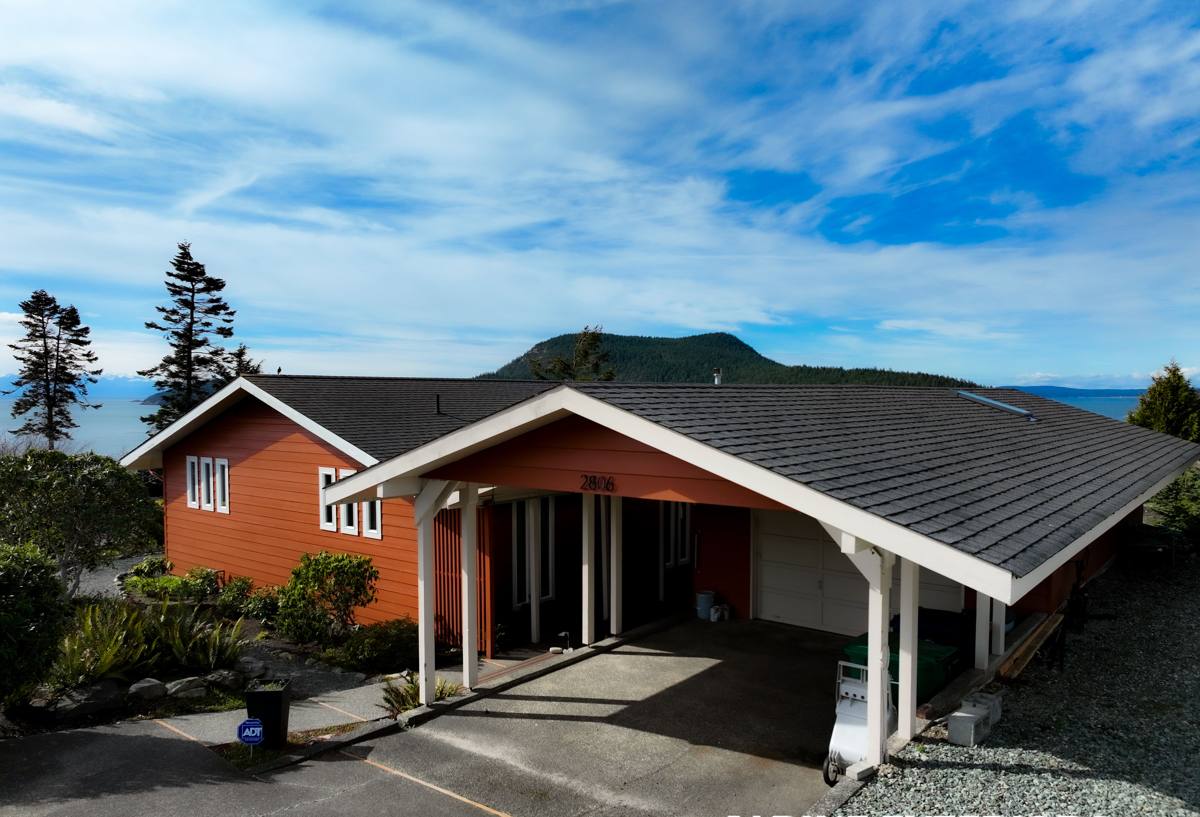
Siding is the single largest surface area on most homes, and it's the first line of defense against everything described above. We install James Hardie fiber cement siding exclusively — we don't install vinyl, LP SmartSide, Cemplank, Allura, primed spruce, or cedar. That's a deliberate standard, not a matter of what happens to be in stock.
Wood-based and wood-composite siding products can perform well in the right conditions, but the Eastside's climate is a demanding test for anything with organic fiber content. Wood swells and contracts with moisture cycles, and even engineered wood products with resin-treated strands are ultimately relying on that treatment to hold up against near-constant dampness over decades. Vinyl siding handles moisture fine on its own, but it's a thin material that can warp in temperature swings and doesn't offer the same fire resistance or paint-ready surface as fiber cement.
James Hardie siding is fiber cement — a mix of cement, sand, and cellulose fiber that doesn't rot, doesn't attract wood-boring insects, and doesn't feed mold or moss growth the way organic materials can. It's non-combustible, which matters more each year in Washington's wildfire-smoke seasons, and its ColorPlus factory finish is baked on under controlled conditions rather than field-applied, which means fewer touch-ups and a longer-lasting color match than site-painted siding.
Hardie's Climate-Engineered Product Lines
James Hardie manufactures different formulations (called HZ5 and HZ10 zones) engineered for specific climate regions. The Pacific Northwest falls into a zone designed around freeze-thaw cycling and prolonged moisture exposure rather than the extreme heat formulations used in the Southwest. That regional engineering is part of why we standardized on the product for homes here — it's not a one-size-fits-all material.
Roofing: Handling Moss Before It Handles Your Roof
Roofs in Kirkland face the moss problem more directly than any other part of the house. Asphalt shingle roofs under tree cover develop moss colonies that lift shingle edges, trap moisture against the roof deck, and shorten the life of the roofing system well before its rated lifespan. A roof replacement here isn't just about the shingles themselves — proper underlayment, ice-and-water shield at vulnerable areas, and ventilation all matter more in a climate this wet.
We also pay close attention to flashing details around chimneys, skylights, and roof-to-wall transitions, since these are the most common points where a Northwest roof actually leaks. A shingle field rarely fails first; the flashing and edge details usually do.
Windows: Sealing Out Driving Rain
Older single-pane or aging dual-pane windows are a common source of both moisture intrusion and energy loss in Eastside homes. Window replacement done right addresses two things at once: a tight, properly flashed installation that keeps wind-driven rain from working behind the window frame, and updated glazing that cuts down on the condensation and heat loss that older units are prone to in this climate. Window work is also a natural pairing with a siding project, since both jobs open up the same wall assembly and it's more efficient to address flashing and moisture barriers once rather than twice.
Decks: Built for a Climate That Never Really Dries Out
Outdoor living spaces in Kirkland get real use during the region's dry summer stretch, but the deck structure itself has to survive nine or ten months of damp weather every year. Ledger board connections, joist hardware, and any wood-to-concrete contact points are the areas most likely to trap moisture and develop rot over time if they weren't detailed correctly during construction. We build and repair decks with attention to those moisture-prone connection points specifically, since that's where Northwest decks typically fail first — not in the decking boards themselves, but in the structure underneath.
Why a Local Crew Matters Here
Exterior work in this region isn't the same job as exterior work in a dry climate, and a crew that hasn't worked through several Northwest wet seasons doesn't always know where the water actually goes. Flashing sequences, weather barrier laps, and fastener choices that are optional in a dry climate are not optional here — they're the difference between a home that stays dry for thirty years and one that develops hidden rot behind siding that looks fine from the curb. Working throughout King County day in and day out means our crews are used to scheduling around actual Northwest weather windows, not fighting it.
Comparing Siding Options for Eastside Homes
| Material | Moisture Resistance | Moss/Mold Resistance | Maintenance | Fire Resistance |
|---|---|---|---|---|
| James Hardie Fiber Cement | High — non-organic, doesn't rot | High — doesn't feed organic growth | Low — factory finish, occasional wash | Non-combustible |
| Cedar / Primed Wood | Moderate — depends on maintenance | Low — organic material attracts growth | High — regular sealing/painting | Combustible |
| Vinyl | High on its own, but seams/gaps a risk | Moderate — surface growth possible | Low | Combustible, can warp/melt |
| Engineered Wood (e.g. LP SmartSide) | Moderate — resin-treated but organic core | Moderate | Moderate | Combustible |
What a Good Exterior Assessment Looks Like
Whether the concern is siding, roofing, windows, or a deck, an honest assessment on an Eastside home should look past the surface for the moisture patterns that actually drive damage here. Before recommending any work, we check the details that matter most in this climate:
- Moss and algae buildup on shaded roof slopes and north-facing walls
- Caulk and sealant condition around windows, trim, and siding joints
- Signs of soft or swollen material at the base of siding and around deck framing
- Flashing condition at roof valleys, chimneys, and wall-to-roof transitions
- Deck ledger board and joist hardware condition, especially at wood-to-structure connections
- Gutter and downspout function, since poor drainage compounds every issue above
Planning an Exterior Project in Kirkland
Most homeowners here approach exterior work one of two ways: addressing a specific problem (a leaking roof, failing siding, a soft deck board) or planning ahead before those problems start. Both are reasonable, but a full exterior assessment tends to catch connected issues — a roof leak that's actually been feeding moisture into a wall cavity, for example — that a single-trade repair would miss. Because we handle siding, roofing, windows, and decks under one roof, we can look at how those systems interact on a given house rather than treating each one in isolation.
If you're dealing with a specific issue on your Kirkland home or just want an honest read on where your exterior stands, we're happy to take a look. Reach out for a free, no-pressure estimate using the form below.