 Seattle
 Renton's Climate and What It Does to a Home's Exterior
Renton sits at the south end of Lake Washington, where the Cedar River comes down out of the foothills, and that geography shapes the weather a home has to deal with. Winters bring long stretches of steady, driving rain rather than short downpours, and the humidity off the lake keeps surfaces damp well after the rain has stopped. That combination is exactly what moss, mildew, and algae need to take hold, and it's why so many older homes in the area show green-black streaking on north-facing walls, roof valleys, and anything shaded by mature trees.
The broader Puget Sound region also carries marine air inland on weather systems moving off the Sound, which adds a corrosive edge to the moisture problem — fasteners, flashing, and trim details all take more punishment here than they would in a drier climate. None of this is dramatic, day-to-day damage. It's slow, cumulative wear that shows up as soft trim boards, curling shingles, fogged window seals, and deck boards that never quite dry out between storms.
A home built or sided for a different climate — or installed without real attention to water management — tends to show its age early in Renton. A home built for this climate, with the right materials and correct installation, holds up for decades with predictable, manageable maintenance.
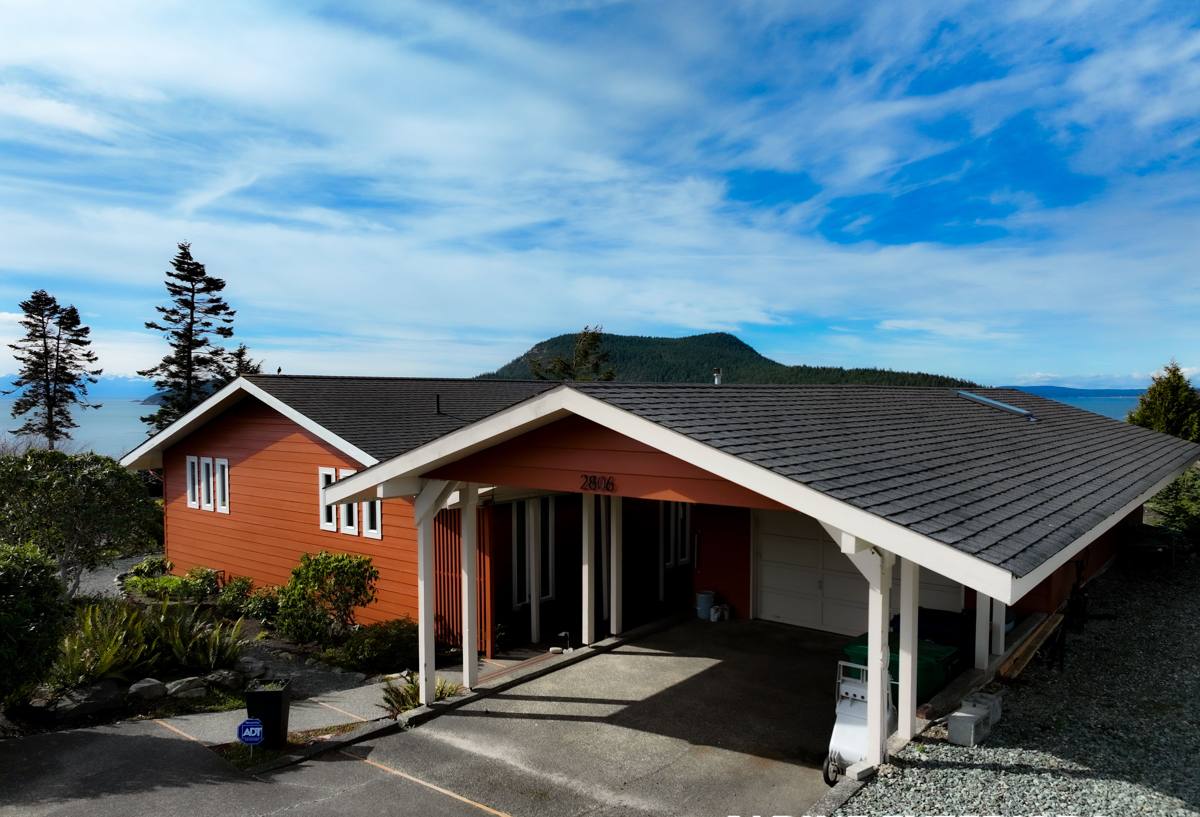
Siding: Why We Only Install James Hardie in Renton
We install James Hardie fiber cement siding exclusively. We don't install vinyl, LP SmartSide, Cemplank, Allura, primed spruce, or cedar, and in a climate like Renton's that's not a marketing position — it's a practical one built on how these products actually perform once they're on a wet-climate wall for fifteen or twenty years.
What we're weighing against
Wood-based siding, whether it's cedar or engineered products like LP SmartSide, depends on an intact paint or sealant layer to keep moisture out. In a climate that stays damp for months at a stretch, any gap in that layer — a nail pop, a hairline crack, a spot where caulk has failed — becomes an entry point for water, and wood-based products swell, rot, or delaminate once water gets behind the surface. Vinyl siding sidesteps the rot issue but has its own trade-offs: it flexes and can crack in cold snaps, fades over time, and its seams and channels give moss and mildew somewhere to grip, especially on shaded elevations that never fully dry.
Why fiber cement changes the equation
James Hardie siding is cement-based, not wood-based, so it doesn't rot, swell, or feed insects, and it holds paint and factory finish far longer than wood substrates because it isn't expanding and contracting with every wet-dry cycle the way wood does. The ColorPlus factory finish is baked on under controlled conditions, which gives it better UV and moisture resistance than field-applied paint, and Hardie's HZ5 product line is engineered specifically for climates with heavy moisture exposure. It's also non-combustible, which matters more each year as wildfire smoke and regional fire risk become a bigger part of Pacific Northwest summers.
None of this means fiber cement is maintenance-free — it still needs to be caulked, painted, or refinished on a normal cycle, and moss can still grow on any exterior surface that stays shaded and wet. But it holds its shape and structure through that cycle instead of degrading, which is the difference that shows up at year fifteen instead of year five.
Roofing: Built for Moss Season, Not Just for Rain
Renton's roofs deal with two separate problems: the volume of water that has to shed correctly through valleys, flashing, and gutters, and the moss that colonizes anything north-facing or shaded by trees. Moss isn't just cosmetic — as it grows, it lifts shingle edges and holds water against the roof deck, and over a few seasons that can shorten the life of an otherwise sound roof. Correct underlayment, properly lapped flashing, and adequate ventilation matter more here than in drier climates, because a roof that can't shed water fast enough or breathe correctly stays wet longer between storms, which accelerates every other problem.
We look at the whole roof system — decking condition, flashing details around penetrations and chimneys, ventilation, and gutter capacity — rather than just the shingles themselves, because in this climate a roof usually fails at a detail, not across the whole field.
Windows: Managing Condensation and Heat Loss
Older windows in Renton homes tend to show two symptoms: fogged glass from failed seals on double-pane units, and condensation on interior sills during cold, wet stretches when warm indoor air meets a cold single-pane or poorly sealed frame. Replacement windows address both — modern insulated glass units cut heat loss and reduce interior condensation, and correct flashing and sealing at the window opening keeps the wall assembly behind the siding dry, which protects everything from the framing to the interior finishes.
Window replacement is also a natural pairing with siding work, since both jobs involve opening up the same wall penetrations. Homeowners planning a siding project often find it's the right time to address aging windows at once, rather than disturbing the same areas twice.
Decks: Standing Up to Standing Water
A deck in Renton spends a large part of the year wet, and the details that get overlooked — ledger board flashing, joist spacing, gaps between boards, and how the structure ties into the house — determine whether it lasts. Standing water on a poorly sloped or poorly ventilated deck surface is what drives rot in the framing below, long before the decking boards themselves show obvious damage. We build and repair decks with drainage and ventilation as first-order considerations, not afterthoughts, because in this climate a deck that can't shed and dry out quickly is a deck with a shortened lifespan.
Why a Local Crew Matters in Renton
A lot of exterior problems in this region come down to details that only show up when a crew actually understands how King County weather behaves — how far moss migrates from a shaded tree line, how much water a valley needs to handle in a real winter storm, where ice and freeze-thaw cycles show up on shaded north walls even in a generally mild climate. A crew that installs the same details year-round in this weather catches things a generalist crew, or a crew unfamiliar with the area, tends to miss.
Working locally also means we're accountable to the work after it's done. If something needs a follow-up visit, we're not driving in from out of the area to handle it.
Cost Factors to Know Before You Start
| Project | What Drives the Price | Renton-Specific Factor |
|---|---|---|
| Siding replacement | Square footage, number of stories, trim complexity, existing siding removal | Moisture damage found once old siding comes off can add repair scope |
| Roofing | Roof size, pitch, layers to remove, decking condition | Moss and years of shaded moisture often mean more deck repair than expected |
| Windows | Number of openings, size, frame material, whether it's full-frame or insert replacement | Older homes may need extra flashing work to meet current water-management standards |
| Decks | Square footage, material choice, structural condition, height/railing requirements | Ledger and framing repair is common on decks over 10-15 years old |
A Simple Maintenance Checklist for Renton Homeowners
- Clean moss and debris from roof valleys and north-facing surfaces at least once a year, before the wet season builds up
- Keep gutters clear so water isn't backing up under roofing or siding during heavy rain
- Walk the exterior each fall and look for cracked caulk, gaps at trim, or soft spots around window openings
- Check deck ledger boards and framing for softness or staining where the deck meets the house
- Trim back tree limbs and vegetation that keep any wall or roof section shaded and damp longer than the rest of the house
- Address small failures — a cracked board, a lifted shingle, a failed seal — before the next wet season, not after
What to Expect When You Reach Out
We walk the exterior with you, look at the specific conditions on your property — sun exposure, tree cover, drainage, age of the existing materials — and give you a straight assessment of what's holding up and what isn't. There's no pressure and no inflated scope; if a section of siding or a run of trim has years left in it, we'll say so.
If you're in Renton and want an honest look at your siding, roof, windows, or deck, request a free estimate below. We'll walk the property, answer your questions, and give you a clear picture of your options with no obligation.