 Seattle
 Window Replacement in Ravenna: Built for This Neighborhood's Housing Stock
Ravenna is one of Seattle's older, established neighborhoods, and that shows up in its windows. A lot of homes here still have their original wood-frame windows from decades past, or a round of aluminum-frame replacements installed sometime in the 70s or 80s that have long since aged out. Both types share the same problems: failed seals, drafts, condensation between panes, and frames that have taken on moisture damage they were never built to handle. Window replacement in Ravenna isn't just a cosmetic upgrade — it's about matching the window to what this part of King County actually throws at a house year-round.
We work on homes throughout Ravenna and the surrounding north Seattle neighborhoods, so we're familiar with the mix of bungalows, Craftsman-style houses, and mid-century remodels that make up the area. That local familiarity matters more than it sounds like it should — knowing what kind of framing and construction is typical here means fewer surprises once a window comes out of the wall.
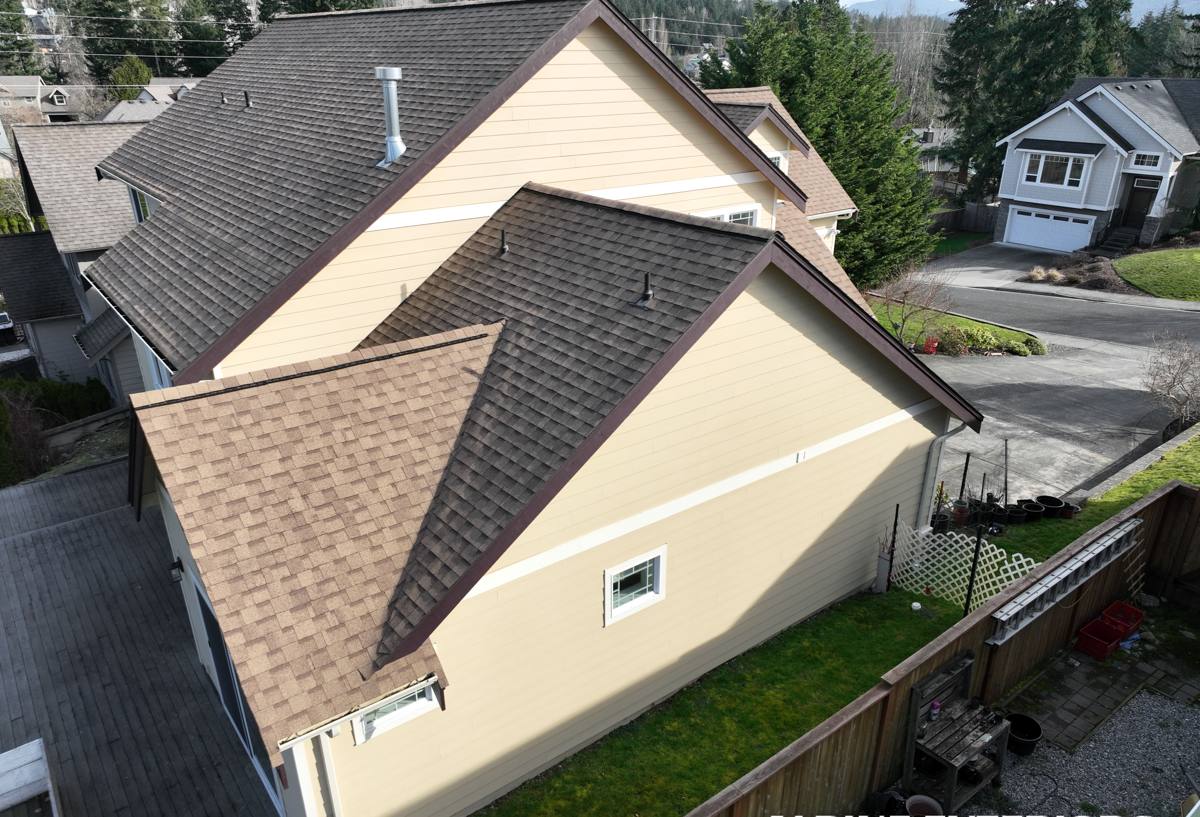
Why Puget Sound Weather Is Hard on Windows
Seattle's climate is deceptively tough on window systems. It's not extreme heat or ice storms that wear windows down here — it's the steady, grinding combination of moisture-laden air, driving rain that comes in sideways during winter storms, and a moss season that stretches longer than most homeowners realize. None of that is dramatic on any given day, but over ten or twenty years it adds up.
What that means for a window assembly
- Moisture-laden salt air off the Sound accelerates corrosion on unprotected metal hardware, fasteners, and older aluminum frames.
- Driving rain tests flashing and sealant details far more than a light, straight-down rain would — wind-driven moisture finds any gap in the installation, not just the window unit itself.
- Extended moss and mildew season keeps humidity elevated around window frames, sills, and trim for months at a time, which is exactly the environment wood rot and seal failure need to take hold.
- Temperature swings between damp mornings and afternoon sun cause repeated expansion and contraction, which is what eventually breaks down old seals and glazing.
A window that was installed without accounting for these conditions might look fine for years and then fail all at once — fogged glass, soft wood at the sill, or a frame that no longer closes square.
Signs a Ravenna Home Needs Window Replacement
Most homeowners don't call about windows until something is obviously wrong, but the early signs are usually there well before that point. Worth checking for:
- Fogging or a visible film between panes on double- or triple-glazed units — the seal has failed and the gas fill or trapped air is gone
- Drafts you can feel near the frame even with the window fully latched
- Wood trim or sills that feel soft, spongy, or show dark staining
- Windows that are difficult to open, close, or lock — often a sign the frame has shifted or swollen
- Visible condensation or moisture buildup on the inside of the glass during cool, damp months
- A noticeable rise in heating costs without any other obvious cause
Any one of these on its own might not mean full replacement is needed. But when a home has several of these signs across multiple windows, patch repairs tend to be a short-term fix on a problem that's already systemic.
What a Correct Window Replacement Job Actually Involves
Swapping in a new window is the easy part to picture — the harder part, and the part that actually determines how the window performs for the next twenty years, is everything around it. In this climate, the installation detailing matters as much as the window product itself.
The steps that matter most
- Assessing the opening — checking the rough opening, sill, and surrounding framing for rot or moisture damage before anything new goes in. Installing a new window into a compromised opening just traps the problem behind new trim.
- Correct flashing and weather barrier integration — this is where driving rain either gets managed or finds its way in. Flashing has to tie into the existing weather-resistive barrier correctly, not just get caulked over.
- Proper shimming and squaring — a window that isn't level and square in its opening will bind, leak, or wear unevenly no matter how good the unit itself is.
- Sealing and insulating the gap — the space between the window frame and the rough opening needs the right insulation and sealant, not just spray foam packed in without regard for how it expands.
- Interior and exterior trim work — finishing details that protect the assembly and match the look of the home.
Skipping or rushing any one of these steps is how a "new" window ends up with the same moisture problems as the one it replaced, just a few years later instead of right away.
Choosing the Right Window Type for This Climate
There's no single "best" window material — the right choice depends on the home's age, exposure, and the homeowner's priorities around maintenance and budget. Our standard is to match the frame material to how much upkeep the homeowner actually wants to do, and how exposed the window will be to wind-driven rain.
| Frame Material | Moisture Performance | Maintenance | Typical Fit |
|---|---|---|---|
| Vinyl | Strong — won't rot, resists moisture well | Low | Most homes; good value and durability |
| Fiberglass | Excellent — very stable in temperature swings | Low | Homes wanting a longer-term, low-flex option |
| Wood (clad exterior) | Good if exterior is fully clad and detailed correctly | Moderate | Historic or Craftsman-style homes where wood interior look matters |
| Aluminum | Weaker — prone to condensation and corrosion over time in wet climates | Low, but performance trade-offs | Limited use; we're selective about where we recommend it here |
We're upfront when a product isn't a good match for a given home. For example, uncladded wood exteriors or bare aluminum frames carry real maintenance and moisture trade-offs in a climate with this much sustained dampness — that's a professional judgment call based on how these materials behave over time, not a knock on any manufacturer.
Glazing Options Worth Discussing
- Double-pane with low-E coating — the standard baseline for energy performance in this climate
- Triple-pane — better insulation and sound dampening, useful on street-facing or exposed sides of a home
- Argon or krypton gas fills — improve insulating performance, though seal quality is what determines how long that benefit lasts
Our Process for Ravenna Window Projects
Every window job starts with an honest look at what's actually happening at each opening, not just a sales pitch for a product line.
- On-site assessment — we look at each window individually, check for hidden moisture or framing issues, and talk through what's realistic for the home and budget.
- Straightforward estimate — a clear breakdown of scope, materials, and cost, with no pressure to upgrade beyond what the home needs.
- Careful removal — old units come out without unnecessary damage to surrounding siding or trim.
- Correct installation — following the flashing, sealing, and squaring steps that actually hold up to Puget Sound weather.
- Final check and cleanup — confirming every window operates correctly and the site is left clean.
Why Hire a Crew That Already Works in Ravenna
Window replacement done wrong doesn't usually fail on day one — it fails a few winters later, when the flashing detail that got rushed finally lets water behind the siding. A crew that regularly works in Ravenna and the greater Seattle area has already seen how the housing stock here behaves: which eras of homes tend to have hidden rot at the sill, which framing setups need extra attention, and how to detail an installation so it holds up through another decade of King County rain and moss season. That local pattern recognition is hard to get from a crew that's only worked in drier or more moderate climates.
It also matters for accountability. A local contractor is around for warranty follow-up and stands behind the work with a reputation that's tied to this community, not a one-time job in a territory they won't be back in.
Getting Started
If your Ravenna home has windows that are drafty, fogged, hard to operate, or just past their reasonable lifespan, it's worth having them looked at before another wet season adds to the damage. We offer free, no-pressure estimates — we'll walk the property, give you a straight assessment of what each window actually needs, and let you decide from there.