 Seattle
 Redmond's Climate Is Harder on Siding Than It Looks
Redmond doesn't get hurricanes or hard freezes, so it's easy to assume siding here has an easy life. It doesn't. What Redmond homes actually face is worse in a different way: months of steady, low-intensity rain, tree canopy that keeps roofs and walls shaded and damp long after a storm passes, and the general marine moisture that sits over the whole Puget Sound region for much of the year. That combination is exactly what breaks down siding that isn't built for it - not through one dramatic event, but through slow, cumulative water exposure that most homeowners never notice until paint is peeling, trim is soft, or moss has taken hold along north-facing walls and under eaves.
King County's wet season runs long, and Redmond's mature tree cover - a big part of what makes the neighborhood attractive - also means more shade, more standing moisture, and more organic debris landing on siding and staying there. That's the real driver behind moss and algae growth on exterior walls, not just roofs. Siding material and installation quality determine whether that moisture sheds cleanly or works its way into seams, fastener holes, and butt joints over years of freeze-thaw cycles and repeated wetting.
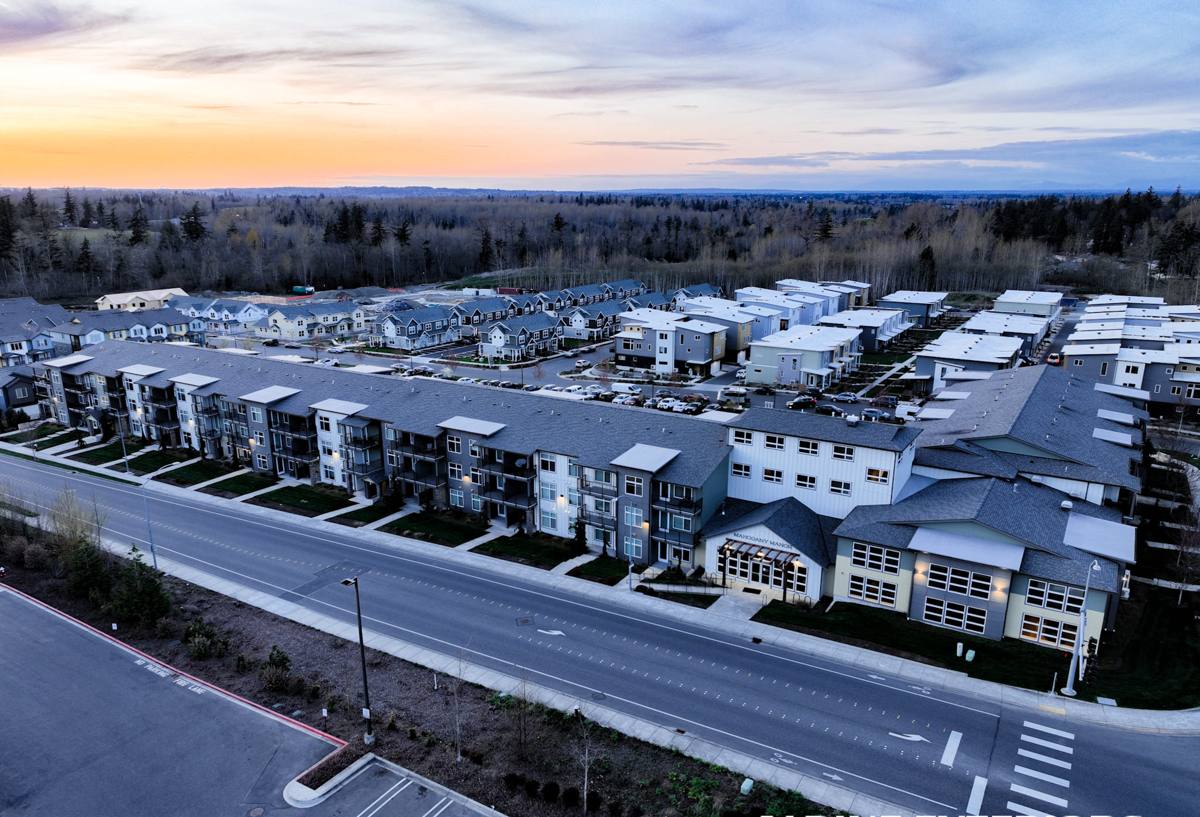
What a Correct Fiber Cement Siding Job Actually Requires
Fiber cement siding is only as good as the installation behind it. In a climate like Redmond's, a handful of details separate a siding job that lasts decades from one that causes problems within a few years:
- Proper rainscreen or drainage gap behind the siding so moisture that gets behind the cladding has somewhere to go
- Correct fastener spacing, type, and depth - overdriven or wrong-length nails are one of the most common failure points we find on tear-offs
- Factory-cut and factory-primed edges kept intact wherever possible, since field-cut edges need proper sealing to match the factory finish's water resistance
- Flashing integrated at every window, door, deck ledger, and roof-to-wall intersection, not just caulk bridging the gap
- Correct clearance from grade, decks, patios, and roof lines so siding isn't sitting in standing water or snowmelt
- Tight, consistent joint gaps sealed with a sealant rated for the movement and moisture cycles fiber cement goes through
Skip any one of these and you can end up with a product that's rated for a 30-plus year lifespan failing in five to ten years - not because the material was wrong, but because the installation didn't respect how water moves around a house in a climate like this one.
Why This Matters More in Redmond Specifically
Homes with heavy tree cover, north or east-facing walls that stay damp longer, and lots of window and roofline transitions - common on the multi-gable, dormer-heavy homes typical of the Eastside - have more places for water to find a way in. A siding crew that understands this doesn't just nail up boards; they think through where water is going to travel on your specific house before the first piece goes up.
Why We Install Only James Hardie Fiber Cement
We don't install LP SmartSide, vinyl, Cemplank, Allura, or unfinished wood siding, and that's a deliberate standard, not an accident of what we happen to stock. Each of those products has legitimate uses and reasonable people choose them for reasons that make sense on paper - cost, familiarity, or a specific look. But for the moisture load and moss pressure a Redmond home deals with year after year, we've found the trade-offs aren't worth it:
- Engineered wood products can perform well when perfectly maintained, but they depend on an unbroken paint film and diligent caulk maintenance - a tall order in a climate where things stay damp for days at a time
- Vinyl siding is low-maintenance but it expands and contracts significantly with temperature swings, and it doesn't offer the same fire resistance or impact durability as fiber cement
- Some fiber cement competitors are reasonable products, but James Hardie's specific ColorPlus finish technology, HZ5 formulation for the Pacific Northwest, and warranty structure are the best combination we've found for this exact climate
James Hardie fiber cement is non-combustible, dimensionally stable in wet-to-dry cycling, and its HZ5 product line is engineered specifically for regions with the freeze-thaw and moisture patterns the Pacific Northwest sees. The ColorPlus factory finish is baked on under controlled conditions and backed by its own finish warranty, separate from the substrate warranty - which matters in a climate where field-applied paint has a much harder job to do.
Choosing the Right Hardie Product Line for Your Home
James Hardie makes several distinct product lines, and the right one depends on your home's architecture and how much of the maintenance conversation you want to have down the road.
| Product Line | Best For | Key Trait |
|---|---|---|
| HardiePlank Lap Siding | Most Redmond homes - traditional and modern styles | Widest color and texture selection, the most common choice |
| HardieShingle | Craftsman and Cape Cod-style accents | Staggered or straight-edge shingle profile without the maintenance of cedar shingles |
| HardiePanel | Modern builds, gable accents, board-and-batten looks | Large-format vertical panels for clean, contemporary lines |
| HardieTrim | Window, door, and corner trim on any of the above | Matches siding durability so trim doesn't fail before the field siding does |
Most Redmond projects end up on HardiePlank for the main field of the house, sometimes paired with HardieShingle or HardiePanel as an accent on a gable end or entry feature. We'll walk through which combination fits your home's actual architecture rather than defaulting to one option for every house on the street.
How Our Installation Process Works
1. On-Site Assessment
We look at your current siding's failure points, your home's drainage paths, roofline transitions, and any trouble spots - shaded walls, deck ledgers, areas with visible moss or staining - before we talk product or price.
2. Detailed Scope and Product Selection
You get a written scope covering product line, color, trim details, and how flashing and drainage will be handled at every transition, not just a square-footage number.
3. Tear-Off and Substrate Check
Old siding comes off and we inspect the sheathing underneath. This is where hidden moisture damage from a previous installation often shows up, and it needs to be addressed before new siding goes on - not covered over.
4. Weather-Resistive Barrier and Drainage Plane
A correctly lapped weather-resistive barrier and drainage gap go in before any siding. This step is invisible once the job is done, which is exactly why it's the one corners get cut on by crews trying to move fast.
5. Installation to Manufacturer Spec
Fastener placement, joint gaps, and flashing follow James Hardie's published installation instructions, which is also what keeps the manufacturer warranty intact.
6. Final Walkthrough
We go through the finished work with you, including where flashing and drainage details are located, so you know what's behind the walls of your own house.
What Fiber Cement Siding Costs Depend On
We don't publish blanket per-square-foot pricing because it's genuinely dependent on your specific house, but these are the factors that move a Redmond project's cost up or down:
| Factor | Why It Matters |
|---|---|
| Tear-off complexity | Multiple layers of old siding or extensive rot found underneath adds labor and repair scope |
| Home height and roofline complexity | Multi-story homes and steep, multi-gable rooflines common in the area require more staging and cutting |
| Product line and texture | Smooth versus woodgrain finishes and specialty profiles carry different material costs |
| Trim and accent scope | Extensive HardieTrim work or mixed-panel accents add detail time |
| Substrate repair | Rot or moisture damage found during tear-off needs to be fixed before new siding goes on - this is the most common source of a revised estimate |
Signs a Redmond Home Needs New Siding Soon
- Moss or dark streaking that returns within months of cleaning, especially on shaded or north-facing walls
- Paint that's bubbling, peeling, or chalking well before its expected repaint cycle
- Soft spots, visible warping, or delamination in existing siding boards
- Gaps opening up at butt joints, corners, or trim over time
- Rising energy bills that track with drafts near exterior walls
- Visible daylight or water staining around window and door trim after heavy rain
Any one of these is worth a look before it becomes a bigger repair. Moisture problems on siding rarely stay small in this climate - they compound every wet season they go unaddressed.
Living With Fiber Cement Siding Through Redmond's Moss Season
James Hardie fiber cement doesn't stop moss and algae from landing on a wall - nothing does, in a region with this much tree cover and moisture. What it does is give you a surface that handles periodic cleaning without the material itself breaking down. A soft wash on a normal schedule keeps ColorPlus finishes looking right, and because the substrate is cement-based rather than wood or wood composite, it isn't feeding organic growth the way an untreated or under-maintained wood product can. That's a meaningfully lower maintenance burden across a long, damp Pacific Northwest fall and winter.
Why Hiring a Crew That Already Works in Redmond Matters
Siding installation isn't identical everywhere, and a crew that mostly works drier climates can make mistakes here that don't show up for a year or two - by which point they're your problem, not the installer's. A crew that regularly works Redmond and the greater Seattle area already knows which wall orientations need extra attention, how local roofline styles handle flashing transitions, and what King County's building department expects for permitting and inspection on siding replacement. That familiarity shows up in fewer callbacks and a job that's built for the weather it actually has to survive, not generic weather.
If you're weighing your siding options for a Redmond home, we're happy to walk your property, point out what we see, and give you a straight answer - even if that answer is that your current siding has a few good years left. Reach out for a free, no-pressure estimate using the form below.