 Seattle
 Roof Replacement Built for Redmond's Weather
Redmond sits in the same weather pattern as the rest of the Puget Sound basin: long stretches of steady, driving rain from fall through spring, a marine air layer that keeps humidity high even on dry days, and enough shade cover from mature Douglas fir and cedar trees that moss gets a real foothold on north-facing slopes. None of that is unusual for King County. What it means for a roof is simple — the materials and details that work fine in a dry climate don't always hold up here, and a roof that looks fine from the driveway can be failing underneath where you can't see it.
When we replace a roof in Redmond, we're not just matching what's already up there. We're building for a specific set of local conditions: sustained wet seasons, moss and moisture pressure, and the freeze-thaw swings that show up a few times most winters. Get the underlayment, ventilation, and flashing details right and a roof will handle decades of this. Skip them, and even a good-looking shingle job can start leaking in five to eight years.
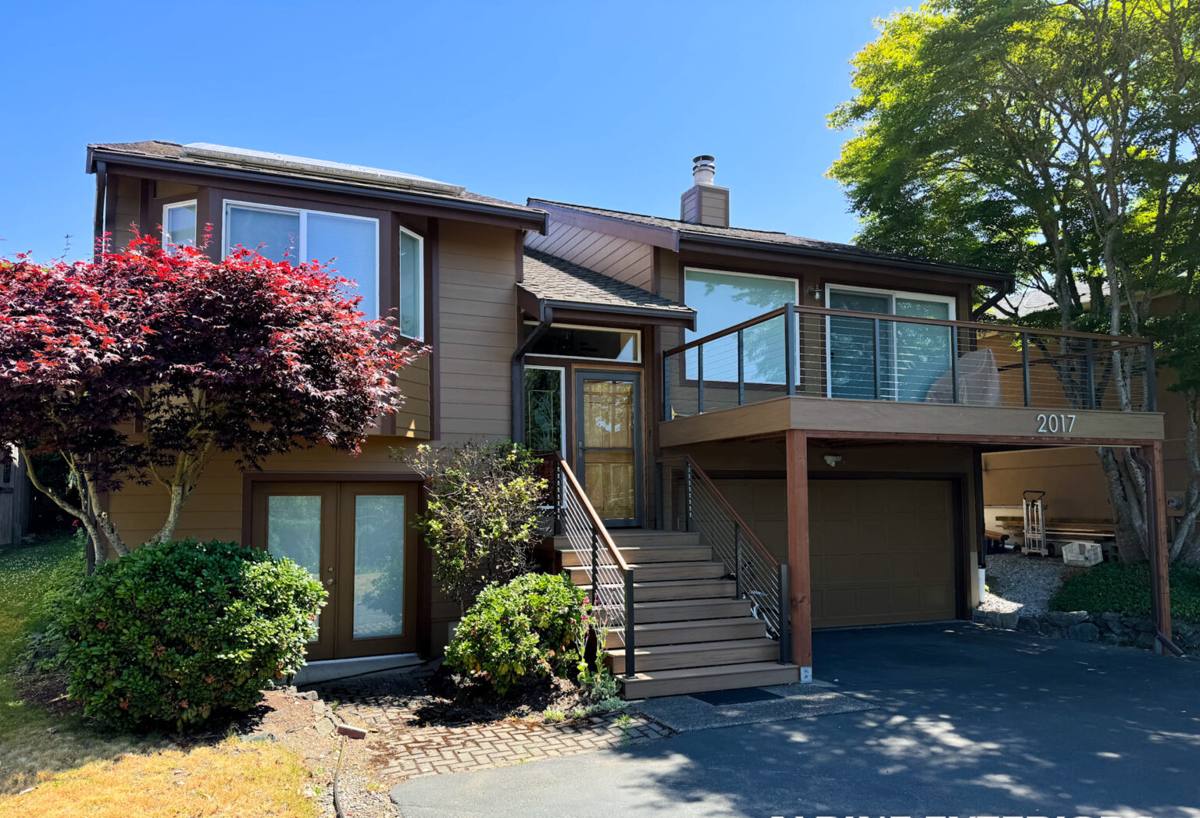
What Redmond Homes Actually Need From a New Roof
Moss and Moisture Management
Moss isn't just cosmetic. Once it establishes on shingles, it holds moisture against the roof surface longer than the material was ever designed to tolerate, and it works its way under shingle tabs and lifts them over time. Redmond's tree cover — especially on lots backing up to greenbelts or mature landscaping — makes shade and moisture retention a bigger factor here than in more open, sun-exposed parts of the region. A replacement roof should account for this from the start: proper shingle selection, attention to slope and sun exposure, and a plan for ongoing moss control rather than hoping it doesn't come back.
Ventilation That Matches Our Climate
Attics in this region deal with a lot of moisture-laden air, and a roof deck that can't breathe traps that moisture against the sheathing. Over a few seasons that shows up as soft spots, mold on the underside of the deck, or premature failure of the roofing material from underneath — problems that have nothing to do with the shingles themselves and everything to do with airflow. Balanced intake and exhaust ventilation is not an upsell; it's a requirement for a roof to reach its expected lifespan here.
Flashing and Water-Shedding Details
Most roof leaks don't start in the open field of shingles — they start at transitions: chimneys, skylights, valleys, sidewalls, and roof-to-wall intersections. In a climate with this much sustained rainfall, those details carry more water over more hours per year than they would in a drier region, so any weak point gets found quickly. Correct step flashing, counterflashing, and valley treatment are what separate a roof that sheds water reliably from one that looks right until the first real storm.
Signs a Redmond Roof Needs Replacing, Not Patching
- Granules collecting in gutters or at downspout outlets, especially after wind or heavy rain
- Shingles that are cupping, curling at the edges, or visibly thinning in spots
- Dark streaking or thick moss growth across a large portion of the roof, particularly on shaded slopes
- Daylight visible through the attic roof deck, or damp insulation after storms
- Sagging in the roofline or soft spots you can feel when walking the roof
- A roof that's 20+ years old (asphalt) or showing widespread wear rather than isolated damage
- Repeated leak repairs in different spots — a sign of general material failure, not one bad flashing detail
If the damage is isolated — one bad flashing point, a handful of storm-damaged shingles — a repair can be the right call. Replacement makes sense when the wear is spread across the roof or when the underlying materials (underlayment, decking) are compromised, since patching over a failing base just delays the real cost.
What a Correct Roof Replacement Involves
Tear-Off and Deck Inspection
We remove the existing roofing down to the deck rather than layering over it. That's the only way to actually see the condition of the sheathing — soft, delaminated, or water-stained decking needs to be replaced before anything new goes down, and you can't know that's needed until the old roof is off.
Underlayment and Ice/Water Protection
A synthetic or felt underlayment goes down as the roof's secondary water barrier, with additional ice-and-water shield membrane at vulnerable points — eaves, valleys, and around penetrations — where wind-driven rain is most likely to find a way in.
Flashing Replacement
Flashing gets replaced, not reused, at chimneys, skylights, valleys, and wall intersections. Old flashing has usually taken two decades of thermal expansion and contraction; reusing it to save a step is one of the more common shortcuts that leads to early leaks.
Ventilation Correction
We evaluate intake and exhaust ventilation as part of the job, not as an afterthought, and correct it where the existing setup is inadequate — which is common on homes that haven't had ventilation reassessed since original construction.
Material Installation
Shingles, panels, or other roofing material go down per manufacturer specification, with attention to nailing pattern, exposure, and sealing — details that affect wind resistance and warranty validity as much as they affect appearance.
Roofing Material Options for This Climate
| Material | Typical Lifespan Here | Moss/Moisture Behavior | Notes for Redmond Homes |
|---|---|---|---|
| Architectural asphalt shingles | 20-30 years | Moderate moss resistance; algae-resistant granule options help on shaded slopes | Most common choice; good balance of cost and durability for this climate |
| Standing seam metal | 40-60+ years | Sheds moss well; smooth surface doesn't hold moisture | Higher upfront cost, strong long-term value, handles heavy rain well |
| Composite/synthetic shingle | 30-50 years | Good moisture resistance; doesn't absorb water like wood | Reasonable alternative where a shake look is wanted without wood's maintenance |
| Cedar shake | 20-30 years with upkeep | Higher moisture retention; needs regular maintenance to resist moss and rot | We'll install it if requested, but it carries a real ongoing maintenance burden in this climate |
There's no single "best" material for every home — it depends on your roof's slope, sun exposure, budget, and how much ongoing maintenance you want to take on. We'll walk through the honest trade-offs for your specific roof rather than pushing one option.
Our Process for a Redmond Roof Replacement
- On-site inspection and estimate. We look at the current roof, attic ventilation, and any problem areas, and give you a clear written estimate — no pressure, no inflated "today only" pricing.
- Material selection. We go over options based on your home, budget, and how much shade or moss pressure your roof deals with.
- Scheduling around the weather. Roofing is weather-dependent work. We schedule with realistic windows and won't tear off a roof into a forecast that puts your home at risk.
- Tear-off, deck repair, and installation. Full removal, deck inspection and repair as needed, new underlayment, flashing, ventilation correction, and material installation.
- Cleanup and final walkthrough. Job site cleared of debris and nails (magnetic sweep included), and a walkthrough so you know exactly what was done.
Cost Factors for Redmond Roof Replacement
| Factor | Why It Matters |
|---|---|
| Roof size and pitch | Steeper roofs take longer and require more safety setup, affecting labor cost |
| Material choice | Asphalt, metal, and composite options span a wide cost range and lifespan |
| Deck condition | Rot or water damage found at tear-off adds material and labor to replace sheathing |
| Number of penetrations | Chimneys, skylights, and vents each need individual flashing work |
| Layers to remove | Homes with multiple existing layers take longer to tear off |
| Ventilation upgrades | Correcting inadequate intake/exhaust adds scope but protects the new roof |
We give firm written estimates after an actual inspection rather than a phone-quote range — a roof is too big an investment to price without seeing it.
Why a Crew That Already Works Redmond Matters
A roofer who works this area regularly already knows what King County inspectors look for, what ventilation setups tend to be under-built in homes of a certain age, and how much moss pressure to expect based on tree cover and slope orientation. That's not a guess made from a general climate zone — it's pattern recognition from doing this work here specifically. It also means we're accountable locally: if a warranty issue comes up, we're not driving in from three counties away.
We stand behind our workmanship and back materials with the manufacturer warranties that come with proper installation — which is exactly why installation detail matters as much as the shingle brand on the package.
If your roof is showing wear, holding moss, or you just want an honest read on how much life it has left, we'll come take a look and give you a straightforward, no-pressure estimate. Use the form below to get started.