 Seattle
 Roofing Built for Columbia City's Weather, Not Just Any Roof
Columbia City sits in one of the more established residential pockets of Seattle, with a mix of older craftsman bungalows, early-1900s housing stock, and newer infill construction packed onto tree-lined lots. That combination matters when it comes to roofing. Older homes often have roof decks, ventilation setups, and flashing details that were never built for the roofing products or code requirements we use today. A roof replacement here isn't just about swapping old shingles for new ones — it's about correcting whatever the original build got wrong and making sure the new system is matched to Seattle's climate, not just the house's age.
That climate is the real driver of everything on this page. King County sees long stretches of driving rain, persistent cloud cover that keeps roofs damp for days at a time, and a moss season that can run most of the year in shaded, tree-covered yards — which describes a lot of Columbia City. Add in the salt-tinged air that moves through the broader Puget Sound region and you've got conditions that are genuinely harder on a roof than most of the country deals with. A roof that would last three decades in a dry climate can fail early here if it wasn't installed with this environment in mind.
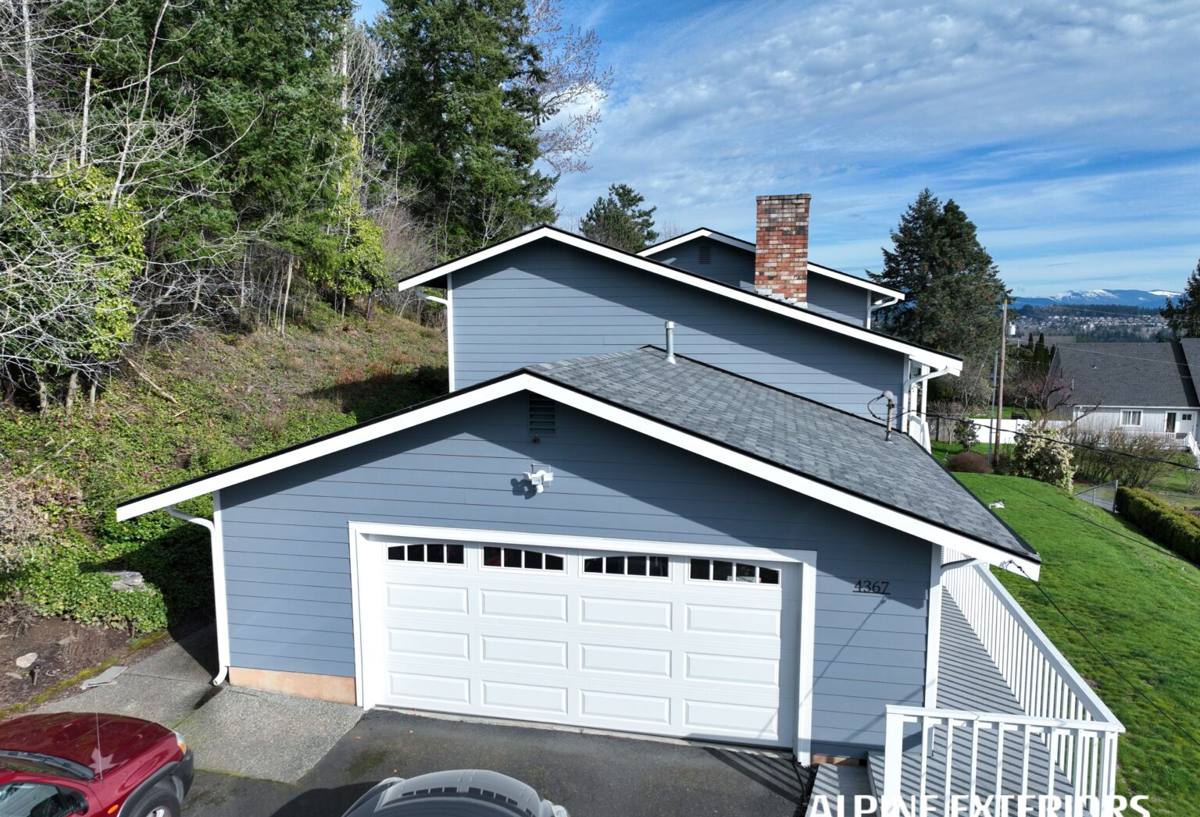
What Rain, Moss, and Damp Air Actually Do to a Roof
It's worth understanding the mechanism, not just the symptom. Constant moisture doesn't rot a roof overnight — it works slowly, and it finds every weak point.
- Driving rain gets pushed sideways by wind and works its way under shingles at edges, valleys, and anywhere flashing is undersized or poorly lapped.
- Moss and moss spores settle into shaded, north-facing, and tree-covered sections of roof, then root into the shingle surface, lifting granules and holding water against the deck.
- Trapped moisture from poor attic ventilation condenses on the underside of the roof deck, encouraging rot from the inside even when the top of the roof looks fine.
- Freeze-thaw cycles, while milder here than in colder states, still happen enough times a year to widen small cracks in aging shingles and flashing sealant.
None of these show up as a dramatic failure. They show up as a slow leak two years after you noticed the first dark streak, or as sagging decking discovered only when a contractor pulls the old roofing off.
Signs a Columbia City Roof May Be Due for Replacement
Repairs make sense for isolated damage. Replacement makes sense when the roof as a system is past the point where patching solves the underlying problem. Common signs we look for on inspections in this neighborhood include:
- Shingles that are cupping, curling at the edges, or missing granules in patches
- Heavy, persistent moss growth that regrows quickly after cleaning
- Dark streaking or staining that spreads year over year rather than washing off
- Soft or spongy spots when walking the roof, indicating deck damage underneath
- Daylight visible through the attic roof boards, or damp insulation after a rainy stretch
- A roof that's 20+ years old on asphalt shingles, or showing wear well before that age due to poor original ventilation
- Frequent flashing leaks around chimneys, skylights, or roof-wall intersections
If you're only seeing one or two of these, a repair or a professional moss treatment might buy you more years. If you're seeing several together, replacement is usually the more honest recommendation — and cheaper than chasing repairs on a roof that's already failing as a system.
Choosing Roofing Materials That Hold Up Here
What We Recommend and Why
Not every roofing product performs the same way under Seattle's rain-and-moss cycle. We steer homeowners toward materials with a track record in wet, shaded climates, and we're upfront about the trade-offs of options that look appealing but carry more maintenance burden in this environment. Cedar shake, for example, has a classic look that fits a lot of Columbia City's older housing stock, but it demands regular treatment and airflow underneath to resist moisture and moss — skip that maintenance and it ages fast in a climate this damp. Architectural asphalt shingles with algae-resistant granules and metal roofing both handle sustained moisture with far less upkeep.
| Material | Typical Lifespan | Moss/Moisture Resistance | Maintenance Needs |
|---|---|---|---|
| Architectural asphalt shingle | 25–30 years | Good, especially with algae-resistant granules | Periodic moss removal, gutter care |
| Standing seam metal | 40–50+ years | Excellent — moss struggles to root on metal | Low; occasional debris clearing |
| Cedar shake | 20–30 years with upkeep | Fair; needs treatment and ventilation to resist moss | High; regular treatment required |
| Synthetic/composite shingle | 30–50 years | Good; engineered to resist moisture absorption | Low to moderate |
There's no single "correct" material for every house — a Craftsman bungalow and a newer infill build in Columbia City may call for different choices based on roof pitch, budget, and how the house is meant to look. What matters is picking a material honestly matched to how much upkeep you're willing to do, not just the lowest bid on paper.
What a Properly Done Roof Replacement Actually Involves
A roof is only as good as what's underneath the shingles. A correct replacement in this climate includes several layers that are easy to skip and hard to notice once the roof is closed up:
- Full tear-off down to the deck, so old, saturated layers aren't trapped under new material
- Deck inspection and repair — replacing any soft, rotted, or delaminated sheathing found during tear-off
- Ice-and-water shield at eaves, valleys, and roof penetrations, where wind-driven rain is most likely to find a way in
- Synthetic underlayment across the full deck for a secondary moisture barrier beneath the shingles
- Balanced attic ventilation — intake at the eaves and exhaust at the ridge — so moist air isn't trapped against the underside of the deck
- New flashing at chimneys, skylights, valleys, and wall intersections rather than reusing old, brittle flashing
- Correct nailing pattern and shingle exposure per manufacturer specs, which is what actually protects the wind and warranty rating, not just the shingle brand
Skipping any one of these steps is how a roof that looks fine from the street starts leaking, rotting decking, or growing moss again within a few years — even with premium shingles on top.
Our Roof Replacement Process
Inspection and Estimate
We start by getting on the roof, not just looking at it from the ground. We check the deck, flashing, ventilation, and attic condition, then give you a straightforward estimate that explains what's driving the cost — not just a single number.
Material and Scope Selection
We walk through material options based on your roof's pitch, sun/shade exposure, and how much long-term maintenance you want to take on, along with what it'll actually cost to install and maintain over time.
Tear-Off and Deck Prep
Old roofing comes off down to the deck, damaged sheathing gets replaced, and we address any ventilation gaps before anything new goes down.
Installation
Underlayment, ice-and-water shield, flashing, and the finish material go on in that order, following manufacturer specs so your warranty is actually valid — not voided by a shortcut nobody sees until it's too late.
Cleanup and Walkthrough
We clear debris and nails from the property, then walk the finished roof with you so you know what was done and what to expect going forward.
Permits and Seattle's Requirements for a Reroof
The City of Seattle generally requires a permit for roof replacement work, and King County jurisdictions have their own inspection expectations depending on the scope of the job. On older homes in established neighborhoods like Columbia City, there can also be additional considerations around roof pitch, materials, or visible character if a home falls under any local design guidelines. We handle the permit process as part of the job rather than leaving it for the homeowner to sort out, and we flag anything unusual about a specific property before work starts, not after.
Why a Crew That Already Works in Columbia City Matters
Roofing done right depends on details that generic, out-of-area crews tend to miss: how much shade a given block actually gets and how that affects moss pressure, how older Seattle housing stock tends to be built, and what Seattle's permitting process actually requires before a crew shows up with a dumpster. A contractor who already works this neighborhood isn't guessing at any of that. That familiarity shows up in fewer surprises mid-project, a more accurate estimate up front, and a crew that can respond quickly if a problem shows up after a heavy storm rolls through.
Keeping Your New Roof Performing Long-Term
A well-installed roof still needs basic upkeep in this climate. Keep gutters clear so water isn't backing up under the shingle edge, keep overhanging branches trimmed back so shaded sections get some sun and airflow, and have moss treated before it takes hold rather than after it's rooted in. A quick annual look — either your own or a professional check — catches small issues while they're still small, cheap fixes instead of full sections of failed decking.
If your Columbia City home is showing signs of roof wear, or you just want an honest read on how much life is left in what you've got, we're glad to take a look. Reach out using the form below for a free, no-pressure estimate.