 Seattle
 Asphalt Shingle Roofing Built for University District's Climate
University District homes sit under a heavy tree canopy, close to Lake Washington and Portage Bay, in one of the wetter, shadier pockets of Seattle. That combination is hard on a roof. Asphalt shingles are still the most practical, cost-effective choice for most of these houses, but only when the installation accounts for what this specific neighborhood throws at a roof year-round: near-constant damp shade, needle and leaf litter, and long stretches without direct sun to dry things out.
We work on roofs across King County, and the pattern in University District is consistent. Homes with mature trees close to the roofline show moss and algae staining years before comparable roofs in sunnier, more open parts of the city. Homes without proper ventilation or ice-and-water protection at the eaves show soft decking and premature shingle failure long before the shingle's rated lifespan is up. The fix isn't a different product — it's a correct installation and a maintenance plan that matches the local conditions.
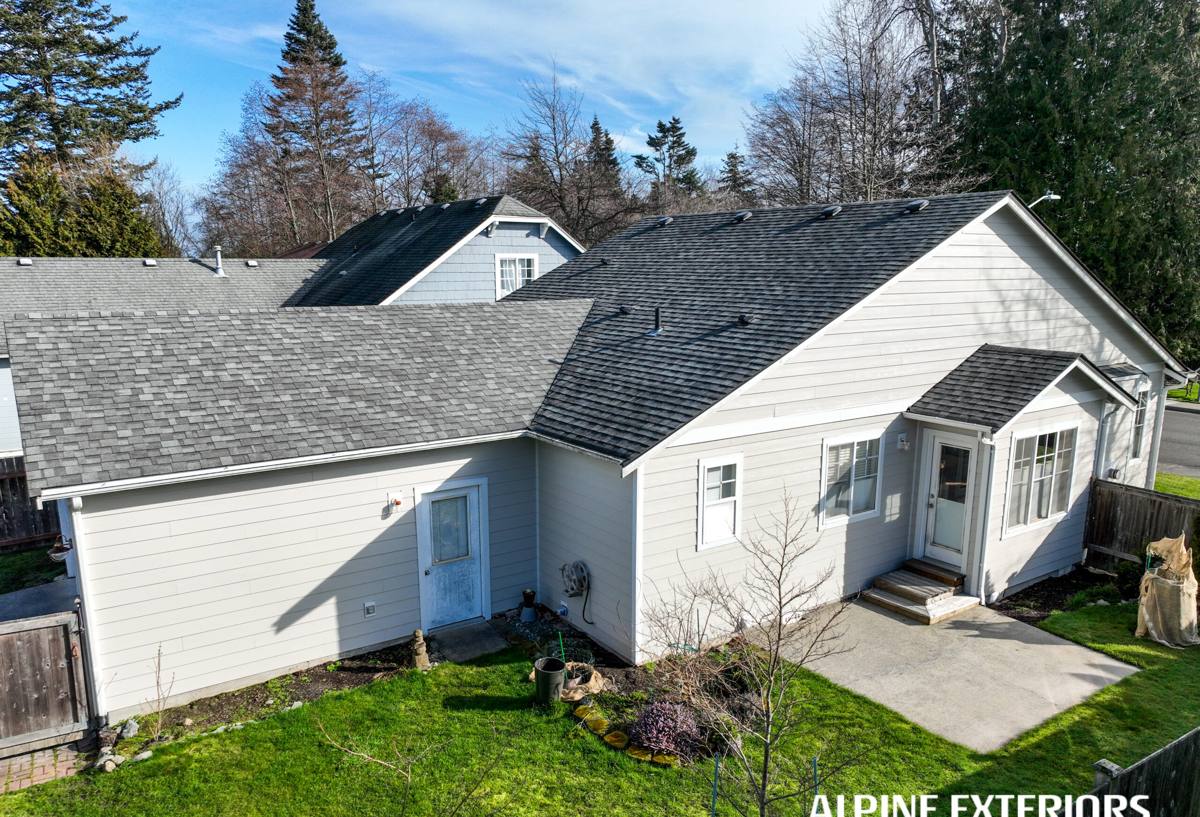
What This Climate Does to a Shingle Roof
Moss and Algae
Seattle's long wet season, combined with the shade cover common in this neighborhood, creates ideal conditions for moss and algae growth on north-facing slopes and anywhere debris collects. Moss isn't just cosmetic — it holds moisture against the shingle surface, works its way under shingle tabs, and lifts granules over time. Left unmanaged for a few seasons, moss growth shortens a roof's usable life significantly.
Driving Rain and Wind-Driven Water
Storms off Puget Sound bring rain at an angle, not just straight down. That matters at every penetration point — chimneys, vent pipes, skylights, and valleys — where water gets pushed sideways under poorly lapped flashing or worn sealant. A roof that's fine in a light shower can leak in a driving rain if the flashing details weren't done right the first time.
Tree Debris and Salt-Influenced Air
Needles, leaves, and cone litter collect in valleys and behind chimneys, holding moisture and accelerating wear in those spots specifically. And while University District isn't waterfront, the broader Puget Sound region's salt-influenced air still affects exposed metal — fasteners, flashing, and vent caps corrode faster here than in drier inland climates, which is why we don't cut corners on fastener and flashing material.
What a Correct Installation Looks Like Here
A shingle roof that's going to hold up in this environment needs a few things done right that are easy to skip on a rushed job:
- Ice-and-water shield at eaves and valleys — extra protection where water lingers longest and where ice damming can occasionally form during cold snaps.
- Synthetic underlayment across the full deck, not just felt paper, for a more reliable secondary water barrier under Seattle's extended wet season.
- Balanced attic ventilation — intake at the eaves, exhaust at the ridge — so moisture from inside the house doesn't condense against the underside of the deck in our damp, mild winters.
- Properly lapped step and counter-flashing at chimneys, walls, and skylights, sized and installed for wind-driven rain, not just vertical rainfall.
- Corrosion-resistant fasteners and metal appropriate for the Puget Sound region's air, not the cheapest option in the truck.
- Algae-resistant shingle granules on shaded or north-facing slopes where moss and algae pressure is highest.
None of this is exotic. It's standard trade practice done without skipping steps — but it's exactly what gets skipped on low-bid jobs, and it's exactly what shows up as leaks and moss five years later.
Our Process for University District Homes
1. Inspection and Honest Assessment
We start on the roof, not just from the ground. We check the deck for soft spots, look at existing ventilation, examine flashing at every penetration, and note tree cover and shading that will affect long-term moss risk. We tell you plainly whether you need a full replacement, a repair, or just a maintenance cleaning — we don't upsell a tear-off when a repair will hold.
2. Tear-Off and Deck Repair
Full removal of old roofing material so we can inspect the decking directly, replace any damaged or soft plywood or sheathing, and confirm the structure underneath is sound before anything new goes down.
3. Underlayment, Flashing, and Ventilation
Ice-and-water shield at vulnerable areas, synthetic underlayment across the field, new flashing at chimneys and walls, and ventilation components installed or corrected as needed.
4. Shingle Installation
Shingles installed to manufacturer specification for nailing pattern, exposure, and sealant activation — the details that determine wind resistance and warranty validity, not just how the roof looks from the street.
5. Cleanup and Walkthrough
Full site cleanup including magnetic sweep for nails, and a walkthrough where we show you the completed work and explain what maintenance, if any, the roof will need going forward.
Shingle Options: What We Typically Recommend
| Shingle Type | Typical Lifespan | Best Fit For | Trade-Offs |
|---|---|---|---|
| 3-tab asphalt | 15–20 years | Budget-conscious re-roofs, rental properties | Lower wind rating, flatter look, less algae resistance without upgraded granules |
| Architectural (laminate) asphalt | 25–30 years | Most owner-occupied University District homes | Higher upfront cost, but better wind rating and moss/algae-resistant options available |
| Premium/designer laminate | 30+ years | Homes wanting a heavier, dimensional look | Highest material cost; benefits are mostly aesthetic and warranty length |
For most homes in this neighborhood, we recommend architectural shingles with algae-resistant granules, especially on shaded slopes. The moss resistance and stronger wind rating are worth the modest price difference over standard 3-tab, given how much shade and rain this area gets.
Why We're Selective About Certain Products
Some lower-tier shingle lines cut corners on granule adhesion and sealant strip quality — details that matter more here than in drier climates because constant moisture exposure tests those weak points every week of the year. Our standard is to install products with a documented track record for wind and algae resistance, backed by a manufacturer warranty that's actually enforceable, rather than the cheapest SKU available. That's a maintenance and moisture-performance decision, not a brand-loyalty one.
Cost Factors for University District Roofs
| Factor | Why It Matters Here |
|---|---|
| Roof pitch and access | Many University District homes have steeper pitches and mature landscaping that complicates equipment access |
| Deck condition | Homes with long-term moss or leak history often need plywood or sheathing replacement discovered mid-tear-off |
| Number of penetrations | Chimneys, skylights, and multiple vent stacks each add flashing labor and material |
| Shingle tier chosen | 3-tab vs. architectural vs. premium laminate directly affects material cost and expected lifespan |
| Tree cover and cleanup | Heavier debris and moss removal adds prep time on shaded lots |
We give a written, itemized estimate after the inspection — not a phone-quote guess — so you know exactly what's driving the number before we start.
Maintenance Checklist for This Climate
Whether your roof is new or has a few years on it, these are the habits that actually extend a shingle roof's life in a shaded, wet neighborhood like this one:
- Have moss treated or gently removed before it spreads past a light dusting — don't wait for visible mats
- Keep gutters and valleys clear of needles and leaves, especially heading into fall storms
- Trim back branches that keep a section of roof in near-constant shade
- Get flashing around chimneys and skylights checked every few years, not just when a leak appears
- Schedule a roof inspection after any major windstorm, not just on a fixed annual schedule
- Address attic ventilation issues promptly — condensation damage from the inside is easy to miss until it's serious
Why a Crew That Already Works University District Matters
Roofing here isn't identical to roofing in a drier, more open part of King County. A crew that already works this neighborhood knows which slopes on a typical lot need algae-resistant shingles as standard rather than an upsell, how to work around mature trees and tighter lots without damaging landscaping, and what permitting and inspection expectations apply within Seattle city limits. That local familiarity shows up in fewer surprises during the job and a roof that's specified correctly for the site from the start, instead of a generic install that has to be corrected a few years in.
If you're dealing with visible moss, staining, missing granules, or a roof that's simply reaching the end of its service life, we're happy to take a look and walk you through what we're seeing — no pressure, no obligation. Reach out for a free estimate using the form below, and we'll schedule a time to inspect your roof and give you a straight answer on what it needs.