 Seattle
 Storm Damage Roof Repair Built for University District Homes
University District sits close enough to Lake Washington and the Montlake Cut that homes here take a steady beating from moisture year-round, and then get hit harder during the fall and winter storm cycles that roll through King County off the Sound. Between the older housing stock near the university and the mix of newer infill construction, roofs in this neighborhood cover a wide range of ages, pitches, and material types — which means storm damage doesn't look the same from one house to the next. A wind-lifted shingle on a 1920s bungalow near campus is a different repair than a split membrane on a low-slope addition a few blocks over. We look at each roof on its own terms rather than applying a one-size answer.
This page covers what storm damage repair actually involves for homes in this part of Seattle: what our regional climate does to roofing over time, how to tell if a recent storm caused real damage versus cosmetic wear, what a proper repair includes, and why working with a crew that already knows this neighborhood's housing stock matters more than it might seem.
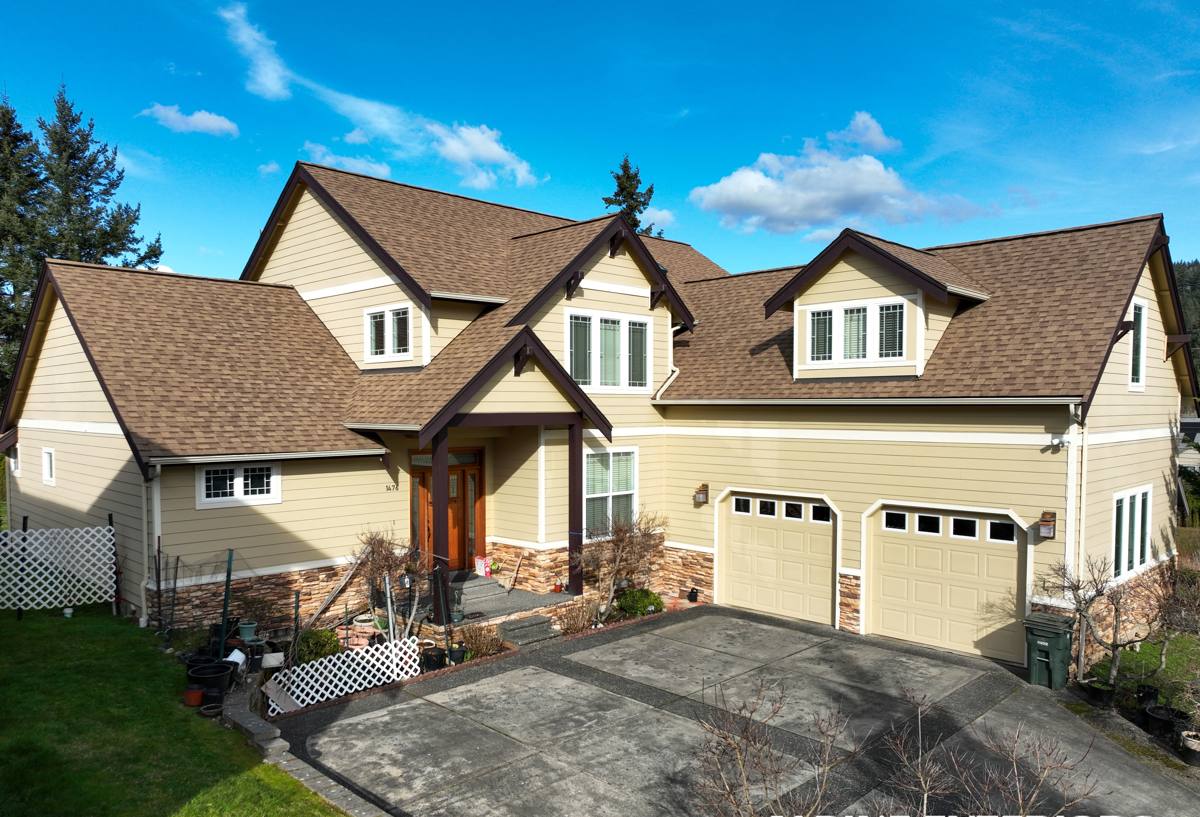
What Seattle's Climate Does to a Roof Over Time
Salt-tinged air off Puget Sound, driving rain that comes in sideways during winter fronts, and a moss season that can run eight or nine months out of the year all work against a roof at the same time. None of these on their own is dramatic, but together they shorten the useful life of roofing materials and make storm damage worse than it would be in a drier climate.
- Wind-driven rain gets pushed up and under shingle edges and flashing laps that were never designed to shed water sideways, which is how a windstorm turns a small gap into an active leak.
- Moss and algae growth holds moisture against the roof surface, which accelerates granule loss on composition shingles and can lift shakes and shingle tabs enough that the next storm's wind gets underneath them.
- Salt air, more noticeable the closer a property sits to the water, speeds up corrosion on exposed metal fasteners, flashing, and gutter hardware.
- Freeze-thaw swings, while less severe here than inland climates, still happen enough in University District winters to stress already-saturated roofing materials and widen small cracks.
A roof that's been quietly losing ground to moss and moisture for a couple of seasons is far more likely to suffer real storm damage in a single windstorm than a roof that's been kept clean and maintained. That's the pattern we see most often when we're called out after weather events in this area.
Recognizing Storm Damage vs. Normal Wear
Not every issue that shows up after a storm was caused by that storm — sometimes wind and rain just expose damage that was already developing. Either way, the fix needs to happen before water finds its way into the attic or wall cavity. Here's what we check for on a post-storm inspection:
- Shingles that are cracked, curled, torn, or missing outright, especially along ridge lines and roof edges where wind uplift concentrates
- Flashing around chimneys, skylights, and roof-to-wall transitions that's bent, separated, or pulled loose from its seal
- Granule buildup in gutters and downspouts, a sign that shingle surfaces took a beating from wind and hail-like debris impact
- Dented or damaged gutters and downspouts, which affect how well the roof sheds water during the next storm
- Soft spots, sagging, or staining on interior ceilings, which usually means water has already gotten past the roofing surface
- Debris punctures from branches or blown material, common on lots with mature trees
- Lifted or separated ridge caps and hip caps, often the first thing to go in sustained wind
If you're not sure whether what you're seeing is worth a repair call, a straightforward rule applies: any active water intrusion or visible structural movement needs attention now, and everything else is worth a professional look before the next storm system arrives.
How We Approach a Storm Damage Repair
Inspection First, Not a Sales Pitch
We start by getting on or over the roof to see the actual extent of the damage — not just the spot you can see from the ground. Storm damage is frequently worse or more widespread than it looks from a ladder, particularly on steeper pitches common on the older homes near campus. We document what we find with photos so you have a clear record, whether you're paying out of pocket or working with an insurance adjuster.
An Honest Repair-or-Replace Read
Most storm damage is repairable without a full roof replacement. We'll tell you plainly when a targeted repair is the right call and when the damage — or the roof's overall condition — means a repair would just be a short-term patch on a roof that's near the end of its service life. We don't pad a repair into a replacement, and we don't recommend a repair on a roof that's clearly not going to hold up through another wet season.
Matching Materials and Doing the Job Right
A patch that doesn't match the surrounding roofing — in material, weight, and weathering — sticks out and can create its own water path if it's not tied into the existing roof correctly. We match shingle type, color, and installation pattern as closely as the existing roof allows, and we make sure flashing and underlayment details are actually correct, not just covered over.
Insurance Claims and Documentation
Wind and storm damage is often covered under homeowners insurance policies, but coverage details, deductibles, and what counts as "storm-caused" versus "wear and tear" vary by policy and by carrier. We're not your insurance company and we won't promise a claim outcome, but we can:
- Provide clear photo documentation of the damage tied to a specific date or storm event
- Give a written scope of the repair work needed
- Walk an adjuster through what we found if that's helpful to your claim
What we won't do is inflate a scope of work to match what a policy might cover, or recommend replacement when a repair is genuinely sufficient. Our estimate reflects what the roof actually needs.
Repair vs. Replacement: What Actually Drives the Decision
| Factor | Leans Toward Repair | Leans Toward Replacement |
|---|---|---|
| Extent of damage | Isolated to one section or slope | Spread across multiple slopes or the whole roof |
| Roof age | Under roughly 12-15 years for asphalt shingle roofs | Nearing or past typical service life |
| Underlying condition | Decking and structure are sound | Soft decking, widespread moss damage, or prior unresolved leaks |
| Material availability | Matching shingles or materials still available | Discontinued material with no reasonable match |
| History of repairs | First significant repair on this roof | Repeated patch jobs in different areas over recent years |
These are general guidelines, not a formula — a 20-year-old roof with one storm-damaged section and sound decking can still be a reasonable repair candidate. That's why the inspection matters more than any rule of thumb.
Roofing Materials and How They Handle Our Weather
University District's mix of home ages means we work on several roofing types, and each responds differently to wind, rain, and moss exposure:
| Material | Storm/Wind Resistance | Moss & Moisture Notes |
|---|---|---|
| Composition (asphalt) shingle | Good when properly nailed and sealed; wind-rated products hold up well | Prone to moss and algae growth without regular cleaning; granule loss over time |
| Cedar shake/shingle | Moderate; individual shakes can lift or split under sustained wind | Highest moisture sensitivity of common local materials; needs consistent maintenance |
| Metal roofing | Strong wind performance when installed correctly | Sheds moisture well; less hospitable surface for moss, though valleys still need attention |
| Low-slope membrane (TPO/modified bitumen) | Depends heavily on seam and edge detailing | Ponding water and debris buildup are the bigger long-term risks |
We don't push one material as universally "better" — each has trade-offs in cost, maintenance, appearance, and how it performs against our specific climate. What matters is that whatever is on your roof now is installed and maintained correctly for how Seattle weather actually behaves.
Why a Crew That Works University District Specifically Matters
Roofing problems in this neighborhood tend to follow patterns tied to the local building stock and terrain — older framing on some blocks, tree canopy coverage that keeps certain roofs shaded and mossier than others nearby, and wind exposure that varies depending on how close a property sits to open corridors like the Cut or the Ave. A crew that regularly works this specific area has already seen how these variables play out on real roofs, which means faster, more accurate diagnosis and fewer surprises once work is underway. It also means we can usually get a technician out promptly after a storm event, since we're not routing a truck across the entire county to reach you.
Preventing the Next Storm From Doing the Same Damage
A repair fixes what already happened. A few maintenance habits reduce how much the next storm can do:
- Have moss removed and treated before it builds up thick enough to hold moisture against shingles
- Keep gutters and downspouts clear so storm runoff actually leaves the roof instead of backing up under the edge
- Trim back tree limbs that overhang the roof, which cuts down on both debris impact and shade that feeds moss growth
- Schedule a roof check after any major windstorm, even if nothing looks obviously wrong from the ground
- Address small flashing or sealant issues promptly, before wind-driven rain finds them
None of this eliminates storm risk entirely — nothing does in this climate — but it meaningfully reduces how much damage a given storm can cause and how often you're dealing with repairs at all.
Get a Straightforward Assessment
If a recent storm has you wondering whether your roof took real damage, or you've just noticed something that doesn't look right after a windy week, we're happy to take a look and give you an honest read on what's actually going on. There's no pressure and no obligation — just a clear assessment from a crew that knows what University District roofs are up against. Use the form below to request a free estimate.