 Seattle
 Why Columbia City Roofs Wear Differently Than Roofs Inland
Columbia City sits close enough to Lake Washington and the broader Puget Sound air mass that roofs here deal with a specific combination of stresses: near-constant moisture for months at a stretch, occasional salt-tinged air moving in off the water, and long stretches of shade under mature street trees that never let a roof fully dry out. None of that is dramatic on its own. It's the accumulation that causes problems — moss getting a foothold in shaded valleys, granule loss from repeated wet-dry cycling, and fasteners or flashing that corrode faster than they would in a drier climate.
An asphalt shingle roof installed correctly for this environment looks almost the same as one installed anywhere else in the country — same shingle, same basic layers. The difference is in the details: how much attention goes into ventilation, underlayment coverage, flashing at every penetration, and the small choices that determine whether moss and trapped moisture become a five-year problem or a non-issue.
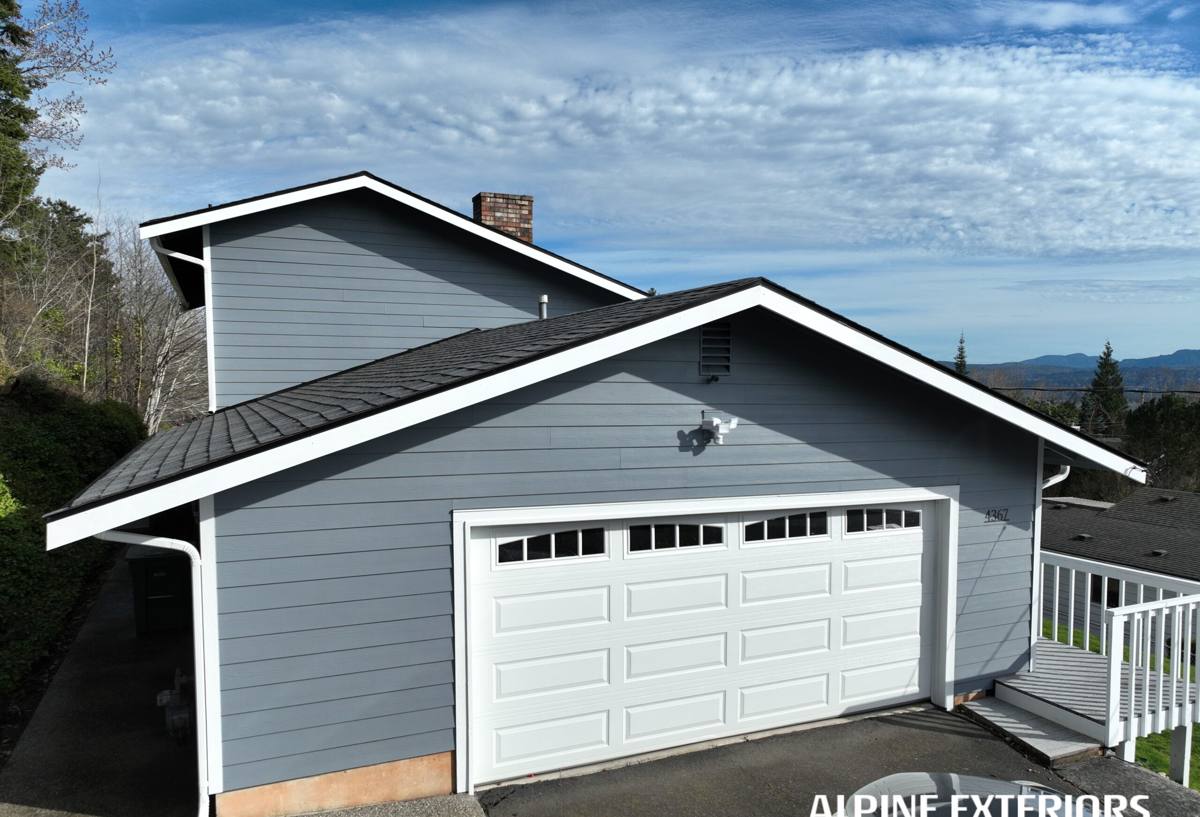
What a Correct Asphalt Shingle Job Actually Involves
A lot of roofing problems in this area don't come from bad shingles — they come from shortcuts taken underneath them. Asphalt shingles are a system, not a single product, and every layer has a job to do in a wet marine climate.
The Deck and Underlayment
Before shingles go down, the roof deck gets inspected for soft spots, delamination, or rot — common on older Columbia City homes where a roof may have been re-covered once or twice without ever checking what's underneath. Any bad sheathing gets replaced, not shingled over. From there, a synthetic or felt underlayment goes down as the roof's real waterproofing layer, with self-adhered ice-and-water membrane at eaves, valleys, and any low-slope transitions where wind-driven rain is most likely to work its way under the shingles.
Flashing
Flashing around chimneys, skylights, walls, and vent pipes is where the majority of leaks on older King County homes actually start — not in the open field of the roof. Step flashing, counter-flashing, and pipe boots all need to be either new or verified sound, and tied properly into the underlayment so water sheds outward instead of finding a seam to follow inward.
Nailing and Fastening Pattern
Manufacturers specify a nailing pattern and nail placement for a reason — wind uplift resistance and warranty validity both depend on it. Driving rain off the Sound tests roofs during winter storms, and a shingle that's hand-nailed slightly high or at an angle is a shingle that can lift in a gust years before it should.
Ventilation
Balanced intake at the soffits and exhaust at the ridge keeps the attic close to outdoor temperature and humidity. Without it, moisture from the living space condenses on the underside of the deck, which shortens the life of the shingles from below — a failure mode a homeowner never sees until the sheathing is already damaged.
Choosing a Shingle for Marine Rain and Moss Season
Most 3-tab and architectural (laminate) asphalt shingles sold today will physically survive Seattle's climate. The differences that matter locally come down to algae resistance, wind rating, and how the shingle handles repeated saturation over a wet Pacific Northwest winter.
| Shingle Type | Typical Lifespan Here | Best For | Trade-Offs |
|---|---|---|---|
| 3-Tab Asphalt | 15–20 years | Budget-conscious re-roofs, rentals, simple rooflines | Lower wind rating, less algae resistance without upgraded granules |
| Architectural / Laminate | 25–30 years | Most Columbia City homes; better looks and durability | Higher material cost, still needs good ventilation to hit rated life |
| Premium/Designer Laminate | 30+ years | Homes wanting a heavier, dimensional look | Highest upfront cost; benefit is mostly aesthetic and impact resistance |
For this specific climate, we lean toward architectural shingles with algae-resistant (AR) granules as the practical baseline rather than an upgrade — moss and algae staining show up faster here than in drier regions, and AR granules genuinely slow that process rather than just marketing around it. We'll walk through the honest trade-offs for your roof's shade, slope, and budget rather than push the most expensive option by default.
Our Process, Start to Finish
- Inspection and estimate — we get on the roof (or use a close visual and attic inspection when access is limited), check the deck, flashing, ventilation, and shingle condition, and give you a straight assessment of repair vs. replace.
- Written scope — what's being replaced, what underlayment and ice-and-water package is included, flashing details, and ventilation changes, spelled out before any work starts.
- Tear-off — old shingles and underlayment removed down to the deck so we can actually see what we're working with, not just cover over hidden damage.
- Deck repair — any soft, rotted, or delaminated sheathing is replaced before anything new goes down.
- Underlayment and flashing — ice-and-water membrane at vulnerable areas, synthetic underlayment across the field, new flashing at penetrations and transitions.
- Shingle installation — installed to manufacturer nailing spec, proper exposure, and starter/ridge detail for wind resistance.
- Ventilation check — intake and exhaust balanced or corrected as part of the job, not treated as a separate upsell.
- Cleanup and final walkthrough — magnetic sweep for stray fasteners, debris hauled off, and a final look at the finished roof with you.
Moss, Algae, and Ongoing Maintenance
Moss is close to unavoidable somewhere on a shaded roof in this region — the question is whether it's managed or left to spread. Left alone, moss lifts shingle edges, holds moisture against the surface, and accelerates granule loss in exactly the areas that get the least sun. A few habits keep it in check without much effort or expense:
- Keep gutters and valleys clear of needles and leaf debris, which hold moisture and give moss somewhere to establish
- Trim back overhanging branches to let more light and airflow reach shaded roof sections
- Have moss physically removed (not just chemically treated) every year or two on north-facing or heavily shaded slopes
- Use zinc or copper strips near the ridge on moss-prone roofs — rain washing over them naturally discourages regrowth downslope
- Avoid pressure washing shingles directly, which strips protective granules and shortens shingle life
Repair or Replace? What to Look For
Not every roof problem means a full replacement. A good inspection separates what's cosmetic from what's structural, and what can be patched from what's a sign the whole roof is at the end of its service life.
- Granules collecting in gutters — normal in small amounts, a concern in heavy, ongoing amounts
- Curling, cupping, or cracked shingles concentrated in one area — often repairable
- Curling or cracking spread across the whole roof — usually a sign the shingles are simply aged out
- Daylight visible through the attic roof deck — needs attention regardless of shingle age
- Soft or spongy spots when walking the roof — deck damage, not just a shingle issue
- Staining on interior ceilings near exterior walls — often a flashing failure, not a field leak
- Moss thick enough to lift shingle tabs — accelerates damage and should be addressed before it spreads
If your roof is showing isolated issues and is under roughly 15 years old, a repair is often the honest recommendation. Past that, especially with 3-tab shingles or a roof that's never been re-vented, replacement usually makes more financial sense than chasing repairs on a roof that's already near the end of its life.
What Affects the Cost
Every roof is different, but the same handful of factors drive most of the cost variation we see on Columbia City homes.
| Factor | Why It Matters |
|---|---|
| Roof size and number of layers to remove | Tear-off labor scales directly with square footage and existing layers |
| Roof pitch and access | Steeper roofs and tight lot access slow the work and add safety requirements |
| Deck condition | Hidden rot found during tear-off adds material and labor not visible from an initial inspection |
| Number of penetrations and valleys | Chimneys, skylights, and valleys each need individual flashing work |
| Shingle tier chosen | 3-tab, standard architectural, and premium laminate carry different material costs |
| Ventilation upgrades needed | Adding or correcting intake/exhaust vents is a smaller add-on when done during a full re-roof |
We give a written, itemized estimate up front so you know what's driving the price, not just a single lump number.
Why It Matters That We Already Work in Columbia City
A roofing crew that already works this neighborhood knows what's typical for the housing stock here — the era most homes were built, the roof pitches and rooflines common to the area, and the shaded, moss-prone spots that tend to need extra attention regardless of which street you're on. That familiarity shows up in small ways: knowing to check for the deck issues common on homes of a certain age, understanding how tree canopy and lot layout affect a specific roof section, and being able to schedule around Seattle's wetter months without treating every job the same as one in a drier part of King County.
It also means a shorter drive for us, which keeps overhead down and makes it easier to be responsive if something needs a follow-up look after the job is done.
Get a Straight, No-Pressure Estimate
If your Columbia City roof is showing its age, dealing with recurring moss, or you just want an honest read on where it stands, we're glad to take a look. The estimate is free, there's no pressure attached to it, and you'll get a clear explanation of what we see and what your real options are — use the form below to get started.