 Seattle
 Ballard's Climate Is Tougher on a Deck Than It Looks
Ballard sits close to the water, and that proximity shapes everything about how a deck ages here. The combination of salt-laden air, driving rain that comes in sideways off storms, and a shoulder season that stretches from October through April creates conditions that most decking products simply weren't designed around. A deck that would hold up fine in a dry inland climate can start showing problems within a few years out here if it wasn't built with this specific environment in mind.
Salt Air and Corrosion
Being near Puget Sound means the air carries a fine salt content that settles on exposed surfaces, including deck boards, railings, and especially fasteners. Over time, salt exposure accelerates corrosion in lower-grade hardware and can pit or discolor certain metal railing systems. It doesn't ruin a deck overnight, but it steadily wears down anything that wasn't specified for a coastal-adjacent environment.
Driving Rain and Moisture Cycling
Seattle rain isn't just frequent — a lot of it in Ballard comes in at an angle, driven by wind off the water. That means decks here deal with more wind-driven moisture intrusion at ledger boards, stair stringers, and railing posts than decks in more sheltered parts of King County. The real damage usually isn't from the rain itself but from the wet-dry cycling: boards and framing members that stay damp for days, then dry out, then get wet again, over and over through the fall and winter.
Moss, Algae, and a Long Shade Season
Many Ballard lots have mature trees or sit close enough to neighboring structures that decks get extended shade for large parts of the year. Combined with our wet season, that's exactly the recipe moss and algae need. On wood decking this means slippery boards and surface decay; on composite it mostly affects appearance and traction unless the surface texture and drainage underneath weren't handled correctly during installation.
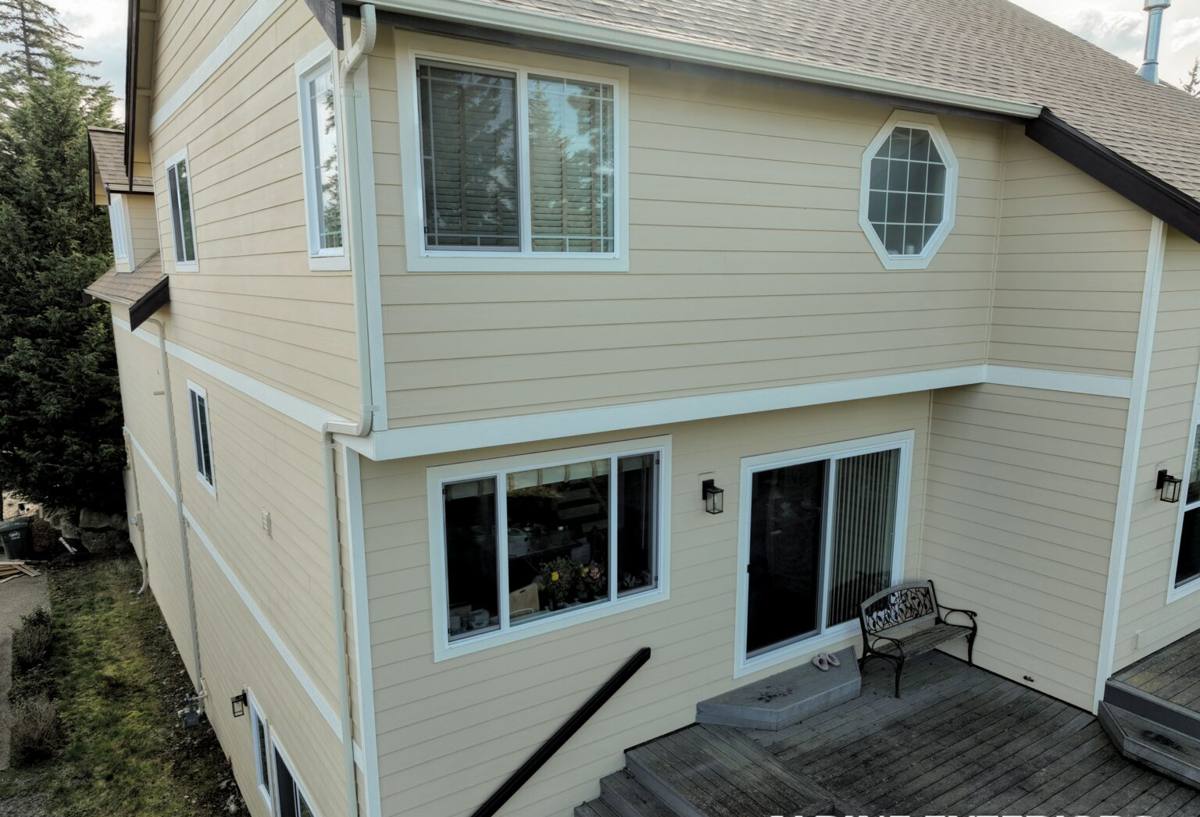
Why Composite Makes Sense for This Environment
What Composite Decking Actually Is
Composite decking is a blend of wood fiber and recycled plastic, formed into boards that don't need staining or sealing the way wood does. Most quality boards today are "capped" — meaning they have a plastic polymer shell wrapped around the core — which is what actually gives them their moisture and stain resistance. Uncapped composite, an older style, absorbs more water at the core and is more prone to swelling and fading over time.
Where Wood Still Struggles Here
We're not going to tell you wood decking doesn't work in Seattle — plenty of it is out there and has been maintained for decades. But wood in a climate like Ballard's demands a maintenance schedule most homeowners don't keep up with: annual or biannual sealing, regular moss treatment, and close attention to any boards that start cupping or splitting from repeated wet-dry cycling. Composite shifts that burden from ongoing maintenance to a correct upfront installation — which is where the real value is, provided the build underneath the boards is done right.
What a Correct Composite Deck Build Involves Here
Substructure and Framing
The boards get the attention, but the framing underneath is what actually determines how long a deck lasts in this climate. Pressure-treated joists and beams need to be rated for ground contact where applicable, and every cut end or drilled hole should get sealed — not just the factory-treated faces. In a climate that cycles wet and dry as often as ours does, an unsealed cut end is where rot starts first.
Drainage and Airflow Underneath
This is the step that gets skipped most often on lower-quality installs, and it's the one that matters most in a wet climate. Composite boards themselves resist moisture well, but if water and debris can't drain and air can't move underneath the deck, you end up with a damp microclimate that promotes mold, mildew, and accelerated wear on the framing — even if the decking on top looks fine. Proper joist spacing, ledger flashing, and clearance above grade all factor into whether a deck stays dry underneath through our wet months.
Fasteners, Flashing, and Hardware
Given the salt content in the air this close to the water, we use fasteners and hidden fastening systems rated for coastal or marine-grade exposure rather than standard-grade hardware. The same goes for any flashing at the ledger board connection to the house — this is one of the most common failure points on decks in wet regions, and it's cheap to do correctly and expensive to fix later once water has gotten behind the siding.
Choosing the Right Composite Board for a Wet, Shaded Site
Not all composite is built the same, and the right choice depends on how much sun, shade, and moisture a specific spot on your property actually gets. Here's how the main tiers generally compare:
| Board Type | Moisture Resistance | Maintenance | Best For |
|---|---|---|---|
| Uncapped composite | Moderate — core can absorb water over time | Occasional cleaning; more prone to fading | Budget-conscious, drier or covered areas |
| Capped composite (standard) | Good — polymer shell resists moisture | Low; periodic washing | Most Ballard decks, full sun or partial shade |
| Capped composite (premium/high-density) | Excellent, including at cut ends when sealed | Minimal | Heavily shaded, low-airflow, or ground-level decks |
For shaded, low-airflow spots — common on tree-lined Ballard lots — we generally steer clients toward the higher-density capped boards with a textured, slip-resistant surface, since those areas are the most prone to moss and standing moisture.
Our Installation Process
- On-site assessment — we look at sun exposure, drainage slope, tree cover, and how close the deck sits to grade before recommending a board and structure.
- Framing and structural work — joists, beams, and ledger connection are built or upgraded to current code and sealed at every cut.
- Drainage planning — grading, gaps, and where needed, under-deck drainage systems, so water has somewhere to go instead of pooling.
- Decking installation — boards fastened with hidden or corrosion-rated hardware, with proper expansion gaps for temperature and moisture movement.
- Railings and finishing — hardware and railing materials chosen with the same salt-air and moisture exposure in mind as the decking itself.
- Final walkthrough — we go over care and what to expect through the first wet season.
Living With a Composite Deck Through a Ballard Winter
One of the real advantages of composite here is how little it asks of you, but "low maintenance" doesn't mean "no maintenance" — especially with our moss season. A short seasonal routine keeps a composite deck looking and performing the way it should:
- Sweep leaves and debris off regularly in fall — trapped organic matter is what feeds moss and mildew growth
- Rinse the deck periodically through winter, especially shaded sections, to keep spores from taking hold
- Use a soft-bristle brush and a composite-safe cleaner for any moss or algae film — avoid pressure washers on the highest settings, which can damage the board's cap
- Check railing hardware annually for corrosion, particularly on decks with more direct exposure to wind off the water
- Keep gutters and downspouts near the deck clear so runoff isn't dumping extra water onto or under the structure
Permits and Local Considerations
Deck projects in Seattle and King County typically require a permit once you're past a certain size or height above grade, and inspections check things like railing height, guard spacing, and structural connections. We handle the permitting process as part of the job rather than leaving it to the homeowner, and we build to the code that applies in Seattle specifically rather than a generic standard, since requirements can vary from one jurisdiction to the next.
Why It Matters to Hire a Crew That Already Works in Ballard
A deck built by someone unfamiliar with this specific stretch of coastline can look identical to one built correctly — right up until the first wet winter exposes what's underneath. Crews who work Ballard regularly already know which fastener grades hold up against the salt air, how much drainage clearance a shaded, low-airflow lot needs, and where ledger flashing tends to get shortcut on lower-bid jobs. That familiarity isn't a marketing point — it's the difference between a deck that needs attention in year three and one that's still solid well past year fifteen.
If you're weighing composite decking for a Ballard property, we're happy to walk the site, talk through board options for your specific sun and shade conditions, and give you a straightforward, no-pressure estimate using the form below.