 Seattle
 Why Ballard Decks Wear Differently Than Decks Inland
Ballard sits close to Salmon Bay, Shilshole Bay, and the Ballard Locks, which means homes here deal with a mix of weather that inland Seattle neighborhoods don't get nearly as much of: a steady dose of salt-laden air off the water, wind-driven rain that gets pushed sideways under eaves and railings, and a long, low-sun moss season that can run from October through May. None of these factors are dramatic on their own, but together they add up to faster wear on fasteners, finishes, and any decking material that isn't suited for damp, salty conditions.
A deck built with generic, one-size-fits-all specs might hold up fine in a drier or more sheltered part of King County, then show corrosion, cupping, or slick moss growth within a couple of seasons in Ballard. The fix isn't complicated, but it does require building with this specific microclimate in mind from the first footing to the last board.
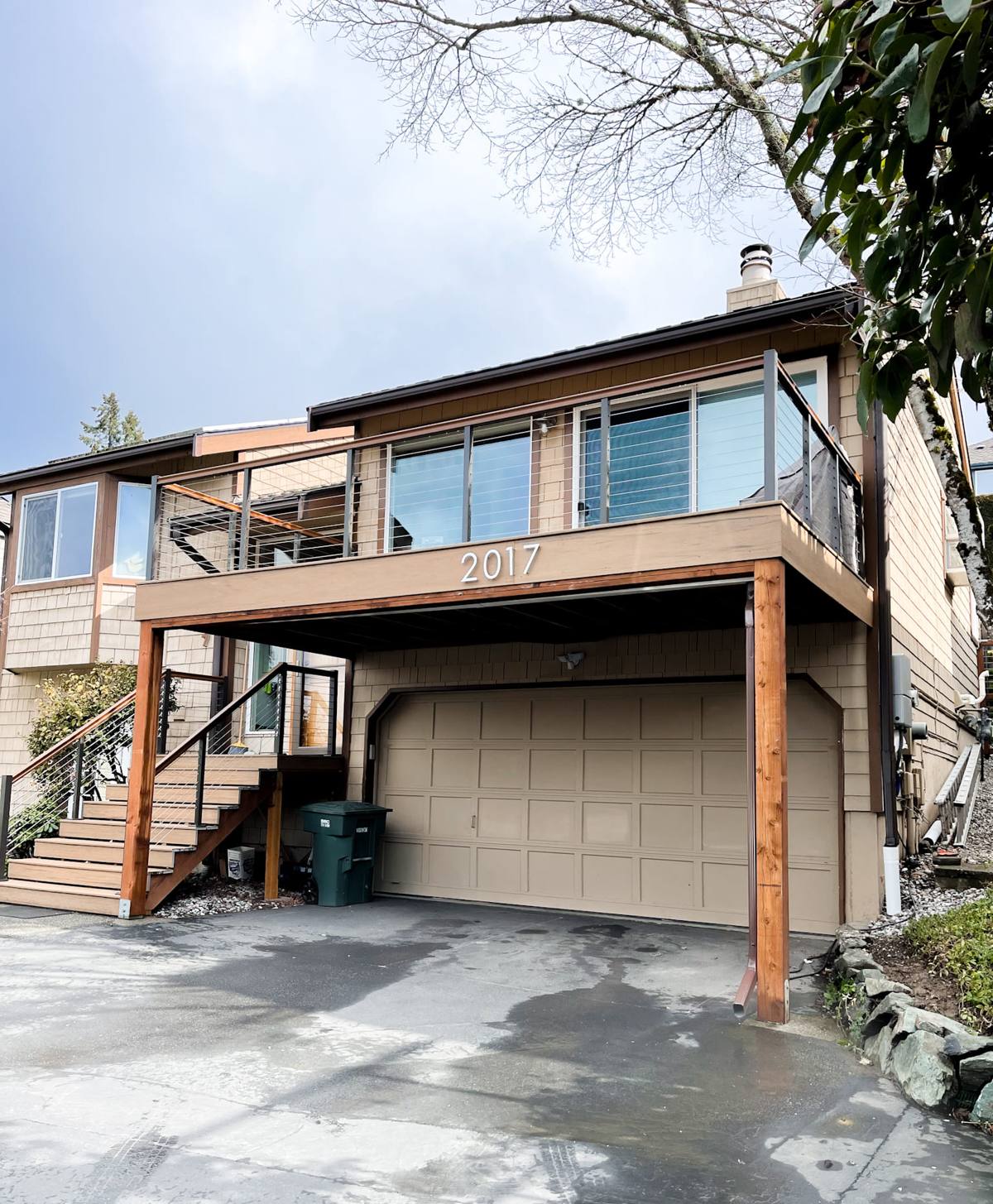
What "Built Correctly" Means for a Ballard Deck
Fasteners and Hardware
Salt air accelerates corrosion on standard hardware faster than most homeowners expect. Structural connectors, ledger bolts, joist hangers, and screws all need to be rated for coastal or salt-exposure use — typically stainless steel or a heavy-duty coated fastener system matched to the decking manufacturer's specs. Mixing metals (for example, an aluminum flashing against untreated steel hardware) can also speed up galvanic corrosion, so hardware selection has to be consistent, not just individually rated.
Framing and Ledger Attachment
The ledger board — where the deck attaches to the house — is the single most water-sensitive connection on the entire structure. Done wrong, it's the most common point where moisture works its way behind siding and into wall framing over time. A correct ledger detail includes proper flashing that sheds water outward away from the house, not just a bead of caulk, plus the right fastener spacing and a gap or drainage plane depending on the siding type.
Decking Surface and Drainage
Standing water is what turns a deck into a moss farm. Proper board spacing, a slight slope away from the house, and joist framing that lets water actually drain instead of pooling underneath all matter more in a wet climate like ours than they would somewhere drier. Ballard's rain doesn't come in occasional storms as much as it comes in long, low, steady stretches, so a deck that dries out slowly is a deck that stays damp most of the winter.
Choosing a Decking Material for Salt Air and Rain
There's no single "best" decking material for every home — it depends on budget, maintenance appetite, and how exposed the deck is to wind and water off the bay. Here's how the common options actually compare under Ballard's conditions:
| Material | How It Handles Salt Air & Rain | Maintenance | Typical Lifespan Here |
|---|---|---|---|
| Pressure-treated wood | Good with proper sealing; end grain and fastener points are the weak spots | Re-seal or stain every 1-2 years | 15-20 years with upkeep |
| Cedar | Naturally rot-resistant but softer; needs finish maintained to resist moss and graying | Annual cleaning, periodic refinishing | 15-20 years with upkeep |
| Composite decking | Handles moisture and salt air well; surface doesn't absorb water like wood | Periodic washing, no staining/sealing | 25-30+ years |
| PVC decking | Fully water-resistant, doesn't support rot; best for high-moisture, shaded areas | Occasional washing | 25-30+ years |
We'll walk you through the honest trade-offs for your specific deck — a shaded, tree-covered lot near the water has different needs than a sun-exposed rear deck, and the right call for a rental property is often different than the right call for a forever home.
A Note on Warranty and Installation Sensitivity
Composite and PVC products carry strong manufacturer warranties, but those warranties are usually contingent on installation following the manufacturer's fastening, spacing, and ventilation specs exactly. We install to those specs as our standard practice — it's the difference between a warranty that actually holds up and one that gets voided by a shortcut nobody notices until years later.
Moss, Algae, and Long-Term Maintenance in a Wet Climate
Moss doesn't mean a deck was built badly — it means the deck stays damp, which in Ballard's climate is close to unavoidable for at least part of the year. What separates a deck that's easy to keep clean from one that becomes a slip hazard is airflow underneath, proper drainage, and a decking surface that doesn't hold moisture against the wood grain.
- Keep gutters and downspouts clear so runoff isn't dumping directly onto or near the deck surface
- Sweep leaves and debris off the boards regularly through fall — trapped debris holds moisture and feeds moss growth
- Rinse or lightly scrub the surface a couple of times a year, especially shaded areas that don't get direct sun
- Check that under-deck airflow hasn't been blocked by storage, skirting without vents, or landscaping grown up against the framing
- Inspect fasteners and ledger flashing annually for early rust staining or gaps, which are easier to fix early than after they've caused damage
- Re-seal wood decking on schedule rather than waiting until it's visibly graying or cracking
Foundation and Structural Considerations
Ballard's mix of soil types and older housing stock means footing depth and post placement aren't always a copy-paste job from house to house. King County frost depth requirements set the minimum, but drainage around the footings matters just as much in a neighborhood that gets sustained winter rain rather than hard freezes. Poorly draining footings can shift or heave over time even without a deep freeze, which is why we check actual site drainage rather than just meeting the code minimum on paper.
For raised decks or anything attached to an older home, we also look at the condition of the rim joist and existing framing the new structure will tie into. A new deck is only as strong as the point it's attached to, and older Ballard homes sometimes have framing that needs reinforcement before a ledger can be safely bolted on.
Permits and Code in Seattle
Most custom decks in Seattle require a permit, particularly if the deck is elevated, attached to the house, or above a certain size threshold. Permitting covers things like footing depth, guardrail height, stair geometry, and ledger attachment — all the structural details that matter most for a deck that's going to hold up through King County winters. We handle the permit process as part of the job rather than treating it as an extra step, because a deck that skips permitting can create real problems at resale or insurance time down the road.
How Our Process Works
1. On-Site Assessment
We look at your specific lot — sun exposure, drainage patterns, proximity to the water, existing structure condition — before recommending a material or design. What works two blocks from Shilshole Bay isn't necessarily what we'd recommend for a more sheltered inland lot.
2. Honest Material and Design Conversation
We'll lay out the real trade-offs between wood, composite, and PVC for your situation, including upfront cost versus long-term maintenance, so you can make the call that fits your budget and how much upkeep you actually want to do.
3. Permitting and Planning
We prepare and submit what's needed for the City of Seattle permit process and plan the build around footing, ledger, and drainage details specific to your property.
4. Build
Framing, ledger flashing, footings, and decking installation are all done to manufacturer and code specs — not just "good enough for now" shortcuts that show up as problems in a few years.
5. Walkthrough and Maintenance Guidance
Before we call the job done, we walk the finished deck with you and go over what upkeep it actually needs for our climate — realistic expectations, not a generic care sheet.
Why Hiring a Crew That Already Works in Ballard Matters
Deck-building advice that's technically correct in general can still be wrong for this specific neighborhood. A crew that's used to drier, more sheltered job sites may not think twice about standard hardware, standard ledger flashing, or a decking material that's fine most places but struggles here. A crew that regularly builds and repairs decks around Ballard and the rest of Seattle already knows where the recurring problems show up — corroded fasteners near the water, moss buildup on shaded north-facing decks, ledger leaks on older homes — and builds to avoid them from the start instead of fixing them after the fact.
That local familiarity also means a more accurate estimate. We're not guessing at what King County permitting will require or how a lot's drainage will behave through a wet winter — we've already seen it play out on decks like yours nearby.
Get a Straightforward Estimate
If you're planning a new custom deck or replacing one that hasn't held up to Ballard's weather, we're happy to take a look and give you honest options — no pressure, no upsell on materials you don't need. Use the form below to request a free estimate.