 Seattle
 Ballard's Weather Is Harder on Siding Than People Expect
Ballard sits close to Puget Sound and the Ballard Locks, which means homes here deal with a combination most inland Seattle neighborhoods don't get in the same dose: salt-laden air moving in off the water, driving rain that hits siding sideways instead of straight down, and a long stretch of the year — often October through May — where surfaces simply don't dry out. That combination is exactly what wears down the wrong siding material or a sloppy installation. It's not that Ballard is uniquely brutal on houses; it's that the margin for error is smaller here than it is somewhere dry and sheltered.
Salt air accelerates corrosion on exposed fasteners and metal trim. Driving rain finds gaps at butt joints, corner boards, and window trim that would stay dry in a calmer climate. And moss doesn't just grow on roofs — it colonizes damp siding surfaces, holds moisture against the substrate, and quietly does damage long before a homeowner notices a problem. Any siding job in Ballard needs to be planned around all three of these at once, not treated as a generic install.
What We Typically Find on Ballard Homes
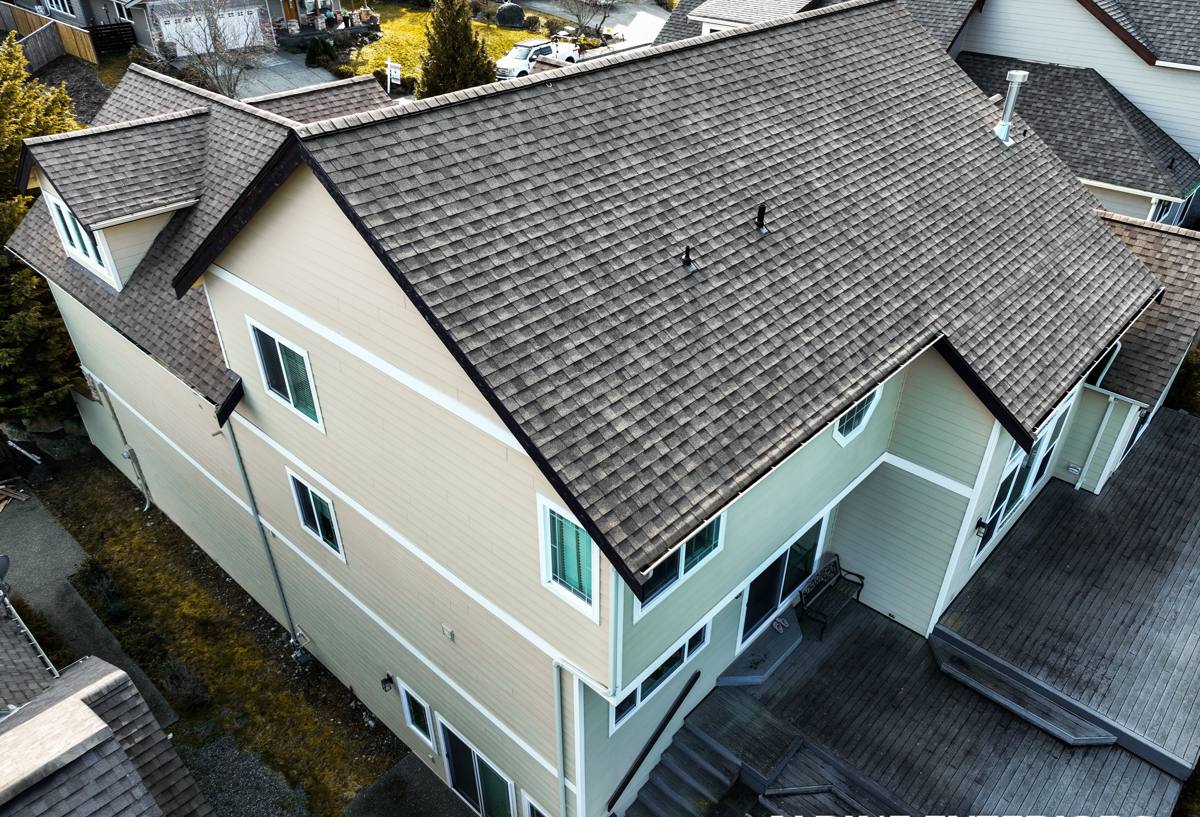
Ballard's housing stock is a mix of older craftsman bungalows, mid-century homes, and a growing number of newer townhomes and infill builds near Shilshole and the Locks. On the older homes, we regularly find original wood siding that's been painted over repeatedly, past repairs done with mismatched materials, and in some cases housewrap or drainage details that were never installed correctly the first time. On homes that were re-sided more recently, we see a lot of vinyl and engineered wood products that were reasonable choices when installed but haven't held up well against the moisture load this area gets year after year.
Common issues we're called out for
- Soft or delaminating siding near ground level, downspouts, and low-slope roof-to-wall intersections
- Moss and algae staining on north- and west-facing walls that stay shaded and damp
- Rusted or bleeding fasteners on older wood or metal siding exposed to salt air
- Gaps at trim and corner boards where caulk has failed and water has been tracking behind the siding
- Paint that won't hold — repeated repainting cycles instead of a factory-cured finish
Why We Install Only James Hardie Fiber Cement
We standardized on James Hardie fiber cement siding, and we don't install vinyl, LP SmartSide, or other composite or engineered wood products. That's a deliberate call, not a brand preference. Fiber cement is non-combustible, doesn't rely on paint alone to shed water the way wood does, and holds its shape and finish in freeze-thaw and wet-dry cycling far better than vinyl or engineered wood panels. James Hardie also engineers specific product lines — including its HZ5 climate designation — for regions like the Pacific Northwest that see sustained moisture rather than dry heat, which matters more in Ballard than in a lot of the country.
Hardie's ColorPlus factory finish is also relevant here specifically because of the moss and mildew pressure Ballard sees. A factory-baked finish resists fading and staining better than field-applied paint, and Hardie backs it with a real, transferable warranty — useful if you sell the house before the siding's service life is up, which happens often in this market.
What a Correct Fiber Cement Installation Actually Involves
Drainage plane and rainscreen gap
In a climate that gets driving rain as often as Ballard does, the water-resistive barrier behind the siding matters as much as the siding itself. Correct installation means a continuous, properly lapped drainage plane, and in most cases a rainscreen gap that lets any moisture that gets behind the panels drain and dry instead of sitting against the wall sheathing. Skipping this step is one of the most common ways a fiber cement job fails early, regardless of how good the siding itself is.
Fastening and clearances
James Hardie publishes specific fastener types, spacing, and penetration requirements, along with minimum clearances from grade, roof lines, and decks. Those clearances aren't cosmetic — they keep the bottom edge of the siding from sitting in standing water or snow, which is exactly the kind of chronic dampness that leads to failure over time.
Flashing and joints
Every window, door, and roof-to-wall transition needs flashing detailed to shed water outward, not just caulk applied over a gap. Butt joints between siding pieces need to be treated correctly — sealed or flashed per manufacturer spec, not just butted together and painted over. This is where a lot of driving-rain leaks in this area actually originate.
How Fiber Cement Compares in a Marine Climate
| Material | Moisture/salt-air performance | Maintenance in Ballard's climate | Notes |
|---|---|---|---|
| James Hardie fiber cement | Strong — engineered HZ5 line, non-combustible, dimensionally stable when wet | Occasional wash-down; factory finish resists fading and moss staining | What we install exclusively |
| Vinyl siding | Can warp or become brittle with temperature swings; seams are a moisture entry point | Low upkeep but limited repair options once damaged | Not installed by our crew |
| Cedar / natural wood | Attractive but moisture-sensitive; needs an intact finish at all times | Frequent refinishing, especially in shaded, damp areas | High long-term maintenance in this climate |
| LP SmartSide / engineered wood | Wood-based core is sensitive to sustained moisture exposure at cut edges and joints | Finish and joint maintenance is installation-sensitive | Not installed by our crew |
Our Process, Start to Finish
- On-site assessment: we walk the exterior, check for hidden moisture damage at trim, corners, and low-slope transitions, and evaluate the existing drainage details.
- Removal and inspection: old siding comes off and we inspect the sheathing underneath for rot or soft spots before anything new goes up — this is where hidden problems get caught.
- Drainage plane and rainscreen install: a continuous water-resistive barrier goes on, with a rainscreen gap where the wall assembly calls for one.
- Flashing at every penetration: windows, doors, vents, and roof lines get flashed before siding goes over them.
- James Hardie siding installation: panels or lap siding installed to manufacturer fastening and clearance specs, with correctly treated joints.
- Trim, caulking, and touch-up: factory-finish touch-up paint at cut edges, sealed joints where specified, and finished trim details.
- Final walkthrough and cleanup: we review the completed work with the homeowner and clear the site of debris and old material.
Living With Fiber Cement Through a Ballard Moss Season
Correctly installed James Hardie siding is low-maintenance, but "low-maintenance" doesn't mean "no maintenance" in a climate that stays damp for months at a stretch. A little seasonal attention goes a long way toward protecting the investment.
- Rinse siding down once or twice a year, especially on shaded north- and west-facing walls where moss and mildew take hold first
- Keep gutters clear so water isn't sheeting down the siding face during heavy rain
- Trim back landscaping and tree cover that keeps siding shaded and damp longer than it needs to be
- Check caulking at trim and joints every year or two and re-seal if it's cracked or pulling away
- Address any soft spots, staining, or fastener rust early rather than waiting — small moisture problems are cheap to fix and expensive to ignore
What Affects the Cost of a Ballard Siding Project
| Factor | Why it matters |
|---|---|
| Home size and wall complexity | More corners, dormers, and trim detail mean more cutting, flashing, and labor time |
| Condition of existing sheathing | Hidden rot found during tear-off adds repair work before new siding can go on |
| Access and story height | Multi-story sections, tight side yards, or steep grade near the water add setup time |
| Drainage plane and rainscreen scope | Full rainscreen assemblies take more material and labor than a basic weather-resistive barrier |
| Trim, corner, and joint detailing | More cut edges and joints mean more sealing and finish work to get right |
Why a Crew That Already Works in Ballard Makes a Difference
Siding work in this neighborhood isn't identical to siding work ten miles inland. A crew that already works Ballard regularly knows which walls take the worst of the wind-driven rain off the Sound, which older homes are likely to have outdated or missing drainage details behind the existing siding, and how Seattle's permitting and inspection process applies to exterior work in King County. That familiarity shows up in fewer surprises during tear-off, fewer callbacks for missed flashing details, and a finished job that's actually built for the weather it has to survive — not just installed to a generic spec and hoped for the best.
If you're planning a siding project in Ballard, we're happy to take a look and talk through what your home actually needs. Fill out the form below for a free, no-pressure estimate.