 Seattle
 Why Ballard's Climate Is Hard on Siding
Ballard sits close to Puget Sound and the water that surrounds it, which means homes here deal with a combination of stresses that inland Seattle neighborhoods see less of: salt-laden air, wind-driven rain that hits walls sideways instead of falling straight down, and a moss season that runs longer than most homeowners realize. None of these problems are dramatic on their own. What they do is work slowly, over years, against whatever is on the outside of your house. Siding that isn't built for this combination tends to look tired well before it's actually failed structurally — and by the time it fails structurally, there's often water damage underneath that costs far more to fix than the siding itself.
Salt Air and Marine Exposure
Proximity to the Sound means airborne salt settles on exterior surfaces more than it does a few miles inland. Salt accelerates corrosion on fasteners, trim hardware, and any metal flashing that isn't properly protected. It also interacts with certain paints and coatings over time, which is part of why the finish on your siding matters as much as the substrate underneath it.
Wind-Driven Rain and Sideways Weather
Seattle's rain isn't usually heavy in volume compared to other parts of the country, but in exposed Ballard locations it frequently comes in at an angle, driven by wind off the water. That matters because siding systems are engineered assuming water will hit the wall and run down — not get pushed up under laps and around trim. A siding job that's watertight in a calm, straight-down rain can still leak in Ballard's typical weather if the flashing details and lap geometry weren't built for wind-driven conditions.
The Long Moss Season
Cool temperatures, shade from mature trees, and near-constant moisture from fall through spring give moss and algae a long window to establish themselves on north-facing walls, under eaves, and anywhere airflow is limited. Moss holds moisture against the siding surface far longer than the surface would otherwise stay wet, which is a problem for any material that isn't dimensionally stable when damp.
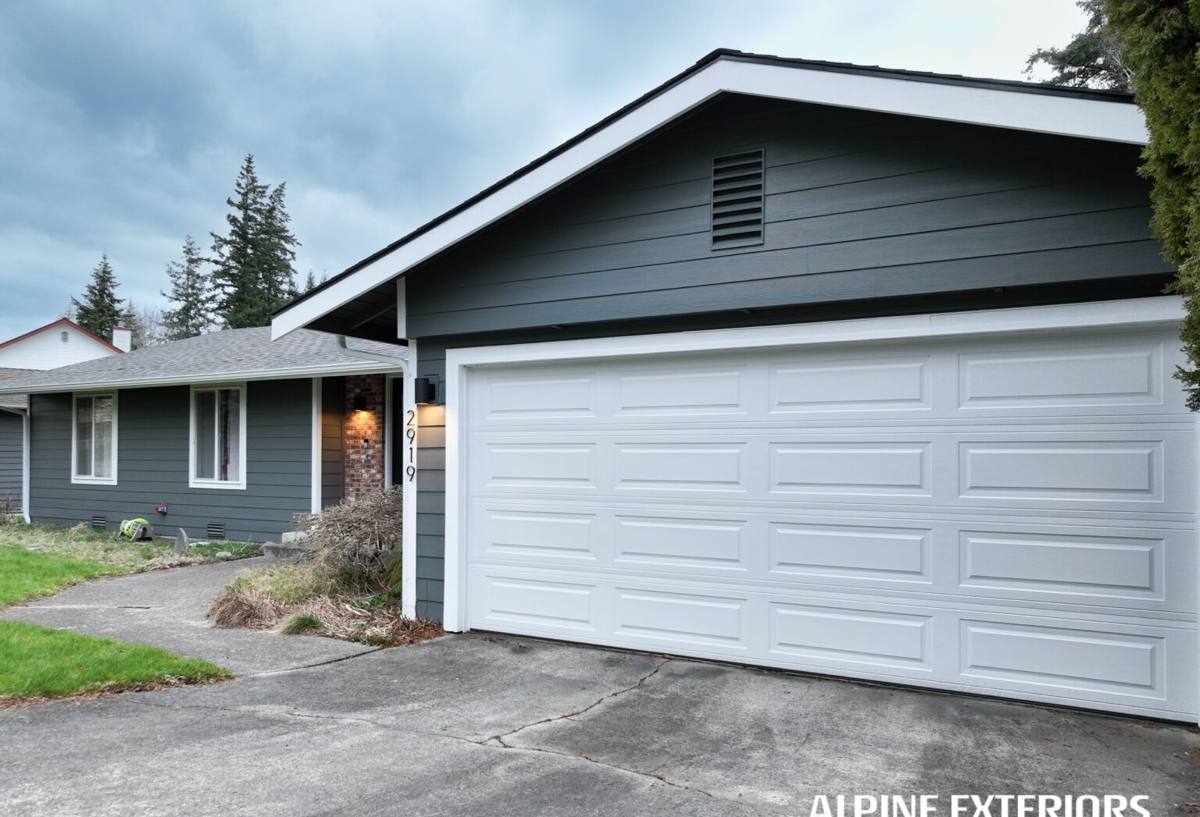
What James Hardie Brings to a Ballard Home
We install James Hardie fiber cement exclusively, and in a climate like this one, the reasons are practical rather than promotional.
A Material That Doesn't Move With Moisture
Fiber cement is dimensionally stable — it doesn't swell, cup, or warp the way wood-based products can when they stay damp for extended stretches, which is exactly the condition Ballard's moss season creates. That stability is also what keeps caulk joints and paint film intact longer, because the substrate underneath isn't expanding and contracting against them every time the weather shifts.
HZ5 Climate-Engineered Product Line
James Hardie engineers its siding by climate zone, and the Pacific Northwest falls into the HZ5 category — built with this region's combination of moisture exposure and temperature swings in mind. That's a meaningful distinction from a one-size-fits-all siding product, because the formulation and moisture-management performance are matched to conditions like Ballard's rather than to a national average.
ColorPlus Factory Finish
Hardie's ColorPlus finish is baked on in a controlled factory environment rather than sprayed or brushed on site, which produces a more consistent, better-adhered coating than field-applied paint typically achieves. In a salt-air environment, finish durability is one of the biggest variables in how long siding keeps its color and resists chalking or fading. ColorPlus is backed by its own finish warranty separate from the substrate warranty, which is worth understanding before you choose a color and finish option.
Non-Combustible Composition
Fiber cement doesn't contribute fuel to a fire the way wood-based siding products can. That's a real advantage regardless of neighborhood, and it's one of the core reasons we standardized on Hardie rather than engineered wood siding products.
What Correct Installation Involves
James Hardie siding performs the way it's designed to only when it's installed to the manufacturer's specifications — and in a wind-driven-rain climate like Ballard's, the details matter more than they would somewhere drier.
Drainage Plane and Rain Screen Gap
A weather-resistive barrier goes on the wall sheathing first, and in most Ballard installations we build in a rain screen gap behind the siding. That gap lets any water that does get past the siding drain and evaporate instead of sitting against the back of the panel or the sheathing — which is the difference between a wall that dries out and one that stays chronically damp.
Fastening and Clearances
Hardie specifies fastener type, spacing, and penetration depth for a reason — under-driven or over-driven nails, or the wrong fastener material, create weak points that show up as cracking or corrosion staining down the line. Clearances above rooflines, decks, and grade also matter more here, since standing water or splash-back at those transitions is a common source of hidden rot in wetter climates.
Caulking and Flashing at Penetrations
Every window, vent, and utility penetration is a place where wind-driven rain can find a way in if the flashing and sealant aren't done correctly. We treat these details as the actual weatherproofing system, not just trim work.
| Installation Detail | Done to Spec | Common Shortcut |
|---|---|---|
| Weather barrier | Continuous, properly lapped, rain screen gap where called for | Barrier interrupted at seams or skipped rain screen entirely |
| Fasteners | Correct type, spacing, and depth per Hardie spec | Whatever fasteners are on hand, driven by feel |
| Clearances | Proper gap above roofline, deck, and grade | Siding run tight to grade or roof, trapping moisture |
| Penetration flashing | Flashed and sealed before siding goes on | Caulk applied over the siding as an afterthought |
Our Process for a Ballard Job
The steps are the same principles wherever we work, but the sequence gets extra attention here because there's less margin for error in a marine, high-rainfall setting.
- Assessment — we look at exposure direction, existing moisture damage, moss and algae patterns, and any trouble spots like poorly flashed windows or low-clearance areas before we scope the job.
- Tear-off and sheathing check — removing the old siding lets us actually see the sheathing, not guess at its condition. Any rot or soft spots get addressed before anything new goes on.
- Weather barrier and drainage plane — installed continuously, with a rain screen gap where the wall assembly calls for one.
- Flashing at every penetration — windows, doors, vents, and any wall-mounted fixtures are flashed before the siding covers them.
- Hardie installation to spec — correct fasteners, clearances, and lap details throughout.
- Final inspection — checking caulk lines, clearances, and trim details before we call the job done.
Why a Crew That Already Works Ballard Matters
A lot of siding problems in this neighborhood aren't failures of the material — they're failures of installation choices that ignored local conditions. A crew that regularly works Ballard homes already knows which walls take the worst of the wind-driven rain, how much of a moss problem to expect on shaded north sides, and where salt exposure tends to be worst. That local pattern recognition shows up in small decisions — where to add extra flashing attention, which clearances to be strict about, how to sequence work around Seattle's wetter months — that a crew unfamiliar with the area might not think to make.
Living With Hardie Siding in a Marine, Mossy Climate
Correctly installed Hardie siding is low-maintenance, not zero-maintenance. A few habits go a long way toward keeping it looking good and performing well for the long term.
- Rinse siding periodically, especially north-facing and shaded walls, to keep moss and algae from establishing
- Trim back vegetation and tree limbs that hold moisture against the wall or block airflow
- Check caulk joints around windows and trim annually and re-caulk any that have cracked or pulled away
- Keep gutters and downspouts clear so water isn't overflowing onto siding below
- Watch for chalking or color fade near ground level, where salt spray and splash-back are most concentrated
- Avoid pressure washing directly into laps and seams — a garden hose and soft brush are usually enough
What Affects the Cost of a Ballard Siding Project
Every home is different, but the same handful of factors tend to drive cost up or down on jobs in this area.
| Factor | Why It Matters |
|---|---|
| Existing sheathing condition | Rot found during tear-off adds repair scope before new siding can go on |
| Wall exposure and complexity | More corners, penetrations, and height mean more flashing and labor detail |
| Siding profile and finish choice | Lap width, texture, and ColorPlus color options carry different material costs |
| Rain screen requirements | Adding a drainage gap is extra labor but reduces long-term moisture risk |
| Access and site conditions | Tight lots, fencing, or landscaping can add setup and staging time |
We don't quote a job without seeing the actual walls — anyone who gives you a firm number sight unseen is guessing. If you're weighing a siding replacement in Ballard, we're happy to come take a look, walk the exterior with you, and put together a free, no-pressure estimate that accounts for your home's specific exposure and condition.