 Seattle
 Board & Batten Siding in Bellevue: Built for a Wet Climate
Board and batten is one of the most requested siding styles on the Eastside right now, and for good reason — the vertical lines read as clean and modern on newer builds, and they suit the craftsman and farmhouse-influenced homes that make up a lot of Bellevue's older neighborhoods just as well. But board and batten is also one of the least forgiving siding styles to get wrong. It has more seams than a standard lap job, it depends on narrow battens that have to be fastened and flashed correctly, and in a climate like ours, a shortcut that would only cause cosmetic problems in a dry state can turn into a moisture problem here in a few wet seasons. We install board and batten siding across King County, and Bellevue is a regular part of that work — enough that we know the shaded, tree-covered lots and lake-effect humidity that show up again and again on jobs in this area.
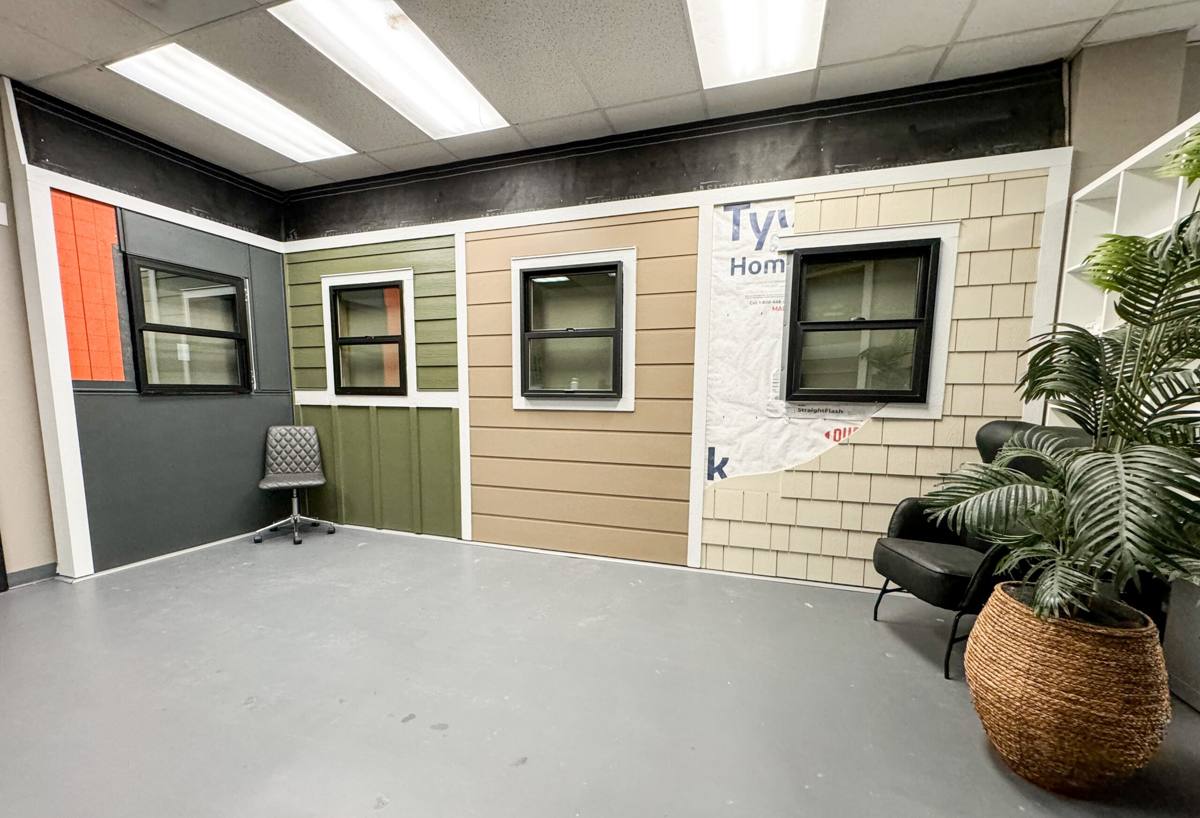
What the Puget Sound Climate Does to Vertical Siding
Bellevue sits back from the open water compared to Seattle's waterfront neighborhoods, but it isn't isolated from the region's weather. Salt-laden air moving in off Puget Sound, long stretches of driving rain through fall and winter, and a moss season that can run most of the year all affect siding here — board and batten included. Vertical siding actually sheds bulk water a little better than horizontal lap, since there's no shelf for water to sit on the way there can be on the top edge of a lap board. But that advantage only holds if the details behind the boards are done right.
Moss and Shade
Bellevue's older residential streets have a lot of mature tree cover, and shaded, north-facing walls stay damp far longer after a storm than walls that get afternoon sun. Moss and algae take hold on any siding material in those conditions, but the vertical battens on this style create extra ledges and shadow lines where organic growth likes to start, especially where the caulk has begun to fail.
Driving Rain and Wind-Driven Moisture
Storms coming off the Sound don't just fall straight down — wind pushes rain sideways into wall assemblies, and that wind-driven moisture finds its way behind board and batten siding faster than people expect if the seams and flashing weren't detailed for it. This is the failure point we see most often on older installs we're called out to inspect or repair.
Humidity and Slow Drying
Even on dry days, King County's ambient humidity is high enough that siding assemblies here need a real path to dry out between rain events. A wall that can shed water but can't dry stays wet longer than one that never got soaked in the first place, and that's where rot and coating failure start.
What a Correct Board & Batten Installation Involves
Board and batten looks simple from the curb — wide boards, narrow strips covering the seams — but the parts nobody sees are what determine whether it lasts fifteen years or forty.
The Rainscreen Gap
In a climate this wet, siding should not be nailed flat against the weather-resistant barrier. A rainscreen gap — typically created with vertical furring strips over the house wrap — gives any moisture that does get past the siding a way to drain and lets air move behind the panels so they can actually dry. Skipping this step is one of the most common corners cut on lower-bid board and batten jobs, and it's invisible once the siding is up.
Flashing at Every Seam and Penetration
Every horizontal butt joint, every window and door opening, and every spot where a fixture or hose bib penetrates the wall needs proper flashing and sealant designed for the assembly — not just a bead of caulk at the surface. Board and batten has more vertical seams than lap siding, so there are simply more places where this can be done well or done sloppily.
Fastening the Battens
The battens themselves need to be fastened into solid framing with corrosion-resistant fasteners at the spacing the manufacturer specifies, and the boards underneath need room to expand and contract without binding. Over-driven or misplaced fasteners are a quiet cause of early cracking that doesn't show up until a few winters in.
The Siding We Install: James Hardie Board & Batten
We install James Hardie fiber cement exclusively — no vinyl, no LP SmartSide, no primed spruce or cedar board and batten. For a style that lives or dies on how well its seams hold up to moisture, we don't think it makes sense to build it out of a material that swells, absorbs water, or needs repainting every few years. Hardie's board and batten systems use fiber cement panels and battens that are dimensionally stable — they don't expand and contract with humidity the way wood-based products do, which matters a great deal on a siding style that depends on tight, consistent seams to keep water out.
James Hardie also engineers its siding formulations differently for different climate zones, with products built specifically to handle regions that see more moisture and more freeze-thaw cycling than the national average — the Pacific Northwest falls into that category. On top of that, Hardie's ColorPlus factory-applied finish is baked on under controlled conditions rather than field-painted, which means better adhesion and a more consistent finish across every board than a job-site paint job can reliably achieve, especially in a region where it's hard to find a stretch of dry, mild days to paint in. Hardie backs its siding with a strong, transferable limited warranty, which matters to a lot of Bellevue homeowners thinking about resale.
Board & Batten vs. Other Siding Styles for Bellevue Homes
Board and batten isn't the only vertical siding option, and it's worth understanding how it compares to the alternatives before committing to it.
| Siding Type | Seam & Moisture Behavior | Maintenance in Our Climate | What We Install |
|---|---|---|---|
| Fiber Cement Board & Batten | Dimensionally stable; performs well when rainscreen and flashing are done correctly | Occasional wash; factory finish holds color for years | Yes |
| Vinyl Board & Batten | Can warp or buckle with temperature swings; seams rely on interlocking panels, not caulk detailing | Low upkeep but limited repairability if damaged | No |
| Engineered Wood (LP-Style) Board & Batten | Wood-based core is more moisture-sensitive at cut edges and seams | Needs consistent sealing at edges and joints | No |
| Cedar Board & Batten | Natural material; battens and boards move with humidity, opening seams over time | Regular refinishing and sealing required | No |
Every one of these materials can be installed by someone, and none of them are without a legitimate case for use somewhere. But for the moisture load a Bellevue exterior wall handles over a typical year, we've standardized on fiber cement because it holds its shape, its seams, and its finish with the least amount of long-term maintenance.
Our Installation Process
- Walkthrough and assessment — we look at the existing wall assembly, sun exposure, tree cover, and any current moisture or rot issues before quoting anything.
- Tear-off and sheathing check — removing old siding lets us actually see the sheathing underneath and catch problems before they're covered up again.
- Weather-resistant barrier and rainscreen — a new house wrap and furring system go on to give the wall a drainage and drying path.
- Flashing at every opening — windows, doors, and penetrations are flashed before a single board goes up.
- Board and batten installation — panels and battens are fastened to Hardie's specifications, with attention to seam alignment and fastener spacing.
- Trim, caulking, and final inspection — we walk the finished wall looking for anything that needs tightening up before we call the job done.
What Board & Batten Siding Costs in Bellevue
Board and batten typically costs somewhat more than standard lap siding to install, mostly due to the extra material (the battens themselves) and the additional labor time each seam requires. The real range for any given home depends on a handful of factors more than on the style itself.
| Cost Factor | Why It Matters |
|---|---|
| Extent of tear-off and sheathing repair | Rot or damage found under old siding adds material and labor before new siding can go on |
| Wall height and complexity | Multi-story walls, dormers, and cut-up facades take longer to flash and fit than a simple rectangle |
| Batten spacing and reveal width | Tighter batten spacing means more material and more fastening time per square foot |
| Color and finish selection | Factory ColorPlus finishes vary in cost by line, though all avoid a separate field-painting cost |
| Site access | Tight lots, slopes, or limited equipment access around a Bellevue home can add labor time |
We give every homeowner a written, itemized estimate before any work starts — no surprise line items added mid-project.
Why Hire a Crew That Already Works in Bellevue
Board and batten installation quality comes down to details that are specific to the site: how much shade a wall gets, how the lot drains, how exposed a wall is to weather coming off the Sound. A crew that's worked a range of Bellevue properties has already seen how those variables play out on real houses in this area, not just in a general sense. That matters when it's time to decide how aggressive the rainscreen detailing needs to be on a heavily shaded north wall, or where extra flashing attention is worth the time on a wall that catches wind-driven rain. It also matters for something more basic — a local crew is easy to reach if a question comes up after the job, without waiting on a company based somewhere else in the state.
Keeping Board & Batten Siding Looking Right
A correctly installed board and batten exterior in fiber cement doesn't need much, but a little attention goes a long way in this climate.
- Rinse the siding once or twice a year, focusing on shaded, north-facing walls where moss and algae take hold first
- Keep gutters clear so overflow doesn't run down the wall behind the siding
- Trim back tree branches and shrubs that keep a wall section damp and shaded
- Check caulking at window and door trim periodically and have any cracked or missing sealant redone
- Have any visible gaps, cracks, or loose battens looked at promptly rather than waiting for the next dry season
If you're weighing board and batten siding for a home in Bellevue, we're happy to take a look and talk through what your specific wall, sun exposure, and tree cover mean for the job. Reach out for a free, no-pressure estimate using the form below.