 Seattle
 Custom Windows Built for Bellevue's Weather
Bellevue sits close enough to Puget Sound and Lake Washington that homes here deal with a specific mix of weather stress: months of driving rain, damp air that never fully dries out, and a moss season that can stretch from fall through spring. Windows take the brunt of this. Seals age faster, wood trim holds moisture longer than it should, and older aluminum-frame windows in particular struggle to keep condensation and drafts under control once they pass the fifteen-to-twenty-year mark. Custom windows done right for this climate aren't just about looks — they're about a frame, glazing, and installation system that's matched to how wet this region actually gets.
We install custom windows for homeowners throughout Bellevue and the surrounding King County area, and we size, spec, and flash every job around Pacific Northwest conditions rather than treating it like a generic replacement.
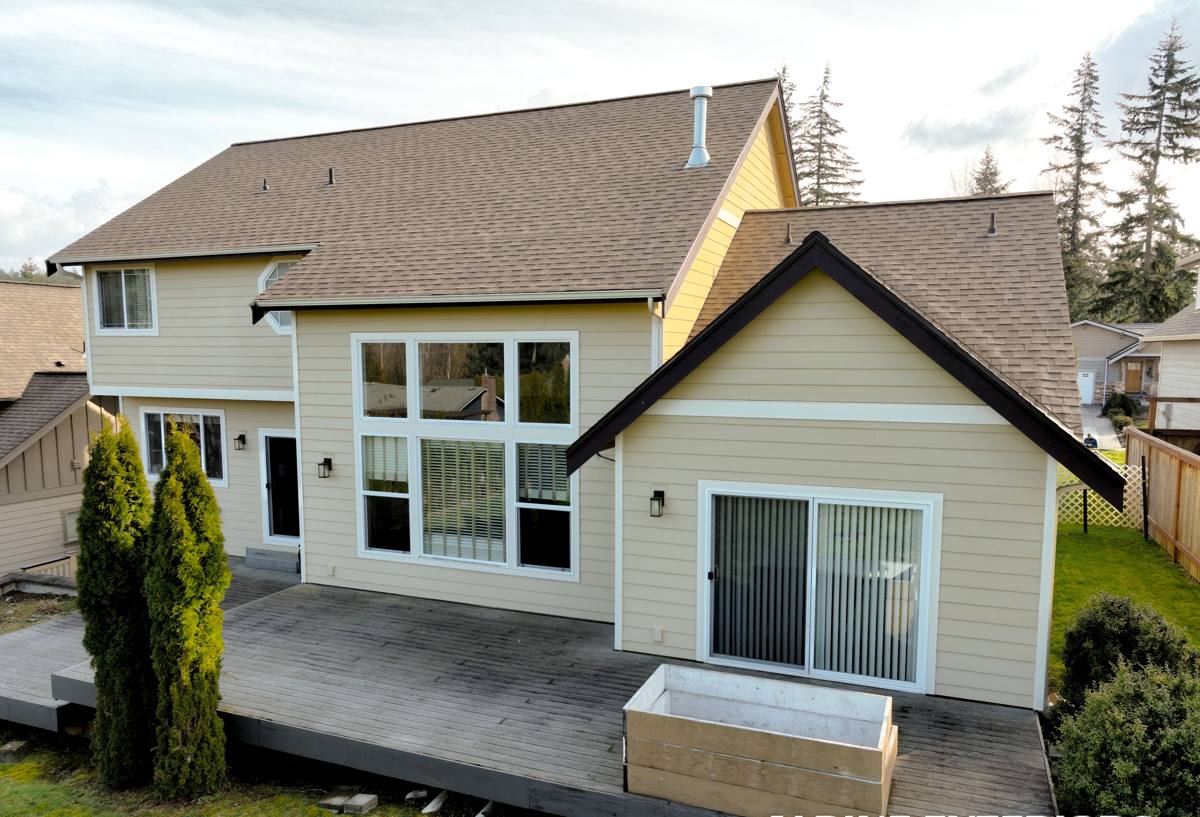
Why "Custom" Matters Here
Custom windows simply means the units are made to fit your home's actual openings, style, and performance needs — not pulled from a limited stock-size rack. For Bellevue homes this matters for a few practical reasons:
- Many Bellevue neighborhoods have a mix of home ages and styles — from older ramblers to newer construction — and stock sizes rarely line up with existing rough openings without extra framing work.
- Custom sizing lets us correct old, poorly fitted openings instead of just shimming a close-enough window into a bad opening, which is a common source of long-term leaks.
- Homeowners can choose glazing packages, frame materials, and grille patterns that match both the home's architecture and the amount of rain and shade exposure a specific wall faces.
- Custom orders let us address specific problem elevations — north-facing walls that stay damp longer, or upper-story windows exposed to more wind-driven rain — with the right glass and frame spec for that exposure.
What Bellevue's Climate Does to Windows Over Time
Driving Rain and Wind-Driven Moisture
Rain in this region rarely falls straight down. Wind off Lake Washington and the Sound pushes moisture sideways into window assemblies, which is why flashing and sealant detail around the frame matter as much as the window unit itself. A well-built window with poor flashing will eventually leak; a well-flashed window with a mediocre frame will underperform but usually stay dry longer. Getting both right is the actual goal.
Moss, Algae, and Prolonged Dampness
King County's long wet season means moss and algae growth isn't limited to roofs — it shows up on window sills, wood cladding around frames, and anywhere water sits instead of draining. Wood-clad and vinyl windows with poor drainage paths accumulate grime and moisture that shortens the life of sealants and finishes. Proper sill pitch and weep hole placement keep water moving out instead of pooling.
Condensation and Indoor Humidity
Bellevue winters combine cold nights with homes that are sealed up and heated, which is a recipe for interior condensation on older, single-pane, or poorly insulated windows. Persistent condensation isn't just a nuisance — over years it can soften wood sills and encourage mold growth at the frame edges. Modern dual or triple-pane units with a warm-edge spacer system reduce this substantially.
What a Correct Custom Window Job Actually Involves
A lot of window problems homeowners deal with aren't caused by the window itself — they're caused by installation shortcuts. Here's what we consider non-negotiable on every custom window job:
- Accurate measurement of the actual opening — not the old window's nominal size, since openings shift and settle over time.
- Removal and inspection of the old frame and sill to check for rot, soft framing, or prior water intrusion before anything new goes in.
- Correcting any framing or sill issues found rather than installing a new window over a compromised opening.
- Proper flashing integration with the home's existing water-resistive barrier, lapped correctly so water sheds outward and down, never behind the siding.
- Continuous, correctly placed sealant beads — not just at visible edges, but at the specific points manufacturers specify for that unit.
- Shimming and squaring the unit so it operates smoothly and doesn't stress the frame or glazing over time.
- Interior and exterior trim-out finished to match the home, with insulation properly filling the gap around the frame — not overpacked, which can bow the frame.
Skipping or rushing any one of these steps is how a brand-new window ends up with a leak two winters later.
Choosing the Right Frame and Glass for a Bellevue Home
There's no single "best" window material — the right choice depends on the home's style, budget, and how exposed a given elevation is to weather. Here's how the common options generally compare for this climate:
| Frame Material | Moisture Performance | Maintenance | Typical Best Use |
|---|---|---|---|
| Vinyl | Strong — won't rot, resists moisture well | Low — occasional cleaning | Most residential replacements, budget-conscious upgrades |
| Fiberglass | Excellent — very stable in wet/cold swings | Low | Homes wanting durability and paintable finish options |
| Aluminum | Weaker — prone to condensation without thermal breaks | Moderate | Specific architectural styles, best with thermally broken frames |
| Wood-clad | Good if maintained; vulnerable if finish fails | Higher — needs periodic inspection and finish upkeep | Traditional or historic-style homes where wood interior look is wanted |
For most Bellevue homes, we lean toward vinyl or fiberglass frames with dual-pane, low-E glass and argon fill as the practical baseline — they hold up well against sustained damp weather with minimal upkeep. Wood-clad windows can still be the right call for homes where the interior wood appearance matters, but we're upfront that they require more attention here than they would in a drier climate. We won't push a product that looks good on a spec sheet but creates a maintenance burden the homeowner didn't sign up for.
Glass Package Considerations
Beyond frame material, the glass package affects comfort and energy use as much as the frame does:
- Dual-pane, low-E glass is the standard baseline for new installs in this region — a meaningful upgrade over older single-pane units.
- Argon or krypton gas fill between panes improves insulation value with minimal added cost.
- Triple-pane options make sense for north-facing rooms, homes near busier roads (added sound dampening), or homeowners prioritizing maximum efficiency.
- Tempered glass is required by code in certain locations — near doors, low to the floor, or near stairs — and we account for this during planning, not after the order is placed.
Our Process for a Bellevue Window Project
We keep the process straightforward and communicate clearly at each stage:
- On-site assessment — we walk the home, measure openings, and check existing framing and sill condition on each window being replaced.
- Product and glazing recommendations — based on the home's exposure, style, and your priorities (efficiency, sound, low maintenance, or matching an existing look).
- Written estimate — clear scope, materials, and timeline so there are no surprises once work starts.
- Custom ordering — units are manufactured to the exact measured openings, which typically takes several weeks depending on the manufacturer and glazing selected.
- Installation — old units removed, openings inspected and corrected as needed, new units set, flashed, sealed, and trimmed.
- Final walkthrough — we check operation, seals, and finish work with you before calling the job complete.
Signs Your Bellevue Home Needs Window Attention
A quick self-check before deciding whether replacement or repair makes more sense:
- Visible condensation or fogging between panes (a sign the seal has failed on a dual-pane unit)
- Persistent drafts you can feel near the frame even when the window is fully closed
- Wood sills or trim that feel soft, discolored, or show early rot
- Moss or dark staining building up on exterior sills or nearby cladding
- Windows that are difficult to open, close, or lock properly
- Noticeably higher heating bills without another clear explanation
- Visible daylight or gaps around the frame from outside
If you're seeing more than one or two of these, it's usually more cost-effective to replace than to keep patching an aging window.
Why Local Installation Experience Matters
Window installation isn't a one-size-fits-all trade. A crew that regularly works in Bellevue and greater King County has already seen how the region's rain patterns, humidity, and older housing stock interact with different window products — which means fewer surprises once the old window comes off the wall. We know which details matter most for wind-driven rain exposure, how to spot early moss and moisture damage before it's a structural issue, and how to flash a window correctly for a climate that stays wet for a large part of the year. That experience shows up in fewer callbacks and windows that actually perform the way they're supposed to for the long haul.
Get a Free Estimate for Your Bellevue Windows
If you're weighing whether to repair, replace, or upgrade the windows on your Bellevue home, we're happy to take a look and give you an honest read on what makes sense — no pressure, no obligation. Fill out the form below to schedule a free, no-pressure estimate.