 Seattle
 Why Ravenna Roofs Wear Out Faster Than the Manufacturer's Warranty Suggests
Ravenna is one of the leafier neighborhoods in Seattle, and that's part of the problem. Between the mature tree canopy along the ravine and the older housing stock that fills the streets around it, roofs here take on a combination of stress that a shingle catalog rarely accounts for. Add in Puget Sound's salt-tinged air moving inland and the driving, wind-pushed rain that comes off the Sound in the fall and winter, and you have a roofing environment that's genuinely harder on materials than most manufacturer warranties were tested for.
None of that means Ravenna homeowners need to replace roofs more often out of bad luck. It means the roof has to be built and maintained with this specific climate in mind — decent ventilation, the right underlayment, flashing detail that actually sheds water instead of trapping it, and a plan for the moss that's going to show up no matter what you do. A roof replacement done without those things in mind will look fine for a year or two and then start failing in ways that are expensive to trace back to the install.
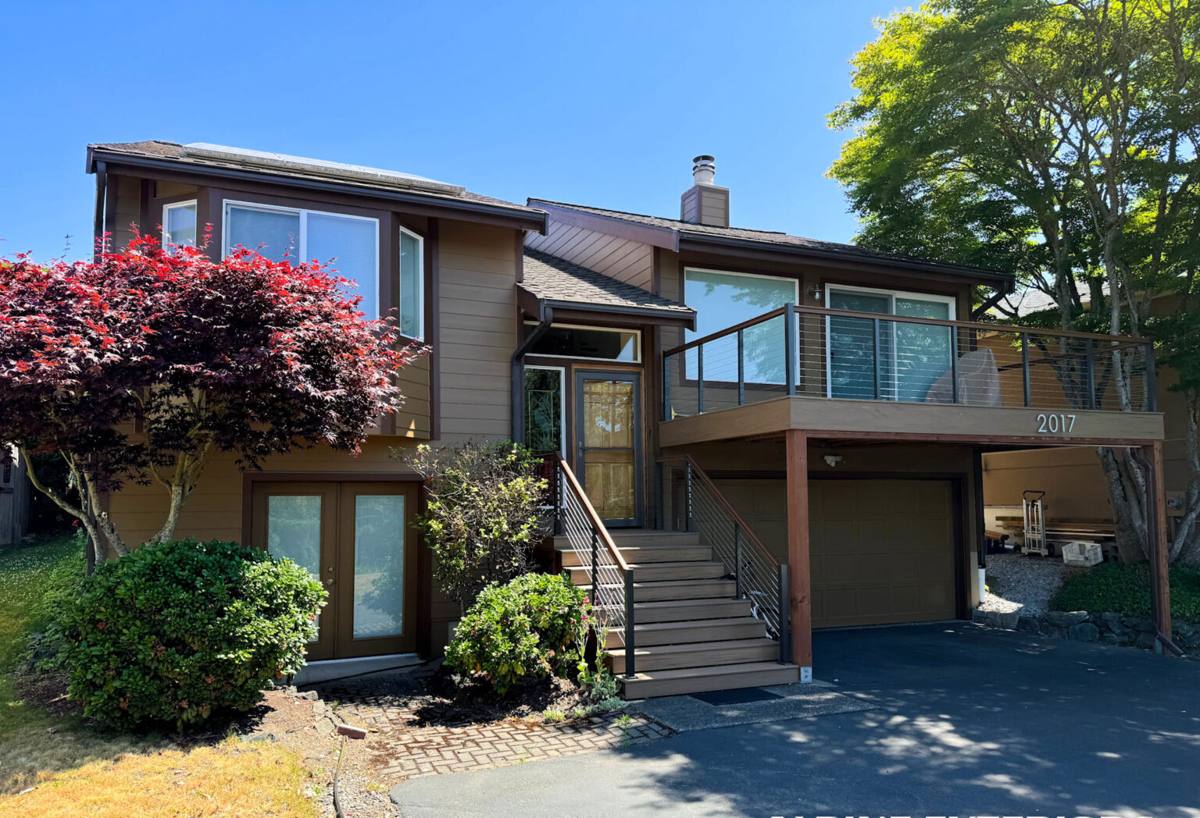
Signs a Ravenna Roof Needs Replacement, Not Another Repair
Most roofs don't fail all at once — they send signals for a season or two first. In a wet, tree-heavy neighborhood like Ravenna, those signals often get misread as "just needs a cleaning." A few patterns tell us the roof itself is past the point where patching makes sense:
- Granule loss heavy enough that you're finding grit in the gutters every time it rains, not just after a storm
- Moss that keeps coming back within a few months of cleaning, especially on north-facing slopes shaded by trees
- Shingles that are curling, cupping, or cracking rather than lying flat
- Water stains on interior ceilings or in the attic that show up during heavy rain events, not just once
- Flashing around chimneys, skylights, or roof-to-wall transitions that's visibly rusted, lifted, or caulked over repeatedly as a fix
- A roof that's 18-25+ years old on standard asphalt composition, regardless of how it looks from the ground
Any one of these on its own might just mean a repair. Two or three together, especially on an older roof, usually means the underlayment and decking are starting to take on moisture too, and repair work is just delaying a bigger bill.
What a Correct Roof Replacement Actually Involves
Full Tear-Off, Not a Layover
We don't install new shingles over old ones. A second layer traps moisture, hides deck damage, and voids most manufacturer warranties outright. A full tear-off lets us see the roof deck itself — which, on older Ravenna homes, sometimes reveals rot or delaminated sheathing around chimneys and valleys that's been quietly getting wet for years.
Deck Repair Before Anything Goes Down
Any soft, delaminated, or water-damaged sheathing gets replaced before underlayment goes on. Skipping this step is one of the most common ways a "new roof" fails early — the surface materials are new, but they're nailed to a deck that was already compromised.
Underlayment Suited to This Climate
In a region with this much sustained rain and wind-driven moisture, we lean toward synthetic underlayment with reinforced ice-and-water shield at eaves, valleys, and any low-slope transitions. This is the layer that protects the house if wind ever drives rain up under a shingle tab, and it matters more here than in drier parts of the country.
Flashing Done Right, Not Caulked Over
Chimneys, skylights, dormers, and roof-to-wall intersections are where the vast majority of leaks actually start — not out in the open field of the roof. Correct step flashing and counter-flashing, installed metal-to-metal rather than sealed with caulk as a shortcut, is what keeps those transitions dry for the life of the roof.
Ventilation That Matches the Attic
Balanced intake and exhaust ventilation keeps the attic temperature and moisture level stable, which matters for both the shingles from above and condensation from below. An under-ventilated attic in a wet climate is a slow path to sheathing rot, mold, and premature shingle failure — even with a brand-new roof.
Material Options for Ravenna Homes
There's no single "best" roofing material — the right call depends on the home's roof pitch, tree coverage, budget, and how much moss maintenance you're realistically willing to keep up with. Here's how the common options stack up for a neighborhood with this much shade and rain:
| Material | Typical Lifespan | Moss & Moisture Behavior | Best Fit |
|---|---|---|---|
| Standard 3-tab asphalt | 15-20 years | Lower cost but more moss-prone; granule loss accelerates in shaded areas | Budget-focused projects, less-shaded roof faces |
| Architectural (laminate) asphalt | 25-30 years | Thicker profile sheds water better, holds up longer under moss growth before it affects performance | Most Ravenna homes — the balance point of cost and durability |
| Standing seam metal | 40-50+ years | Sheds moss and debris very well due to smooth, slick surface; minimal moisture retention | Heavily shaded lots, homeowners planning to stay long-term |
| Cedar shake | 20-30 years with upkeep | Attractive but requires real commitment to moss and moisture maintenance; we're honest that this is a higher-upkeep choice in a wet, shaded neighborhood | Homeowners prioritizing traditional look who accept the maintenance schedule |
We'll walk through these trade-offs on-site rather than push one product line. A steep, sun-exposed roof face and a flat, shaded one on the same house can sometimes reasonably use different strategies for moss resistance, even if the visible shingle is the same.
Our Roof Replacement Process, Start to Finish
- On-site assessment — we walk the roof (not just look from the ground), check the attic from inside, and note deck condition, ventilation, and existing flashing problems.
- Written scope and estimate — a clear breakdown of tear-off, deck repair allowances, material choice, underlayment, and flashing work, so there are no surprise change orders mid-project.
- Permitting — we pull the required permit before work starts, not after.
- Tear-off and deck inspection — old roofing comes off, deck is inspected and repaired as needed, with photos if damage is found.
- Underlayment and flashing installation — the waterproofing layer that does the real work, installed before any finish material goes down.
- Roofing material installation — installed to manufacturer specification, which is what keeps material warranties valid.
- Cleanup and magnetic nail sweep — yard, driveway, and gutters cleared of debris and stray fasteners.
- Final walkthrough — we go over the finished roof with you before calling the job done.
Keeping a New Roof Healthy Through Ravenna's Moss Season
A correctly installed roof still needs some seasonal attention in a neighborhood with this much tree cover. None of this is complicated, but skipping it is how a 25-30 year roof turns into a 15-year roof:
- Clear gutters and downspouts at least twice a year, more often on lots with heavy overhead tree coverage
- Keep overhanging branches trimmed back so leaves and needles don't accumulate on the roof surface
- Have moss growth treated or removed before it works under shingle tabs, rather than after it's visibly thick
- Check attic ventilation isn't blocked by insulation or storage after any attic work
- Schedule a quick visual inspection after major windstorms, since that's when flashing and ridge caps take the most abuse
Permits and Code Requirements in Seattle
Roof replacement work in Seattle requires a permit in most cases, and inspections confirm that decking, underlayment, and ventilation meet current code — not just that the shingles look right from the street. We handle the permit process as part of the job rather than leaving it to the homeowner, and we build inspection timing into the project schedule so it doesn't stall the work. This matters more than it sounds like: a re-roof done without permit can create real problems later, at resale or with insurance claims, if the work is ever questioned.
What Affects the Cost of a Roof Replacement
We won't quote a number without seeing the roof, but these are the factors that actually move the price, in rough order of impact:
| Factor | Why It Matters |
|---|---|
| Roof size and number of planes | More square footage and more valleys/hips mean more material and labor time |
| Deck condition | Rot or delamination found during tear-off adds repair cost that can't be known until the old roof is off |
| Material choice | Standard asphalt, architectural shingle, and metal have significantly different material costs per square |
| Roof pitch and access | Steep roofs or homes with tight lot access take longer and require more safety equipment |
| Layers to remove | A tear-off with one existing layer costs less than removing two or more old roofs stacked on top of each other |
| Flashing and penetrations | Chimneys, skylights, and multiple vent pipes each add flashing labor |
Broadly, a straightforward architectural shingle replacement on a typical Ravenna home runs in the mid five figures, with simpler roofs coming in lower and complex, multi-plane, or metal roofs running higher. We'll give you real numbers once we've actually seen the roof, not a phone estimate.
Why It Matters That We Already Work in Ravenna
A roofing crew that works this specific part of Seattle regularly already knows what a shaded, tree-lined lot in King County does to a roof over 20 years — which slopes hold moss longest, how the local rain patterns stress flashing, and which older homes in the area tend to have deck issues under the surface. That's not something you can fully substitute with a generic checklist. It shows up in the estimate being more accurate up front, and in fewer surprises once the tear-off starts.
If your roof is showing its age, or you just want an honest read on whether it's a repair year or a replacement year, we're happy to take a look. Fill out the form below for a free, no-pressure estimate — we'll walk the roof, tell you what we actually see, and give you real options.