 Seattle
 Deck Repair Built for Bellevue's Climate
Bellevue decks take a beating that homeowners in drier parts of the country never have to think about. Between the long wet season, the moss that creeps in every fall, and the freeze-thaw cycles that hit the Eastside in winter, wood and composite decking here ages differently than it does almost anywhere else. A deck that looks fine from the porch door can have soft ledger boards, rusted hardware, or rot working through the framing underneath. We repair decks across Bellevue and the greater Seattle area, and most of the calls we get aren't about a deck that's failed all at once — they're about a deck that's been quietly failing for a couple of years and finally showed a soft spot, a wobble, or a board that gave way.
This page covers what deck repair actually involves in this climate, how we diagnose and fix the problems that show up most in King County, and what to expect if you call us out to take a look.
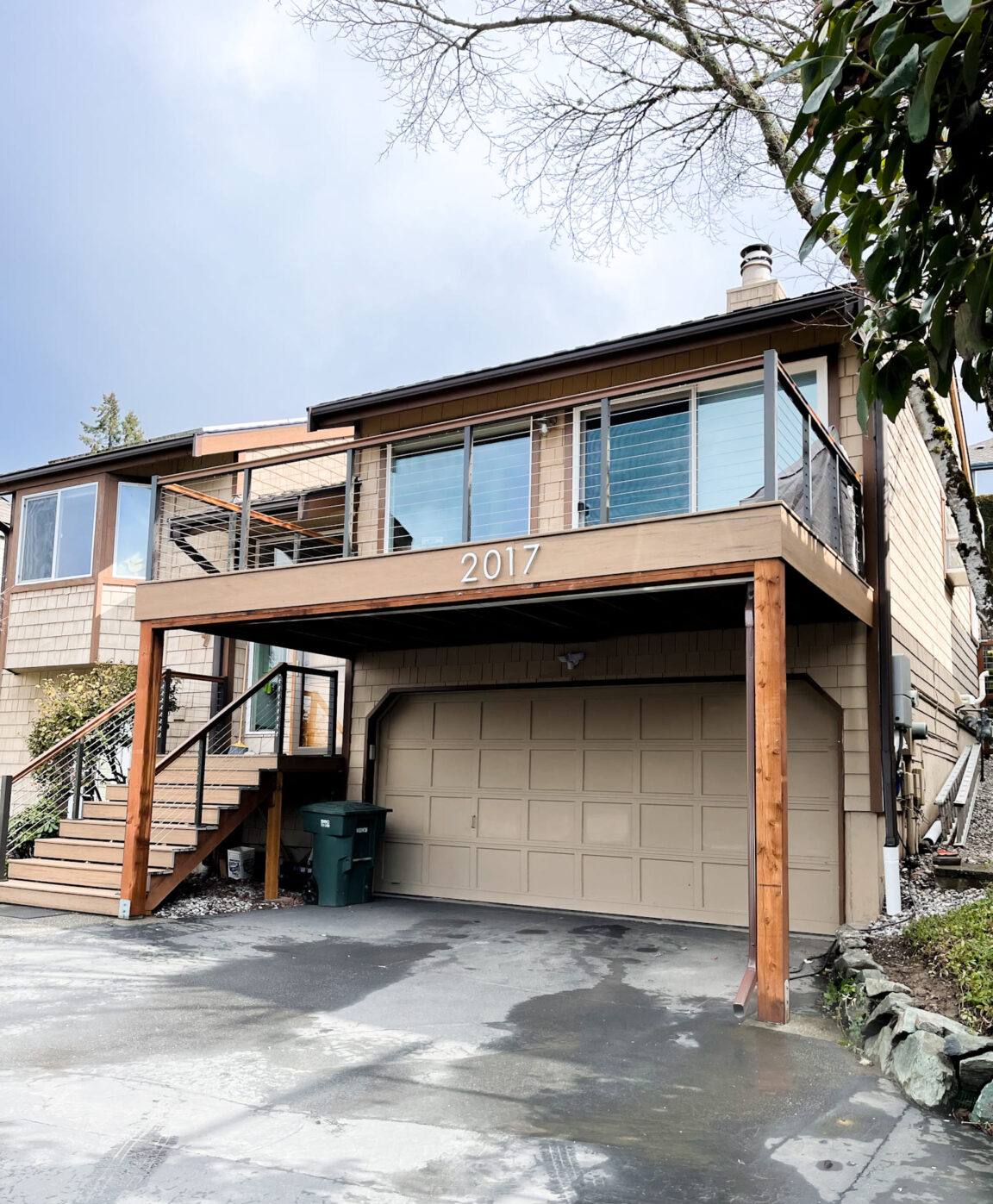
Why Bellevue Decks Wear Differently Than You'd Expect
Moisture Is the Real Enemy, Not Just Rain
It's not the rain itself that destroys a deck — it's what happens when moisture gets trapped and can't dry out between storms. Bellevue's driving rain tends to come in at an angle, which pushes water into joints, under flashing, and behind ledger boards where it lingers. Combine that with our long stretches of overcast, humid days and you get wood that never fully dries between wet cycles. That's the exact condition rot needs to take hold.
Moss Season Does More Than Make the Deck Slippery
Moss isn't just a cosmetic nuisance here — it holds moisture directly against the wood surface for months at a time, particularly on the shaded north and east sides of a house or under overhangs where the sun never really dries things out. Left alone through a full moss season, that constant damp layer softens the top grain of the boards and accelerates surface rot long before the structural framing is affected.
Salt Air and Metal Fasteners
Homes closer to Lake Washington or with exposure to marine air deal with faster corrosion on nails, screws, and structural connectors. Once a fastener starts rusting, it loses grip strength in the wood and can streak the surrounding boards — and a corroded structural screw or joist hanger nail is a bigger problem than a cosmetic one.
Common Deck Problems We Find in Bellevue Homes
| Problem | What Causes It | Why It Matters |
|---|---|---|
| Soft or spongy decking boards | Trapped moisture under moss, leaves, or debris | Weak points can give way underfoot; usually spreads to neighboring boards |
| Rotted ledger board (where deck meets house) | Poor or missing flashing letting water behind the connection | The ledger carries a large share of the deck's structural load — this is a safety issue, not cosmetic |
| Loose or wobbly railings | Corroded fasteners or rot at post bases | Railings are a fall-protection feature, not decoration |
| Rusted joist hangers and connectors | Age, moisture exposure, and in some cases mismatched metal | Weakens the framing connections that hold the deck together |
| Cupping, splitting, or graying boards | UV exposure combined with repeated wet-dry cycling | Usually a surface issue, but can trap water in the cracks over time |
| Stairs that feel loose or uneven | Stringer rot or settling at the base support | High-traffic, high-consequence area if it fails |
What a Correct Deck Repair Actually Involves
Diagnosis Before Anything Else
The first thing we do is figure out whether a problem is cosmetic or structural, because the fix is completely different depending on the answer. We probe suspect boards and framing members with an awl or screwdriver — sound wood resists; rotted wood gives way easily. We check the ledger connection, the post bases, and the joist hangers, since these are the spots that get missed on a surface-level look but matter most for safety.
Matching Repairs to the Actual Damage
Not every soft board means the whole deck needs rebuilding, and not every deck with a rotted ledger can be saved with a patch. Part of doing this correctly is being honest about which repair fits the actual damage:
- Isolated board replacement — when rot or damage is limited to a few boards and the framing underneath is sound
- Framing sistering or replacement — when a joist or beam has soft spots but the overall structure is salvageable
- Ledger board reconstruction — when the house connection has failed; this always includes correcting the flashing, not just replacing the board
- Railing and post repair — resetting or replacing posts, upgrading fasteners, tightening the whole system rather than just the loose piece
- Full deck rebuild — when structural failure is widespread enough that patching would just be delaying a bigger job
Fasteners and Hardware Matter as Much as the Wood
A repair is only as good as what's holding it together. We use corrosion-resistant, code-rated fasteners and connectors sized for the specific repair — not whatever's closest to the right length in the truck. In our climate, cutting corners on hardware is one of the fastest ways to end up back at the same spot in two or three years.
Our Repair Process, Step by Step
- On-site inspection — we walk the whole deck, not just the spot you called about, since problems in this climate rarely stay isolated
- Honest assessment — we tell you what's cosmetic, what's structural, and what can wait versus what shouldn't
- Written scope and estimate — clear about what's being replaced, what hardware is used, and why
- Repair work — matched decking material where possible, correct flashing detail at any house connection, code-appropriate fasteners throughout
- Final check — railings tested for movement, stairs checked for level and secure attachment, surface cleaned up
Repair vs. Replace: How We Help You Decide
This is the question almost every homeowner asks, and the honest answer depends on how much of the deck is affected and how old the structure is. A deck under 10-15 years old with isolated rot at the ledger or a handful of boards is usually a strong repair candidate. A deck where framing rot has spread across multiple joists, or where the original construction had flashing or drainage problems built in from the start, often makes more sense to rebuild — because repairing around a design flaw just means you're fixing the same spot again in a few years. We'll walk you through which situation yours falls into and why, rather than defaulting to whichever answer costs more.
Preventing the Next Repair
Seasonal Maintenance That Actually Matters Here
- Clear leaves and debris from between boards before the fall rains set in — trapped organic matter holds moisture against the wood
- Treat or remove moss as soon as it appears, especially on shaded sides of the deck
- Check that gaps between boards haven't closed up from swelling, which blocks proper drainage
- Inspect the ledger flashing annually — this is the single most common failure point on Bellevue decks
- Re-seal or re-stain wood decking on the manufacturer's recommended schedule, not just when it looks faded
- Test railings and stair stringers by hand each spring for any give or movement
Composite Decking Doesn't Mean Maintenance-Free
Composite boards resist rot far better than wood, but the framing underneath is still almost always dimensional lumber, and that framing is where we find the real problems on composite decks. Composite surfaces can also trap moisture differently than wood at the board edges, so drainage and ventilation underneath still matter just as much.
Why Hire a Crew That Already Works in Bellevue
Deck repair done by someone unfamiliar with King County construction and climate patterns tends to treat every deck the same way, regardless of region. We know which connection details fail first in this weather, which materials hold up through a Pacific Northwest winter, and what a deck needs to survive years of driving rain and moss season without becoming a repeat call. That local pattern recognition is the difference between a repair that lasts and one that's a temporary patch.
We also know that Bellevue permitting and inspection requirements apply to structural deck work, and we handle that side of the job correctly rather than treating it as an afterthought.
Get a Straight Answer About Your Deck
If your deck has a soft spot, a wobbly railing, or you just want a second opinion before your next gathering on it, we're happy to take a look. Fill out the form below for a free, no-pressure estimate — we'll tell you plainly what we find and what it would take to fix it right.