 Seattle
 Board & Batten in Redmond: A Style That Has to Earn Its Keep
Board and batten has become one of the most requested looks on the Eastside — it shows up on modern farmhouse remodels, craftsman-style additions, and new construction from Redmond's older neighborhoods near downtown out toward the tech corridor. The vertical lines read clean and modern, work well as an accent alongside horizontal lap siding, and give a home a custom, architectural feel that flat lap siding doesn't always deliver on its own.
But board and batten is also a style that punishes a sloppy installer more than almost any other siding profile. The battens create dozens of extra vertical seams, fastener lines, and joints compared to standard lap siding. Every one of those is a potential water entry point if it's not detailed correctly. In a King County climate, that's not a small detail — it's the difference between siding that looks good for 30 years and siding that's hiding rot behind it in five.
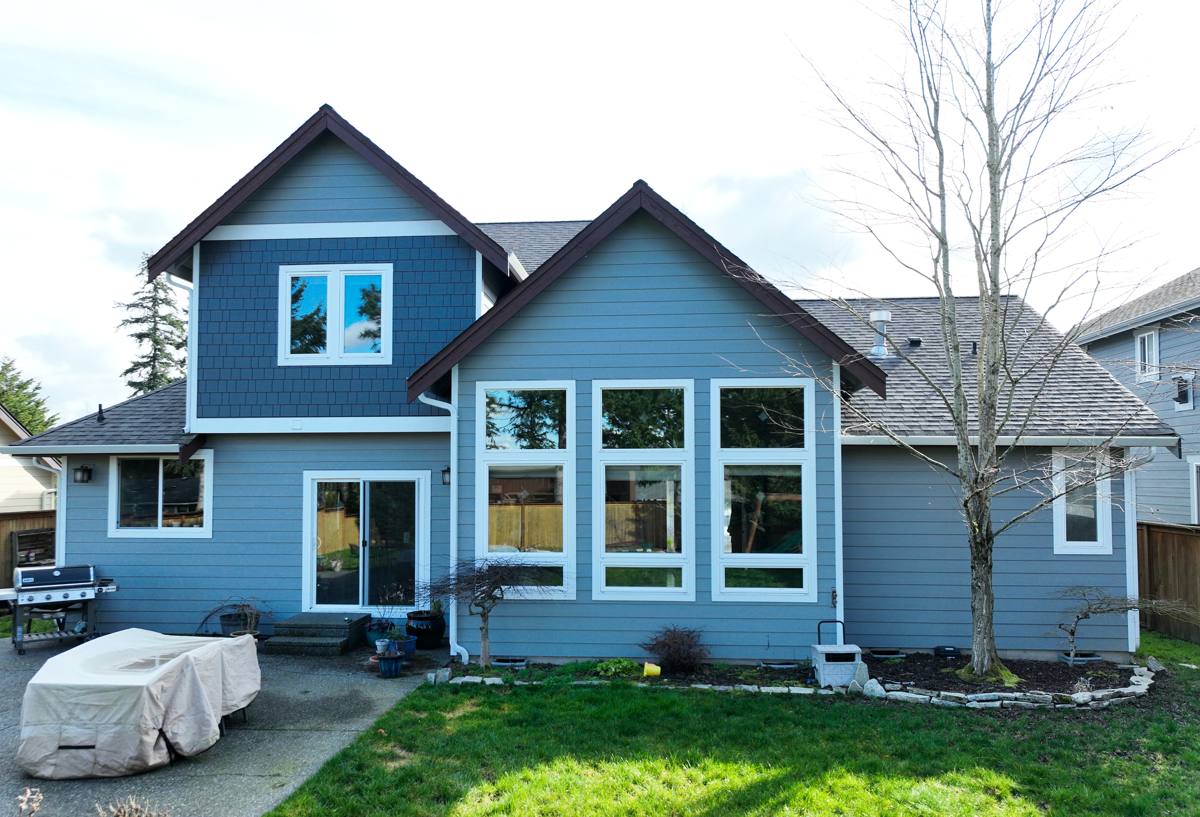
What Redmond's Climate Actually Does to Vertical Siding
Redmond sits in the Puget Sound lowlands, and like most of the region it deals with a long wet season, driving rain that comes in at an angle off frequent Pacific storm systems, and heavy tree cover in a lot of established neighborhoods that keeps north- and west-facing walls shaded and slow to dry. Add in the marine-influenced air that moves through the broader Sound region and you get a wall assembly that's under near-constant low-grade moisture pressure for months at a time.
Moss is the visible symptom homeowners usually notice first — dark green or black growth creeping up the lower courses of siding, especially on the shaded side of the house or under overhangs that don't get much sun. Moss itself isn't destroying the siding, but it's a sign the surface is staying damp longer than it should, and that same moisture is working on fasteners, seams, and any wood trim nearby. On a board and batten wall, moisture that gets behind a batten and can't escape is a much bigger problem than moisture sitting on a flat lap course, because it has nowhere to go and nothing to see it evaporate.
That's the standard this style has to be held to on a Redmond project: not just "does it look right going up," but "does this wall assembly actually manage water for the next few decades of King County winters."
Why This Matters More on Board & Batten Specifically
- Vertical battens create more linear feet of seam and fastener penetration per square foot of wall than horizontal lap siding.
- Battens are often installed tight to the panel below, which — done wrong — traps moisture instead of shedding it.
- Shaded, tree-covered lots common in Redmond's older neighborhoods slow drying time on vertical assemblies.
- Board and batten is frequently used as an accent with other siding types, which means more transitions, flashing, and trim details where water can find a way in.
Why We Install James Hardie for This Application
We install James Hardie fiber cement exclusively — we don't run LP SmartSide, vinyl, Cemplank, Allura, primed spruce, or cedar board and batten on our jobs. For a vertical siding profile in this climate, that's not a brand preference, it's a practical one.
Cedar board and batten looks beautiful new, but real wood in a wet, shaded climate needs consistent re-staining or repainting, and any spot where finish fails becomes an entry point for rot — exactly the failure mode board and batten is already more exposed to because of its extra seams. Engineered wood products can perform well when kept dry and properly maintained, but their long-term durability depends heavily on edges and cut ends staying sealed, which is a hard standard to guarantee over 20-plus years of Pacific Northwest weather. Vinyl board and batten is low-maintenance but it's a thin, flexible material — it doesn't hold paint, it can warp with temperature swings, and it doesn't carry the same fire rating.
James Hardie fiber cement is non-combustible, dimensionally stable in wet-dry cycling, and holds a factory-applied ColorPlus finish that's warrantied against fading and peeling — which matters on a profile with this many exposed edges. Hardie's HZ10 formulation is engineered specifically for wetter climate zones like ours, which is the relevant product line for anything we install in Redmond.
How a Correct Board & Batten System Is Built
There are two ways to build board and batten with Hardie products, and the right choice depends on the wall and the look the homeowner wants:
- Panel-and-batten system — HardiePanel vertical siding installed as the base layer, with battens fastened over the panel seams. This is the more traditional look and the one most commonly requested on Redmond remodels.
- Board-on-board or reveal systems — using Hardie trim boards spaced with a gap, giving a more contemporary shadow-line look. Less common but growing in popularity on newer Eastside builds.
The Details That Actually Determine Whether It Lasts
| Detail | What correct looks like | What goes wrong without it |
|---|---|---|
| Rainscreen gap | Furring strips or a drainage mat create an air gap behind the panel so any moisture that gets in can drain and dry | Panel fastened tight to sheathing traps moisture against the wall, especially on shaded elevations |
| Batten fastening | Battens fastened through to framing per Hardie's engineering, not just face-nailed to the panel | Loose battens work free in wind and driving rain, opening the seam they're supposed to protect |
| Panel joints | Joints backed and flashed per manufacturer spec, sealed with the right sealant | Unbacked joints let water track behind the wall during heavy Puget Sound storms |
| Bottom clearance | Minimum clearance from grade, decks, and roof lines per Hardie's installation instructions | Siding installed too close to grade wicks moisture and stays damp — accelerates moss growth |
| Cut edges | Factory edges used wherever possible; field cuts sealed | Unsealed cut edges are the single most common failure point on any fiber cement job |
Our Process for a Redmond Board & Batten Project
- On-site assessment — we look at the specific wall, tree cover, drainage around the foundation, and existing moisture or moss patterns before quoting anything.
- System selection — panel-and-batten vs. reveal system, based on the home's style and the homeowner's goals.
- Tear-off and sheathing check — old siding comes off and we inspect sheathing for hidden rot before anything new goes up. This step gets skipped by crews trying to move fast, and it's where problems get missed.
- Rainscreen and weather barrier installation — the part of the job nobody sees once it's done, and the part that determines whether the wall performs for the next few decades.
- Panel and batten installation to manufacturer spec — fastening, spacing, and joint treatment per James Hardie's published installation requirements.
- Final trim, caulking, and walkthrough — we go over the finished wall with the homeowner before calling the job done.
Cost Factors Homeowners Should Actually Weigh
Board and batten generally costs more per square foot than standard lap siding because of the extra material (battens on top of panels) and the added labor time for precise batten spacing and fastening. Rough, honest ranges depend heavily on:
- Whether it's a full re-side or an accent application over part of the home
- Condition of the existing sheathing once old siding comes off
- Wall height and complexity (dormers, gables, and cutouts all add labor)
- Trim and corner detail choices
- Access — some Redmond lots have tight side yards or steep grades that slow the work down
We give a real number after we've seen the wall, not before — anyone quoting board and batten sight-unseen is guessing.
Maintenance: What Redmond Homeowners Should Actually Do
- Rinse siding annually, focusing on shaded and north-facing walls where moss takes hold first.
- Keep gutters clear so overflow isn't running down the wall behind battens.
- Trim back vegetation and tree limbs that keep a wall section shaded and damp longer than the rest of the house.
- Walk the exterior once a year and look for cracked caulking at batten joints or trim — catching it early is a caulk job, not a repair.
- Don't power-wash on high pressure directly into seams — it can force water behind the siding instead of cleaning it off.
Why Hiring a Crew That Already Works Redmond Matters
Board and batten done wrong doesn't usually fail in year one — it fails in year eight or ten, quietly, behind the wall, after the crew that installed it is long gone. A crew that regularly works King County homes has already seen how these walls perform through several wet seasons, knows which elevations in a given neighborhood tend to hold moisture longest, and installs to the standard that Pacific Northwest weather actually requires — not the minimum standard that gets a project signed off.
If you're considering board and batten siding for a home in Redmond, we're happy to walk the exterior with you, look at the specific conditions on your lot, and give you a straight answer on what the job involves and what it will cost. Reach out for a free, no-pressure estimate using the form below.