 Seattle
 Siding Replacement Built for Capitol Hill's Housing Stock
Capitol Hill is one of Seattle's older, denser neighborhoods, and that shapes what a siding job actually needs to solve. Lots are tight, homes sit close to their neighbors, mature trees shade large parts of most yards, and a lot of the housing stock is older — craftsman bungalows, older multi-family conversions, and early-1900s frame construction that has usually been re-sided at least once already. Replacing siding here isn't just a cosmetic swap. It's a chance to fix whatever the last layer of siding was hiding, and to put something on the wall that can actually handle the way this neighborhood's climate and shade patterns behave.
We work throughout Seattle and King County, but jobs in Capitol Hill come with their own set of realities: narrow side yards, limited staging space, shared driveways, and older wall assemblies that don't always match what's on the permit drawings. A crew that's done this work in the neighborhood before knows to expect that going in, instead of finding out mid-project.
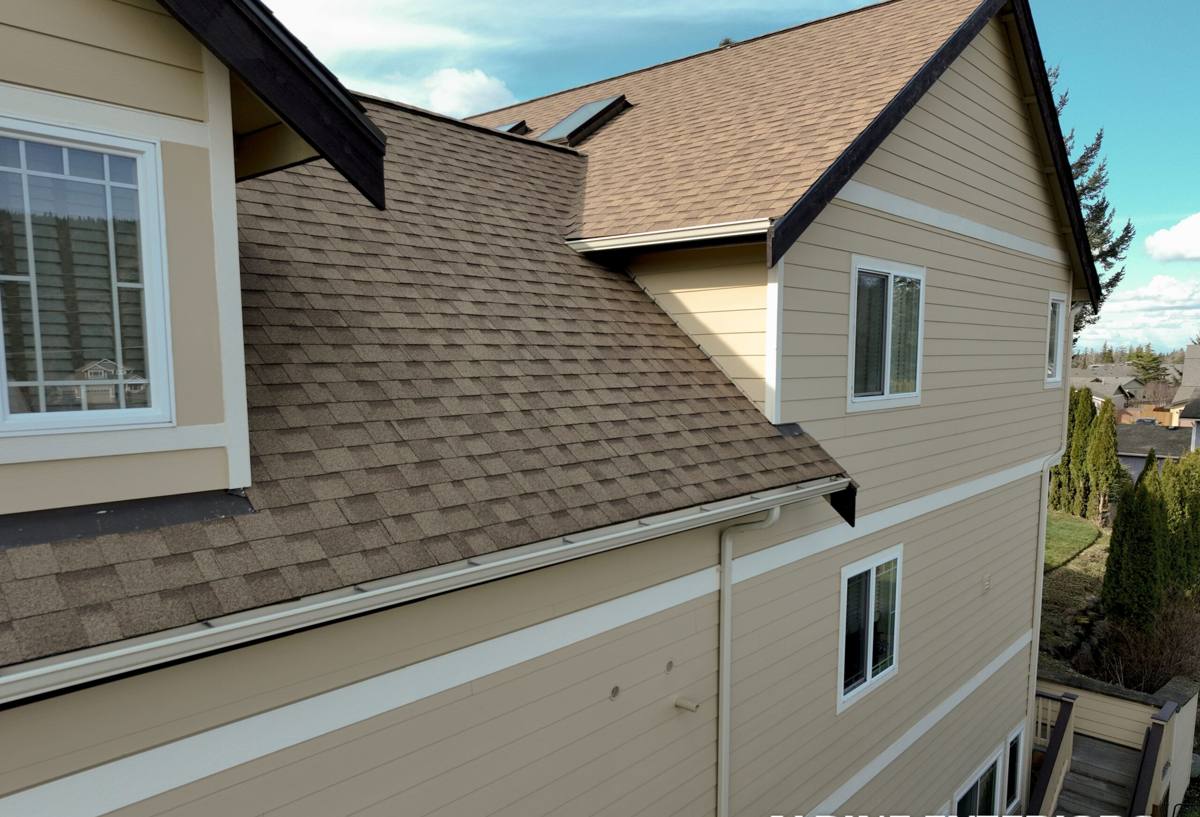
What Seattle's Climate Does to Siding Over Time
Western Washington's marine climate is hard on exterior materials in ways that aren't always obvious from the street. Puget Sound's salt-tinged marine air reaches across the city, driving rain regularly comes in sideways rather than straight down, and the region's long, mild, damp winters give moss and mildew months at a time to take hold. None of these are dramatic events — no single storm does the damage. It's the accumulation, year after year, that wears siding down.
Moss, Mildew, and Trapped Moisture
Capitol Hill's mature tree canopy is part of what makes the neighborhood attractive, but it also means a lot of homes get more shade and less direct sun on at least one wall. Shaded, damp siding stays wet longer after every rain, and that's exactly the environment moss and mildew need. On wood-based siding, that constant damp cycle leads to soft spots, swelling, and eventually rot. On any siding, moss holds moisture against the surface and against the fasteners, which accelerates wear even if the material itself is holding up.
Wind-Driven Rain at the Wall
Seattle's rain doesn't just fall — it gets pushed into walls by wind, especially on exposed corners and upper stories. That means flashing details, house wrap, and the way siding courses overlap matter as much as the siding material itself. A lot of moisture problems we find during tear-off didn't come from bad siding — they came from missing or poorly lapped flashing that let water behind a perfectly fine-looking exterior.
Signs Your Capitol Hill Home Is Due for Siding Replacement
Most siding failures give warning signs well before anything looks obviously bad from the sidewalk. Worth checking for:
- Boards that are cracking, cupping, or visibly separating at the seams
- Paint that won't hold — repeated peeling or bubbling within a few years of repainting
- Soft or spongy spots when you press on the siding, especially near the bottom courses
- Persistent moss, algae, or dark streaking that comes right back after cleaning
- Visible gaps or warping around window and door trim
- A noticeable jump in heating bills, which can point to moisture-saturated siding or insulation
- Siding that was already patched or re-sided once and is showing the same problems again
Any one of these on its own might just need a repair. Several at once, especially on a wall that gets a lot of shade or wind exposure, usually means the underlying material or installation has reached the end of what it can handle.
Why We Install Only James Hardie Fiber Cement
We don't install vinyl, LP SmartSide, or unfinished wood siding, and that's a deliberate call, not a sales preference. Vinyl expands and contracts with temperature swings and can crack or warp over time, and it doesn't hold paint the way homeowners expect if they ever want to change the color. Engineered wood products like LP SmartSide perform reasonably well when installation and maintenance are perfect, but they're wood-based, which means they're still vulnerable to the exact moisture cycle Seattle's climate creates — and a damp, shaded Capitol Hill wall is not a forgiving place for a wood-based product to make up ground. Unfinished or primed wood siding needs regular repainting and sealing to keep water out at all, which is a maintenance commitment most homeowners don't want to sign up for indefinitely.
James Hardie fiber cement is non-combustible, doesn't rot or feed insects, and holds its factory-applied ColorPlus finish far longer than field-applied paint. It's engineered specifically for climate zones like ours through Hardie's HZ5 product line, which is formulated for regions with sustained moisture exposure. That combination — a material that doesn't absorb and hold water the way wood does, paired with a finish that doesn't need repainting every few years — is why it's the only siding we put on a home.
What Hardie Gets You
| Factor | What It Means for a Capitol Hill Home |
|---|---|
| Moisture resistance | Engineered to resist swelling, cracking, and rot in sustained damp conditions |
| Finish durability | Factory ColorPlus finish holds color far longer than field-painted wood or LP products |
| Fire rating | Non-combustible fiber cement, a meaningful factor on tightly spaced Capitol Hill lots |
| Maintenance | No repainting cycle to keep water out — occasional washing is typically enough |
| Warranty | Strong, transferable manufacturer warranty backing the material |
What a Correct Siding Replacement Job Actually Involves
The siding you see is the last step, not the whole job. What happens underneath it determines whether the new siding lasts fifteen years or fifty.
Full Tear-Off and Wall Inspection
We remove the existing siding down to the sheathing rather than installing over it. That's the only way to actually see what's going on — soft sheathing, old water staining, or rot that's been hidden under the old material for years. On older Capitol Hill homes that have already been re-sided once, this step is where we usually find whatever the last job left unresolved.
Water-Resistive Barrier and Flashing
A new weather-resistive barrier goes on before any siding, with flashing detailed at every window, door, and roofline transition. This is the layer that actually keeps wind-driven rain out of the wall assembly — get it wrong and even the best siding material won't stop moisture problems.
Installation to Manufacturer Spec
Hardie products have specific requirements for fastener spacing, board clearance from grade and roofing, joint treatment, and caulking — all of which affect the warranty and the long-term performance of the siding. We install to that spec, not to a shortcut version of it.
Cost Factors on a Capitol Hill Project
Every home is different, but the variables that move the price are consistent. Rather than quote a number that won't match your house, here's what actually drives cost:
| Factor | Why It Matters |
|---|---|
| Home size and story count | More wall area and height mean more material, labor, and staging |
| Condition under the old siding | Rot or sheathing damage found at tear-off adds repair scope before new siding goes on |
| Site access | Tight Capitol Hill lots with narrow side yards or shared driveways affect staging and can add labor time |
| Trim and detail work | Older homes with more window trim, dormers, or architectural detail take more time per square foot |
| Siding profile chosen | Lap, shingle, and panel Hardie profiles vary in material and install time |
Site Access and Older Construction: What Makes Capitol Hill Different
Working in Capitol Hill means planning around things a suburban job doesn't have to consider. Many lots have little to no side-yard clearance, on-street parking is limited, and dumpster or material staging often has to be worked out with neighbors in mind. Some blocks in the neighborhood also fall under Seattle's historic-preservation review, which can affect what exterior changes are allowed — worth checking with the city before assuming any exterior work is a straightforward swap.
Older homes in the neighborhood also tend to have less standardized framing than newer construction, which means more judgment calls during tear-off around flashing details, uneven sheathing, or trim that was never installed to current standards. A crew that has worked on that vintage of home before knows what to expect and doesn't treat every surprise as a change-order opportunity.
Our Process
- On-site walkthrough and estimate, including a look at accessible wall areas for early warning signs
- Written scope covering material, profile, color, and any repair allowances if wall damage is likely
- Full tear-off, sheathing inspection, and repair of any damaged framing before anything new goes on
- Water-resistive barrier and flashing installed at every penetration and transition
- Hardie siding installed to manufacturer spec, followed by trim, caulking, and a final walkthrough
We keep the homeowner in the loop the moment we find anything under the old siding that changes the scope — no surprises buried in a final invoice.
Why Hiring a Crew That Already Works Capitol Hill Matters
A contractor who's unfamiliar with the neighborhood learns its quirks on your project — tight access, older framing, historic-review questions, permitting through the City of Seattle. A crew that already works Capitol Hill regularly has already worked through those logistics on other homes nearby, which means fewer surprises, fewer delays, and a more accurate estimate from the first walkthrough. It also means we're not guessing about how this neighborhood's shade and moisture patterns treat siding over the long run — we've seen it firsthand on homes just like yours.
If your Capitol Hill home's siding is showing its age, we're happy to take a look and give you a straight, no-pressure estimate. There's no cost or obligation to have us come out — just an honest read on what your home actually needs.