 Seattle
 Why Composite Decking Makes Sense in Wallingford's Climate
Wallingford sits close enough to Puget Sound and Lake Union that the air carries salt and moisture most of the year, and the neighborhood's mature tree canopy keeps a lot of yards and decks shaded well into the afternoon. That combination — damp air, limited direct sun, and a long stretch of gray months — is hard on traditional lumber decking. Wood needs sun and airflow to dry out between rains. When it doesn't get either, you're looking at recurring mold, soft spots, and a refinishing schedule that never really ends.
Composite decking was built for exactly this kind of environment. It doesn't absorb water the way wood does, it doesn't need annual staining, and it holds up to the freeze-thaw swings and driving rain that come through King County from fall through spring. For Wallingford homeowners dealing with shaded yards and older housing stock, composite is often the material that finally stops the seasonal deck maintenance cycle.
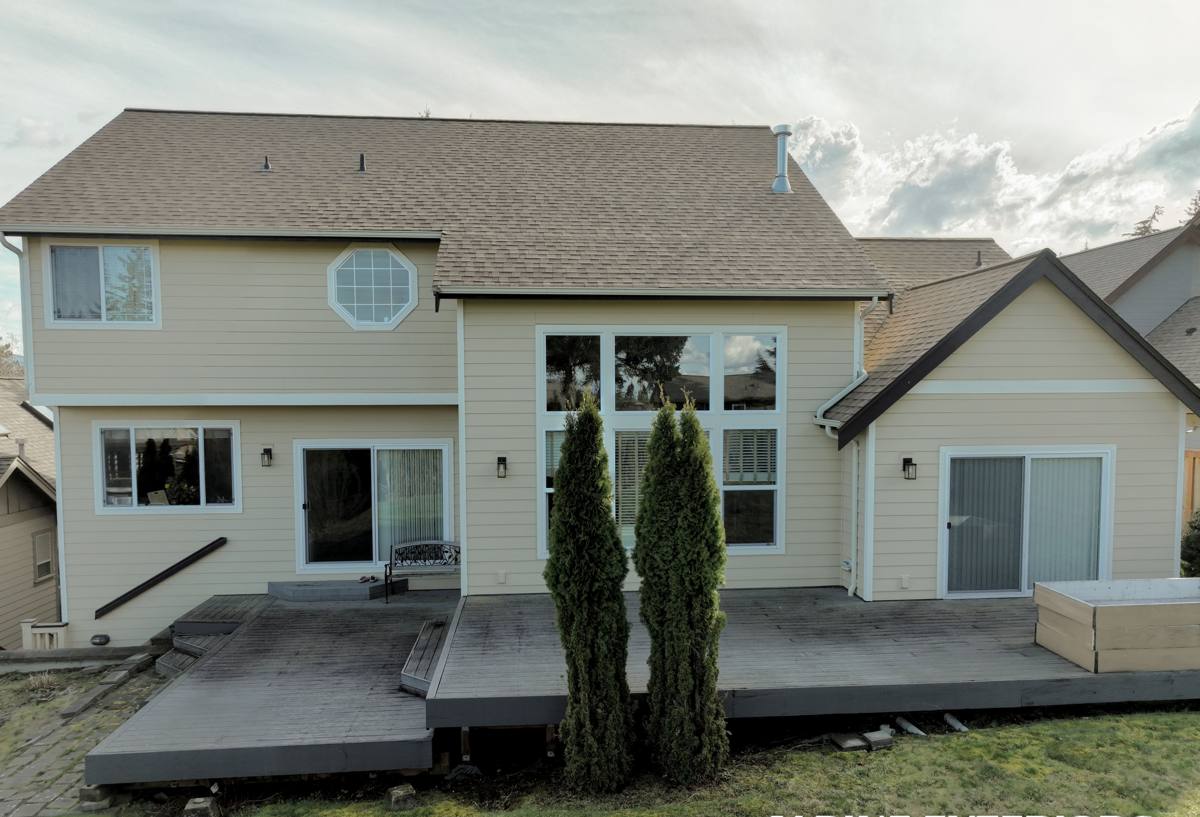
What Wallingford's Tree Canopy and Shade Mean for Your Deck
Wallingford is one of Seattle's leafier neighborhoods — big conifers, maples, and mature landscaping on lots that were platted decades ago, long before anyone thought about deck drainage or sun exposure. That's part of the neighborhood's character, but it creates real conditions a deck has to be built for:
- Shaded decks stay damp longer after rain, which is exactly what moss and algae need to take hold
- Falling leaves and needles collect in board gaps and against ledger boards if drainage isn't planned for
- Narrower lots and close setbacks common in older Wallingford blocks often mean less airflow under and around the deck
- Root systems from established trees can affect footing placement and post depth
None of this rules out a great deck — it just means the design and material choice have to account for shade and moisture instead of assuming a sunny, open yard.
Composite Decking Materials: What We Install and Why
Not all composite is the same, and in a climate like this the differences matter more than they would somewhere dry. We install capped composite and PVC decking because both shed water at the surface instead of letting it soak into the board core, which is the main reason older, uncapped composite products developed a bad reputation for swelling and staining.
| Material | Moisture Behavior | Maintenance | Best Fit |
|---|---|---|---|
| Capped composite | Sheds surface water; core is protected by a polymer shell | Occasional wash; no staining or sealing | Most Wallingford yards, including shaded ones |
| PVC decking | Fully synthetic, no wood fiber to absorb moisture | Lowest maintenance; wipe or wash | Heavily shaded, moss-prone, or waterfront-adjacent lots |
| Uncapped composite | Wood fiber core can absorb moisture over time | More prone to staining in wet, shaded spots | We generally steer clients away from this in our climate |
| Natural wood (cedar/fir) | Absorbs and releases moisture constantly | Annual cleaning, sealing, and inspection | Homeowners who want a traditional look and accept the upkeep |
We're upfront with clients about the trade-offs. Uncapped composite and untreated wood aren't bad products — they just ask more of a deck that sits in shade and rain for eight or nine months a year than most homeowners want to keep up with. Our standard recommendation for Wallingford is a capped composite or PVC board, matched to the home's style and the client's budget.
Color and Finish Considerations for Shaded Lots
Darker composite colors show pollen, moss spores, and organic debris less obviously than very light tones, which is worth factoring in on a heavily shaded lot. Streaked or variegated color patterns also tend to hide the occasional leaf stain or water spot better than a solid, flat color — a small detail, but one that makes a real difference in how the deck looks between cleanings.
What a Correct Composite Deck Installation Involves
Composite boards are more forgiving than wood in some ways and less forgiving in others. The board itself resists rot, but the structure underneath it still has to be built to shed water and breathe — otherwise you're just hiding a moisture problem under a low-maintenance surface.
Framing and Drainage
Joist spacing has to match the manufacturer's specification for the specific composite product — this is often tighter than standard wood-decking spacing, especially at angles or picture-frame borders. Ledger board flashing and proper slope away from the house are non-negotiable in a region that sees as much rain as King County does; a poorly flashed ledger is one of the most common causes of hidden rot behind a deck, regardless of what decking material sits on top.
Fasteners and Hardware
We use hidden fastener systems or manufacturer-approved composite screws rather than generic wood deck screws. Mismatched hardware is a common source of the surface staining and board movement that give composite decking a bad name — it's usually an installation shortcut, not a flaw in the material.
Ventilation Underneath
On the low-clearance decks common in older Wallingford homes, we make sure there's enough airflow beneath the structure. Composite boards don't rot, but the joists, beams, and posts underneath are typically still treated lumber, and they need the same airflow any wood-framed structure needs to avoid trapped moisture.
Our Process From Estimate to Finished Deck
We keep the process straightforward, especially since most Wallingford projects involve replacing an existing deck rather than building on a bare lot.
- On-site assessment — We look at sun exposure, drainage, tree cover, existing framing condition, and how the deck ties into the house.
- Material walkthrough — We show samples and talk through the trade-offs in this section honestly, based on how shaded and exposed the specific yard is.
- Written estimate — Clear scope, materials, and price before any work starts.
- Demo and framing — Old decking and any compromised framing come out; structure is inspected and rebuilt or reinforced as needed.
- Composite installation — Boards, fascia, and railing installed per manufacturer spec, with attention to drainage and airflow.
- Final walkthrough — We go over the finished deck and basic care with the homeowner before we consider the job done.
Maintenance in a Wet, Mossy Climate
Composite decking cuts maintenance dramatically compared to wood, but "low maintenance" isn't "no maintenance," especially under Wallingford's tree canopy. A simple seasonal routine keeps a composite deck looking right for years:
- Sweep leaves and needles out of board gaps regularly during fall
- Rinse the deck surface every few months to prevent pollen and organic buildup from becoming moss
- Use a soft-bristle brush and mild soap on any green or dark spots rather than a pressure washer on high setting, which can damage the cap layer
- Check that gutters and downspouts near the deck are clear so runoff isn't draining directly onto the boards
- Keep planters and furniture legs from sitting in standing water on the deck surface for long stretches
Cost Factors for a Wallingford Composite Deck
Pricing depends on the specifics of the project, but a few factors consistently move the number up or down:
| Factor | Effect on Cost |
|---|---|
| Deck size and shape (angles, curves, multiple levels) | More cuts and framing complexity raise labor cost |
| Existing structure condition | Rotted framing found during demo adds to the scope |
| Material tier (capped composite vs. PVC) | PVC typically costs more upfront, less long-term upkeep |
| Railing and fascia choices | Composite or metal railing systems add to material cost |
| Access and lot constraints | Narrow side yards and close setbacks common in Wallingford can affect equipment access and labor time |
We give straightforward written estimates after seeing the site in person — we don't quote sight unseen, because the condition of the existing framing usually matters as much as the size of the deck.
Why Hire a Crew That Already Works in Wallingford
A lot of deck problems in this neighborhood trace back to a design that ignored the shade, the drainage, or the tree cover — details that are easy to miss if a crew doesn't regularly work in this kind of setting. Knowing how much airflow a low-clearance deck actually needs under a canopy, or how a ledger flashing detail has to handle King County's rain volume, comes from doing this work here repeatedly, not from a generic install checklist.
We also know the practical side of working in Wallingford's older residential blocks — tighter lots, mature landscaping to work around, and homes where the existing structure often needs an honest assessment before anyone talks about new boards.
If you're weighing a composite deck for your Wallingford home, we're happy to take a look and give you a straightforward, no-pressure estimate — just fill out the form below to get started.