 Seattle
 Why West Seattle Decks Take More Punishment Than You'd Expect
West Seattle sits right up against Puget Sound, and that location cuts both ways. The water views are a big part of why homeowners here want a deck in the first place, but that same exposure means salt-laden air, near-constant winter moisture, and long stretches of shade under mature evergreens all work on a deck at once. A deck built with generic, one-size-fits-all specs from a national contractor often shows its age in West Seattle within a few years — fasteners bleeding rust, boards cupping, and a green film creeping across every north-facing surface. None of that is inevitable. It's a sign the deck wasn't built with this specific environment in mind.
Seattle's marine climate means our decks rarely deal with deep freezes, but they deal with something arguably harder on wood and hardware over time: near-constant dampness for months on end, punctuated by salt-carrying wind off the Sound. Getting a deck right here isn't about over-building for a single extreme event — it's about choosing materials and details that shrug off year after year of gray, wet, salty weather without complaint.
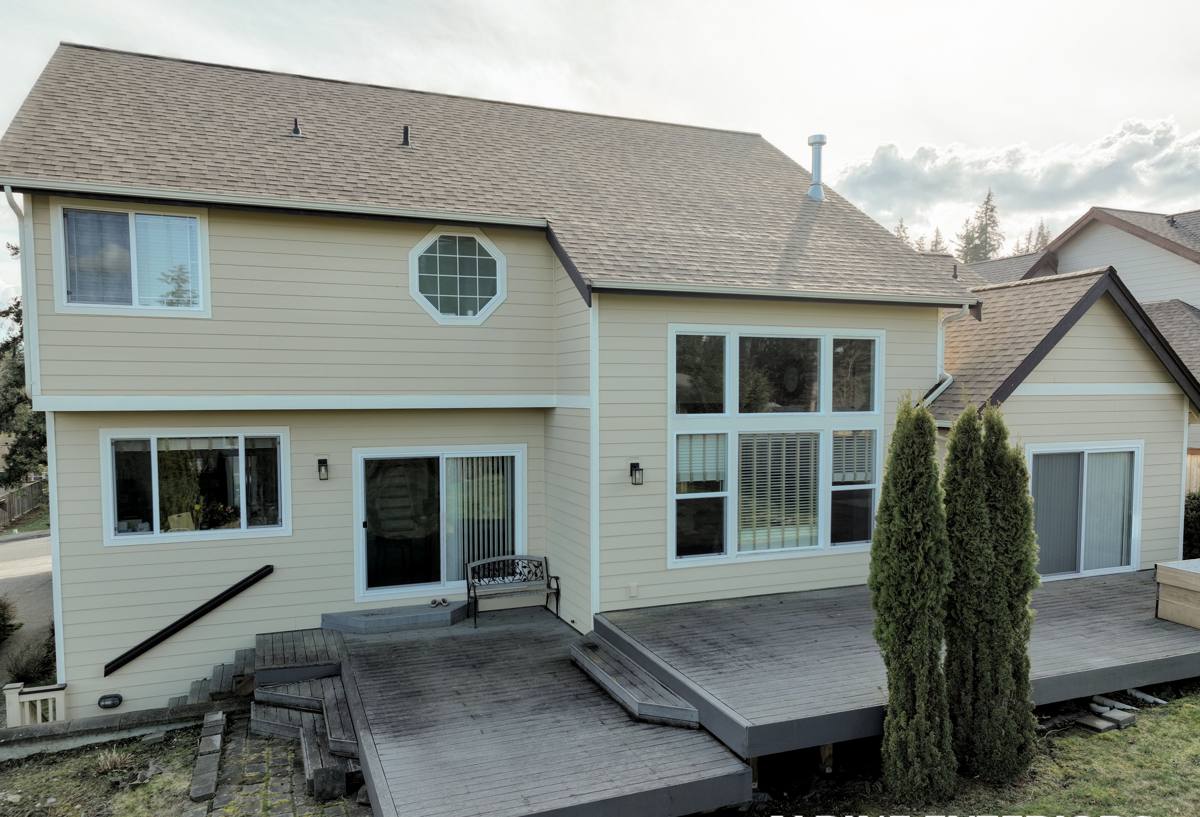
What Salt Air Actually Does to a Deck
Salt air doesn't need to be a stiff ocean breeze to cause problems — a steady, low-level exposure over years is often worse because it goes unnoticed until damage is visible. The two areas we watch closest:
- Fasteners and hardware: Standard coated screws and joist hardware can start showing rust streaks in salt-influenced air far faster than the same products would inland. Streaking isn't just cosmetic — it means the coating is breaking down and the fastener is losing strength.
- Metal railings and fixtures: Aluminum and steel components need a finish genuinely rated for coastal exposure, not just "outdoor use." A lot of off-the-shelf railing hardware is tested for general weather, not salt air specifically.
The fix isn't complicated, but it does mean being deliberate about what goes into the deck rather than defaulting to whatever's cheapest at the supply house.
Moss, Shade, and the Long Wet Season
West Seattle's tree cover and marine cloud layer mean many decks — especially anything facing north or tucked under overhanging branches — stay damp for long stretches between fall and spring. That combination of moisture and low light is exactly what moss and algae need. Once established, moss holds even more water against the deck surface, which accelerates rot in wood decking and can make composite boards dangerously slick.
A correctly built deck fights this on two fronts: material choice that resists moisture absorption, and design details (drainage gaps, airflow underneath, proper board spacing) that let the structure actually dry out between storms instead of staying saturated.
Choosing a Decking Material for This Climate
There's no single "best" decking material for every West Seattle home — it depends on budget, how much upkeep you want to do, and how exposed the deck is to sun, shade, and salt air. Here's how the common options actually compare in this climate:
| Material | Moisture & Moss Resistance | Maintenance | Typical Lifespan Here |
|---|---|---|---|
| Pressure-treated lumber | Good if sealed regularly; absorbs water if coating lapses | Annual cleaning and re-sealing recommended | 10-15 years with upkeep |
| Cedar | Naturally moisture- and insect-resistant; still needs care in constant shade | Periodic cleaning and oil/stain to maintain color and resistance | 15-20 years with upkeep |
| Capped composite | Excellent — doesn't absorb moisture into the core | Occasional washing to keep moss from gripping the surface texture | 25-30+ years |
| PVC decking | Excellent — fully synthetic, no organic material for moss to feed on | Low — periodic rinse-off | 25-30+ years |
We'll talk through these trade-offs honestly during your estimate — including where a lower-maintenance material is worth the added upfront cost versus where a well-built wood deck still makes sense for your budget and the way you'll use the space.
What's Underneath Matters More Than What's on Top
The decking boards get all the attention, but the substructure — ledger connection, footings, joists, and fasteners — is what actually determines whether a deck stays safe and level for decades. In a climate that keeps wood damp for months at a time, we pay particular attention to:
- Ledger board flashing: Where the deck attaches to the house is the single most common failure point on any deck, and it's a bigger risk here given how much rain the connection has to shed over a typical winter.
- Joist protection: Coated or wrapped joists resist the slow rot that untreated lumber develops when it's damp for extended periods.
- Corrosion-resistant fasteners and connectors: Given the salt air, we use hardware rated for coastal or marine-grade exposure rather than standard exterior-rated products.
- Footing depth and drainage: Footings need to be set to local frost and soil requirements, with drainage that keeps water from pooling against posts.
None of this is visible once the deck is finished, which is exactly why it's worth asking a contractor to explain what's going into the structure before boards ever go down.
Design Considerations Specific to West Seattle Properties
Slopes and Elevation Changes
Many West Seattle lots have real elevation change between the house and yard, which often means a deck also needs to solve a grade problem — stairs, a lower patio landing, or a multi-level design. We look at the whole site, not just the deck footprint, so the finished structure works with your yard rather than fighting it.
Wind and View Exposure
Homes with unobstructed Sound-facing exposure deal with more direct wind and weather than homes tucked into denser, more sheltered blocks. That affects railing choices, how open or wind-buffered a design should be, and how much of the structure needs coastal-rated hardware versus standard exterior fasteners.
Shade Patterns
Mature trees are common on West Seattle lots, and the shade they cast changes how a deck ages. A deck under heavy tree cover needs better drainage and airflow underneath than one that gets regular sun, simply because it has fewer dry days to recover between rain events.
How We Approach a Deck Project
- On-site assessment: We walk the property, check the grade, existing structure (if any), sun and shade exposure, and how close the site sits to open water or prevailing wind.
- Design and material selection: Based on that assessment, we recommend decking, hardware, and structural details suited to the specific exposure of your lot — not a generic package.
- Permitting: Most new decks and many significant deck rebuilds in Seattle require a permit through the city. We handle that process so the structure is inspected and compliant.
- Construction: Footings, framing, and ledger work come first and get inspected before decking goes down, followed by decking, railing, and any stairs.
- Final walkthrough: We go over the finished deck with you, including what maintenance (if any) the specific materials chosen will need going forward.
Permits and Code in Seattle
Seattle requires a permit for most new decks, particularly anything above a certain height off grade or attached to the structure of the house, and King County/city code sets requirements for railing height, guard spacing, and structural connections. Skipping the permit process might save time up front, but it creates real problems later — unpermitted decks can complicate a home sale, and uninspected structural connections are exactly where failures happen. We pull the appropriate permits and build to code as a matter of course, not as an upcharge.
Keeping a West Seattle Deck in Good Shape
Whatever material you choose, a little seasonal attention goes a long way in this climate. A simple annual checklist:
- Sweep debris and standing leaves off the deck surface before fall rains set in — trapped organic matter is what feeds moss growth
- Rinse or lightly scrub composite and PVC decking once or twice a year to keep algae from gaining a foothold
- Re-seal or re-stain wood decking on the schedule the manufacturer recommends — don't wait until it's visibly gray and dry
- Check railing hardware and fasteners for early rust streaking, especially on Sound-facing or unsheltered decks
- Confirm gaps between boards and clearance underneath the deck are clear of debris so air can keep circulating
- Look at the ledger flashing and house connection point once a year for any sign of water intrusion
Why a Crew That Already Works West Seattle Makes a Difference
A deck built to a generic national spec sheet can look fine on the day it's finished and still be the wrong deck for a Puget Sound-facing lot. Choosing hardware, decking, and structural details based on actual local exposure — salt air, shade, drainage, wind — isn't an upsell; it's the difference between a deck that needs real repair work in five years and one that's still solid in twenty. We build decks throughout Seattle and King County, and the lessons learned on one West Seattle project inform the next one, rather than starting from a blank slate every time.
If you're planning a new deck or replacing one that's showing its age, we're happy to come take a look and talk through what makes sense for your specific site. Reach out for a free, no-pressure estimate using the form below.