 Seattle
 Deck Building on Queen Anne's Hills
Queen Anne sits up high, which means a lot of decks here are doing double duty: outdoor living space and, in many cases, a structural platform perched over a slope, a daylight basement, or a steep side yard. That elevation gives homeowners some of the best views in Seattle, but it also means wind exposure, water runoff, and access can all be more complicated than a flat-lot deck build elsewhere in King County. Add in Puget Sound's salt air, long wet winters, and the moss that comes with them, and a deck here needs to be built with the local conditions in mind from the first footing to the final board.
We build and replace decks throughout Queen Anne and the surrounding Seattle neighborhoods, so we're used to the site conditions specific to this area — retaining walls, older foundations, mature landscaping, and the drainage patterns that come with hillside lots. A deck that's designed and installed correctly for this environment will outlast one that's built to a generic spec and just dropped into place.
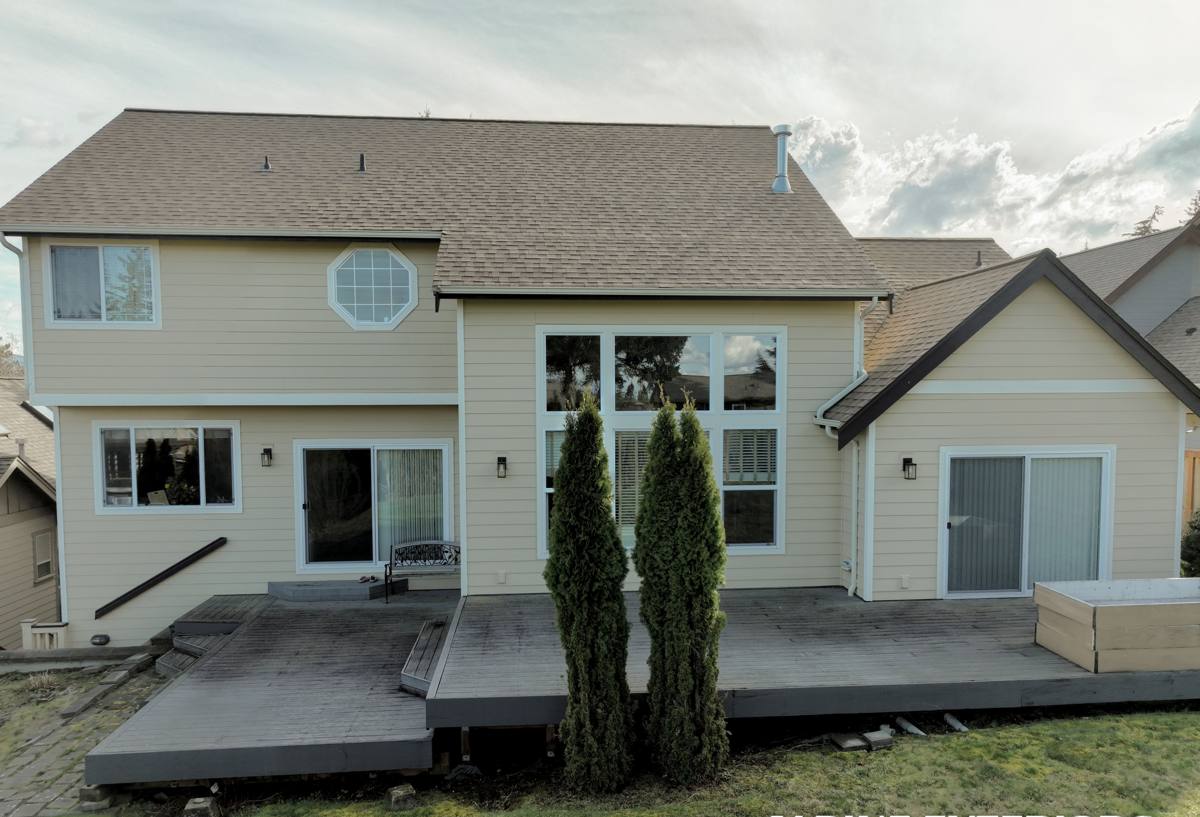
What Queen Anne's Climate Does to a Deck
Seattle's marine climate is generally mild, but "mild" doesn't mean easy on wood, fasteners, or finishes. A few things matter more here than in drier parts of the country:
Salt Air and Corrosion
Queen Anne's proximity to Puget Sound means a steady low level of salt-laden air moving through the neighborhood, especially on the west- and north-facing sides of the hill. Salt air accelerates corrosion in fasteners, structural hardware, and railing components. Using the wrong grade of screw or bracket doesn't usually fail in year one — it fails quietly over several years, often at the connections you can't see once the decking is down.
Driving Rain
Rain in this area doesn't just fall straight down — wind off the Sound drives it sideways into ledger boards, rim joists, and any spot where a deck meets the house. Flashing and water management at that ledger connection is one of the most common places we find rot on decks that were built without it, regardless of how nice the decking looks on top.
Moss Season
Seattle's long stretch of overcast, damp months (roughly October through April) is prime moss and algae growth season, especially on decks that sit in shade from mature trees or a neighboring structure — common on tightly built Queen Anne lots. Moss holds moisture against the deck surface, which speeds up wood decay and makes boards slick and dangerous underfoot.
What a Correct Deck Build Involves Here
A deck that's going to hold up on Queen Anne needs attention in a handful of specific places, not just a nice-looking surface:
- Ledger flashing: Proper metal flashing and a water-shedding detail where the deck attaches to the house, so driving rain can't work its way behind the ledger board.
- Fastener and hardware grade: Corrosion-resistant, code-rated structural connectors and fasteners rated for outdoor and coastal-influenced exposure — not general-purpose hardware.
- Footings sized for the site: On sloped or hillside lots, footings and post placement account for grade, soil conditions, and load in a way that a flat-lot deck doesn't require.
- Grading and drainage under the deck: Especially on low decks or ones built over a walkout basement, water needs somewhere to go that isn't pooling against the house foundation.
- Board spacing and airflow: Correct gapping between decking boards and adequate airflow underneath so wood can dry out between rain events instead of staying damp for weeks at a time.
- Railing and guard details: Especially relevant on elevated Queen Anne decks, where fall height and wind load both come into play.
Choosing a Decking Material for This Environment
There's no single "best" decking material for every home — it depends on budget, maintenance tolerance, and how much shade and moisture the deck sees. Here's how the common options compare for a Seattle-area, moss-prone site:
| Material | Moisture/Moss Behavior | Maintenance | Typical Lifespan |
|---|---|---|---|
| Pressure-treated wood | Prone to moss and staining in shaded spots without regular cleaning | Periodic cleaning, sealing, and re-staining | 15-20 years with upkeep |
| Cedar | Naturally more rot-resistant but still needs finish maintenance in this climate | Regular sealing/staining to hold color and resist moisture | 20-25 years with upkeep |
| Composite decking | Sheds moisture well; can still grow surface algae in deep shade if not cleaned | Occasional washing; no staining or sealing | 25-30+ years, manufacturer-dependent |
We install all of these depending on what the homeowner wants, but we're upfront about the trade-offs. Wood decking costs less up front and looks great, but it demands a real annual maintenance commitment in a climate this wet — skip a year or two of cleaning and sealing, and moss gets a foothold that's harder to remove without damaging the finish. Composite costs more initially but removes most of that maintenance burden, which matters to a lot of Queen Anne homeowners dealing with steep, harder-to-access decks where getting up to clean and reseal isn't a simple weekend chore.
Repair, Replace, or Rebuild?
Not every deck problem means starting over. We look at three things before recommending a path:
Structural Framing
Posts, beams, joists, and the ledger connection are the parts that actually keep the deck safe. If these are sound, there's often no reason to replace the whole structure. If we find rot at the ledger or in structural framing, that's not a cosmetic issue — it needs to be addressed regardless of how the decking looks.
Decking Surface
Surface boards take the brunt of moss, foot traffic, and UV exposure. It's common to resurface a deck — replacing just the boards and railings — while keeping a structurally sound frame underneath, which saves cost compared to a full rebuild.
Age and Code
Older decks, especially ones built before current fastening and guard-rail standards, sometimes have connection details that don't meet what's required today. Part of our job is flagging those gaps honestly, even when they weren't visible or a problem when the deck was first built.
Our Process for a Queen Anne Deck Project
Because so many lots in this neighborhood involve slope, limited access, or tight side yards, we treat the site assessment as more than a formality:
- On-site evaluation: We look at grade, drainage paths, existing structure (if any), sun/shade exposure, and access for materials and equipment.
- Design and material discussion: We walk through decking material options, railing style, and layout based on how the space will actually be used.
- Permitting: Deck work in Seattle typically requires a permit depending on height and scope — we handle that process rather than leaving it to the homeowner.
- Framing and structural work: Footings, posts, beams, joists, and ledger flashing get built to code and to the site's specific drainage and load conditions.
- Decking, railing, and finish work: Surface installation with correct spacing and fastening, followed by railing and any finish or sealing work the material requires.
- Final walkthrough: We go over maintenance expectations for the specific material installed, so there are no surprises about upkeep once moss season rolls around.
Maintenance That Actually Matters Here
Whatever material a deck is built from, a few habits make the biggest difference in a climate like Seattle's:
- Sweep or blow off leaves and debris regularly, especially in fall — trapped organic matter is what feeds moss growth.
- Clean the deck surface at least once a year, more often in heavily shaded spots, before moss gets established rather than after.
- Check and clear drainage paths under and around the deck so water isn't sitting against posts, footings, or the house foundation.
- Inspect railings and fastener points periodically for early signs of corrosion, particularly on decks facing prevailing wind and rain.
- Re-seal or re-stain wood decking on the schedule the finish product actually requires — stretching it out is the single biggest reason wood decks fail early here.
Why Local Experience Matters for This Job
Queen Anne's mix of hillside lots, older homes, and tight side-yard access means a deck crew needs to plan around real site constraints, not just build to a standard blueprint. We've worked enough decks in this part of Seattle to know where water tends to collect, which fastener grades hold up against the salt air coming off the Sound, and how to sequence a build around limited equipment access on a steep lot. That local familiarity shows up in details a homeowner might never think to ask about — but that determine whether the deck is still solid in fifteen years or starting to show rot in five.
King County permitting requirements and Seattle's specific building code details are also part of the picture, and it helps to work with a crew that already knows that process rather than learning it project by project.
If you're planning a new deck or need an honest look at an existing one, we're happy to come out, walk the site, and give you a straightforward assessment. There's no pressure and no obligation — just fill out the form below to request a free estimate.