 Seattle
 Why Decks in Ballard Wear Out the Way They Do
Ballard sits close enough to the water that salt air is a real factor in how fast a deck ages, not just a talking point. Add in Seattle's long stretch of driving rain every fall and winter, plus a moss season that can run from October well into spring, and you've got a combination that attacks decks from three directions at once: corrosion on fasteners and hardware, moisture intrusion at every joint and seam, and organic growth that holds water against wood and composite surfaces far longer than most homeowners realize. A deck that would last two decades in a dry inland climate can show serious structural issues in Ballard in half that time if it wasn't built with this climate in mind the first time around.
We're not describing anything exotic here — it's just what happens to an exterior wood or composite structure that sits outside, low to the ground, in a maritime climate for years. The good news is that almost every failure mode we see is preventable with the right materials, the right flashing details, and framing that's built to shed water instead of trap it.
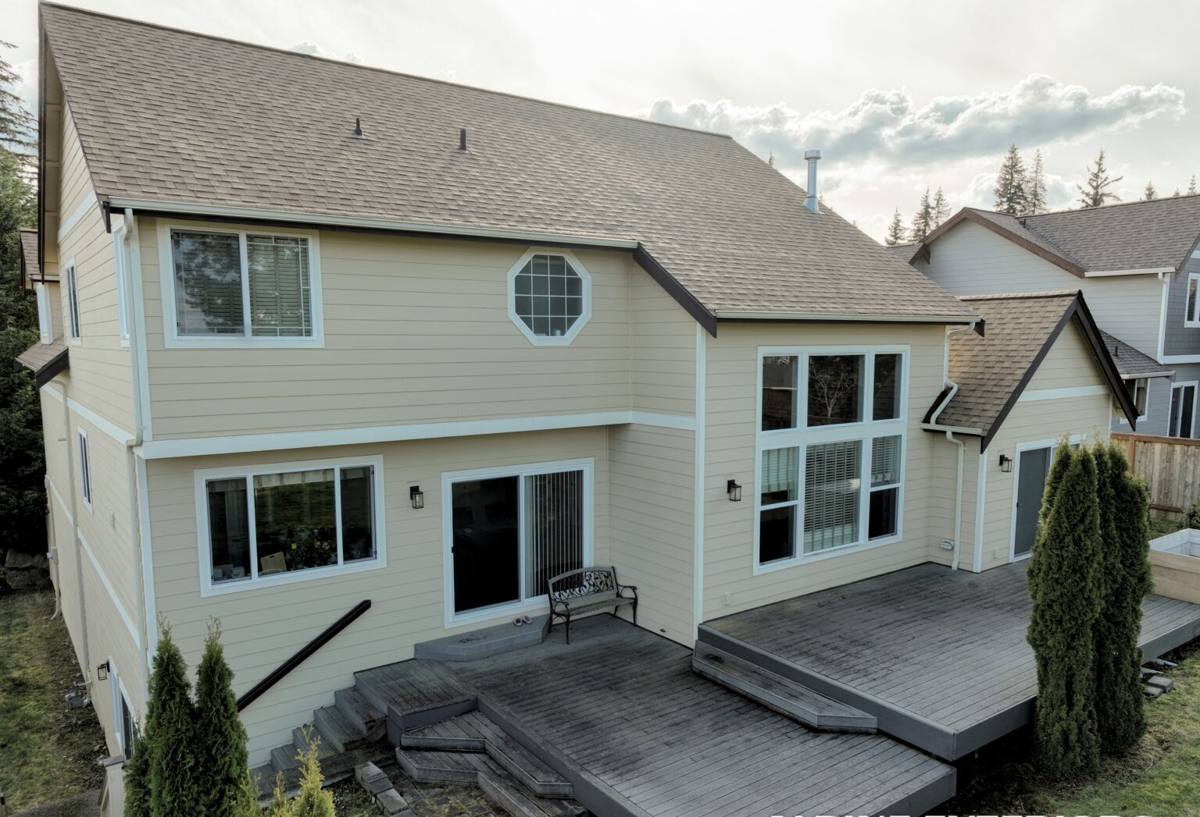
Signs a Repair Won't Cut It Anymore
Homeowners often call us for a repair quote and end up learning the deck needs full replacement instead. There's no shame in that — decks fail from the inside out, so the surface can look fine while the framing underneath is already compromised. Here's what tells us a deck has crossed the line from "fixable" to "replace it":
- Soft, spongy, or bouncy spots in the decking or framing when you walk across it
- Visible rot at the ledger board (where the deck attaches to the house) or at post bases
- Rust staining or corroded fasteners, especially on older galvanized hardware
- Moss or dark staining that keeps coming back within weeks of cleaning
- Railings or stairs that feel loose or shift under normal use
- Gaps opening up between boards, or boards cupping and warping unevenly
- Multiple past repairs to the same sections of decking or framing
Any one of these on its own might be a repair. Two or three together, especially anything involving the ledger board or main support posts, usually means the structure has moisture damage that a surface fix won't solve.
What a Proper Deck Replacement Actually Involves
A deck replacement isn't just pulling up old boards and screwing down new ones. The parts nobody sees — framing, flashing, fasteners, and drainage — determine whether the new deck lasts 10 years or 30. In our experience, most premature deck failures in this region trace back to shortcuts in these hidden details, not to the decking material itself.
Tear-Out and Structural Assessment
We remove the old decking and railing, then inspect the ledger board, posts, beams, and joists before deciding what stays and what gets rebuilt. Sometimes the footings and framing are sound and only the decking needs replacing; other times water damage has spread further than the surface suggested, and we'll walk you through exactly what we found before moving forward.
Ledger Board and Flashing
This is the single most important detail on any Pacific Northwest deck. The ledger board is where the deck bolts to your house, and it's the number-one point of water intrusion when it's flashed incorrectly. We install proper flashing that directs water away from the house framing, not just a bead of caulk that will fail in a season or two of driving rain.
Framing and Fasteners
We use fasteners and structural hardware rated for exterior, corrosion-prone environments — this matters more in Ballard than in drier inland areas because of the added salt air exposure. Joists get proper spacing for the decking material chosen, and we build in the slight slope away from the house that lets water run off instead of pooling.
Decking Installation
Board spacing, ventilation underneath, and fastening pattern all affect how well a deck handles our wet season. We leave appropriate gapping for material expansion and airflow, which cuts down on the trapped moisture that feeds moss and rot.
Choosing the Right Decking Material for Ballard's Climate
There's no single "best" decking material — there's a best material for your budget, your maintenance appetite, and how much sun versus shade your deck gets (shaded decks hold moisture longer and grow moss faster). Here's how the common options stack up in a climate like ours:
| Material | Moisture Behavior | Maintenance | Typical Lifespan |
|---|---|---|---|
| Pressure-treated wood | Prone to cupping, splintering, and moss growth if not sealed regularly | Annual cleaning and re-sealing recommended | 10–15 years |
| Cedar | Naturally rot-resistant but still needs sealing in our rain volume | Periodic sealing and moss treatment | 15–20 years |
| Composite decking | Doesn't rot, but can still hold surface moisture and grow moss without airflow underneath | Occasional washing; no sealing needed | 25–30 years |
| PVC / capped composite | Best moisture resistance of the group; sheds water and resists staining | Low; occasional washing | 25–30+ years |
We install all of these depending on what fits your house and budget, but we're upfront about trade-offs. Composite and PVC cost more up front but save on maintenance over the deck's life, which matters in a climate where an unsealed wood deck can start showing moss within a single wet season. Wood costs less initially but only holds up if you're willing to keep up with sealing and cleaning on a real schedule, not "when it looks bad."
Railings, Stairs, and Code Requirements
Railing height, baluster spacing, and stair requirements are governed by Seattle and King County building code, and they get checked at permit inspection. Beyond the code minimums, we pay attention to how railing posts are attached to framing — a loose or wobbly railing is almost always a sign of an attachment problem, not a design flaw, and it's one of the more common issues we find on older decks we're asked to replace.
Most deck replacements above a certain size or height require a permit in Seattle. We handle the permit process as part of the job so you're not left navigating that on your own, and so the finished deck is actually documented and inspected rather than an unpermitted structure that can complicate a future home sale.
What Drives the Cost of a Deck Replacement
Every deck is different, so we'll always give you a real number after seeing the site, but these are the factors that move the price up or down:
| Factor | Why It Matters |
|---|---|
| Deck size and height | Larger decks and multi-level structures need more material and framing labor |
| Decking material chosen | Composite and PVC cost more upfront than wood but need less upkeep |
| Framing condition | Rotted joists, posts, or ledger boards add rebuild work beyond the surface |
| Railing style | Cable, glass, and custom railing systems cost more than standard baluster railing |
| Site access | Tight side yards or elevated decks can add labor time for material handling |
| Permit requirements | Larger or taller decks require permitting and inspection, which adds time to the schedule |
Our Process, Start to Finish
We keep the process straightforward because deck replacement shouldn't feel like a mystery:
- On-site assessment of the existing deck, framing, and any moisture or rot issues
- Honest recommendation — repair versus full replacement, with reasoning explained
- Material and layout discussion based on your budget, sun exposure, and how you use the space
- Permit filing where required, before any demo begins
- Tear-out and structural rebuild, including proper ledger flashing and framing
- Decking, railing, and stair installation
- Final walkthrough and inspection sign-off
We don't skip the framing and flashing details to get to the "visible" part of the job faster. Those hidden details are what determine whether you're calling us again in five years or enjoying the deck for the next two decades.
Why a Crew That Already Works Ballard Makes a Difference
Deck problems in this neighborhood tend to follow patterns — moss buildup on shaded north-facing decks, ledger rot on older homes with outdated flashing details, and corrosion on hardware that wasn't rated for the salt air this close to the water. A crew that's replaced decks throughout Seattle and King County has already seen these patterns enough times to know what to check for before problems show up, rather than discovering them mid-project. That means fewer surprises, a more accurate estimate up front, and a deck that's actually built for the conditions it's going to sit in, not a generic install that happens to be located here.
It also means we're not guessing at permit requirements or code details specific to this area — we handle that as routine, not as something we have to research for the first time on your job.
If your Ballard deck is showing soft spots, moss that won't quit, or hardware that's starting to rust, we're glad to take a look and give you a straight answer on repair versus replacement. Fill out the form below for a free, no-pressure estimate.