 Seattle
 Deck Replacement Built for Fremont's Conditions
Fremont sits close enough to the Ship Canal and Puget Sound that homes here deal with a specific combination of exposures: damp marine air carrying salt, long stretches of steady rain from fall through spring, and shade from mature trees that keeps decks wet and mossy far longer than decks in drier, sunnier parts of King County. A deck that was built to a generic standard, or one that's now 15-20 years old, is usually not holding up well against that combination. We replace decks in Fremont on a regular basis, and the failure patterns we see are consistent enough that we can tell you what to expect before we ever pull up a board.
This page is about deck replacement specifically - not repair, not a quick refresh. If your deck has structural problems, widespread rot, or ledger and post issues, replacement is usually the more honest recommendation than patching around them.
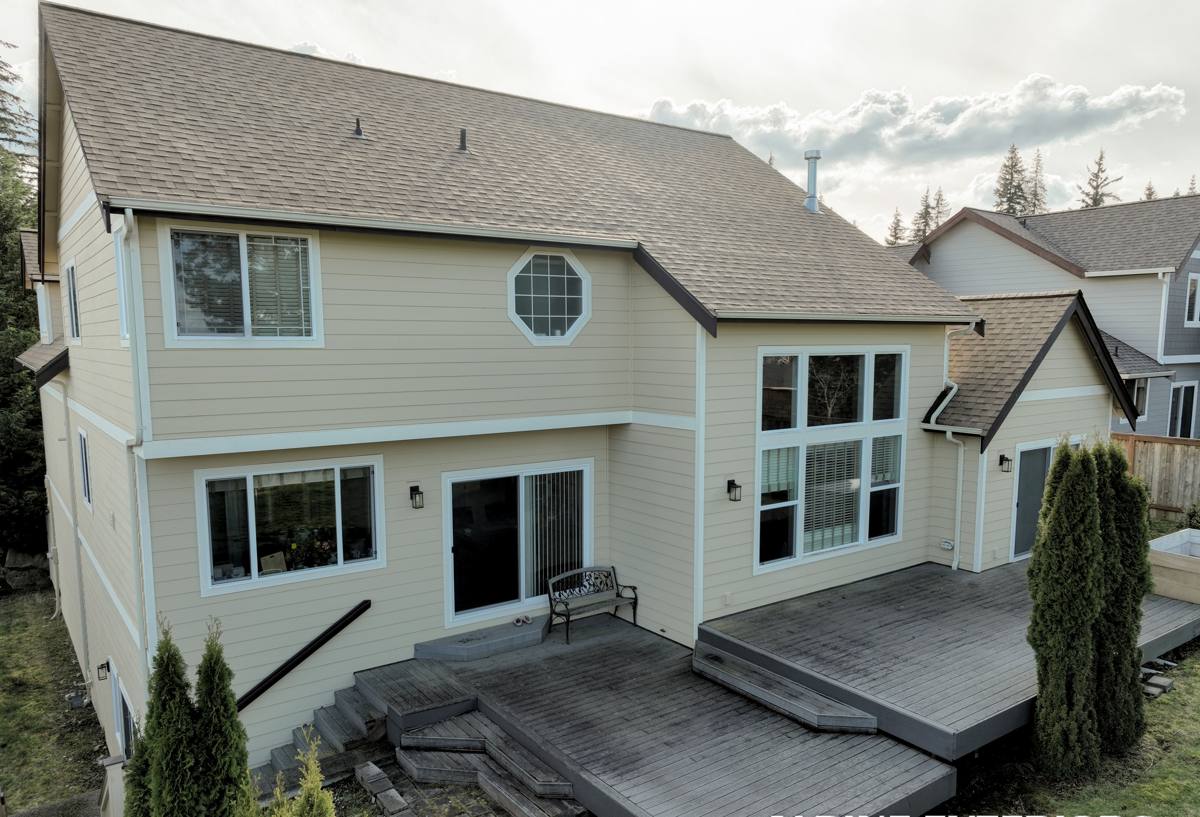
Why Fremont Decks Wear Out Faster Than the Manual Says
Salt Air and Metal Fasteners
Proximity to the Sound means airborne moisture carries salt content that accelerates corrosion on fasteners, joist hangers, and any hardware that isn't rated for it. We see galvanized coatings that have broken down years ahead of schedule, leaving rust streaks on the decking and, more importantly, weakened connections at load-bearing points. This is one of the most common reasons a deck that "looks fine" from the top is unsafe underneath.
Driving Rain and Trapped Moisture
Seattle's rain doesn't just fall straight down - wind-driven rain gets underneath railings, into end-grain cuts, and behind ledger boards where it doesn't dry out between storms. Wood and composite decking both depend on proper drainage and airflow to shed that moisture. When a deck was built without adequate flashing at the house connection, or without gaps for airflow underneath, water sits and the structure suffers even if the surface boards look okay.
Moss, Shade, and the Long Wet Season
Tree cover common in Fremont's older residential blocks keeps decks shaded and slow to dry. Moss and algae take hold on any surface that stays damp, and beyond being slippery, moss holds moisture against the wood surface, which speeds up rot in untreated or poorly sealed boards. A deck in full sun in a drier part of the county can go years longer between major maintenance than a shaded Fremont deck built the same way.
Signs Your Deck Needs Replacement, Not Repair
- Soft or spongy spots in the decking surface, especially near the house or at board ends
- Visible rot or discoloration at the ledger board where the deck attaches to the house
- Rust streaking from fasteners, joist hangers, or post brackets
- Posts that wobble or show rot at the base, particularly where they meet concrete footings
- Railings that flex or feel loose under normal pressure
- Persistent moss or algae that returns within weeks of cleaning
- A deck older than 20 years that has never had a structural inspection
- Gaps opening up between boards, or boards cupping and warping
If you're seeing two or more of these, it's worth having someone look underneath the deck, not just at the walking surface. Most of the damage that matters is invisible from above until it fails.
What a Correct Deck Replacement Involves
Full Structural Assessment First
Before we quote a replacement, we look at the ledger connection, the footings, the framing, and how the deck was originally attached to the house. In Fremont specifically, we pay close attention to ledger flashing, because a poorly flashed ledger is the single most common source of hidden rot we find, and it's also the point where a failure has the most serious consequences.
Framing and Fastener Choices That Match Local Conditions
Given the salt air and moisture exposure, we don't cut corners on hardware. That means stainless steel or high-corrosion-resistant coated fasteners and connectors at every structural point, proper joist hanger installation, and framing lumber rated for ground contact or exterior use where it's called for. This costs more upfront than using standard hardware, but replacing a deck's fasteners is far more disruptive and expensive than specifying the right ones the first time.
Drainage and Airflow Designed In
A deck that dries out between rain events lasts longer, full stop. That means proper slope on the decking surface, ledger flashing that actually sheds water away from the house rather than behind the siding, and enough clearance underneath for air to move. On shaded lots, we sometimes recommend joist tape or additional drainage detailing specifically because the deck won't get the sun exposure that helps drier lots dry out on their own.
Decking Material Suited to Shade and Moisture
We'll talk through wood versus composite honestly, including the maintenance trade-offs of each, and we won't push a material that doesn't fit your specific site conditions. A heavily shaded, moss-prone deck has different needs than one in full sun, and we'll say so plainly rather than selling the same recommendation to every homeowner.
Decking Material Comparison for Fremont's Climate
| Material | Moss/Moisture Resistance | Maintenance | Typical Lifespan Here |
|---|---|---|---|
| Pressure-treated wood | Moderate - needs sealing and regular cleaning in shaded areas | Annual cleaning, periodic staining/sealing | 10-15 years with upkeep |
| Cedar | Naturally moderate rot resistance, but still needs sealing in shade | Regular sealing, more attention in wet/shaded spots | 12-18 years with upkeep |
| Composite decking | High - doesn't absorb moisture the way wood does, resists rot | Occasional washing, no staining or sealing | 20-30 years, varies by product |
| PVC decking | Very high - fully synthetic, minimal moisture absorption | Lowest maintenance of the options | 25+ years |
Composite and PVC products cost more per square foot than wood, but in a shaded, moss-prone environment like much of Fremont, the reduced maintenance and moisture resistance often make up the difference over the life of the deck. That's a homeowner decision based on budget and how much upkeep you want to take on, not something we assume for you.
Our Process for a Fremont Deck Replacement
- On-site assessment - we inspect the existing deck from underneath as well as on top, check the ledger connection, footings, and framing, and give you an honest read on what's actually wrong
- Written estimate - a clear scope of work and cost range, including material options, so you're not guessing at what's included
- Permitting - most deck replacements in Seattle require a permit; we handle the application and inspections so you don't have to navigate the city process yourself
- Demolition and disposal - full removal of the old deck, including hauling away debris
- Structural rebuild - new framing, ledger flashing, footings as needed, and corrosion-resistant hardware throughout
- Decking and railing installation - installed to the material manufacturer's specifications, with attention to drainage and airflow
- Final walkthrough - we go over the finished deck with you and answer any maintenance questions before we consider the job done
Permits and Code Considerations
Seattle requires permits for most deck replacements, particularly when the deck is elevated, attached to the house, or being rebuilt to a different size or footprint than the original. Permitting also triggers inspection of footings and ledger attachment, which is a good thing - it catches structural issues before they're covered up. We manage this process as part of the job rather than leaving it to the homeowner, since navigating city permitting on your own can add weeks of delay if something's filled out incorrectly the first time.
Why Local Experience in Fremont Matters
A crew that only occasionally works in this part of Seattle may not immediately recognize how much moss buildup or ledger rot is normal wear versus a sign of a deeper structural problem specific to shaded, marine-influenced lots. We work in Fremont regularly enough to know which failure points show up again and again here, and we build replacement decks with those specific conditions in mind rather than applying a one-size-fits-all approach. That local pattern recognition is part of what you're paying for when you hire a crew that already knows the neighborhood, not just the trade.
We also know which parts of a job tend to get value-engineered out on lower bids - things like ledger flashing detail and fastener grade - and why skipping them costs more in the long run on a lot like yours.
What to Expect on Cost
Deck replacement cost depends heavily on size, decking material, railing type, and how much structural rebuild is needed versus a straightforward like-for-like replacement. Rather than quote a number that won't mean much without seeing your specific deck, we provide a written estimate after the on-site assessment so you know exactly what you're paying for and why.
Get a Free, No-Pressure Estimate
If your Fremont deck is showing signs of age, moss buildup that won't quit, or you're just not sure whether it needs repair or full replacement, we're happy to take a look. The estimate is free, there's no pressure to move forward, and you'll get a straight answer about what your deck actually needs. Use the form below to get started.