 Seattle
 Bellevue's Climate Is Harder on Siding Than Most Homeowners Realize
Bellevue sits in a stretch of King County where marine air off Puget Sound, months of low-intensity rain, and heavy tree canopy combine into one of the tougher siding environments in the Lower 48. It's not dramatic weather — no hurricanes, no hail the size of golf balls — but it's relentless. Wood and engineered-wood siding products are rated for moisture exposure in a lab. Bellevue tests them for real, year after year, and the failures show up slowly: soft spots at the bottom courses, swollen seams, and a gray-green film creeping up from ground level.
Three things define what siding needs to survive here: constant low-grade moisture exposure, driving wind-rain that gets pushed sideways into wall assemblies during winter storms, and salt-laden marine air that accelerates corrosion on fasteners, trim, and finishes. Add Bellevue's mature tree cover — a big part of what makes the neighborhood attractive — and you get deep shade on north- and east-facing walls that rarely dry out between rain events. That's exactly the condition moss and algae need to take hold.
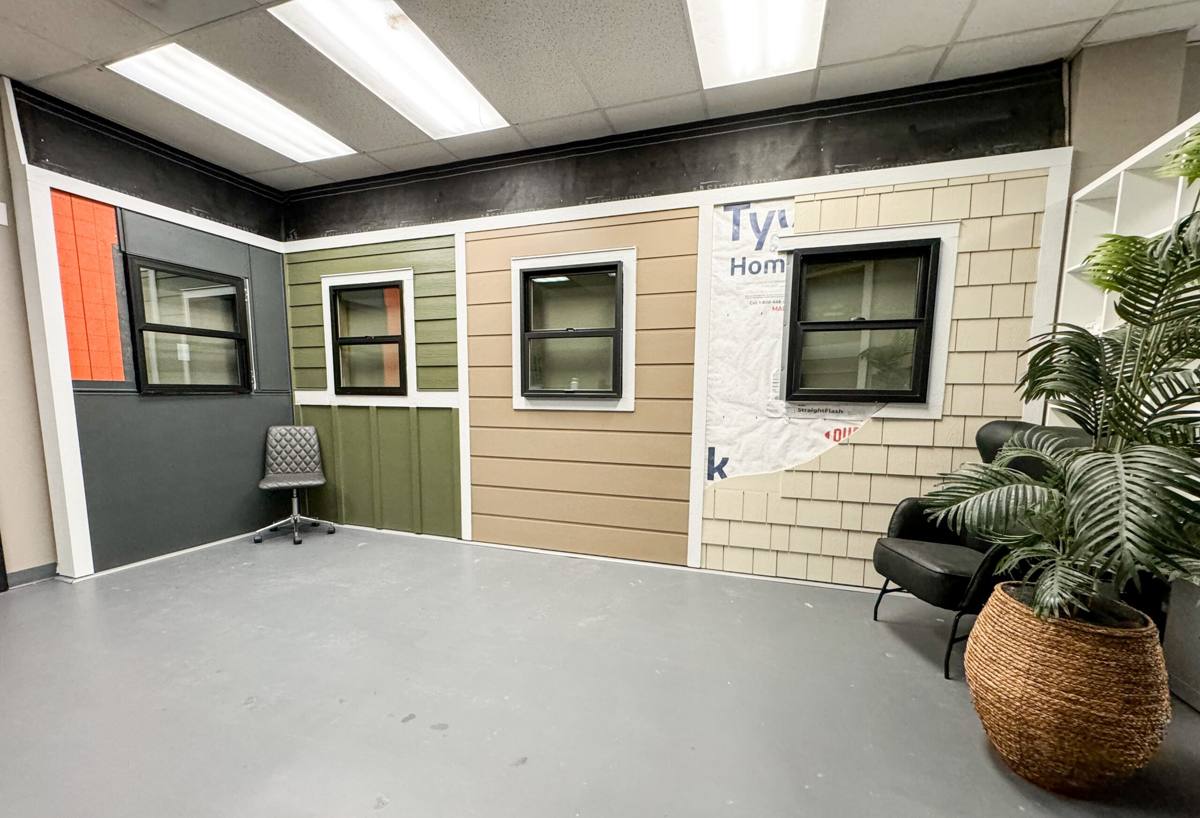
What "Moss Season" Actually Does to a House
Around here, moss season isn't a few weeks — it's most of the year. On siding, moss and algae aren't just cosmetic. They hold moisture directly against the wall surface, which is the opposite of what a siding system is supposed to do. On products with any organic content (wood, primed wood composites, some engineered panels), that sustained moisture contact is how rot starts. On a material that doesn't feed mold or absorb water into its core, the same moss is a surface nuisance you can wash off — not a structural threat.
This is one of the clearest reasons fiber cement performs differently in Bellevue than it does in a dry climate. The material itself is inorganic — it's cement, sand, and cellulose fiber, not wood pulp with a coating. Moss can grow on the surface of anything left damp long enough, but it has nothing to feed on underneath. That distinction matters more here than almost anywhere else we work.
Why We Only Install James Hardie
Seattle Exterior installs James Hardie fiber cement siding exclusively. We don't install vinyl, LP SmartSide, Cemplank, Allura, primed spruce, or raw cedar siding, and we're upfront about why: we've built our process, our crew training, and our warranty backing around one product system so we can install it correctly every time, rather than juggling five different products' quirks across a crew.
James Hardie makes fiber cement in climate-specific formulations — its HZ10 product line is engineered specifically for high-moisture, low freeze-thaw climates like the Puget Sound region, as opposed to the HZ5 formulation built for regions with hard freeze cycles. That's a meaningful distinction for Bellevue: the product arrives already engineered for the moisture load it's going to see, not a one-size-fits-all siding shipped to every region in the country.
On top of the base material, Hardie's ColorPlus finish is a factory-applied, baked-on finish rather than a field-applied paint job. That matters in a climate where field-applied paint is fighting rain almost every month of the year to cure properly. A factory finish cures under controlled conditions before it ever reaches the truck, and it carries its own fade-resistance warranty separate from the product warranty.
What This Means Compared to Alternatives
| Factor | James Hardie Fiber Cement | Vinyl Siding | Wood / Primed Composite (e.g., LP SmartSide) |
|---|---|---|---|
| Moisture/rot risk | Inorganic core, no rot | Doesn't rot, but traps moisture behind panels if installed poorly | Organic wood fiber core — vulnerable if the finish or caulk lines fail |
| Moss/algae impact | Surface growth only, washes off | Surface growth, panels can warp with heat | Growth can hold moisture against the wood fiber core |
| Finish durability | Factory-baked ColorPlus finish | Color molded through the panel, can fade/chalk | Field-applied or factory primer, needs repainting on a cycle |
| Fire resistance | Non-combustible | Combustible, can melt/deform in heat | Combustible |
| Typical repaint interval | 15+ years (ColorPlus warranty-backed) | Not painted, but fades | 5–8 years typical |
| Upfront cost | Mid-to-higher | Lower | Lower-to-mid |
We're not going to tell you vinyl or engineered wood are bad products — they have real, honest use cases and plenty of homes wear them fine in drier climates. What we will say is that Bellevue's combination of shade, moisture, and marine air punishes their specific weak points, and we'd rather stand behind one product we trust completely than sell whatever's cheapest that week.
What a Correct Fiber Cement Install Requires Here
Fiber cement siding is only as good as the assembly behind it. In a wet climate, the water management details behind the panels matter as much as the panels themselves. A rushed or undertrained crew can install genuine James Hardie product and still leave a house vulnerable, because the failure points aren't in the siding — they're in the flashing, the gaps, and the fastening.
The Assembly, Layer by Layer
- Weather-resistant barrier (WRB): A continuous, properly lapped water barrier behind the siding, sealed at every penetration.
- Rainscreen gap: A drainage/ventilation space between the WRB and the siding so any moisture that gets past the panel face can drain and the wall can dry — critical in a climate where walls rarely get a long dry stretch.
- Flashing at every horizontal transition: Window heads, doors, deck ledgers, roof-to-wall intersections, and kick-out flashing at roofline terminations, all directing water outward and down, never into the wall.
- Correct fastening: Hardie panels installed with the manufacturer-specified nail pattern, penetrating framing (not just sheathing), at the right distance from panel edges.
- Proper clearances: Minimum gap between the bottom of the siding and grade, roofing, decks, and walkways, so splashback and standing water don't sit against the bottom course.
- Minimal reliance on caulk: Caulk is a maintenance item, not a waterproofing strategy. A well-detailed install uses flashing and overlaps to shed water, with sealant as a secondary line of defense, not the primary one.
Every one of these details is invisible once the job is finished and the house looks great. The difference only shows up five, ten, or fifteen years later — as either a house that's still tight and dry, or one with soft trim boards and stained sheathing behind the siding.
Our Process on a Bellevue Job
1. Inspection and Assessment
We start by walking the exterior and identifying moisture-prone zones specific to the property — shaded north walls, areas under tree drip lines, low clearance points, and any existing trim or flashing that's already showing wear. Every lot in Bellevue has its own exposure pattern depending on tree cover and orientation, and that shapes where we pay extra attention.
2. Removal and Substrate Check
Old siding comes off and we inspect the sheathing and framing underneath before anything new goes up. This is the point where hidden moisture damage from a prior siding system gets caught and addressed, rather than sealed behind a new wall.
3. Water Management Layer
WRB installation, flashing at every penetration and transition, and the rainscreen gap go in before a single piece of visible siding is hung. This is the stage that determines how the house performs in year ten, not year one.
4. Hardie Panel Installation
Panels, trim, and accessories go up to manufacturer specification — nail pattern, spacing, and clearances included — using the HZ10 product line suited to this climate zone.
5. Finish Detailing
Because ColorPlus finish is factory-applied, field work is limited to touch-up at cut edges and fastener heads, using Hardie's matched touch-up products rather than field-mixed paint. That keeps the finish consistent and preserves the factory warranty.
6. Final Walkthrough
We walk the completed exterior with the homeowner, checking clearances, trim lines, and any transition details before calling the job done.
Why Local Experience in Bellevue Specifically Matters
A crew that mostly works drier inland climates tends to under-detail rainscreen gaps and flashing because they can get away with it there. A crew that works Bellevue and the greater Seattle area every week doesn't have that option — the climate punishes shortcuts fast enough that you learn to stop taking them. Knowing which walls on a given lot get afternoon shade, how a particular roofline tends to shed water, and where tree cover keeps a wall damp longer than its neighbors isn't something you learn from a spec sheet. It's something you learn from doing this work, on these streets, in this weather, repeatedly.
That local pattern-recognition is also why we push back, respectfully, when a homeowner asks for a cheaper product just to save money on a Bellevue exterior. It's not about brand loyalty — it's that we've seen what this specific climate does to the alternatives, and we don't want to hand a homeowner a callback five years down the line for a problem that was foreseeable at the time of installation.
What to Ask Any Siding Contractor Before Hiring
- Do you install a rainscreen gap on every job, or only when asked?
- Who manufactures your flashing details, and can you walk me through your approach at windows, doors, and roof lines?
- Are you a certified installer for the specific siding product you're proposing?
- What does your workmanship warranty cover, separate from the manufacturer's material warranty?
- Can you explain why you recommend this specific product for a Bellevue property, not just siding in general?
- How do you handle substrate damage discovered after tear-off?
A contractor who can answer all of these clearly and specifically, without vague reassurances, is one who understands what actually determines whether siding performs in this climate.
Maintenance After Installation
Fiber cement with a factory finish is low-maintenance, not no-maintenance. A yearly rinse to knock off surface moss and algae buildup, a visual check of caulk lines and flashing after major storms, and prompt attention to any trim or gutter issue that could direct water against the wall will keep a correctly installed system performing for decades. None of this compares to the repainting cycles or moisture-related repairs that other siding types tend to need in this climate.
If you're weighing a siding replacement in Bellevue and want a straight answer about what your home actually needs — not a sales pitch for whatever's in stock — we're happy to walk the property with you. The estimate is free, there's no pressure, and you can use the form below to get started.