 Seattle
 West Seattle's Climate Is Harder on Siding Than Most Homeowners Realize
West Seattle sits close to Puget Sound, and that location comes with a specific mix of weather stress most inland Seattle neighborhoods don't deal with in the same combination. Salt-laden air off the Sound accelerates corrosion on fasteners, trim, and any siding product that isn't built to resist it. Driving rain — wind-blown, not just falling straight down — gets pushed sideways into seams, laps, and trim joints that a calmer climate would never test. And King County's long, wet stretch from fall through spring gives moss, algae, and mildew months at a time to colonize any siding surface that stays damp.
None of this means West Seattle homes need exotic materials. It means the siding product and the installation details both have to be chosen with this specific combination in mind — not generic "Pacific Northwest" assumptions, but the particular salt-air-plus-rain-plus-moss stack that this part of Seattle sees year after year.
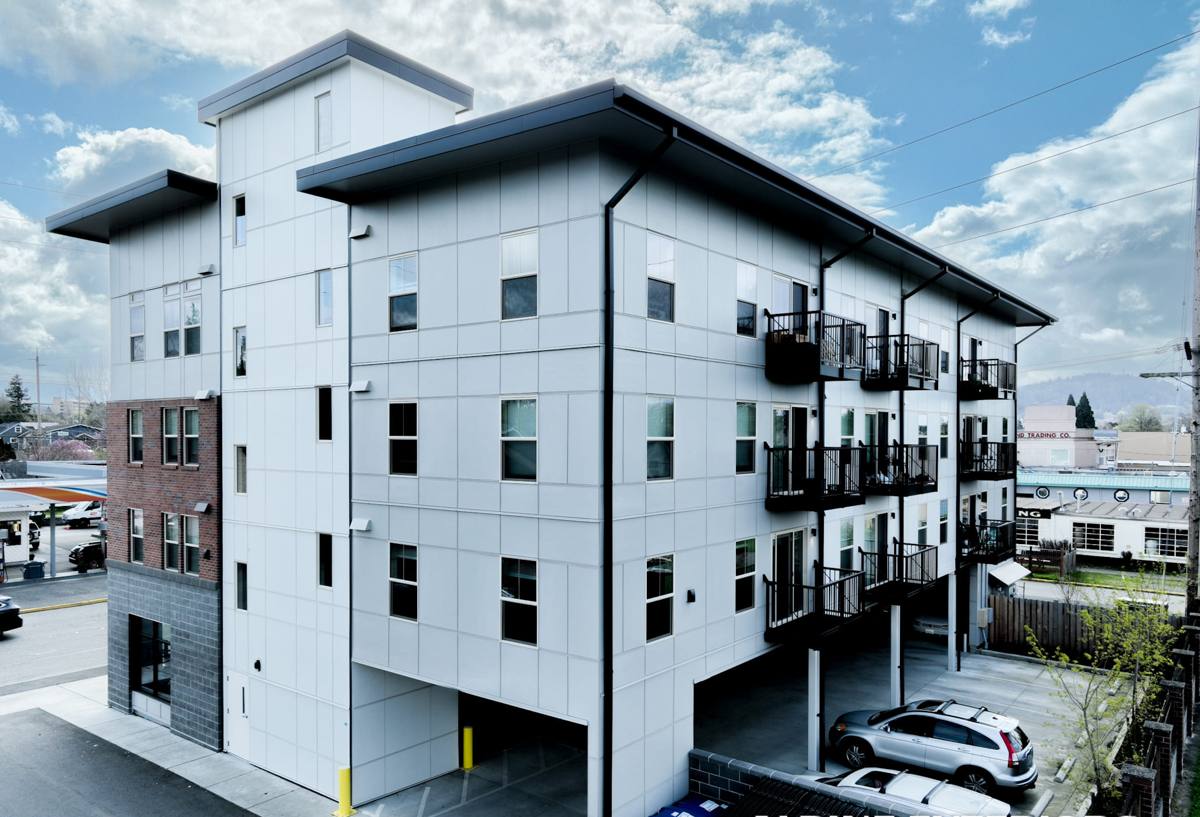
Why Fiber Cement Handles This Environment Better Than the Alternatives
Fiber cement siding is a mix of cement, sand, and cellulose fibers, pressed and cured into planks that don't rot, don't feed insects, and don't warp the way wood-based products can when they take on moisture. For a West Seattle home, that matters in three specific ways:
- Salt air resistance: Fiber cement doesn't corrode. Fasteners and trim accessories still need to be rated for coastal exposure, but the siding panel itself isn't the weak point.
- Moisture stability: Fiber cement absorbs far less water than wood-based composites, so it doesn't swell, cup, or delaminate at the edges after repeated soaking from driving rain.
- Moss and mildew resistance: A dense, factory-cured surface gives moss and algae less to grip onto compared to a porous or fibrous surface, and it holds up to periodic cleaning without breaking down.
We install James Hardie fiber cement exclusively — not LP SmartSide, not vinyl, not primed wood products, and not other fiber cement brands. That's a standard we hold across every job, in every Seattle neighborhood we work, and West Seattle's climate is a good example of why. Hardie's HZ5 product line is engineered specifically for wetter, more variable climates like the Pacific Northwest, with moisture-resistant formulation and installation specs built around that reality rather than a one-size-fits-all national product.
What We Deliberately Don't Install, and Why
Wood-based composite siding (LP SmartSide and similar products) uses engineered wood strand technology with a resin binder — it's a real product with real advantages, including lighter weight and easier field cutting. But wood strand construction is more sensitive to sustained moisture exposure at cut edges and seams than fiber cement, and West Seattle's driving rain finds those weak points over time. Vinyl siding is inexpensive and low-maintenance in mild climates, but it can warp under UV exposure, doesn't offer the same fire resistance, and its seams and expansion gaps are harder to keep fully weathertight under wind-driven rain. We don't say these products are junk — we say they're not what we're willing to put our name behind on a Puget Sound-facing home, and Hardie fiber cement is.
What a Correct Fiber Cement Install Actually Requires Here
Fiber cement siding is only as good as the installation behind it. A rushed or generic install on a West Seattle home — one that ignores the site's wind and rain exposure — will underperform no matter how good the panel itself is. A correct install includes:
Weather-Resistive Barrier and Drainage Plane
A continuous weather-resistive barrier goes on before the siding, with a drainage gap behind the panels so any water that does get past the surface has somewhere to go instead of sitting against the sheathing. On a home exposed to wind-driven rain off the Sound, this drainage plane is not optional — it's the difference between water shedding away and water finding a path inward.
Flashing at Every Penetration
Windows, doors, hose bibs, light fixtures, and any other penetration through the siding plane need proper flashing integrated with the weather barrier — not just caulk. Caulk fails; flashing sheds water by design and keeps working long after the caulk bead has cracked.
Correct Fastening for Coastal Exposure
Fastener spacing, type, and depth all follow Hardie's published installation specs, and in salt-air-exposed areas that means using fasteners rated for that exposure. Under-driven or over-driven nails, or the wrong fastener material, are a common source of early siding failure — and it's invisible from the ground once the job is done, which is exactly why it matters who's doing the work.
Expansion Gaps and Caulking Details
Fiber cement needs specific gaps at panel ends, trim joints, and butt joints, sealed with a high-quality, paintable, flexible sealant rated for exterior use. Too tight, and the panel has nowhere to move; too loose or poorly sealed, and wind-driven rain finds a way in.
Starter Strips and Bottom Clearance
Proper starter strip installation and clearance from grade, decks, and roof lines keeps the bottom edge of the siding from sitting in standing water or splash-back — a common problem on homes with limited clearance near patios, walkways, or sloped yards.
ColorPlus Factory Finish: Built for This Kind of Weather
Every Hardie product we install can be specified with ColorPlus Technology — a factory-applied finish baked onto the fiber cement under controlled conditions, rather than field-painted on site after installation. For a West Seattle home, that matters because:
- The finish resists fading and chalking from UV exposure better than most field-applied paint jobs.
- It's more resistant to moisture intrusion at the surface level, which helps in a climate that stays damp for months at a stretch.
- It comes backed by its own finish warranty, separate from and in addition to the substrate warranty on the siding itself.
- It gives a more consistent, uniform color across the whole home, since it's applied and cured under factory conditions rather than a jobsite spray or brush application.
Field-painted fiber cement is still a legitimate option and sometimes the right call for matching an existing color exactly, but ColorPlus is what we recommend by default for homes in this kind of exposure.
Our Process for a West Seattle Fiber Cement Project
- On-site assessment. We walk the home, evaluate current siding condition, look at wind and rain exposure on each elevation, and check for existing moisture damage at trim, corners, and penetrations.
- Product and finish selection. We walk through Hardie's plank profiles, panel styles, and ColorPlus color options relevant to the home's style and the homeowner's goals.
- Tear-off and substrate check. Old siding comes off and the sheathing underneath gets inspected for rot or water damage before anything new goes on — this step catches problems that would otherwise get sealed behind new siding.
- Weather barrier and flashing installation. This is the layer that does the real waterproofing work, and it happens before a single piece of visible siding goes up.
- Siding installation to Hardie spec. Fastening, spacing, and gaps installed to manufacturer specification, not shortcuts.
- Final inspection and walkthrough. We review the finished work with the homeowner before calling the job complete.
What Fiber Cement Siding Costs in West Seattle
Every home is different, and we don't quote a job without seeing it, but these are the main factors that move the price on a real fiber cement project in this area:
| Cost Factor | Why It Matters |
|---|---|
| Home size and number of stories | More square footage and taller elevations mean more material, more labor time, and more equipment (lifts, scaffolding) for upper-story work. |
| Tear-off complexity | Removing old siding down to the sheathing takes longer when there's existing water damage, multiple layers, or extensive trim to work around. |
| Plank profile and trim package | Lap siding, panel siding, shingle-style accents, and trim boards all price differently based on material and labor. |
| ColorPlus vs. field-applied paint | Factory-finished ColorPlus panels typically cost more upfront than unfinished panels painted on site, but reduce future repainting needs. |
| Exposure and detailing needs | Homes with more window and door penetrations, or more architectural detail, need more flashing and trim work per square foot of wall. |
| Substrate repair | Any rot or water damage found during tear-off needs to be repaired before new siding goes on, which is a real cost but not one you want skipped. |
Signs Your Current Siding May Be Failing
Because failure often starts behind the surface, it's worth knowing what to look for from the outside:
- Soft or spongy spots when you press on the siding, especially near the bottom edge or around windows
- Persistent moss, algae, or dark streaking that comes back quickly after cleaning
- Paint that's bubbling, peeling, or flaking rather than just fading
- Visible gaps, warping, or buckling at panel seams and corners
- Rising heating bills with no other explanation, which can point to moisture-compromised insulation behind the siding
- Interior signs like peeling paint, musty smell, or discoloration on walls that back up to exterior siding
Any one of these on its own isn't necessarily an emergency, but a home showing several of them is worth a professional look before the damage spreads further into the wall assembly.
Why Hiring a Crew That Already Works West Seattle Matters
Siding installation isn't just about following a manufacturer's printed spec sheet — it's about applying that spec correctly to the specific exposure conditions of the home in front of you. A crew that regularly works homes in West Seattle already has a working sense of which elevations tend to take the worst of the wind-driven rain, where moss tends to build up fastest, and what kind of flashing and drainage details hold up over multiple King County winters rather than just looking right on installation day. That's not something you get from a crew doing one-off jobs scattered across the region with no repeated exposure to this specific coastal microclimate.
It also matters for accountability. A local crew that plans to keep working in this neighborhood has a direct incentive to get the details right the first time, because a warranty claim or a callback is a short drive away, not a scheduling problem for a distant service area.
Maintaining Fiber Cement Siding in This Climate
One of the practical advantages of fiber cement is how little maintenance it needs compared to wood-based siding, but "low-maintenance" doesn't mean "no-maintenance" in a climate like this one. A yearly rinse-down to keep moss and algae from establishing, prompt attention to any caulking that starts to crack or pull away from trim, and a periodic look at fastener heads and trim corners will keep a correctly installed Hardie system performing for decades. ColorPlus finishes generally don't need repainting on the same cycle field-applied paint does, which cuts down on one of the more disruptive maintenance tasks homeowners deal with on other siding types.
If you're weighing a siding replacement for a West Seattle home and want a straight answer about what your home actually needs — not a generic pitch — we're happy to take a look and walk you through it. Request a free, no-pressure estimate using the form below.