 Seattle
 Capitol Hill's Housing Stock Puts Real Demands on Siding
Capitol Hill is one of Seattle's older, denser neighborhoods, and that combination matters more than most homeowners realize when it comes to siding. You've got a mix of early-1900s Craftsman and Victorian-era homes, later infill construction, and a lot of houses sitting close together on narrow lots with mature street trees overhead. That mix creates a specific set of conditions siding has to survive here — conditions that are different from what you'd see on a newer, more open lot elsewhere in King County.
Driving Rain and Wind Exposure
Seattle rain isn't usually the dramatic downpour kind — it's the steady, wind-driven kind that comes in sideways and works its way into every gap, seam, and lap joint over time. On Capitol Hill, wind can funnel between houses and down streets in ways that push moisture harder against certain walls than you'd expect. Siding that isn't installed with real attention to water management — proper laps, correct flashing, a working drainage path behind the cladding — will eventually let that moisture in, even if it looks fine from the sidewalk.
Shade, Tree Canopy, and a Long Moss Season
Mature trees are part of what makes Capitol Hill's streets pleasant to live on, but they also mean a lot of homes have walls that stay shaded and damp for long stretches of the year. Shaded, slow-to-dry siding is exactly what moss and algae need to take hold, and once they're established they hold moisture against the surface even longer. On wood-based siding products, that combination accelerates rot from the inside out — often in places you can't see until the damage is already significant.
Marine Air and Moisture
Seattle's marine climate keeps humidity elevated most of the year, and homes closer to the water pick up salt-tinged air on top of that. Salt air and constant moisture are a slow but steady stress test for any exterior material — it's not one storm that causes the damage, it's years of repeated wetting, drying, and exposure. Siding material and installation quality both matter more in this environment than they would somewhere drier.
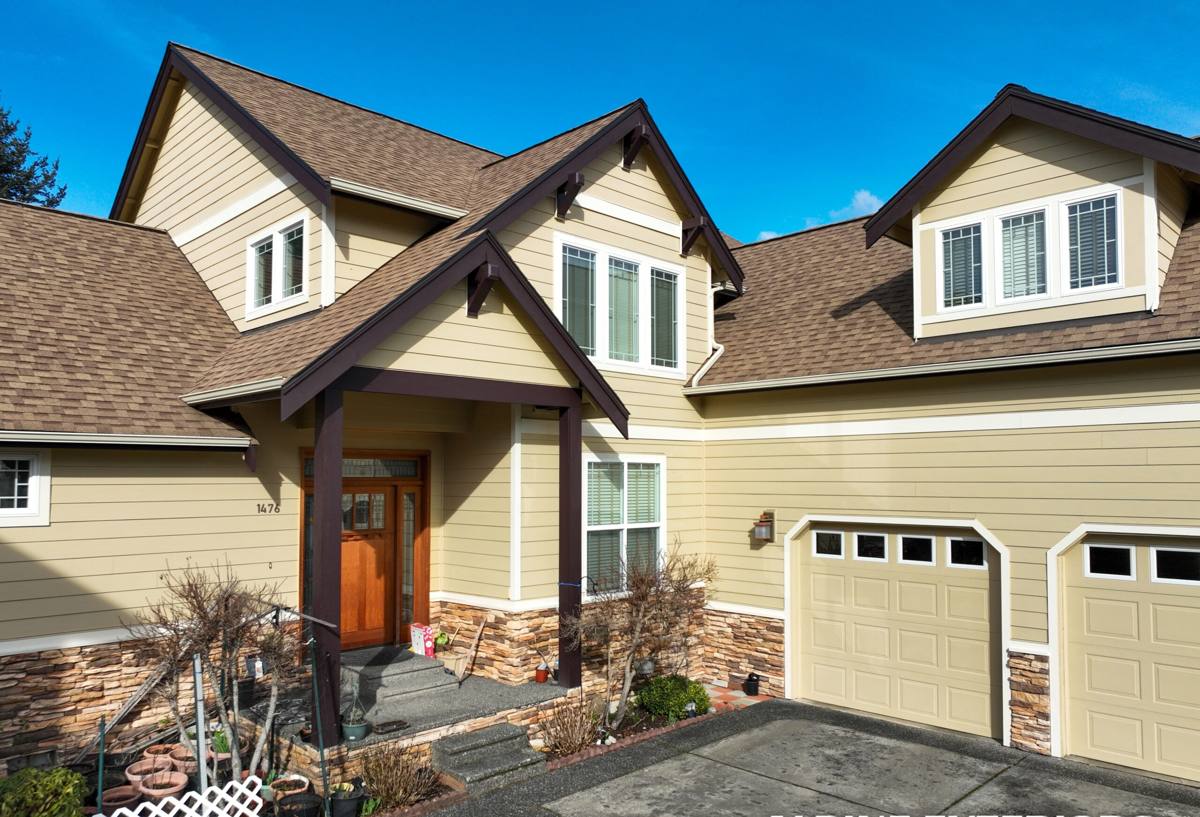
Why We Only Install James Hardie on Capitol Hill Homes
We standardized on James Hardie fiber cement siding because it holds up to exactly the conditions described above better than the alternatives we used to install. Fiber cement doesn't rot, doesn't feed mold or moss the way wood does, and doesn't absorb water the way engineered wood products can at cut edges and seams. James Hardie's ColorPlus factory finish is baked on under controlled conditions, which means better fade resistance and adhesion than a field-applied paint job — and no repainting cycle every five to seven years like you'd face with wood siding in this climate.
We're not going to tell you every other siding product is junk — vinyl, engineered wood, and other fiber cement brands all have their place. But for the specific combination of driving rain, shade, and moisture Capitol Hill throws at a house year-round, we've seen what holds up over the long haul and what doesn't, and that's why James Hardie is the only product we put on a wall.
What a Correct James Hardie Installation Involves Here
Drainage and Flashing First
The single biggest factor in whether siding performs well in this climate isn't the siding itself — it's what's behind it. A correct install includes a weather-resistant barrier, a drainage gap or rainscreen where the wall assembly calls for it, and properly lapped, sealed flashing at every window, door, and roof-to-wall transition. Skipping or rushing this step is the most common reason siding fails early, regardless of brand.
Fastening and Climate-Zone Specs
James Hardie makes climate-specific product lines (their HZ5 line is engineered for wetter, cooler regions like ours) with fastening and clearance requirements that are meant to be followed exactly — correct nail placement, gaps at butt joints, ground clearance, and clearance from roof lines and decks. Installed to spec, these products carry a strong transferable warranty. Installed loosely, they don't perform the way they're designed to, warranty or not.
Working Around Older Wall Assemblies
Older Capitol Hill homes sometimes have wall assemblies that were never built with modern drainage planes in mind — old sheathing, original framing, layers of previous siding. Part of doing this job correctly is inspecting what's actually behind the existing siding before assuming a straightforward install, and addressing any hidden moisture damage or rot before new siding goes up rather than covering it over.
Respecting the Neighborhood's Character
A lot of Capitol Hill's charm comes from its older homes keeping their original proportions and detailing. If your home falls within a design review area or has other exterior guidelines attached to it, that's worth checking into before you finalize a plan — trim profiles, reveal widths, and color choices can be matched to keep a home looking like itself rather than like a generic remodel.
Our Process for a Capitol Hill Project
- On-site inspection: we look at your current siding, trim, and the wall assembly underneath where accessible, and flag anything — rot, old moisture damage, inadequate flashing — before any work starts.
- Written scope and estimate: what's being removed, what's going on, product line and color, and a clear price — no vague allowances.
- Tear-off and prep: old siding removed, sheathing inspected and repaired as needed, weather barrier and drainage plane installed correctly.
- James Hardie installation: siding, trim, and flashing installed to manufacturer spec for our climate zone.
- Final walkthrough: we go over the finished job with you before calling it done, and clean up the site fully.
Hardie Product Lines That Fit Capitol Hill's Homes
Different Hardie profiles suit different house styles, and matching the right one to your home's era and character is part of the job, not an afterthought.
| Product | Best Fit For | Notes for This Climate |
|---|---|---|
| HardiePlank lap siding | Craftsman, traditional, and most standard home styles | Most common choice here; wide range of reveal widths and textures |
| HardieShingle | Homes with Craftsman or cottage detailing, accent gables | Mimics traditional wood shingle look without the rot risk in shaded areas |
| HardiePanel | Modern or mixed-material facades, accent walls | Clean look for infill and contemporary remodels |
| HardieTrim | Window, door, and corner detailing on any style | Pairs with any of the above; resists the moisture rot that hits wood trim first |
What Affects the Cost of a Siding Project on Capitol Hill
Every home is different, but the same handful of factors tend to drive price up or down on jobs in this neighborhood.
| Factor | Why It Matters |
|---|---|
| Condition behind old siding | Hidden rot or moisture damage found during tear-off adds repair work before new siding can go on |
| Lot access | Narrow lots, tight setbacks, and street parking can slow material staging and add labor time |
| Home height and complexity | Multi-story homes, dormers, and detailed trim take longer than a simple single-story wall |
| Product line and profile | Shingle-style and specialty trim cost more in materials and labor than standard lap siding |
| Full replacement vs. partial | Repairing or re-siding one damaged section costs less than a full home re-side, but full replacement is often more cost-effective long-term |
Why a Crew That Already Works Capitol Hill Matters
A siding crew that's worked this neighborhood before knows how to stage materials and equipment on tight lots without blocking a street for a week, how to work respectfully around mature trees and root systems instead of damaging them, and what to expect when they open up the wall on a home of this age. That experience shows up in fewer surprises mid-project and a cleaner, more efficient job site — which matters when your house sits a few feet from your neighbor's.
It also means we've seen how this specific climate — the shade patterns, the wind-driven rain, the moss — actually plays out on Capitol Hill walls over years, not just in a manufacturer's spec sheet. That's the kind of local pattern-recognition that helps us flag problem areas on your home before they become expensive ones.
Checklist: Before You Sign a Siding Contract
- Ask exactly which James Hardie product line and profile is being quoted, not just "Hardie siding"
- Confirm whether a drainage gap or rainscreen is included where your wall assembly needs one
- Get the flashing and moisture barrier details in writing, not just verbally described
- Ask how existing rot or moisture damage, if found, will be handled and priced
- Confirm who registers the manufacturer warranty and what voids it
- Ask about site protection for trees, plantings, and neighboring property during the work
If you're weighing a siding project on Capitol Hill and want a straight answer about what your home actually needs, we're happy to take a look. The estimate is free, there's no pressure, and you'll get a clear, honest scope — use the form below to get started.