 Seattle
 Why Kirkland Homes Need Siding That Can Actually Take a Beating
Kirkland sits right on Lake Washington, and that waterfront position is part of what makes the neighborhood desirable — and part of what makes siding here work harder than it does twenty miles inland. Homes close to the lake pick up salt-tinged, moisture-laden air moving off the water, on top of the driving rain that comes through most of the year and the long moss season that King County is known for. None of that is unusual for this region. What's unusual is how many siding materials on the market simply aren't engineered to handle it, and how much that gap shows up ten or fifteen years after installation rather than on day one.
We install James Hardie fiber cement exclusively, and Kirkland is one of the neighborhoods where that decision matters most. This page walks through what Kirkland homes specifically need from their siding, what a correct Hardie installation involves, how our process works, and why hiring a crew that already knows this lake-influenced climate is worth more than it sounds.
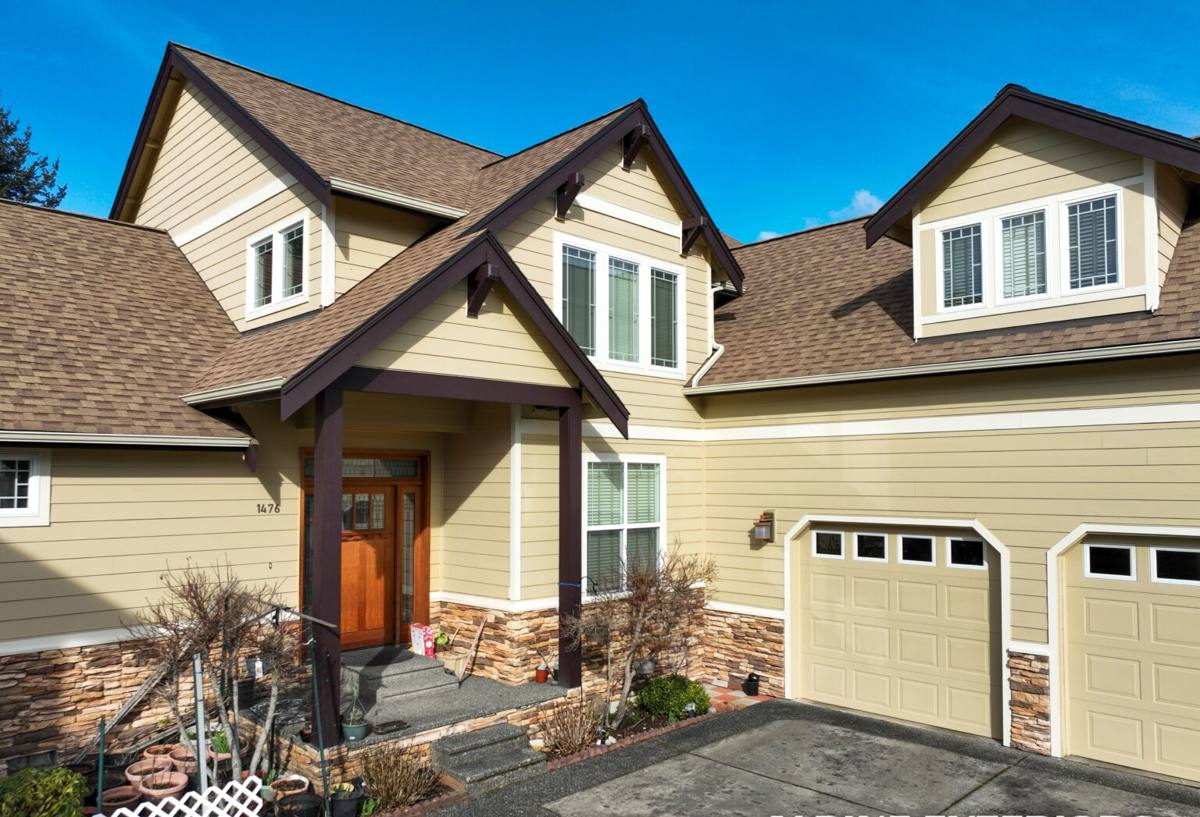
What Kirkland's Climate Does to Siding Over Time
Salt Air and Lake Moisture
Proximity to Lake Washington means Kirkland homes — especially those closer to the shoreline — deal with more sustained moisture in the air than homes further from the water. That moisture doesn't just sit on the surface; over years it works into seams, fastener points, and any spot where a lesser material's finish has started to break down. Salt-influenced air also accelerates fading and chalking on lower-quality or field-applied finishes, which is a slow, unglamorous kind of damage that's easy to miss until the siding looks noticeably tired.
Driving Rain
Rain in this region rarely falls straight down. Storms off the Sound and across the lake tend to drive rain sideways into walls, which puts real pressure on every horizontal lap, corner, and window opening. A siding system with weak water-shedding detail, poor caulking practices, or a material that absorbs moisture rather than shedding it is going to show problems at exactly those seams, usually starting with staining and eventually leading to rot in whatever's underneath.
A Moss Season That Doesn't Really End
Kirkland's mix of mature tree cover, shaded lots, and consistently damp conditions gives moss and algae most of the year to establish themselves, particularly on north-facing walls and anywhere siding stays shaded and cool. Moss itself doesn't destroy fiber cement, but it holds moisture against the surface longer than a clean wall would, and on materials with a weaker finish or a wood-based substrate, that sustained dampness is where real deterioration starts.
Why James Hardie Is the Right Match for This Environment
James Hardie fiber cement is engineered specifically to resist the conditions Kirkland throws at it. It's non-combustible, doesn't absorb water the way wood-based products do, and — critically for this region — is manufactured in climate-specific formulations. We install the HZ5 product line, which is engineered for colder, wetter climate zones like the Pacific Northwest, meaning the board itself is built to handle moisture cycling and the freeze-thaw swings this region occasionally sees, not just a generic siding board sold everywhere in the country.
On top of the board itself, most Hardie siding we install carries a factory-applied ColorPlus finish rather than field-applied paint. That finish is baked on under controlled conditions before it ever reaches a Kirkland jobsite, which matters in a climate where getting a clean, fully-cured paint job outdoors is genuinely difficult — there's rarely a long enough dry, mild stretch to guarantee ideal painting conditions. ColorPlus resists fading, chipping, and cracking better than typical site-applied paint, and it comes with its own finish warranty separate from the substrate warranty on the board.
How James Hardie Compares to Other Common Options
| Factor | James Hardie Fiber Cement | Vinyl | Untreated/Primed Wood |
|---|---|---|---|
| Moisture behavior | Doesn't absorb water; engineered HZ5 formulation for wet climates | Doesn't rot, but can warp and trap moisture behind panels | Absorbs moisture; prone to rot and swelling over time |
| Fire resistance | Non-combustible | Combustible, can melt or deform near heat | Combustible |
| Finish durability | Factory ColorPlus finish resists fading/chalking | Color molded through material, can fade and chalk over time | Depends entirely on field-applied paint upkeep |
| Maintenance | Periodic gentle washing | Periodic washing; more prone to moss staining in shaded areas | Regular repainting and moisture monitoring |
| Typical lifespan when correctly installed | Multiple decades | Multiple decades, but appearance often degrades sooner | Shorter without diligent, ongoing maintenance |
We don't install vinyl, LP SmartSide, primed spruce, cedar, or other fiber cement brands, not because those products have no merit at all, but because after years of installation and repair work in this exact climate, Hardie's combination of engineered moisture resistance, factory finish, and warranty structure is what we're comfortable standing behind on a Kirkland roof — and on the walls under it.
What a Correct James Hardie Installation Actually Involves
The board itself only performs as well as the installation underneath it. A lot of the siding failures we get called out to inspect in this region aren't a Hardie product problem — they're an installation problem, often on a home where the crew treated fiber cement like it was interchangeable with any other siding material. It isn't. Correct installation includes:
- Proper weather-resistive barrier and flashing: a correctly lapped house wrap and flashing at every window, door, and penetration, so water is directed out and away rather than trapped behind the siding
- Correct fastening: Hardie specifies fastener type, spacing, and placement precisely; over- or under-driven nails and the wrong fastener material both shorten the life of the installation
- Manufacturer-specified clearances: proper gaps at the ground, roofline, and adjoining surfaces so the board doesn't sit in standing water or trap moisture against masonry, decking, or grade
- Correctly caulked and sealed joints: particularly important on driving-rain walls, where sloppy joint work is where water intrusion typically starts
- Manufacturer-certified crews: installers trained specifically on Hardie's installation requirements, not general contractors treating it as a like-for-like swap with another siding type
Cutting corners on any one of these doesn't usually show up immediately. It shows up in year six or year ten, as staining, soft spots, or premature finish failure — exactly the kind of damage that's expensive to trace back and repair versus getting it right the first time.
Our Process for a Kirkland Siding Project
1. On-Site Assessment
We walk the property, look at existing siding condition (if there is any), note wall orientation relative to sun, wind, and lake exposure, and flag anything — trim rot, old flashing, moisture staining — that needs attention before new siding goes up rather than getting sealed in underneath it.
2. Product and Color Selection
We talk through Hardie's HZ5 lap, panel, and shingle profile options and the ColorPlus palette, factoring in your home's sun exposure, tree cover, and how the color will read against Kirkland's specific mix of lake light and overcast days.
3. Permitting
We pull the required permit for the jurisdiction your home sits in rather than skipping that step, which protects you if the work is ever reviewed during a future sale or inspection.
4. Tear-Off and Substrate Check
Existing siding comes off, and we check the sheathing and weather barrier underneath for hidden moisture damage before anything new goes up — a step that's easy to shortcut and expensive to regret.
5. Installation to Manufacturer Spec
Certified installers handle fastening, flashing, and clearances according to James Hardie's published requirements for the HZ5 product line, not generic siding practice.
6. Final Walkthrough
We walk the finished job with you, point out anything future maintenance-relevant (drainage paths, areas prone to moss, touch-up notes), and make sure you're clear on what the warranty actually covers.
Why a Local Crew Matters More Than It Sounds
Siding contractors who don't regularly work lake-adjacent and marine-influenced properties tend to underestimate how much detail work driving rain and sustained moisture demand. A crew that's used to drier, more forgiving climates can install a technically "correct" siding job that still underperforms here, because the margin for error in flashing and sealing is smaller in a climate like Kirkland's than it is somewhere with less sustained rain. We work throughout Seattle and the surrounding King County area, and the installation habits that hold up on a Kirkland lakefront lot — tighter flashing detail, more conservative clearances, closer attention to shaded north walls — are things a crew learns from doing this work repeatedly in this exact environment, not from a manufacturer's install manual alone.
There's also a practical side to hiring local: a crew that knows Kirkland's permitting process, is familiar with the housing stock in the area, and can respond quickly if something needs a follow-up visit is simply easier to work with than an out-of-area contractor passing through for one job.
Signs Your Current Siding May Already Be Struggling
- Visible staining or streaking below window sills or at horizontal seams
- Soft or spongy spots when pressed gently, especially near the ground or roofline
- Persistent moss or algae buildup that returns quickly after cleaning
- Paint that's peeling, bubbling, or chalking heavily on rubbing contact
- Visible gaps, warping, or separation at panel joints and corners
- A musty smell or interior wall staining that could point to moisture getting behind the siding
Any one of these on its own isn't necessarily an emergency, but on a Kirkland home — where moisture has more opportunity to do damage than in a drier climate — it's worth having someone take a real look before the underlying structure is affected.
What Affects the Cost of a Kirkland Hardie Project
| Factor | Why It Matters |
|---|---|
| Home size and wall complexity | More square footage, corners, and gables mean more material and labor |
| Existing siding removal | Tear-off and disposal of old material adds time and cost versus new construction |
| Substrate repair | Hidden moisture or sheathing damage found during tear-off adds scope, but skipping repair isn't a real option |
| Product line and profile | Lap, panel, and shingle profiles carry different material and labor costs |
| Color and finish | Factory ColorPlus finish versus primed-for-paint boards affects material pricing |
| Access and site conditions | Slopes, tight lot lines, and lake-adjacent access can affect scaffolding and staging needs |
We give a firm number after walking your specific property — Kirkland lots vary enough in size, access, and existing condition that a broad estimate given without seeing the home rarely holds up once work actually starts.
Getting Started
If your Kirkland home's siding is aging, showing early signs of moisture trouble, or you're simply ready to plan ahead for a lake-climate-appropriate re-side, we're glad to walk the property with you and put together a free, no-pressure estimate — no obligation, just a clear look at what your home actually needs.