 Seattle
 Why Kirkland Siding Wears Out the Way It Does
Kirkland sits right on Lake Washington, and that proximity to open water shapes how siding ages here. Homes get a steady diet of moisture: fall and winter storms that drive rain sideways into wall assemblies, long stretches of overcast humidity that never quite let wood or wood-composite siding dry out, and mature tree canopy on many older lots that keeps north- and east-facing walls shaded for most of the day. Add in the broader Puget Sound region's marine air, and you have a climate that is patient but relentless about finding weak points in a home's exterior.
None of that means siding is doomed to fail — it means siding has to be installed and repaired with that moisture load in mind. A repair that looks fine from the driveway but doesn't address how water is actually moving behind the wall will fail again, usually in the same spot, within a season or two.
Lake Effect, Shade, and Slow Drying
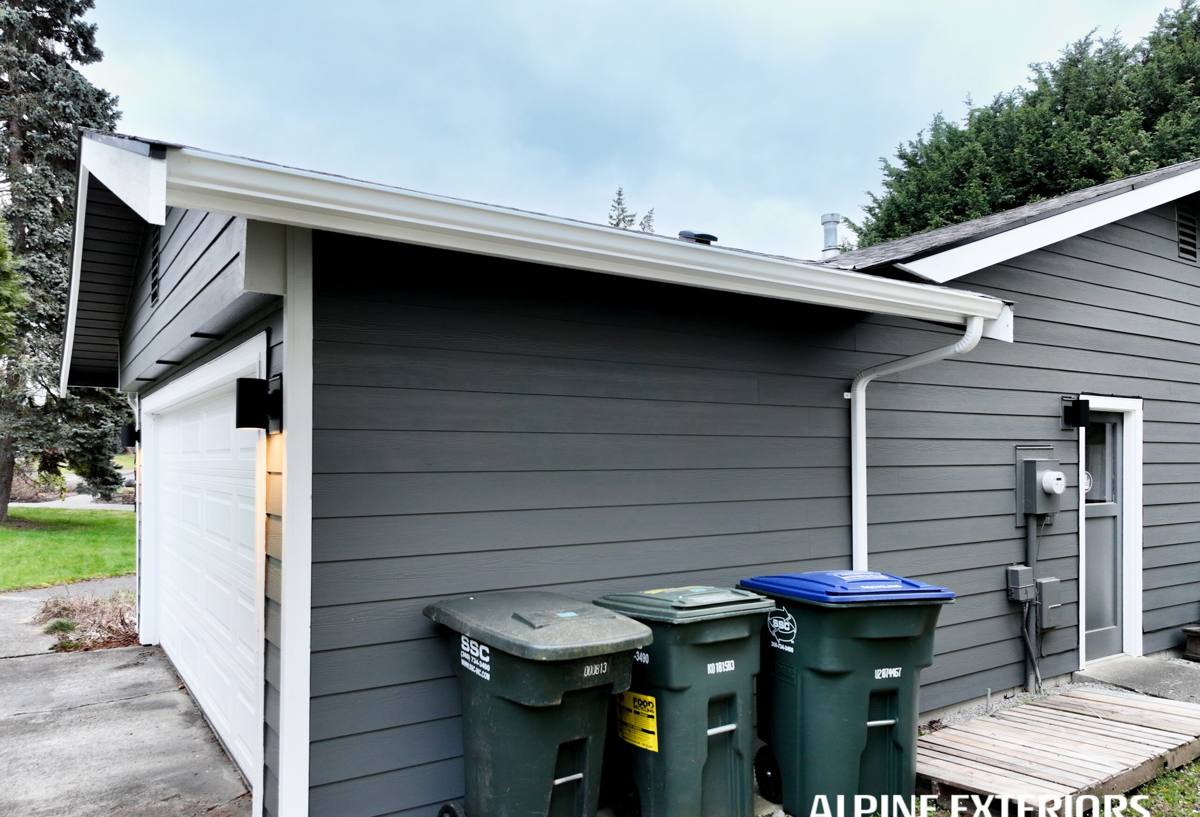
The specific pattern we see most often in Kirkland is damage concentrated on shaded, wind-exposed walls — the sides of the house that get hit by driving rain but rarely get direct sun to dry out afterward. Butt joints, corner boards, and anywhere trim meets siding are the first places that pattern shows up, because those are the seams where water finds a way in if the original installation or flashing wasn't done correctly.
Early Warning Signs Worth Acting On
Most siding problems in this area start small and stay hidden for a while. Catching them early is the difference between a contained repair and a much larger project. Walk your exterior periodically and look for:
- Soft or spongy spots when you press on the siding, especially near the bottom courses
- Paint that's bubbling, peeling, or cracking in a localized area rather than evenly across the wall
- Dark streaking or persistent staining that doesn't wash off
- Visible gaps opening up at butt joints or where siding meets trim
- Swelling, warping, or delamination — common on older hardboard or engineered wood products once moisture gets in
- Heavy moss or algae growth concentrated in one area, which signals that spot stays wet longer than the rest of the wall
- Cracked or missing caulk lines at joints, corners, and penetrations
- Nail pops or fasteners backing out, which loosen the siding's seal
Any one of these on its own might be minor. Several clustered in the same area usually means water has been getting behind the siding for a while, and the repair needs to address what's happening underneath, not just what's visible on the surface.
What a Correct Repair Actually Involves
A proper siding repair isn't cosmetic. It starts with figuring out why that section failed in the first place — otherwise you're just delaying the same problem. Our process for a repair includes:
- Identifying the actual moisture source (failed caulk, damaged flashing, a gap in the water-resistive barrier, poor original fastening)
- Cutting back to sound, dry material rather than patching over anything soft or compromised
- Inspecting and repairing the housewrap or flashing underneath before any new siding goes back on
- Matching the reveal, profile, and fastening pattern of the existing siding so the repair is structurally consistent, not just visually close
- Priming or sealing cut edges, which is one of the most commonly skipped steps and one of the most important for long-term durability
- Correct fastening — placement, spacing, and depth matter more than they seem like they should
Shortcuts That Don't Hold Up in This Climate
We regularly see repairs elsewhere in the region that were done to pass a quick visual check rather than solve the underlying issue — caulk smeared over rot instead of cutting it out, face-nailing through the siding face instead of proper edge fastening, or new siding installed directly over a torn housewrap. In a dry climate those shortcuts might last for years. In Kirkland's moisture load, they typically fail again within a wet season or two.
Repair or Replace? How to Think About It
Not every siding problem calls for a full re-side, and not every problem is fixable with a patch. The right call depends on how much of the wall is affected and what's happening behind it.
| Situation | Repair Usually Makes Sense | Replacement Worth Considering |
|---|---|---|
| Extent of visible damage | Isolated to one or two wall sections | Spread across multiple walls or the whole house |
| Age and condition of existing siding | Siding is otherwise sound and holding paint well | Siding is near the end of its service life or a discontinued product |
| Moisture behind the wall | Contained to the repair area, sheathing intact | Signs of wider sheathing or framing damage |
| Material match | Matching material and color are still available | Original product is obsolete or no longer manufactured |
We'll always tell you honestly which category your situation falls into. A targeted repair that's done right can extend the life of a wall for years; we're not going to push a full replacement when a repair will hold.
Our Siding Repair Process in Kirkland
- On-site inspection of the damaged area and the surrounding wall, including a look behind accessible siding where warranted
- Moisture check to confirm whether the issue is contained or has spread into sheathing or framing
- A clear, written scope — what's being replaced, what's being repaired in place, and why
- Sourcing color- and profile-matched material, including factory-finished ColorPlus product when the repair is on James Hardie siding
- Careful removal of damaged material without disturbing more of the surrounding wall than necessary
- Repair or replacement of any compromised flashing or water-resistive barrier before new siding goes on
- Installation to manufacturer spec — fastening, reveal, and sealant
- Final walk-through so you can see exactly what was done and why
Why We Repair and Install Only James Hardie Fiber Cement
When a repair calls for new material, we use James Hardie fiber cement — it's the only siding product we install, and that's a deliberate standard, not a default. Fiber cement is non-combustible, dimensionally stable in wet-dry cycling, and Hardie's HZ product lines are engineered specifically for climates like ours, where siding stays damp for extended stretches. The factory-applied ColorPlus finish also holds color and resists the moisture-driven paint failure we see on field-painted repairs, which matters in a region that doesn't give paint much time to dry between rain events.
If your home currently has a different siding product — vinyl, cedar, LP SmartSide, or another engineered wood — we can often repair a small section in kind if the material is still available and the damage is limited. But for larger repairs or full wall sections, we'll be upfront that some of those materials carry real trade-offs in a wet marine climate: engineered wood products can be more sensitive to sustained moisture exposure at cut edges and seams, cedar requires ongoing maintenance to keep ahead of rot and moss, and vinyl can't offer the same fire performance or paintability as fiber cement. We're not saying those products can't perform — we're saying we've standardized on the one that gives Kirkland homeowners the fewest recurring problems, and we'll tell you plainly when a repair-in-kind makes sense versus when transitioning that section to Hardie is the better long-term move.
What Affects the Cost of a Siding Repair
| Factor | Why It Matters |
|---|---|
| Scope of damage | A single section costs far less than repairs spread across multiple walls |
| Material match | Sourcing an exact color/profile match takes more time than using stock material |
| Access | Second-story sections and the tight side yards common on older Kirkland lots take more labor to reach safely |
| Underlying damage | Repairs that require flashing or housewrap work cost more than a straight siding swap |
| Painting/finish | Field-painting a repair to blend with existing siding adds labor beyond the material itself |
We'll always give you a written scope and a real number before any work starts — no vague estimates, no surprise change orders for anything we could have identified during the inspection.
Why a Local Seattle-Area Crew Matters for This Job
Siding repair is a job where local experience actually changes the outcome. A crew that works King County day in and day out knows how Kirkland's mix of older and newer homes tends to fail, understands local permitting where it applies, and has the supplier relationships to get color-matched Hardie product without a long wait. Just as important, we're close enough to come back quickly if you have a question after the work is done — that matters more here than it would somewhere with a milder, drier climate, because problems in this region don't wait for a convenient time to show up.
If you're seeing any of the warning signs above, or you just want an honest read on whether a section of your siding needs a repair or something more, we're happy to take a look. Request a free, no-pressure estimate below and we'll give you a straight answer.