 Seattle
 Why Kirkland Windows Take More Punishment Than People Expect
Kirkland sits in a mild-looking climate that isn't actually mild on window systems. The combination of moist Puget Sound air, long stretches of driving rain, and short, low-angle winter sun means windows here are wet more often than they're dry, and they rarely get a real chance to dry out between storms. Add in the moss and algae growth that thrives on shaded, north-facing walls and window sills through most of the year, and you have conditions that expose weak flashing, poor caulking, and low-quality frame materials faster than a drier climate would.
None of this means Kirkland is a hard place to keep windows in good shape. It means the margin for error during installation is smaller. A window that's slightly out of level, under-flashed, or sealed with the wrong material might hold up fine in Eastern Washington. Here, that same shortcut usually shows up within a few wet seasons as a soft sill, a fogged pane, or a stain creeping down the interior wall below the window.
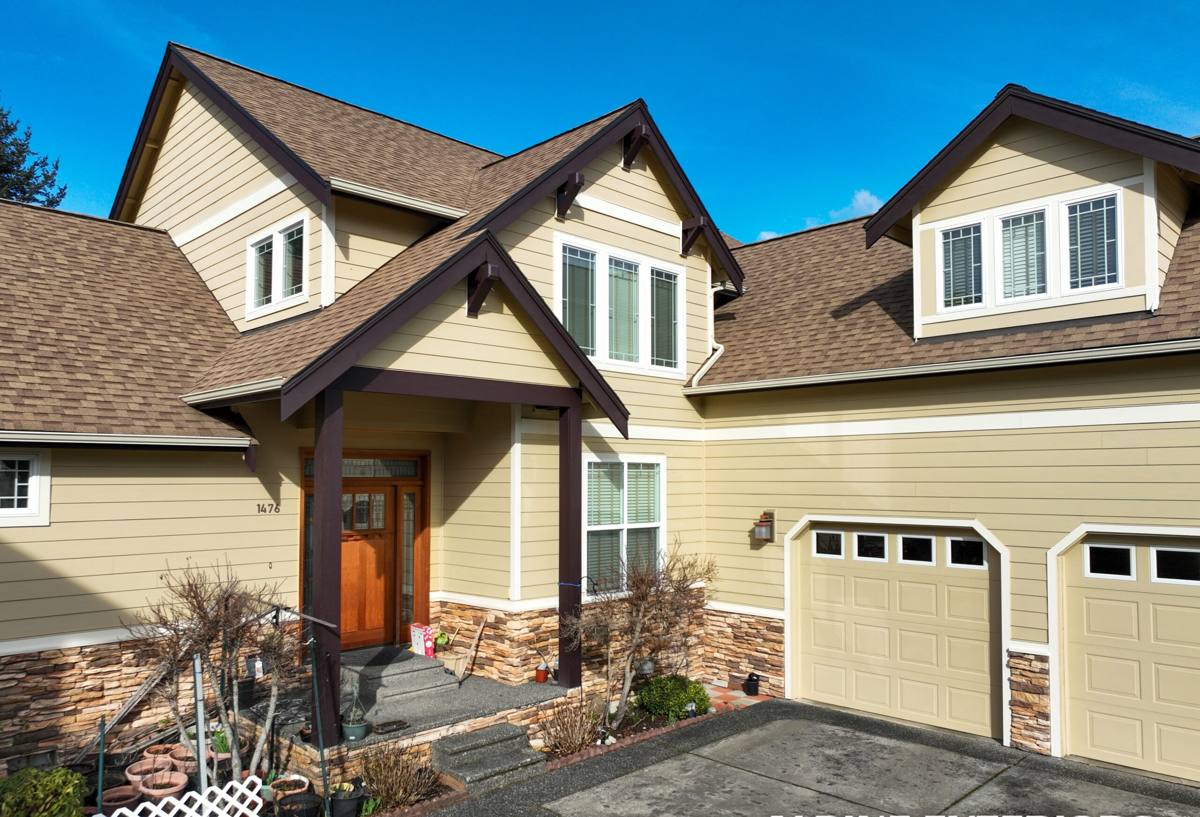
Signs Your Windows Are Due for Replacement
Homeowners often live with failing windows longer than they need to because the problems show up gradually. Look for these signs, especially on walls that face prevailing weather or sit in shade for most of the day:
- Fogging or a visible film between panes — the sign of a failed seal on double- or triple-pane glass
- Wood trim or sills that feel soft, spongy, or show dark staining
- Visible gaps, drafts, or a noticeable temperature difference near the window in winter
- Windows that stick, won't stay open, or need force to latch
- Peeling paint or bubbling finish on interior or exterior trim around the frame
- Moss or dark algae growth building up in the corners of the frame or on the sill
- Rising heating bills that don't match any other change in the home
Any one of these can be a minor fix. Several at once, especially on an older home, usually points to windows that are past the point where caulk and paint solve the problem.
What a Correct Installation Actually Involves
Window installation is judged almost entirely on things you can't see once the trim goes back on. The window itself matters, but most failures we get called out to repair trace back to installation shortcuts, not product defects.
Flashing and Water Management
In a climate that sees this much driving rain, the flashing details around a window matter more than the window brand. That means properly lapped flashing tape at the sill and jambs, a sloped sill pan that directs any water that gets past the glass back outside instead of into the wall cavity, and integration with the home's existing weather-resistive barrier so water sheds down and out rather than behind the siding. Skipping or rushing this step is the single most common cause of hidden rot behind window openings in this region.
Air Sealing and Insulation
The gap between the window frame and the rough opening needs to be filled with a proper low-expansion foam or backer rod and sealant — not stuffed with fiberglass insulation alone, which does little to stop air movement and can hold moisture against the frame. Correct sealing here is what actually delivers the energy savings homeowners expect from new windows.
Sizing and Fit
New-construction windows and replacement (insert) windows are installed differently, and using the wrong approach for the situation causes fit and water-management problems down the line. A correct installation starts with accurate measurement of the existing opening and a decision, based on the condition of the surrounding framing, on whether a full-frame replacement or an insert replacement is the right call.
Comparing Window Materials for a Kirkland Home
There's no single "best" window material for every home — it depends on your home's exposure, your maintenance tolerance, and your budget. Here's how the common options stack up for this climate specifically:
| Material | Moisture Performance | Maintenance | Typical Lifespan |
|---|---|---|---|
| Vinyl | Good — won't rot, handles constant moisture well | Low — occasional cleaning | 20–30+ years |
| Fiberglass | Very good — dimensionally stable in wet/dry cycling | Low | 30+ years |
| Aluminum | Fair — durable but prone to condensation without thermal breaks | Low | 20–30 years |
| Wood (unclad) | Poor without diligent upkeep — most vulnerable to our wet climate | High — regular painting/sealing required | Varies widely with maintenance |
| Wood-clad | Good on exterior face; interior wood still needs some care | Moderate | 25–35 years |
We generally steer homeowners away from unclad wood exteriors in exposed or shaded parts of a Kirkland property — not because wood windows are a bad product, but because the maintenance schedule needed to keep them watertight here is demanding, and a missed repaint cycle can lead to rot faster than in a drier climate. Vinyl and fiberglass tend to be the more forgiving, lower-maintenance choices for most homes in this area.
Our Installation Process
The steps don't change much from job to job, but the care taken at each one is what determines whether a window performs for twenty years or five.
- Assessment and measurement — We check the condition of the existing framing and sheathing around each opening, not just the window size, since hidden rot changes the scope of the job.
- Material and product selection — We walk through options based on your home's exposure, budget, and how the windows need to perform on that specific wall.
- Removal — Old windows come out carefully to protect interior finishes and give us a clear look at the opening before anything new goes in.
- Opening inspection and repair — Any soft framing, damaged sheathing, or failed old flashing gets addressed before the new window goes in. Installing over a hidden problem just buries it.
- Flashing and sill pan installation — Built to shed water out and down, integrated with the existing weather barrier.
- Window installation and leveling — Set plumb, level, and square, with fasteners placed per manufacturer specification.
- Insulation and air sealing — Gaps filled correctly around the full perimeter.
- Exterior and interior trim — Finished and sealed to match the home.
- Final check — Operation, seal, and weatherproofing confirmed before we consider the job done.
What Affects the Cost
Window installation pricing varies more than most homeowners expect, largely because the condition of the existing opening matters as much as the window itself. Broad cost drivers to expect:
| Factor | Why It Matters |
|---|---|
| Full-frame vs. insert replacement | Full-frame costs more but is often necessary when framing is damaged |
| Window material and glass package | Fiberglass and triple-pane glass cost more upfront than vinyl and standard double-pane |
| Hidden rot or framing repair | Not visible until removal — can add labor and material cost mid-project |
| Number and size of openings | Larger and specialty-shaped windows take more time and custom flashing work |
| Trim and siding integration | Matching existing exterior finish adds labor beyond the window itself |
| Access and height | Second-story or hard-to-reach openings take longer and require more equipment |
We give a firm, itemized quote after seeing the actual openings — not a phone estimate — because the range on paper is wide until we know what's behind the existing trim.
Why It Matters That We Already Work in Kirkland
A lot of window problems we're called to fix started as a good product installed by a crew that wasn't used to this specific climate. Flashing details that work in a drier region don't hold up to sustained Puget Sound rain. A crew that regularly works Kirkland and the surrounding King County area already knows which wall orientations take the worst weather, how shaded, moss-prone areas need extra attention at the sill, and how to detail flashing so it integrates cleanly with the siding types common on homes in this area. That local repetition is what keeps a window installation from becoming a callback.
It also means faster response if something does need attention after the job — no waiting on a crew that has to travel in from outside the area.
Keeping New Windows Performing Through Every Season
New windows installed correctly need very little upkeep, but a few habits extend their life in this climate:
- Clear debris and moss buildup from sills and tracks a couple of times a year, especially on shaded walls
- Check exterior caulk lines annually for cracking or separation, particularly after a hard winter
- Keep gutters and downspouts clear so runoff isn't sheeting directly across window openings
- Operate each window a few times through the year so weatherstripping and hardware don't seize up
- Watch for condensation between panes — it's the earliest sign of a seal starting to fail
If you're weighing whether it's time to replace your windows or want a straight answer on what a correct installation should cost for your home, we're happy to take a look and walk you through it. Fill out the form below for a free, no-pressure estimate.