 Seattle
 Building New on the Magnolia Peninsula Changes What Your Windows Need to Do
Magnolia sits on a peninsula bounded by Puget Sound on three sides, and that position shapes almost every decision that goes into a new-construction window package. Homes here catch salt-laden air off the water, take driving rain on exposed elevations, and sit under enough marine moisture and shade year-round to grow moss on anything that stays damp too long. None of that is unique to Magnolia, but the combination — salt exposure, wind-driven rain, and a long wet season — is more concentrated here than in more sheltered parts of King County, and it changes what "correct" window installation looks like.
When you're building new, you get one real shot at getting the window openings right. Retrofitting a poorly flashed opening later means tearing into finished siding and trim. That's why the rough opening prep, flashing sequence, and product selection matter more on a new build than almost anywhere else in the project.
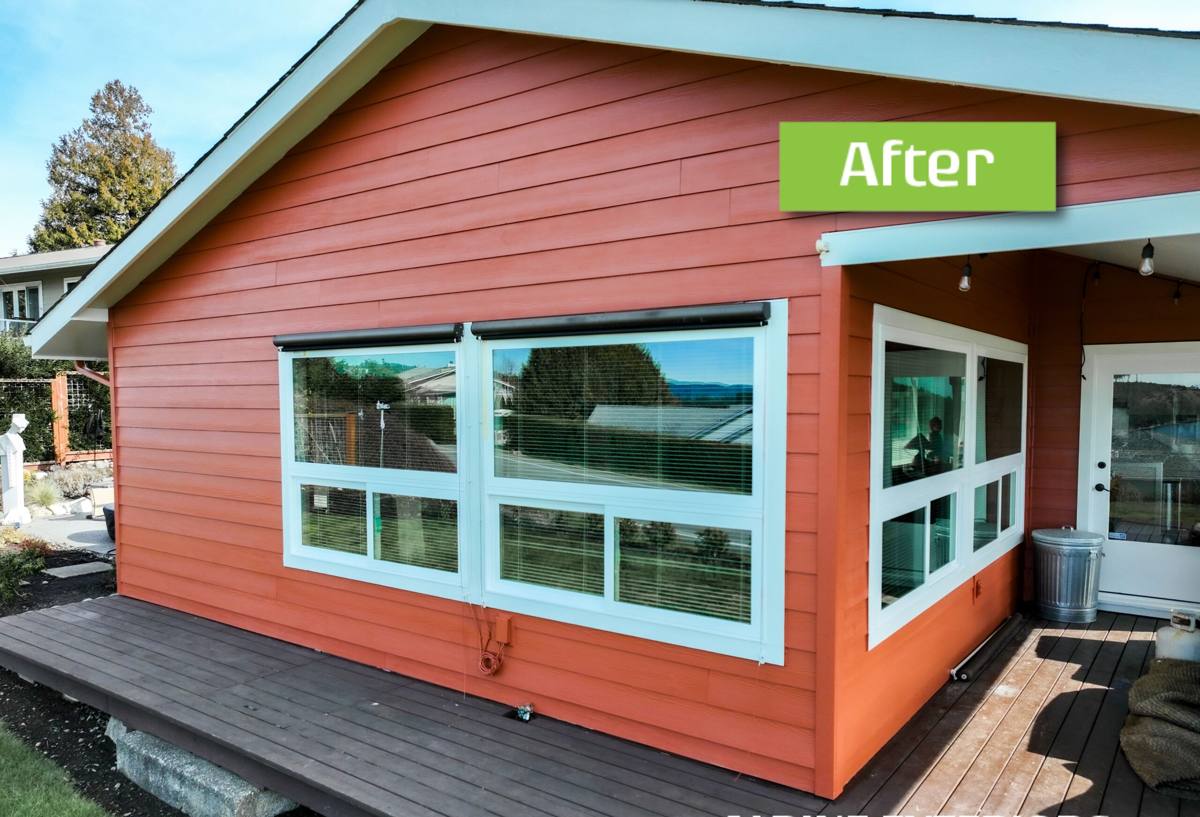
What Salt Air, Driving Rain, and Moss Season Actually Do to a Window System
Salt Air and Metal Components
Airborne salt accelerates corrosion on exposed fasteners, hinges, and low-grade cladding. It's not usually the glass or the frame body that fails first on a waterfront-adjacent home — it's the hardware and the metal flashing details that get overlooked. Windows facing the Sound or sitting on exposed, elevated lots benefit from corrosion-resistant fastener packages and cladding finishes rated for coastal-adjacent exposure, even though Magnolia isn't technically oceanfront.
Driving Rain and Wind-Driven Water
Seattle's rain isn't usually heavy by national standards, but it's frequent, and on exposed Magnolia elevations it often arrives sideways rather than straight down. A window that would perform fine on a sheltered inland lot can leak on a bluff-facing wall if the flashing and sill pan aren't built to handle wind-driven water. This is a detailing problem more than a product problem — the window itself can be excellent and still leak if the opening around it wasn't built to manage water correctly.
Moss and Prolonged Moisture
Long stretches of damp, shaded weather let moss and algae take hold on any horizontal or slow-draining surface — sills, exterior trim, and mulled window assemblies with flat ledges. Moss holds moisture against wood and composite surfaces, which shortens the life of anything that isn't detailed to shed water quickly. Sill design and drainage matter as much as the glass package for long-term performance.
What Correct New-Construction Window Installation Involves
New-construction installation is different from a retrofit or pocket replacement. The window has a nail fin or flange that gets integrated directly into the wall's weather-resistive barrier before siding goes on, which means the installation sequence — not just the window itself — determines whether the opening stays dry for the life of the house.
- Rough openings framed square, level, and sized correctly to the manufacturer's tolerances — not "close enough"
- A sloped sill pan installed under every opening so any water that gets past the window drains back out, not into the wall cavity
- Self-adhered flashing membrane integrated in the correct shingle-lap sequence — sill, jambs, then head — so water always sheds downward and outward
- Weather-resistive barrier integration that ties the window flashing into the housewrap correctly, with no reverse laps
- Head flashing that carries water clear of the opening rather than directing it back toward the frame
- Proper shimming and fastening so the frame isn't racked or bowed, which affects both operation and long-term seal integrity
- Low-expansion foam or backer rod and sealant at the interior gap, sized to allow for seasonal movement without gapping
- Exterior sealant only at the specified termination points — sealing everything can trap water rather than let it drain
Every one of these steps exists because water finds the one detail that was skipped. On a house exposed to Magnolia's rain and wind patterns, a skipped sill pan or a reversed flashing lap is the kind of mistake that doesn't show up for a year or two — and by then it's inside the wall.
Choosing Window Products for a Magnolia Build
There's no single "best" window brand or material for every project — the right call depends on the home's design, budget, and exposure. What we do is walk builders and homeowners through the real trade-offs rather than pushing one line because it's what we happen to stock.
| Frame Material | Strengths in This Climate | Trade-Offs to Know |
|---|---|---|
| Vinyl | Won't corrode or rot, good value, low maintenance | Limited color and profile options at the budget tier; quality varies a lot between manufacturers |
| Fiberglass | Very stable dimensionally, holds paint well, strong moisture resistance | Higher upfront cost than vinyl |
| Aluminum-clad wood | Interior warmth of wood, exterior weather protection, refined sightlines | Needs correct cladding and sealant detailing at joints; more expensive; interior wood still needs periodic attention |
| Wood (uncladded) | Classic look, repairable | Highest maintenance burden in a wet, salt-air climate; not our default recommendation for exposed elevations |
For most Magnolia new builds, we lean toward vinyl or fiberglass on exposed, weather-facing walls and reserve wood or clad-wood for sheltered elevations or interior-facing rooms where maintenance is easier to keep up with. That's a professional judgment call based on moisture behavior and long-term upkeep — not a knock on any manufacturer.
Glass and Performance Packages
Double-pane, low-E glass with argon fill is the practical baseline for new construction in this region — it balances energy performance with cost. On view-oriented walls, which is common in Magnolia given the water and skyline exposure many lots have, we also talk through solar heat gain coefficient and glare control, since large expanses of west- or water-facing glass behave differently than a standard-size window.
Our Installation Process
- Plan review and product selection: we work from the builder's plans or your design intent to spec window sizes, materials, and performance ratings before framing is finalized.
- Rough opening verification: we check every opening against manufacturer tolerances before a single window goes in — this catches framing issues while they're still cheap to fix.
- Sill pan and flashing installation: sloped pans and shingle-lapped flashing membrane go in per manufacturer and code requirements, tied correctly into the weather-resistive barrier.
- Window setting: units are shimmed, squared, and fastened to spec, then checked for operation before sealing.
- Head flashing and WRB integration: the barrier system is closed up so water sheds down and out at every layer.
- Interior and exterior sealing: insulated and sealed at the correct points, with drainage paths left open where they need to be.
- Final walkthrough: we check operation, seal quality, and hardware on every unit before we consider the opening complete.
New-Construction Windows vs. Replacement Windows: Why the Distinction Matters
New-construction and replacement windows aren't interchangeable, and using the wrong type — or the wrong installation method — creates problems that are hard to see until they cause damage. New-construction windows have a nail fin designed to be flashed into an open wall before siding goes on, giving the most reliable, code-compliant water management. Replacement windows are built to fit into an existing, finished opening without disturbing siding or trim, which is the right call for a remodel but is not the standard we'd choose for a home being framed from scratch. On a new build, using proper new-construction units with full flashing integration gives you the strongest, most durable seal the project can achieve — and it's usually not more expensive to do it right the first time, since the wall isn't finished yet.
What Drives Cost on a New-Construction Window Package
| Factor | How It Affects Price |
|---|---|
| Frame material | Vinyl is typically the entry point; fiberglass and clad-wood run higher |
| Window size and configuration | Large fixed panes, corner units, and multi-window mulls cost more than standard operable units |
| Glass package | Upgraded low-E coatings, triple-pane, or solar control glass add cost but pay back in comfort and energy use |
| Exposure and elevation | Weather-facing or elevated openings may call for upgraded flashing details and corrosion-resistant hardware |
| Number of openings and access | Total unit count and how easily the crew can work the site (scaffolding, stairs, tight lots) affect labor |
We give straightforward, itemized numbers rather than a single lump figure, so you can see exactly what's driving the cost and where there's room to adjust the plan if budget is tight.
A Practical Checklist Before Your Windows Go In
- Confirm rough opening sizes match the ordered window schedule before framing is closed up
- Verify sill pan flashing is specified for every opening, not just weather-exposed ones
- Ask which elevations are getting upgraded corrosion-resistant hardware and why
- Confirm the WRB and flashing integration sequence in writing, not just verbally
- Check that large or view-oriented windows have a glass package suited to their orientation
- Get a written punch-list walkthrough after installation, before siding closes the openings for good
Why Hiring a Crew That Already Works in Magnolia Matters
A window package that performs well in a dry, sheltered inland neighborhood can underperform on an exposed Magnolia lot facing the Sound. Crews who work this peninsula regularly already know which elevations tend to take the worst wind-driven rain, which lots see enough salt air to justify upgraded hardware, and how moss and prolonged dampness affect sill design over time. That local pattern recognition doesn't replace good installation practice — it sharpens it, because we're applying the same rigorous flashing and sealing standards with a clear sense of which details matter most for your specific site.
We also work regularly with builders and homeowners across Seattle and King County, so we're used to coordinating around framing schedules, inspections, and the realities of a live construction site — not just dropping in windows and leaving.
Get a Straightforward Estimate
If you're framing a new build in Magnolia and want a window package specified and installed correctly the first time, we're glad to walk the plans with you and give a clear, no-pressure estimate. Use the form below to get started.