 Seattle
 Why University District Roofs Wear the Way They Do
The University District sits in a part of Seattle where mature tree canopy, older housing stock, and a long wet season combine to put steady, cumulative stress on a roof. Many homes here date from the early-to-mid 1900s through the postwar boom, with roofs that have already been recovered or patched at least once. When we go out to look at a roof in this neighborhood, we're usually looking at a system that's been quietly losing ground for years — not from one dramatic failure, but from moss, moisture, and age working together.
King County's climate doesn't give roofing materials much of a break. Long stretches of low-intensity rain keep roof surfaces damp for days at a time, driving rain pushes water sideways under poorly lapped shingles and flashing, and the shade from tall firs and maples common around the University District keeps north-facing slopes wet long after the sun comes back out elsewhere. That combination is exactly what moss needs to get established, and once it does, it accelerates everything else.
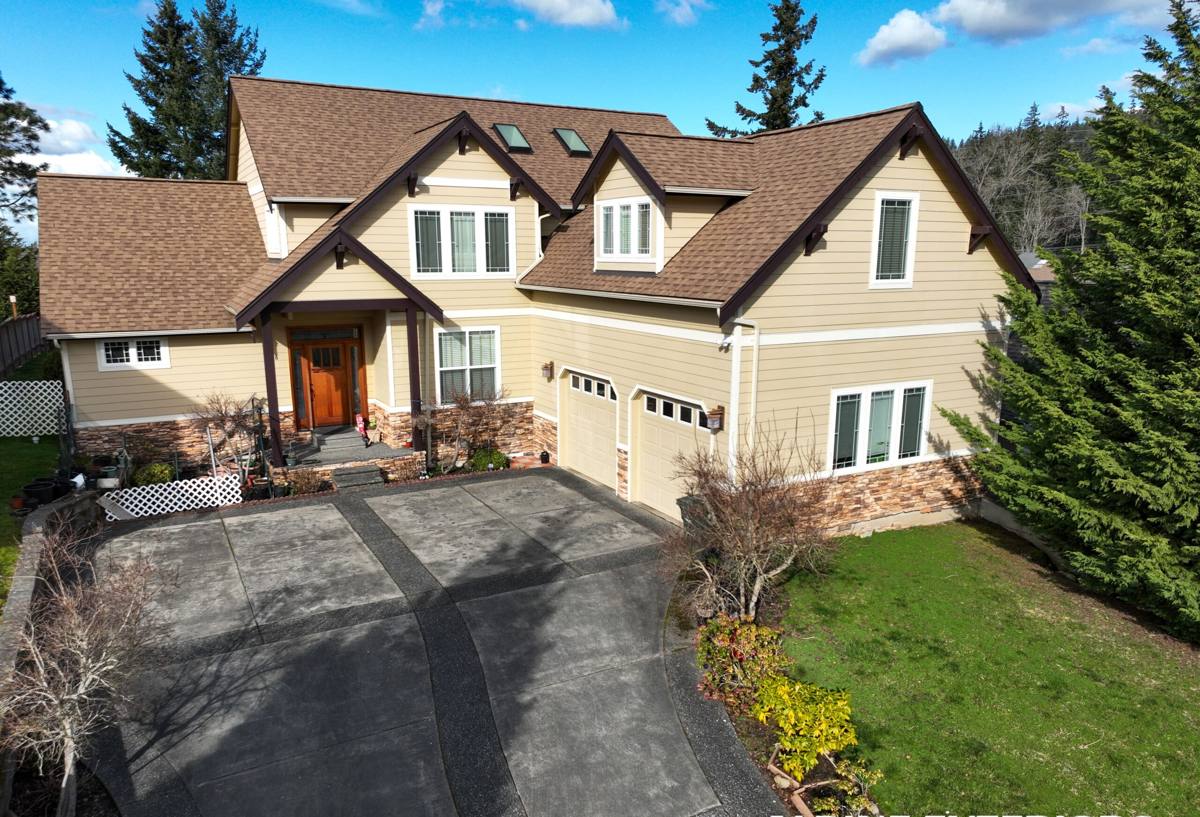
What This Climate Actually Does to a Roof
Moss and Organic Growth
Moss isn't just a cosmetic problem. As it spreads across shingles, it holds moisture against the roofing material around the clock, works its rhizoids into shingle mat and granule surfaces, and gradually lifts shingle edges — which is exactly where wind-driven rain finds its way in. A roof that looks "mostly fine" from the ground can have moss doing real damage on the shaded slopes.
Driving, Wind-Driven Rain
Seattle rain is rarely a hard downpour — it's more often a sustained, wind-pushed drizzle that can travel sideways and upward under shingle edges, especially at low-slope sections, valleys, and anywhere flashing has started to separate. A roof that would hold up fine in a drier climate with occasional heavy storms can still fail here if the underlayment and flashing details weren't built for sustained wet exposure.
Salt Air and Marine Influence
Seattle's proximity to Puget Sound means many neighborhoods, including areas around the University District, see some level of marine air influence. It's milder than a direct waterfront exposure, but it still accelerates corrosion on exposed metal fasteners, flashing, and vents over the life of a roof — one more reason we don't cut corners on the materials that go under and around the shingles.
Signs a Roof Needs Replacement, Not Another Repair
- Granules collecting in gutters or at downspout outlets, indicating the shingle mat is breaking down
- Moss or algae covering more than isolated patches, especially on north- or shade-facing slopes
- Curling, cupping, or cracked shingles visible from the ground
- Daylight or water stains visible in the attic, particularly near valleys, chimneys, or skylights
- A roof that's already had one or more patch repairs in the last several years
- Soft or spongy decking felt underfoot during an inspection
- A roof at or beyond the manufacturer's expected service life for its material and exposure
If a roof is showing two or more of these signs, patch repairs are usually a short-term fix that delays a larger bill rather than avoiding it. We'll always tell you honestly when a repair is the right call and when it isn't.
What a Correct New Roof Installation Actually Involves
A new roof is more than shingles nailed to a deck. In a wet climate like this one, the details underneath the visible surface are what determine whether the roof performs for its full expected life or starts leaking in year six.
Full Tear-Off and Deck Inspection
We remove the old roofing down to the deck rather than layering over it. That's the only way to actually see the condition of the sheathing, catch soft or rotted decking before it's covered up again, and confirm nailing patterns meet current code.
Ice-and-Water Shield and Underlayment
Given how much sustained moisture this region sees, we pay close attention to underlayment coverage at eaves, valleys, and any low-slope transitions — the areas most exposed to wind-driven rain and ponding. Synthetic underlayment over the full deck, with self-adhered membrane at the vulnerable spots, is standard practice for us, not an upgrade.
Flashing at Every Penetration
Chimneys, skylights, vent pipes, and wall-to-roof transitions are where most leaks actually start — not in the open field of shingles. Properly formed and lapped flashing at each of these points matters more to long-term dryness than almost anything else in the job.
Ventilation
Balanced intake and exhaust ventilation keeps the attic temperature and moisture level in check, which protects the underside of the new decking and helps prevent the kind of condensation that can rot a roof from the inside out — a real risk in a climate this damp.
Material Options for This Climate
| Material | Typical Lifespan | Moss Resistance | Notes for This Area |
|---|---|---|---|
| Standard 3-tab asphalt shingle | 15–20 years | Low without treatment | Lowest upfront cost; needs more frequent moss treatment on shaded slopes |
| Architectural (laminate) asphalt shingle | 25–30 years | Moderate, higher with algae-resistant granules | Most common choice we install here — good balance of cost, durability, and appearance |
| Class A / algae-resistant shingle | 25–30 years | Higher (copper or zinc granule blend) | Worth the upcharge on heavily shaded lots with a history of moss |
| Standing seam metal | 40–60 years | High — moss struggles to hold on smooth metal | Higher upfront cost, sheds moisture and debris fastest of any option |
We don't push one product over another as a rule — we walk the property, look at sun exposure and tree cover, and talk through what actually fits the house and the budget. On a shaded University District lot with mature trees overhead, algae-resistant shingles or metal often pay for themselves in reduced maintenance, even if the sticker price is higher.
Our Installation Process
- On-site inspection and honest assessment of repair versus replacement
- Written estimate detailing materials, scope, and timeline — no vague allowances
- Permitting handled on your behalf where required by the City of Seattle or King County
- Full tear-off, deck inspection, and any necessary sheathing repair
- Underlayment, ice-and-water shield, and flashing installed to current code and manufacturer specs
- New roofing material installed with attention to nailing pattern, exposure, and ventilation
- Full site cleanup, including magnetic nail sweep of the yard and driveway
- Final walkthrough and warranty paperwork
Why Local Experience Matters in the University District
A crew that regularly works this neighborhood already knows what to expect before the ladder goes up: the tree cover that keeps certain slopes shaded and slow to dry, the mix of older single-family homes and converted rentals near campus, and the parking and access realities of working on narrower lots close to the street. That familiarity shows up in small but real ways — knowing which slopes are likely to need extra ice-and-water coverage, anticipating deck condition on a house of a certain age and era, and being able to give a realistic timeline that accounts for Seattle's rain patterns rather than an optimistic best-case schedule.
It also matters when something needs a second look years down the road. A local crew with a track record in the neighborhood is easy to reach and accountable in a way an out-of-area or storm-chasing crew simply isn't.
Cost Factors to Expect
| Factor | How It Affects Cost |
|---|---|
| Roof size and number of stories | More square footage and steeper access both increase labor time |
| Number of layers to remove | Tear-off of multiple existing layers adds disposal and labor cost |
| Roof pitch and complexity | Steep slopes, multiple valleys, and dormers take longer to flash correctly |
| Decking condition | Rotted or soft sheathing found during tear-off requires repair or replacement |
| Material selection | Standard architectural shingle costs less upfront than metal or premium algae-resistant products |
| Ventilation upgrades | Adding or correcting intake/exhaust venting adds modest cost but protects the investment |
Every one of these gets spelled out in writing before work starts. We'd rather walk you through the real range for your specific roof than throw out a number that doesn't hold up once we're on the deck.
Choosing a Roofing Contractor: A Practical Checklist
- Confirmed licensed, bonded, and insured in Washington State
- Willing to inspect the deck in person, not just quote from a satellite photo
- Provides a written, itemized estimate — materials, labor, disposal, and timeline
- Explains flashing and ventilation plans, not just shingle brand and color
- Handles permitting rather than leaving it to the homeowner
- Offers both a workmanship warranty and clear info on manufacturer material warranty
- Has verifiable local experience, not just a regional or national franchise presence
If a bid skips over deck condition, flashing detail, or ventilation and jumps straight to shingle brand, that's usually a sign the estimate wasn't built from an actual inspection.
Get a Free, No-Pressure Estimate
If your University District home is showing moss buildup, aging shingles, or you just want an honest read on how much life is left in the current roof, we're glad to take a look. Fill out the form below for a free estimate — no pressure, no obligation, just a straight answer about what your roof needs.