 Seattle
 Queen Anne's Roofs Work Harder Than Most People Realize
Sitting up on its hill above downtown, Queen Anne catches weather that flatter, more sheltered parts of Seattle simply don't see as much of. Homes near the top and on the west-facing slopes take wind and driving rain straight off Puget Sound, along with the fine salt-laden moisture that travels inland from Elliott Bay. Add in King County's long, wet moss season — often running from late fall through spring — and a mature tree canopy that shades large sections of many lots for much of the day, and you have a roofing environment that punishes shortcuts. An asphalt shingle roof installed the same way it might be on a dry, open lot elsewhere in the region tends to show problems here years sooner than it should.
That doesn't mean asphalt shingles are the wrong choice for Queen Anne. They remain one of the most practical, cost-effective, and widely serviceable roofing materials available, and a properly detailed shingle roof holds up well against this neighborhood's conditions. The difference between a roof that lasts and one that doesn't usually comes down to the details underneath the shingles, not the shingles themselves.
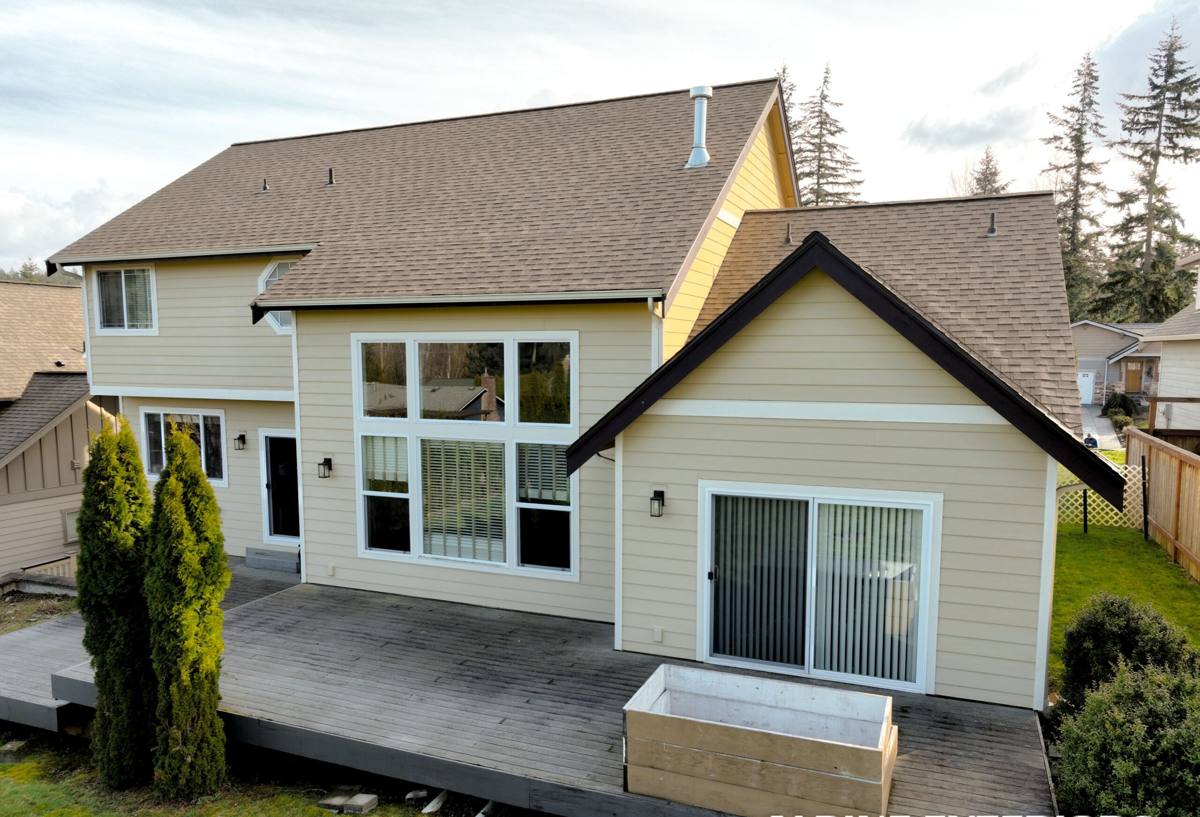
What a Correctly Installed Shingle Roof Needs Here
A shingle roof is a system, not a single product. On a hill neighborhood with salt exposure and heavy rain, every layer of that system earns its keep.
Shingle Class and Wind Rating
We spec shingles rated for the wind exposure a given roof actually sees, not just a minimum-code product. West- and north-facing slopes catching open wind off the water need a shingle and fastening pattern that won't lift at the tab edges. This is also where nailing technique matters as much as the shingle itself — correct nail placement, count, and depth are what actually hold a shingle down in gusty weather, regardless of what the shingle is rated for on paper.
Underlayment and Water Barrier
Driving rain doesn't always run straight down a slope — wind pushes it sideways and even upward under the shingle edge. A synthetic underlayment with good water-shedding performance, combined with self-adhering ice-and-water barrier at eaves, valleys, and around every penetration, is what keeps that wind-driven moisture from finding a way into the deck. This is not an area to trim from a bid.
Ventilation and Moisture Management
Homes shaded by mature trees hold moisture longer after a storm, and moss growth is a direct symptom of that. Balanced intake and exhaust ventilation keeps the underside of the roof deck drying out between rain events instead of staying damp, which protects both the shingles and the wood structure beneath them over the long run.
Flashing
Chimneys, dormers, skylights, and wall-to-roof transitions are where the overwhelming majority of leaks start — not in the open field of shingles. Correctly formed step flashing, counter-flashing, and sealed penetrations matter more on a roof exposed to this much wind-driven rain than almost anywhere else in the install.
Problems We Commonly See on Queen Anne Roofs
Because of the neighborhood's mix of older homes, tree cover, and hill exposure, a few issues show up repeatedly during our inspections:
- Moss colonies established at the north-facing slopes and anywhere shaded most of the day, holding moisture against the shingle surface
- Granule loss and early shingle aging on roofs facing prevailing wind and salt-carrying air
- Flashing that has separated or corroded around chimneys and dormers, especially on older homes where the flashing has never been updated
- Gutters and valleys clogged with needles and leaf litter, causing water to back up under shingle edges
- Nail pops and lifted tabs from wind gusts on roofs where the original fastening pattern was inadequate
None of these are unusual for the area — they're the predictable result of the climate this neighborhood sits in. The point of a good install and regular upkeep is to keep them from turning into deck rot, interior leaks, or a premature full tear-off.
How Our Process Works
- Inspection and honest assessment. We get on the roof, check the deck condition, flashing, ventilation, and the shingles themselves, and tell you plainly whether you're looking at a repair, a partial re-cover, or a full replacement.
- Written estimate. You get a clear scope of work and price before anything is scheduled — no vague allowances, no surprise change orders for work we should have caught during inspection.
- Material selection. We walk through shingle class, color, and warranty options suited to your home's exposure and your budget, not a one-size-fits-all recommendation.
- Tear-off and deck check. Old roofing comes off down to the deck so we can actually see and address any rot or damage — covering up a bad deck is how good shingles fail early.
- Install. Underlayment, ice-and-water barrier, flashing, ventilation, and shingles go on in that order, to spec, with attention paid to the details that matter most in this climate.
- Cleanup and final walkthrough. Job site cleared of debris and nails, and we walk the finished roof with you before calling it done.
Repair, Recover, or Full Replacement
Not every roofing problem calls for a full tear-off. The right call depends on the age of the existing roof, the condition of the deck, and how widespread the damage is.
| Option | Best For | Key Cost Factors |
|---|---|---|
| Spot repair | Isolated leaks, storm damage to a small area, failed flashing on an otherwise sound roof | Size of affected area, accessibility, matching existing shingle color/age |
| Re-cover (shingle over existing layer) | Sound deck and one existing layer, roof nearing end of life but not leaking structurally | Number of existing layers (code limits apply), added weight, inability to inspect deck underneath |
| Full tear-off and replacement | Aged roofs, multiple existing layers, deck damage, or roofs with chronic moss and moisture issues | Roof size and pitch, deck repair needs, shingle class chosen, ventilation upgrades, disposal |
We'll always recommend the least invasive option that actually solves the underlying problem — a full replacement isn't the right answer just because it's the most profitable one for us.
Maintenance That Actually Extends Roof Life Here
A shingle roof in this climate benefits from a bit of regular attention. Homeowners who stay ahead of these items tend to get noticeably more years out of their roof:
- Clear moss growth before it spreads across a slope — early growth is far easier and cheaper to address than an established colony
- Keep gutters and valleys free of leaf and needle debris, especially under tree cover
- Check flashing around chimneys and dormers every year or two for separation or corrosion
- Trim back branches that keep a roof slope shaded and damp longer than necessary
- Have a professional look at the roof after any major windstorm, even if nothing looks obviously wrong from the ground
Why Local Experience on This Hill Matters
Queen Anne's steep streets, tight lot access, and mix of older and newer construction make roofing work here different from a flat, open-lot job elsewhere in King County. Crews who already work this neighborhood know how to stage material and equipment safely on steep grades, what to expect from older framing and deck conditions, and how City of Seattle permitting and inspection requirements apply to reroofing work. That familiarity translates into fewer surprises, fewer delays, and a cleaner job site during the work.
It also means we've seen firsthand how this specific stretch of hill, wind, and tree cover affects a roof over time — which is exactly the kind of detail that should shape material choices and installation details, not a generic regional average.
Warranty and Product Considerations
We install shingle systems backed by manufacturer warranties, and we're upfront about what those warranties do and don't cover — most require the full system (underlayment, ventilation, and accessories) to be installed as specified to stay valid, not just the shingle itself. We steer clients away from mismatched or budget-tier component combinations not because any one product is bad, but because mixing incompatible parts is the most common way a warranty ends up voided when it's needed most. Our standard is to install matched, spec-compliant systems so the paperwork is worth something if you ever need it.
If you're weighing a repair, a re-cover, or a full replacement on a Queen Anne home, we're glad to take a look and give you a straight answer. Use the form below to request a free, no-pressure estimate — we'll walk the roof, explain what we find, and let you decide from there.