 Seattle
 Windows on Queen Anne Take a Different Kind of Beating
Queen Anne sits high above the rest of Seattle, and that elevation is a double-edged sword. The views are real, but so is the exposure. Homes on the upper slopes and along the west- and south-facing blocks catch wind and driving rain that homes down in more sheltered parts of King County simply don't see as often. Add in Puget Sound's salt-tinged air moving up the hill and the long stretch of wet, low-light months that keep everything damp for weeks at a time, and you've got a climate that is genuinely harder on windows than most homeowners realize until they're dealing with soft trim, fogged glass, or a frame that won't latch true anymore.
We install windows across Seattle, but Queen Anne's mix of older housing stock — craftsman bungalows, Tudor and Colonial Revival homes, mid-century builds, and newer infill construction squeezed onto steep lots — means no two jobs look quite the same. What doesn't change is what the climate demands from the installation itself.
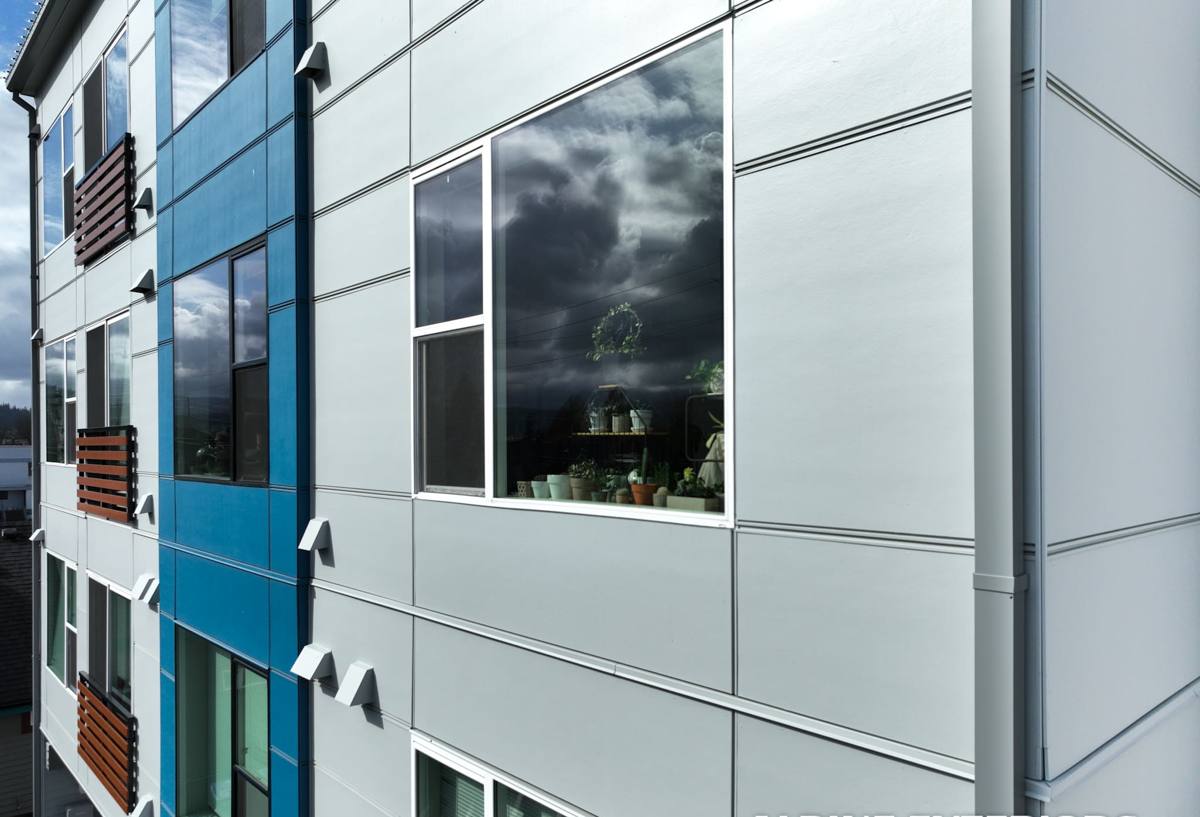
What the Climate Actually Does to a Window
It helps to be specific about the failure modes we see, because they shape how we approach every install here.
- Driving rain finds gaps. Wind-driven rain doesn't just run down glass — it gets pushed sideways and upward under the sash and into any flashing gap that isn't properly lapped.
- Moss and organic growth hold moisture against wood. Seattle's long moss season means anything organic — wood sills, wood cladding, even vinyl with a dirt film — stays damp longer than it should, which accelerates rot and finish failure.
- Salt air is mildly corrosive. It's not coastal-Florida severe, but on exposed upper-hill lots it slowly attacks unprotected hardware, fasteners, and metal cladding over years.
- Temperature swings stress seals. Cool, wet winters and warmer, drier summers cycle expansion and contraction in glazing seals and caulk joints, which is why cheap sealant fails here faster than it does in more stable climates.
None of this means Queen Anne homes need exotic products. It means the installation details — flashing sequence, sealant choice, drainage path — have to be right every time, because the margin for error is smaller here than in a drier region.
What a Correct Installation Actually Involves
Window installation gets treated like a swap-and-caulk job more often than it should. Done right, it's a moisture-management job first and a window job second. Here's what we consider non-negotiable on any Queen Anne install:
Proper Flashing and Drainage
Every opening needs a flashing system that sheds water downward and outward — self-adhered flashing tape at the sill and jambs, a sill pan to catch anything that gets past the window itself, and head flashing that laps correctly over the housewrap or building paper above. Skip any layer of this and you're building in a slow leak that won't show up as a stain for a year or two.
Sill Pans, Not Just Caulk
Caulk is a backup, not a strategy. A sloped sill pan gives water somewhere to go if it does get past the window, instead of sitting against the framing and rotting it from the inside — which is exactly the kind of hidden damage we find in older Queen Anne homes when a window finally gets pulled out.
Correct Fastening and Shimming
A window that's out of square or under-shimmed will bind, won't seal evenly, and puts uneven stress on the glazing over time. On older homes with settled framing — common on this hilly terrain — this step takes more care than it does on a flat, newer lot.
Insulation Without Overpacking
The gap between the window frame and the rough opening needs low-expansion foam or backer rod and sealant, applied evenly. Overpacking with high-expansion foam can actually bow the frame and cause it to bind or leak.
Choosing the Right Window for This Climate
There's no single "best" frame material — it depends on the house, the exposure, and what you're willing to maintain.
| Frame Material | Moisture Performance | Maintenance | Typical Lifespan | Best Fit |
|---|---|---|---|---|
| Vinyl | Good — won't rot, but seams and welds matter | Low | 20–30 years | Budget-conscious replacements, rentals, back-of-house openings |
| Fiberglass | Excellent — stable in wet/dry cycling, low expansion | Low | 30–40+ years | Exposed hilltop and view-facing walls, homes wanting a durable long-term product |
| Wood-clad | Good if maintained; cladding protects the exterior face | Moderate — interior wood needs periodic attention | 25–35 years with upkeep | Craftsman and period homes where interior wood trim matches original character |
| Aluminum | Fair — prone to condensation without thermal breaks | Low | 20–30 years | Modern designs, budget commercial-style openings; we recommend thermally broken frames only |
For most Queen Anne homes we talk through fiberglass or vinyl for full-exposure walls, and wood-clad where a homeowner wants the interior look of a period home preserved. We won't push a product that doesn't suit the exposure just because it's what we happen to have on the truck.
Signs Your Windows Are Telling You Something
- Wood trim or sills that feel soft, spongy, or show dark staining
- Visible fog or moisture between panes (a failed seal on double- or triple-glazed units)
- Drafts you can feel even with the window fully latched
- Difficulty opening, closing, or locking — a sign of a frame that's shifted or swollen
- Condensation forming on the inside of the glass regularly during cold months
- Paint or finish that's peeling specifically around the window opening, not the whole wall
- Rising heating bills without another clear explanation
Any one of these on its own isn't an emergency. Several together, especially on a wall that takes direct wind and rain, usually means it's time to have someone look at the whole opening, not just the glass.
Our Process, Start to Finish
1. On-Site Assessment
We look at the actual opening — not just the window — including the condition of the framing, existing flashing (if any is visible), and how exposed that particular wall is to wind and rain given the home's orientation and elevation.
2. Honest Product Recommendation
We'll tell you what fits the exposure, the house style, and the budget, including where a mid-range product is genuinely fine and where it isn't worth cutting corners.
3. Removal and Opening Prep
Old windows come out carefully, and we inspect the rough opening for rot or damage before anything new goes in. If we find a problem, we address it before installation — not after.
4. Flashing, Sill Pan, and Install
New flashing and sill pan go in per manufacturer and code requirements, the window is set square and shimmed correctly, and insulation and sealant are applied without shortcuts.
5. Final Check and Cleanup
We test operation, check the seal, and clean up the work area — including hauling away old windows and debris.
Permits, Historic Character, and Older Framing
Seattle building code requires permits for window replacement in most cases, and homes in some parts of Queen Anne carry historic or design-review considerations depending on the specific block and structure. We handle the permitting conversation as part of the job so it's not left to a homeowner to sort out, and where a home has genuine period character worth preserving — original trim profiles, sightlines from the street — we factor that into the product recommendation rather than defaulting to whatever's fastest to install.
Older Queen Anne homes also tend to have framing that's settled or slightly out of square after decades on a hillside lot. That's normal, but it means an installer working from a generic template rather than reading the actual opening will end up with gaps, binding, or a window that never quite seals right.
Questions Worth Asking Before You Hire
- Will you install a sill pan, or just caulk and go?
- Who pulls the permit, and is that included?
- What happens if you find rot or damage once the old window is out?
- What's the warranty on the product, and separately, on your installation labor?
- Have you worked on homes in this neighborhood before, and do you understand the wind/rain exposure here specifically?
Why a Local Crew Matters Here
Window installation isn't complicated in theory, but doing it correctly on a hilltop home in Seattle's climate takes attention to details that don't matter as much in gentler conditions. A crew that regularly works Queen Anne has already seen how wind moves across the different slopes, how moss and moisture behave against wood trim through a wet King County winter, and how older framing on this terrain tends to have settled. That familiarity shows up in fewer callbacks and a job that holds up through the next decade of wet seasons, not just the next dry summer.
If you're weighing whether it's time to replace a window, repair one, or just want a second opinion on what you're seeing, we're happy to take a look. Request a free, no-pressure estimate using the form below and we'll walk the property with you and tell you honestly what we find.