 Seattle
 Window Replacement Built for Rainier Valley Homes
Rainier Valley has one of the more varied housing stocks in Seattle — older bungalows and Craftsman-era homes mixed in with mid-century ramblers and newer infill construction. That mix means window replacement here isn't one-size-fits-all. A 1940s double-hung window with original wood trim needs a different approach than an aluminum slider from a 1970s remodel. What doesn't change is the climate load every window in this neighborhood has to handle: months of steady Pacific Northwest rain, humid air working in from Puget Sound, and long stretches of gray, damp weather where window seals rarely get a chance to fully dry out between storms. Add in Rainier Valley's tree canopy, which keeps a lot of homes shaded and slower to dry after rain, and you've got conditions that are hard on old glazing, tired weatherstripping, and any flashing detail that was cut corners on the first time around.
When we replace windows in this part of Seattle, we're not just swapping glass — we're addressing how water moves around a window opening in a climate that gives it a lot of chances to find a way in.
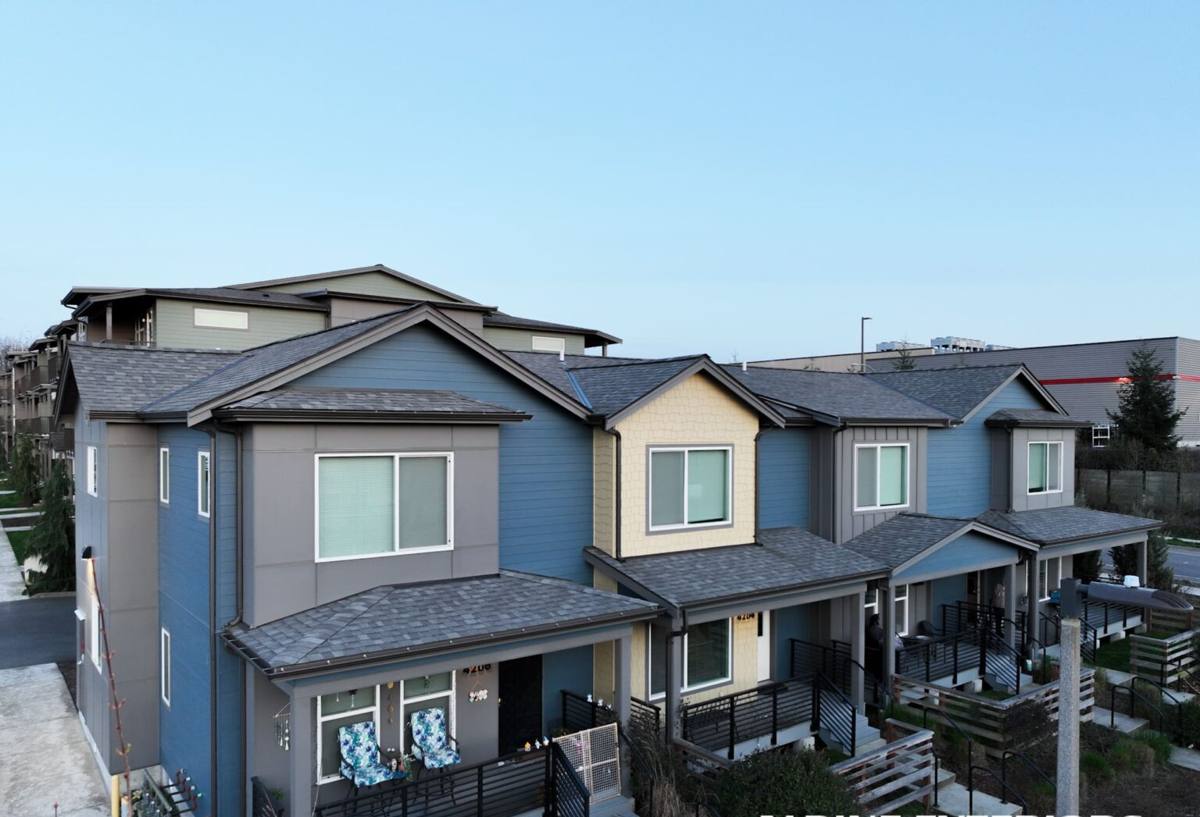
What King County's Climate Does to Older Windows
Seattle and King County don't get the dramatic freeze-thaw cycles that crack windows in other parts of the country. Our problem is different: it's the sheer duration of moisture exposure. Salt-tinged air moving in off the Sound, driving rain that hits west- and south-facing walls at an angle, and a moss season that can run from fall through spring all combine to create slow, steady deterioration rather than sudden failure.
- Wood rot at the sill and corners — the lowest points of a window frame hold moisture longest, and that's where rot typically starts first.
- Failed seals on older dual-pane units — once the seal between panes breaks down, you get fogging, condensation between the glass, and a real drop in insulating value.
- Moss and organic growth around frames — moss holds moisture against wood and vinyl trim far longer than open air would, accelerating decay in shaded, north-facing walls common throughout the valley.
- Warped or swollen wood sashes — repeated wet/dry cycles cause wood to swell and shrink, which eventually makes windows hard to open, close, or lock properly.
- Corroded hardware — salt air and persistent humidity are hard on cheaper latches, cranks, and balances, especially on homes closer to the water.
None of this happens overnight. It's cumulative — which is exactly why windows that seemed fine five years ago can suddenly show soft wood, drafts, or fogged glass all at once.
Signs a Rainier Valley Home Needs Window Replacement
What to look for from inside
- Condensation or fog trapped between the panes of a dual-pane window
- Visible drafts near the frame, especially noticeable during a windy rain event
- Windows that stick, won't stay open, or are difficult to latch
- Soft or spongy wood when you press on the sill or lower frame
- Noticeably higher heating bills compared to similar homes nearby
What to look for from outside
- Paint that's peeling or bubbling near the window frame
- Moss or dark staining building up on the sill or trim
- Gaps between the window frame and siding where caulking has failed
- Visible wood rot, especially at the bottom corners
If you're seeing two or more of these, it's worth having someone look at the whole opening — not just the window unit itself, but the flashing and framing behind it.
What a Correct Window Replacement Actually Involves
A lot of window problems in this region don't come from bad windows — they come from bad installation. Swapping in a new window without addressing the flashing and water management around the opening just sets up the same failure to happen again in a few years, only now it's hidden behind a new window instead of an old one.
Our process
- Remove the old unit carefully and inspect the framing, sill, and sheathing underneath for hidden rot or water damage before anything new goes in.
- Repair or replace damaged framing — if we find soft wood or compromised sheathing, that gets addressed first. Installing a new window over rotten framing is a waste of the new window.
- Install proper flashing at the head, jambs, and sill so water is directed out and away from the wall assembly, not trapped behind the window.
- Set the window plumb, level, and square, with correct shimming so the unit operates smoothly and seals evenly for years, not months.
- Seal and insulate the gap between the window frame and rough opening using appropriate materials — not just caulk over a gap, but proper backer rod and sealant or low-expansion foam where called for.
- Finish the exterior trim so water sheds correctly and the transition between window and siding is weathertight.
Skipping any one of these steps is how a homeowner ends up with a "new" window that leaks the same way the old one did.
Choosing Window Materials for This Climate
There's no single "best" window material — the right choice depends on the home's age, style, budget, and how exposed the wall is to wind-driven rain. Here's how the common options generally perform in King County's climate:
| Material | Moisture Performance | Maintenance | Best Fit |
|---|---|---|---|
| Vinyl | Good — won't rot, handles moisture well | Low | Budget-conscious replacements, rear/side elevations |
| Fiberglass | Very good — dimensionally stable in wet/dry cycles | Low | Homes wanting durability without wood upkeep |
| Wood (clad exterior) | Good if detailed correctly — the clad exterior shields the wood core | Moderate | Craftsman and older homes where interior wood look matters |
| Solid wood | Requires diligent upkeep in this climate | High | Historic-accurate restorations with a maintenance plan in place |
| Aluminum | Prone to condensation without thermal breaks | Low | Limited use; mainly older commercial-style openings |
For most Rainier Valley homes, we steer clients toward vinyl or fiberglass on exposed elevations because they hold up to sustained moisture without the ongoing maintenance wood requires. For homes where matching original wood trim matters — common in the neighborhood's older Craftsman housing stock — clad-wood units let you keep that look on the interior while the exterior face handles the weather.
Energy Efficiency and Comfort
Old, leaky windows are one of the more noticeable comfort problems in older Seattle homes — cold drafts near the glass in winter, condensation buildup on the inside during cold snaps, and rooms that never quite feel as warm as the thermostat says. Modern replacement windows with proper low-E glass and tight, correctly installed seals cut down on drafts and reduce the strain on your heating system. The efficiency gain isn't just about the glass — it's about the whole assembly working together: glass, frame, and installation. A high-efficiency window installed with gaps in the flashing or insufficient sealing around the frame will still leak air and water, regardless of what the energy rating sticker says.
A quick homeowner checklist before you get quotes
- Note which rooms feel drafty or cold, and which windows fog up or show condensation
- Check the exterior trim and sills for soft wood, peeling paint, or moss buildup
- Decide which elevations get the most direct, wind-driven rain — that affects material choice
- Have a rough budget range in mind, since material, size, and number of windows all shift cost
- Ask any contractor how they handle flashing and rough-opening prep, not just the window brand they carry
Why Local Experience in Rainier Valley Matters
A crew that regularly works in this part of Seattle already understands the housing stock here — the mix of older wood-frame homes and newer builds, the tree cover that keeps certain walls damp longer, and the microclimates that come from Rainier Valley's terrain and proximity to the Sound. That experience shows up in practical ways: knowing which elevations on a given block type tend to take the worst of the driving rain, recognizing early-stage rot before it becomes structural, and having a sense for how older Craftsman trim details need to be handled to keep a home's character intact.
It also means fewer surprises. A contractor who's opened up dozens of similar walls in this neighborhood has a good idea of what's likely behind the siding before the first window even comes out, which makes for a more accurate quote and fewer change orders once work begins.
What to Expect From Our Process
We start with an on-site look at the windows in question — not a drive-by estimate. That means checking the condition of the frames, sills, and surrounding siding, discussing which rooms or elevations are giving you the most trouble, and going over material options that fit both your home's style and your budget. From there we give you a clear, itemized quote before any work begins, so you know exactly what's included — removal, framing repair if needed, the new units, flashing and sealing, and finish trim work.
During installation, we protect your landscaping and interior spaces, work room by room or window by window depending on your preference, and clean up thoroughly at the end of each day. Once the job's done, we walk through the finished windows with you so you can see how they operate and ask any questions about care or warranty coverage.
Get a Free, No-Pressure Estimate
If your windows are drafty, fogged, hard to operate, or showing rot around the frame, it's worth having a local crew take a look before another wet Seattle winter makes the problem worse. Fill out the form below for a free estimate on window replacement in Rainier Valley — no pressure, just an honest assessment of what your home needs.