 Seattle
 Why Roofs Age Differently Around Green Lake
Green Lake is one of the greener, shadier pockets of Seattle, and that's exactly why roofs here don't age the same way they do in drier, more exposed parts of King County. The lake itself keeps humidity higher than the surrounding city, mature tree canopy shades large sections of most roofs for much of the day, and moist marine air moves through the neighborhood off Puget Sound. Put those three things together and you get a roofing environment built for one thing: moss and slow moisture damage.
Driving rain is the other half of the equation. Seattle's rain doesn't just fall straight down — wind off the lake and through the tree lines pushes it sideways, working it under shingle tabs, around flashing, and into any gap a roof has been quietly developing for years. A roof that would hold up fine in a dry climate with poor ventilation or aging flashing can fail here in a fraction of the time, because the water finds every weakness and never really lets the roof dry out between storms.
That combination — shade, humidity, and driving rain — is why we treat Green Lake roof replacements as a different job than a roof replacement in a sunnier, more open part of the region. The materials, the ventilation plan, and the moss strategy all need to account for it.
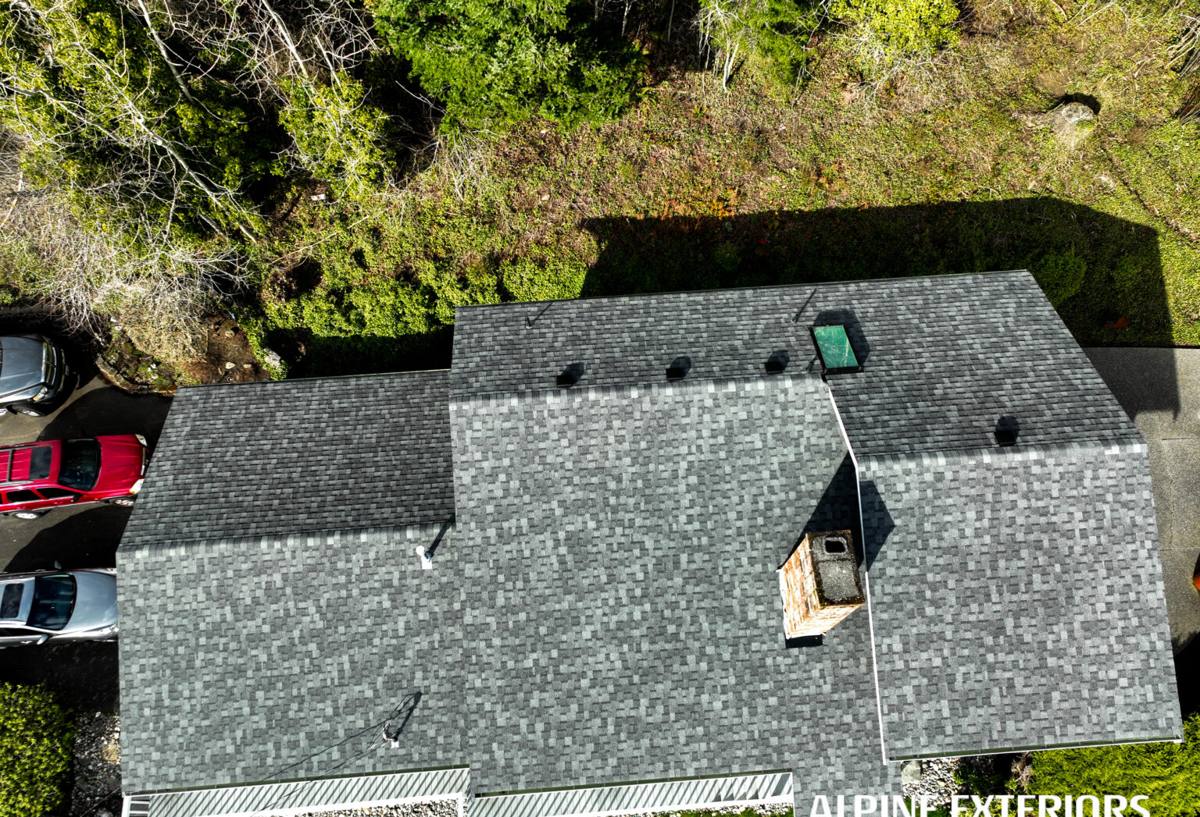
Signs It's Time to Replace, Not Repair
Not every roofing problem means a full replacement. But in a neighborhood like this, where moisture has more chances to do damage, it's worth knowing the difference between something a patch can fix and something that means the roof is done.
Interior warning signs
- Ceiling stains that reappear after drying out, even faintly, especially near exterior walls or where the roof planes meet
- A musty smell in the attic, particularly after a string of wet days
- Visible daylight through the roof deck when you're up in the attic
- Sagging or soft spots you can feel underfoot on the roof itself
Exterior warning signs
- Granule loss heavy enough that you're finding grit in the gutters every season, not just after a new roof's first year
- Shingles that are cupping, curling, or cracking, especially on the shadier slopes
- Moss that keeps coming back within a few months of cleaning, no matter how carefully it's removed
- Flashing around chimneys, vents, or valleys that's rusted, lifted, or was never properly sealed to begin with
A single missing shingle or one soft spot can usually be repaired. Multiple issues showing up together, or a roof that's already past its expected service life, is a sign that repairs are just delaying an inevitable replacement — and in a climate this wet, delaying often means dealing with deck damage on top of the roofing itself.
What a Correct Roof Replacement Involves
A roof replacement done right in this climate is not just stripping old shingles and nailing down new ones. The parts that matter most are usually the parts you can't see once the job is finished.
Tear-off and deck inspection
Every square foot of the old roofing comes off so the deck underneath can actually be inspected, not guessed at. In a wet climate, soft or delaminated plywood is common around valleys, chimneys, and eaves where water has been finding its way in slowly for years. Any compromised decking gets replaced before anything new goes down — covering over a soft deck just hides the problem for the next owner to find.
Underlayment built for driving rain
Because wind-driven rain is normal here, not a rare event, the underlayment and flashing details matter more than they would in a drier region. That means self-adhered ice-and-water membrane in the vulnerable spots — valleys, eaves, around penetrations — and a synthetic underlayment across the rest of the field, installed with the laps oriented to shed water even when it's coming in sideways.
Flashing and penetration details
Chimneys, skylights, plumbing vents, and roof-to-wall transitions are where the vast majority of leaks actually start, not in the open field of shingles. New step flashing, counterflashing, and properly sealed vent boots are part of a correct replacement, not an upsell.
Choosing Roofing Materials for This Climate
There's no single "best" roofing material — the right choice depends on your home's exposure to shade and moisture, your roof's pitch, and how much maintenance you want to take on. Here's how the common options compare for a shaded, moisture-heavy neighborhood like Green Lake.
| Material | Typical Lifespan | Moss & Moisture Behavior | Fit for Green Lake |
|---|---|---|---|
| Architectural asphalt shingles | 25-30 years | Good drainage when installed correctly; algae-resistant granule options help on shaded slopes | Solid all-around choice; budget-friendly and widely serviceable |
| Standing seam metal | 40-50+ years | Sheds water and moss very well due to smooth, steep-shedding surface | Strong option on shadier lots; higher upfront cost, minimal moss maintenance |
| Cedar shake | 20-30 years with upkeep | Attractive but absorbs moisture and needs regular treatment to resist moss and rot in shade | Requires the most ongoing maintenance here; we're upfront about that commitment before recommending it |
| Synthetic/composite shingle | 30-50 years | Doesn't absorb water like wood; consistent moss resistance | Good middle ground for homeowners who want the cedar look without the moisture upkeep |
We don't push one material on every roof. If a home has heavy tree cover and low pitch, we'll say so plainly and steer the conversation toward the products that actually hold up in that spot — even if that means a longer conversation about trade-offs instead of a quick recommendation.
Ventilation and Moisture Control
Ventilation gets overlooked constantly, and it's one of the biggest reasons roofs in humid, shaded neighborhoods fail early. Without a balanced intake-and-exhaust system, moist air gets trapped in the attic, condenses on the underside of the roof deck, and slowly rots it from the inside — a problem that has nothing to do with the shingles themselves and everything to do with airflow.
Part of every replacement we do includes checking that intake vents at the eaves and exhaust at the ridge are balanced and unobstructed. On older Green Lake homes, it's common to find attic vents that were painted over, insulation blocking soffit intake, or a ridge vent that was never properly cut in. Fixing that during a replacement costs far less than dealing with rotted sheathing a few years later.
Our Process, Start to Finish
- Free on-site inspection — we walk the roof and attic, not just the ground, to check deck condition, ventilation, flashing, and moss growth patterns
- Written estimate — a clear scope of work and material recommendation, with the reasoning behind it, not just a number
- Scheduling around the weather — we plan tear-off for a dry window whenever possible and keep the roof dried-in if conditions shift mid-job
- Tear-off and deck repair — old roofing removed, deck inspected, any soft or damaged sheathing replaced
- Underlayment, flashing, and ventilation work — the details that determine whether the roof actually performs in this climate
- New roofing installed — per manufacturer specification, not shortcuts
- Cleanup and final walkthrough — magnetic sweep for nails, gutters checked, and a walkthrough so you know what was done and why
Living With a New Roof Near Green Lake
A new roof still lives in the same shaded, humid environment that wore out the old one, so a little seasonal attention goes a long way toward getting the full lifespan out of it.
- Keep gutters clear of leaves and needles, especially in fall — clogged gutters back water up under the eaves
- Have moss growth addressed early, before it mats down and holds moisture against the shingles
- Trim back overhanging branches where practical to cut down on shade, debris, and abrasion
- Walk the roofline visually after major windstorms to check for lifted shingles or displaced flashing
- Schedule a quick inspection every couple of years, even with no visible problems — small issues are cheap to fix early and expensive to ignore
None of this is heavy maintenance, but skipping it is how a roof that should last decades starts losing years off its life in a neighborhood this shaded and this wet.
Why Local Experience in Green Lake Matters
Roofing crews who mostly work drier, more open parts of King County don't always think about moss-resistant shingle choices, shaded-slope ventilation, or how to sequence a tear-off around a genuinely unpredictable rain window. A crew that already works Green Lake regularly has seen how these specific homes — often older housing stock with mature trees close to the roofline — actually perform over time, and plans the job accordingly instead of treating it like any other roof in the region.
That familiarity also shows up in the smaller logistics: working respectfully in a dense, tree-lined residential area near the park, protecting landscaping during tear-off, and communicating clearly with homeowners who are used to a busy neighborhood. It's not a dramatic difference on paper, but it shows up in how smoothly the job actually goes.
If your roof is showing its age, or you just want an honest read on how much life it has left, we're happy to take a look. The estimate is free, there's no pressure to sign anything on the spot, and you'll get a straight answer about whether you need a full replacement or just a repair.