 Seattle
 Redmond's Climate Is Hard on Asphalt Shingles, Even When the Roof Looks Fine
Redmond sits in the same wet, mild, marine-influenced climate that shapes every roof across the greater Seattle area — and asphalt shingles feel it more than most homeowners realize. It isn't one dramatic storm that wears a shingle roof out. It's the accumulation: months of steady rain, humid air drifting in off Puget Sound, driving wind events in the fall and winter, and long stretches of shade under mature trees that never let a roof fully dry out between rains.
That last part matters more here than almost anywhere else. Redmond's tree cover is heavier than a lot of the region, and shaded, damp shingles are exactly what moss and algae need to get established. Once moss takes hold on an asphalt roof, it doesn't just look bad — it lifts shingle edges, holds water against the roof deck, and shortens the life of a roof that would otherwise last for decades. King County's version of a "moss season" isn't really a season at all; on a shaded north-facing slope, it can be a year-round condition.
None of this means asphalt shingles are a poor choice for Redmond. It means the installation has to account for local conditions from the start — the right underlayment, the right ventilation, the right shingle rating — rather than treating this as a generic roofing job that happens to be located here.
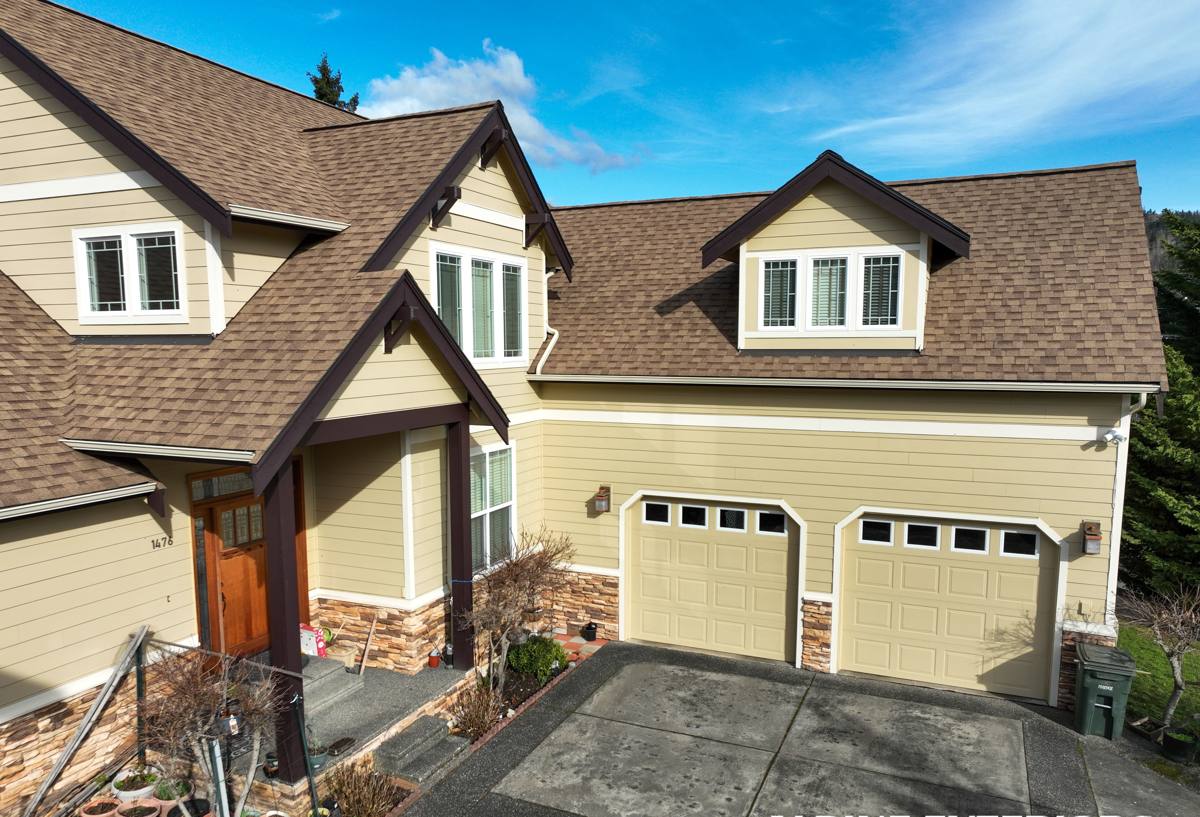
What a Correctly Installed Shingle Roof Looks Like in This Climate
A shingle roof that's built for Redmond's weather isn't just shingles nailed to plywood. It's a layered system, and every layer earns its place.
Underlayment and Water Protection
Under the visible shingles, a synthetic underlayment sheds the water that inevitably works its way past wind-driven rain and wind-lifted shingle edges. At eaves, valleys, and anywhere water concentrates, a self-adhering ice-and-water membrane adds a second line of defense — not because Redmond gets heavy ice, but because that same membrane is what stops slow leaks caused by wind-driven rain and roof-valley runoff, which this region gets plenty of.
Ventilation
Attic ventilation is easy to overlook because you can't see it from the ground, but it's one of the biggest factors in how long a shingle roof lasts here. Balanced intake at the eaves and exhaust at the ridge keeps moist attic air moving instead of condensing against the underside of the roof deck. Poor ventilation in a wet climate leads to trapped moisture, premature deck rot, and shingles that fail from underneath — problems a homeowner won't see until they're already expensive.
Flashing and Transitions
Most roof leaks don't start in the field of the shingles — they start at the transitions: chimneys, skylights, sidewalls, and roof-to-wall junctions. Correctly formed and properly lapped flashing at every one of these points is what actually keeps water out, and it's also the part of a roofing job that's easiest to shortcut if a crew is unfamiliar with how water moves on a low-slope, high-rainfall roof.
Choosing the Right Shingle for a Redmond Roof
Not every asphalt shingle performs the same way in a wet, shaded climate. We factor in wind rating, algae resistance, and how the shingle sheds water at low slopes when we walk through options with a homeowner.
| Shingle Type | Typical Fit for Redmond | Key Consideration |
|---|---|---|
| 3-tab asphalt | Budget-conscious re-roofs | Lower wind rating, thinner profile, shorter expected service life in wet climates |
| Architectural (dimensional) | Most common choice locally | Better wind and weather resistance, heavier mat, longer manufacturer warranties |
| Algae-resistant (AR) shingles | Strongly recommended under tree cover | Copper- or zinc-infused granules slow moss and algae growth on shaded slopes |
| Impact-rated (Class 4) | Optional upgrade | More resistance to debris impact; sometimes qualifies for insurance discounts — worth asking your carrier |
For most Redmond homes with any tree canopy nearby, we lean toward architectural shingles with algae-resistant granules as the practical baseline, not an upsell. It's a smaller price difference upfront than most homeowners expect, and it directly addresses the moss problem instead of just delaying it.
Signs a Redmond Roof Needs Attention
Because shingle roofs fail gradually, most homeowners don't catch the early signs from the ground. A few things worth checking, or asking a roofer to check, at least once a year:
- Granules collecting in gutters or at downspout outlets — a sign shingles are wearing down
- Dark streaking or green-black patches, especially on shaded, north-facing slopes
- Curling, cupping, or lifted shingle edges, particularly after a windy fall or winter
- Moss buildup along ridge lines, valleys, or anywhere debris collects and holds moisture
- Soft or discolored spots on interior ceilings, which usually trace back to a roof issue, not a plumbing one
- Visible daylight or water staining in the attic around chimneys, vents, or skylights
- Sagging or uneven rooflines, which can indicate deck damage underneath
Catching these early is almost always cheaper than waiting. A roof with isolated flashing damage or a handful of damaged shingles is a repair; the same roof left alone through another wet winter can turn into a full deck replacement.
How Our Redmond Roofing Process Works
- On-site inspection. We walk the roof (or use ground and attic inspection where a walk-on isn't safe or necessary) and check the deck, ventilation, flashing, and shingle condition — not just what's visible from the driveway.
- Honest scope and written estimate. We tell you plainly whether you're looking at a repair, a partial re-roof, or a full replacement, and why — including what happens if you do nothing this year.
- Scheduling around the weather. Shingle installation needs a dry deck and a reasonable weather window, so we plan around Puget Sound's rain patterns rather than rushing a job into a storm system.
- Tear-off and deck inspection. Old roofing comes off down to the deck, which gets inspected and repaired where needed — this is the point where hidden moisture damage, if any, gets found and dealt with, not covered over.
- Underlayment, flashing, and ventilation first. These go in before a single shingle is installed, because they're what actually keeps water out over the long run.
- Shingle installation. Installed to manufacturer specification and local wind conditions, with attention to nailing pattern and exposure — details that affect both warranty coverage and real-world performance.
- Cleanup and magnetic sweep. Job site and yard cleared of debris and stray fasteners.
- Final walkthrough. We go over the finished roof with you before we consider the job done, not after.
Repair, Partial Replacement, or Full Re-Roof — How We Help You Decide
Not every roofing problem calls for a full replacement, and we're not going to tell you it does. The right call usually comes down to the roof's age, how widespread the damage is, and what's happening under the surface.
| Situation | Likely Fit | What We Check |
|---|---|---|
| Isolated leak, roof under 12-15 years old | Targeted repair | Flashing, localized shingle damage, deck condition at the leak point |
| Widespread granule loss, curling shingles, roof 15-20+ years old | Full re-roof | Overall shingle wear, deck moisture, ventilation adequacy |
| Heavy moss on one slope, rest of roof sound | Cleaning plus targeted repair | Whether moss has already lifted shingles or just discolored them |
| Storm or wind damage to a portion of the roof | Partial replacement | Shingle matching, whether the rest of the roof can reasonably be tied in |
We'd rather walk a homeowner through an honest repair-versus-replace conversation than push a bigger job than the roof actually needs. If a repair genuinely buys you several more good years, we'll say so.
Why Hiring a Crew That Already Works in Redmond Matters
Roofing work in this region isn't the same as roofing work in a dry climate, and a crew that mostly works elsewhere can miss things that are second nature to a local crew. A few reasons it matters in practice:
- Permitting and local requirements. Redmond and King County have their own permitting expectations for re-roofing work, and knowing what's required upfront avoids delays.
- Weather-window scheduling. Knowing the realistic dry-day windows in this area, month to month, means fewer surprises with tarps and delays mid-project.
- Tree cover and debris. Redmond's mature trees mean roofing crews need to plan for overhead branches, needle and leaf debris, and moss conditions that a crew from a drier or less-wooded area may not be used to accounting for.
- HOA and neighborhood standards. Many Redmond neighborhoods have architectural or color guidelines for exterior work; a local crew is used to working within them rather than treating them as a surprise mid-project.
- Being reachable afterward. If a question comes up two years after installation, a local crew is still local — not a phone number that only worked during the sales process.
What Affects the Cost of a Redmond Asphalt Shingle Roof
We won't quote a number without seeing the roof, but these are the main factors that move the price up or down on most jobs in this area:
| Factor | Why It Matters |
|---|---|
| Roof size and number of slopes/facets | More cuts, valleys, and edges mean more labor and material waste |
| Roof pitch and access | Steeper or harder-to-access roofs take longer and require more safety setup |
| Number of layers to remove | Tear-off of multiple existing layers adds labor and disposal cost |
| Deck condition | Rotten or damaged sheathing found during tear-off needs repair before shingles go on |
| Shingle tier chosen | 3-tab, standard architectural, and algae-resistant/impact-rated products all price differently |
| Flashing and ventilation scope | Older roofs often need new flashing and vent upgrades, not just new shingles |
Broadly, a full re-roof costs more than a repair and less than a full tear-off with significant deck replacement — but the only honest way to give you a real number is an in-person look at your specific roof.
Living With Your Roof Between Installations
A well-installed shingle roof in this climate should need very little from you — but a little goes a long way. Keeping gutters clear so water doesn't back up under the shingle edge, trimming overhanging branches that keep a slope shaded and damp, and having moss treated or gently removed before it spreads are the main things that extend a roof's life between full inspections. We're happy to point out what your specific roof needs during an estimate visit, even if you're not ready to do work yet.
If you're dealing with a leak, visible moss, an aging roof, or you just want an honest read on where things stand, we're glad to come take a look. The estimate is free, there's no pressure to move forward, and you'll get a straight answer about what your roof actually needs.