 Seattle
 Building a Deck That Actually Holds Up in Renton
A deck in Renton doesn't fail the way a deck fails in a dry climate. It doesn't crack from sun exposure or dry out and split first. Around here, decks fail from the bottom up and from the inside out — moisture that gets trapped where it can't dry, wood that stays damp for months at a stretch, and hardware that quietly corrodes where nobody's looking. If you're planning a custom deck for a home in Renton, the design and the materials matter less than how well the whole system is built to shed water and dry out between storms.
This page is about one thing: building custom decks correctly for this specific area, in this specific climate. Not a generic "how to build a deck" overview — the actual decisions that separate a deck that looks good for two summers from one that's still solid in fifteen years.
What Renton's Climate Does to a Deck Over Time
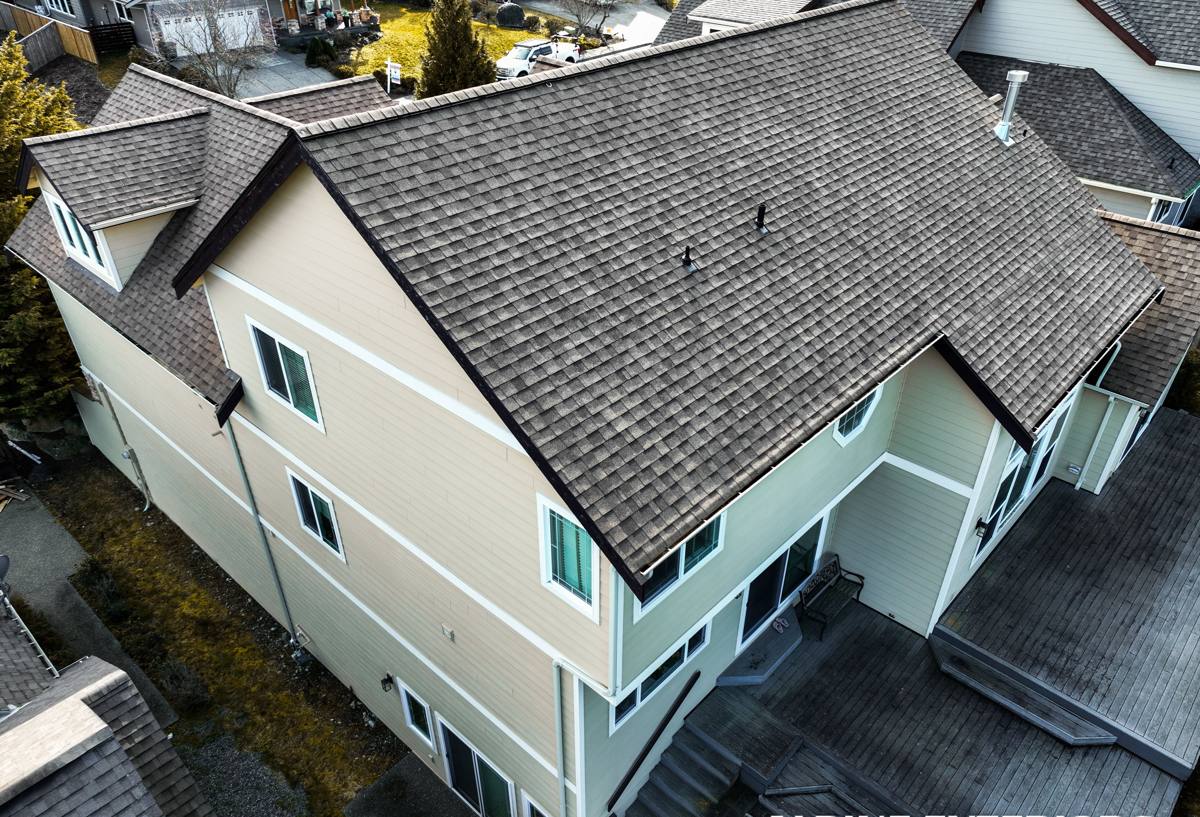
King County's marine climate means long stretches of steady, driving rain, mild temperatures that rarely dry things out fast, and a moss and algae season that can run most of the year on shaded or north-facing structures. None of that is dramatic on its own — but it adds up on a deck differently than it does on a roof or a wall, because a deck is a horizontal surface people walk on, with framing underneath that's much harder to inspect once it's covered.
The three things that actually cause damage
- Trapped moisture: water that gets between boards, under ledger connections, or into end grain and doesn't fully dry before the next rain arrives
- Moss and algae buildup: turns walking surfaces slick and, over time, holds moisture against the wood or composite cap longer than open air would
- Corrosion at fasteners and connectors: the failure point nobody sees until a board is loose or a railing post has some give in it
None of these are exotic problems. They're the predictable result of a wet regional climate acting on a structure over years, and they're almost entirely preventable with the right materials and detailing at the time of construction.
Choosing Decking Material for a Wet Climate
There's no single "best" decking material — there's a best material for your budget, your maintenance appetite, and how exposed the deck is to shade and standing water. Here's how the common options actually compare for a Renton install, not in a showroom, but over years of PNW weather.
| Material | How it handles our climate | Maintenance | Typical lifespan here |
|---|---|---|---|
| Pressure-treated fir/hem-fir | Good if detailed with proper flashing and gapping; can trap moisture if boards are laid too tight | Annual cleaning, re-stain/seal every 2-3 years | 15-20 years with upkeep |
| Cedar | Naturally rot- and insect-resistant, ages gracefully, but softer and needs consistent sealing to resist moss staining | Cleaning plus sealant every 1-2 years | 20-25 years with upkeep |
| Composite decking | Doesn't absorb water or rot, resists moss better than bare wood, but can still get slick with algae film if never cleaned | Periodic washing, no staining or sealing | 25-30+ years, per manufacturer warranty |
| Tropical hardwoods (ipe, etc.) | Extremely dense and rot-resistant, handles standing moisture well | Oil treatment 1-2x/year to maintain color, or left to gray naturally | 30+ years |
Composite has become the default for a lot of Renton homeowners who want to stop staining a deck every couple of years, and we install it often. But it's not automatically the right call for every deck — a heavily shaded, low-airflow deck under mature trees still needs to be built with drainage and gapping in mind no matter what surface material sits on top, because composite doesn't rot but it also doesn't fix a framing problem underneath it.
Framing and Structure: The Part You Don't See
The surface material gets all the attention, but the framing underneath is what determines whether a deck is still safe in twenty years. This is where most of the corner-cutting happens on cheap deck jobs, because it's invisible once the decking goes down.
What correct framing looks like in this climate
- Ledger board attached with proper flashing that directs water away from the house sheathing, not into it
- Joist tape or cap flashing on top of every joist to keep fastener penetrations from wicking moisture into the wood over time
- Footings sized and set to local frost depth and soil-bearing requirements, not just "deep enough to look right"
- Hardware rated for ground contact and treated lumber — stainless or hot-dip galvanized, not standard coated screws that corrode against ACQ-treated wood
- Board spacing that allows airflow and drainage instead of packing boards tight, which traps debris and moisture between them
A deck built this way costs more upfront than one where the framing gets rushed. It's also the difference between a deck that needs board replacement in year eight and one that's still tight and quiet underfoot well past year twenty.
Permits and Local Requirements in Renton
Most raised decks in Renton require a building permit, and the exact thresholds and setback rules depend on your lot, your zoning, and how the deck attaches to the house. Guardrail height, baluster spacing, and stair rail requirements are all governed by the adopted building code, and inspectors will check ledger attachment and footing depth before anything gets covered up.
We handle the permit application and coordinate inspections as part of the build — not as an upcharge or an afterthought. Skipping the permit process on a deck might save a little time now, but it becomes a real problem at resale, since unpermitted structural work routinely gets flagged in home inspections and can hold up a sale.
Design Considerations for Renton Homes and Lots
Renton has a mix of lot types — some flat, some with real grade change from street to backyard, some backing up to greenbelt or mature trees that keep parts of the yard shaded most of the day. Each of those changes the right deck design.
Sloped and multi-level lots
On a lot with significant grade change, a single-level deck often isn't the right answer — a multi-level design that steps down with the yard can avoid a wall of lattice skirting and awkward stairs, and it usually looks more intentional than trying to force a flat deck onto sloped ground.
Shaded lots
Decks under tree cover or on the north side of a house dry out slower after rain, which means moss and algae show up faster. On these lots we lean harder on drainage detailing, gapping, and sometimes composite decking specifically because it tolerates that slower dry-out cycle better than untreated wood.
Drainage planning
Where the deck sits relative to your yard's overall drainage matters. A deck built without thought to where water goes underneath it can turn the space below into a standing-water problem, which affects both the structure above and anything you're using that space for — storage, a patio, a walkway.
Our Process From Estimate to Finished Deck
We keep the process straightforward and don't ask you to make decisions you don't have the information for yet.
- On-site assessment: we look at your lot's grade, sun/shade exposure, soil, and how the deck will attach to your home
- Design and material selection: we walk through material options and layout based on your budget and how you'll actually use the space
- Permit handling: we prepare and submit what's needed for Renton permitting and schedule the required inspections
- Construction: footings and framing first, inspected before anything is covered, then decking, railing, and stairs
- Final walkthrough: we go over the finished deck with you, including basic maintenance guidance for your specific materials
We don't pressure anyone into upgrades mid-project or pad an estimate with vague allowances. What we quote is based on what your specific lot and design actually require.
Maintaining Your Deck After It's Built
Even a well-built deck needs some seasonal attention in this climate — the goal is to stay ahead of moss and moisture rather than dealing with it once it's already caused damage.
- Sweep leaves and debris off the deck surface regularly, especially in fall — trapped organic matter holds moisture and feeds moss growth
- Rinse or wash the deck surface at least once or twice a year to remove algae film before it gets slick or established
- Check railings and stair connections annually for any looseness — this is often the first sign of a fastener issue
- Keep gutters and downspouts near the deck clear so runoff isn't draining directly onto or under the structure
- For wood decks, re-seal or re-stain on the schedule appropriate to your species — don't wait until it's visibly gray and dry
- Trim back overhanging branches to improve airflow and sun exposure where moss is a recurring problem
Why Work With a Crew That Already Builds in Renton
A deck design that works fine in a drier climate can be the wrong call here — tight board spacing, the wrong fastener coating, a ledger detail that doesn't account for how much rain this area actually gets over a winter. A crew that works Renton and the wider Seattle area regularly already knows the local permitting process, has a working relationship with what inspectors look for, and builds with King County's rain and moss season as the default assumption, not an afterthought.
If you're planning a new deck or replacing one that's showing its age, we're glad to come take a look and give you a straightforward, no-pressure estimate. Use the form below to get started.